Earth. Energy. Everything next.

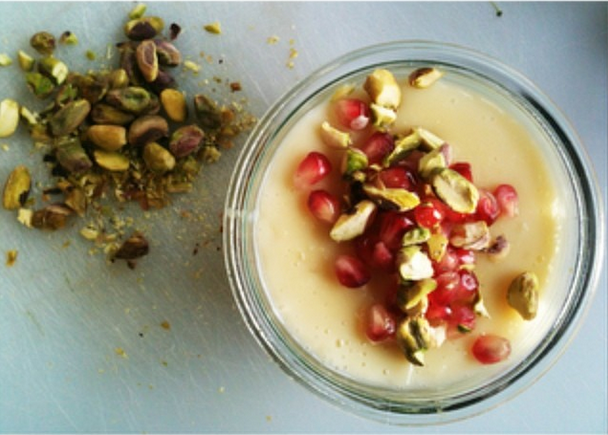
Creamy white malabi pudding with pistachios

Malabi with pistachios via les petites pestes. Food trends come and go, but malabi, or muhallabia (in Arabic) is forever! Mouhallabia is a classic creamy stovetop milk pudding from the Middle East. It is egg-free and gelatin-free, takes a few minutes to cook and has been enjoyed across the Middle East for centuries. It is affordable and cooks in a reasonable amount of time; with easy-to-find ingredients.

Rose-flavored sweetness and a light, creamy texture that keeps you dipping your spoon back in – in Israel this pudding is called malabi.

In Turkey, Lebanon, Syria, Jordan, and Egypt, people call it muhallibieh. The Greeks eat it as well. And it’s only milk pudding, made in ten minutes. Sounds like a dessert for children, but all over the Middle East, you’ll see Malabi offered in restaurants and at dinner parties. In Tel Aviv and Jaffa you will now find shops called malabia, which serves a vegan or cream option for about $2.50.

Recipes vary a little.  Some call for a combination of milk and cream. A vegan combination I like is half coconut milk, half water. Rice milk works very well too, but not, for some reason, soy milk.

Some people flavor their malabi with rosewater, some with orange flower water. Very old recipes call for mastic, a resin from a shrub belonging to the pistachio family.

One ancient recipe requires flavoring the pudding with two leaves of a bitter orange tree, or the flowers (click to read our almond blossom recipe).

Toppings vary too. You can top Malabi with chopped pine nuts and walnuts, or with chopped pistachios, like in the above photo. Some dust a little cinnamon over the top, or sprinkle shredded coconut and peanuts. A little syrup over everything – it can be silan – the Middle-Eastern date honey used to “sweeten” sweet potatoes –  or a home-made sugar syrup flavored with lemon, maple syrup, or chocolate syrup.

Malabi

8 servings – can be halved
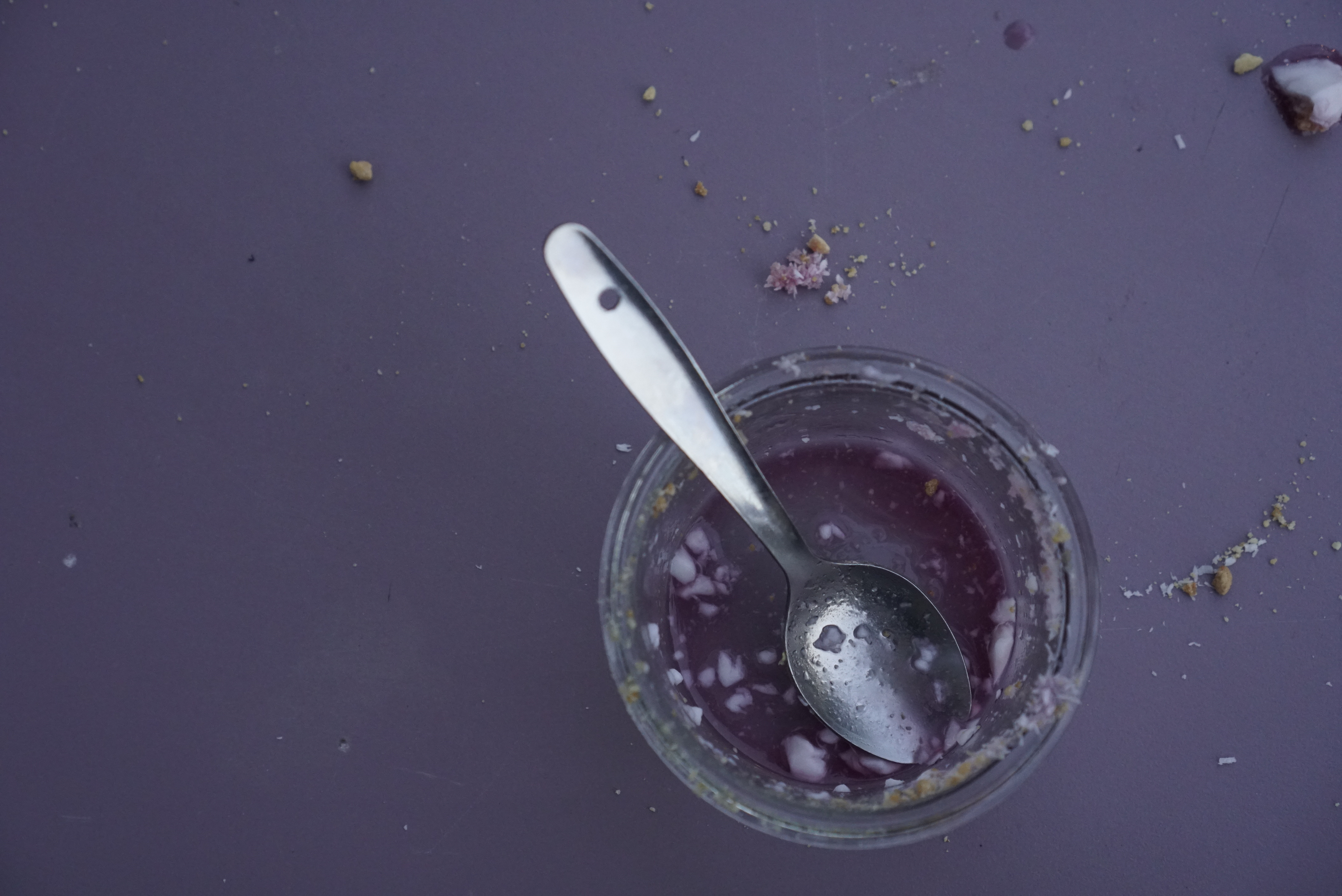
Malabi, it will be gone before you know it. Image by Karin Kloosterman, 2019 – Jaffa Malabia in the Jaffa Flea Market

Ingredients:

4 cups milk

1 cup sugar

5 tablespoons cornstarch, diluted in 1/4 cup water

2 tablespoons rose water or orange flower water

4 oz. chopped nuts

Silan or other syrup

Method:

1. Put the milk and the sugar in a pan and bring the mixture to a boil.

2. Always stirring, add the cornstarch and water mixture.

3. Cook over medium heat till the pudding thickens – up to 5 minutes.

4. Add the rose water; stir.

5. Ladle into small bowls. Cool the pudding and then refrigerate it till cold.

5. Garnish the servings with chopped nuts and a swirl of syrup.

Bon appetit!

More Middle-Eastern recipes from Green Prophet:


Miriam Kresh
Miriam Kreshhttps://www.greenprophet.com/
Miriam Kresh is an American ex-pat living in Israel. Her love of Middle Eastern food evolved from close friendships with enthusiastic Moroccan, Tunisian and Turkish home cooks. She owns too many cookbooks and is always planning the next meal. Miriam can be reached at miriam (at) greenprophet (dot) com.

Read More

2 COMMENTS
  1. Yes, you can substitute 4-1/2 cups milk, 1/2 cup rice flour, and 1/2 cup sugar. Dissolve the rice flour in a little of the milk, add it to the hot milk/sugar mixture, and continue as from step 3 in the recipe.

    The bright red sauce is usually that horrible “petel” syrup. Much tastier and healthier is silan date honey, plain honey, or maple syrup. Chocolate syrup too – not especially healthy, but you can’t argue with chocolate…

TRENDING

Cities promise net zero. A new UN-aligned checklist asks them to prove it

At COP31 in Türkiye, a new climate checklist challenges cities to prove their net-zero promises with measurable action, transparent reporting and real emissions cuts.

Petra by Night returns as Jordan tries brings tourists back to Wadi Rum

The Nabataeans understood that prosperity in the desert depended on respecting environmental limits. Two thousand years later, Petra's greatest attraction may still be the wisdom of the people who learned to live within them.

The pulsing planet and the earthquakes that shape our world

One of the most persistent questions in seismology concerns whether scientists will eventually be able to predict major earthquakes before they happen.

Amman’s traffic crisis is about more than cars. It’s about how we think

I believe Jordan needs a cultural transformation alongside its infrastructure investments. We must begin by redefining social prestige. Why should ownership of an expensive car be considered a greater achievement than making an environmentally responsible transportation choice? Why should travelling by bus carry a social stigma?

Why water-starved Amman keeps flooding and how underground rain tanks could help

Jordan's capital faces a troubling paradox: chronic water shortages and destructive winter floods. Hydrogeological expert Dr. Osama MN Gazal explains how underground rainwater tanks and green infrastructure could help Amman capture precious rainfall, reduce flooding and build a more water-secure future.

Why Bronwyn Finnegan Chose the Nonprofit Sector Over Politics or Corporate Life

Bronwyn Finnegan could have pursued a career in politics or corporate leadership. Instead, she chose the nonprofit sector, where she focuses on financial sustainability, governance and helping mission-driven organizations build the capacity to survive and grow.

Scientists make lead-free perovskite solar cells that can weather the elements

Scientists have developed a “raincoat” for lead-free tin perovskite solar cells, helping them withstand air, moisture and heat while maintaining high efficiency.

The Essential Guide To Sustainability in Project Management

Sustainability is an approach where businesses and individuals balance the environmental, social, and economic aspects of a project such that current and future stakeholders are not overburdened with the impacts of the project in future.

Yerukim Forms a New Green Economy Where the Money is Really Green

The Yerukim members who pick up the recyclables get to keep the monetary reward, the public earns "green" bills that can be used in shops, and business owners get to be associated with environmentalism.

Choosing Riyadh over Dubai? What Investors Should Know

Saudi Arabia is deploying capital at unmatched scale to catalyze tourism and advanced industry while rewiring its power-and-water backbone. The investable frontier is widening—especially in renewables, grid storage, water efficiency/desal retrofits, and hospitality operating platforms. Prudent investors will insist on phased delivery, enforceable KPIs (energy, water, biodiversity), and RHQ/zone compliance—while pricing political-economy and reputational risks alongside growth upside.

Sell your cooking oil for biodiesel money

Want to make money on old french fry oil? Sell it.

Qatar Alternative Energy Summit Pairs Investors And Innovators

Alternative energy investors and innovators can meet n' greet in Doha, Qatar March 16 and 17.

Here’s How To Implement The Four Pillars Of Employee Engagement

If you throw a party for your work team and they are vegans, don't make it a barbecue. Know the sustainability values of your team to boost moral and retain good people.

Popular Categories