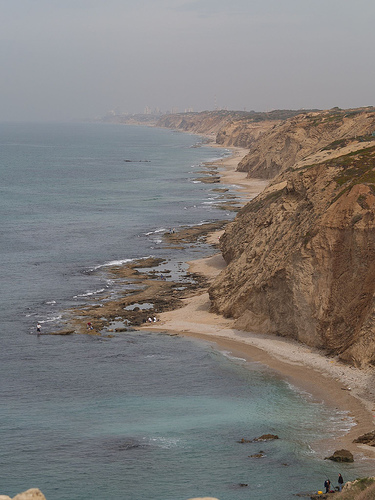
Iron-Rich Whale Poop Essential in Middle Eastern Marine Habitats

whale poopBig recyclers and important for carbon storage: New evidence explores how important this large mammal is for regulating nutrients in the sea.

What does whale excrement, or poop, have to do with enriching the world’s marine environment? Plenty,  according to a recent  article on Greenbang. The “poop” the article is referring to is that contributed by whales whose diet is largely consisting of ingesting thousands of pounds of a small marine crustacean known as krill. Krill are small, shrimp-like creatures whose average size is that of a paper clip, and are full of iron that they obtains from the sea; especially from feeding on algae in many of the world’s oceans. Their poop, also, helps our oceans absorb the greenhouse gas carbon dioxide from the atmosphere. Now’s a better time than ever to Save the Whales!Whales that feed on krill include the world’s largest living mammals: the majestic blue whale; which are not only found in the northern and southern oceans, but in locations such as the Gulf of Eden in Yemen, and in parts of the Persian Gulf.

Since algae is one of the world’s best sources of carbon, the whales ingest a certain amount of carbon and iron from the large amounts of krill they eat. The amounts of krill ingested amount to thousands of tons a year by producing a large amount of excrement, containing as much as 12 per cent iron.
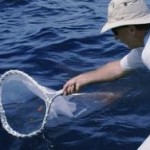
Collecting whale poop for study

Of course, whales are not the only large marine mammals found in sea, including bodies of water like the Gulf. At least 4,000 dugongs (large gentle marine herbivores, related to the manatee of sea cow) also live in the Gulf, as well as 40 different species of dolphins.

In a recent Green Prophet article , I expressed environmental concerns for the well being of the Gulf’s dugong population that in some parts of world is threatened with extinction.

The fact that whales, a very much endangered species, make so much of a contribution to fertilizing the sea, it would seem that more of an effort should be made to save them from the harpoons of whalers, as well as from environmental dangers like oil and chemical spills, ingestion of plastics and other waste materials, mercury and other metals poisoning; and global warming, which has an effect on the very food the whales like to eat.

Steve Nicol, a scientist for Australia’s Antarctic Division, estimates that whales are responsible for “recycling” more than 12% of the iron found in the Southern Ocean alone. And this iron comes largely from krill which hold large quantities of iron in their bodies.

As noted by Nicol: “Approximately 24 per cent of the total iron in the Southern Ocean surface water is currently stored within krill body tissue.”

This works out to an estimated 379 million tons of krill in the Southern Ocean alone that includes an iron supply of about 15,000 tons.

Since blue whales are frequently sighted in both the Gulf of Aden and the Persian Gulf, it means that the poop they generate is helping to fertilize and increase the iron content of these bodies or water. Other marine mammals, fish and birds also feed on krill, including albatross, pelicans, cormorants, and species of seals and sea lions.

Naturally, the future of large sea mammals like whales depends heavily on ample supplies of krill. These magnificent animals have few natural enemies, outside of predators such as killer whales (Orcinus Orca) which are actually members of the dolphin family This only leaves one earth mammal that is now the greatest threat to the future of the whale population – and the quantities of iron-rich excrement they produce. And that mammal is non-other than Man.

Image via www.divematfrix.com
::Greenbang

Read more on benefits of poop and algae:
Qteros Makes Bio Fuel from Animal and Human Excrement.

Expanding the Role of Algae for Food and Other Products

Algae Into Bio Fuel in Joint Israel-Chinese Project

Maurice Picow
Maurice Picowhttps://www.greenprophet.com/
Maurice Picow grew up in Oklahoma City, U.S.A., where he received a B.S. Degree in Business Administration. Following graduation, Maurice embarked on a career as a real estate broker before making the decision to move to Israel. After arriving in Israel, he came involved in the insurance agency business and later in the moving and international relocation fields. Maurice became interested in writing news and commentary articles in the late 1990’s, and now writes feature articles for the The Jerusalem Post as well as being a regular contributor to Green Prophet. He has also written a non-fiction study on Islam, a two volume adventure novel, and is completing a romance novel about a forbidden love affair. Writing topics of particular interest for Green Prophet are those dealing with global warming and climate change, as well as clean technology - particularly electric cars.

Read More

1 COMMENT

TRENDING

Collecting kinetic energy from roads; REPS turns traffic into a power plant

REPS announced a $23.6M equity financing round to scale...

Baby teeth read like tree rings paint a picture of toxins in early life

A new study from the Icahn School of Medicine at Mount Sinai in New York offers a striking insight into how the environments we are born into can quietly shape our brains years later. By analyzing naturally shed baby teeth, the ones tucked under pillows for the tooth fairy, researchers have reconstructed a detailed timeline of exposure to environmental metals during pregnancy and early infancy.

40 more migratory animals need protecting, warns UN group

The Convention on the Conservation of Migratory Species of Wild Animals (CMS), governments agreed to extend protection to 40 more migratory species, from cheetahs and striped hyenas to snowy owls, giant otters, and great hammerhead sharks. Too many of them are slipping toward extinction .

Koh Phangan’s angels for the dogs and the cats

Koh Phangan may be known for yoga, detox retreats, and full moon parties, but beyond the curated paradise lies a different reality—one of injured stray animals and the quiet work of rescue. This story explores PACS (Phangan Animal Care for Strays), a grassroots animal shelter tackling overpopulation, disease, and neglect on the island. Through firsthand experience with teens, it reveals how meaningful travel, volunteerism, and compassion offer a deeper kind of healing—far from the Instagram version of paradise.

Saving Gourmet Wild Plants For The Future

Think of truffles, a gourmet wild food. The European...

Yerukim Forms a New Green Economy Where the Money is Really Green

The Yerukim members who pick up the recyclables get to keep the monetary reward, the public earns "green" bills that can be used in shops, and business owners get to be associated with environmentalism.

Choosing Riyadh over Dubai? What Investors Should Know

Saudi Arabia is deploying capital at unmatched scale to catalyze tourism and advanced industry while rewiring its power-and-water backbone. The investable frontier is widening—especially in renewables, grid storage, water efficiency/desal retrofits, and hospitality operating platforms. Prudent investors will insist on phased delivery, enforceable KPIs (energy, water, biodiversity), and RHQ/zone compliance—while pricing political-economy and reputational risks alongside growth upside.

Sell your cooking oil for biodiesel money

Want to make money on old french fry oil? Sell it.

Qatar Alternative Energy Summit Pairs Investors And Innovators

Alternative energy investors and innovators can meet n' greet in Doha, Qatar March 16 and 17.

Here’s How To Implement The Four Pillars Of Employee Engagement

If you throw a party for your work team and they are vegans, don't make it a barbecue. Know the sustainability values of your team to boost moral and retain good people.

Locals From Rishon Fight IKEA

Big Box stores are a pretty new concept in Israel, and thank God that not every Israeli city wants them in their backyard. A word from someone who has see the beautiful farmland around her hometown Newmarket, Ontario stripped and converted into vulgar strip malls of big box shops: they have no place in a healthy and sustainable town or city.

The Jewish National Fund Meets An Inconvenient Truth

According to the JNF, it has transformed thousands of acres of barren land into green forests in Israel. They state that each person emits about 23 tons of carbon per year, estimating that each tree planted can absorb one ton of carbon in its lifetime. That's a whole lot of trees you'd need to be planting. Could so many fit in Israel?

How to quiet noise from construction in your office

Streets need to be resurfaced in New York but the humming and grinding noise is unsettling. Noise is environmental pollution. 

Popular Categories