
Lebanon Celebrates Three Years of an Organic Farming Project

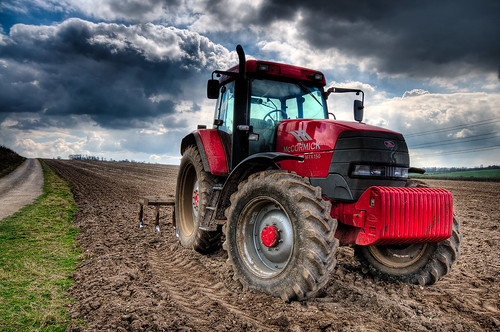
Last Friday, World Vision and the United States Agency for International Development (USAID) celebrated the achievements of a three year project that has helped hundreds of Lebanese farmers grow organic agriculture in Lebanon.  The project – called the Sustainable Agri-Business Initiative for Lebanon Project – directly helped 800 farmers and over 4500 people in total.

USAID helped spearhead this widespread organic farming by providing the funding to develop specialized organic agriculture practices, provide state-of-the-art processing, packaging, and storage facilities throughout Lebanon, and put the necessary marketing services in place in order to successfully bring organic Lebanese farm products to the market.

Through this project, farmers from Bint Jbeil, East Sidon, Marjayoung, the Bekaa Valley, North Lebanon and Beirut were able to earn organic certifications and sell their produce at higher prices than conventional produce (thus providing a cash incentive for being green).  In addition to being sold in Lebanon, some products have been exported to Europe and the Gulf (which makes this Green Prophet a little weary of the environmental benefits of growing organic produce just in order to ship it far, far away and cause environmental damage through that process… but that’s another story).

Project manager Nabil Maalouf said: “We are proud for having created, and not just enhanced, the organic agriculture sector in Lebanon, which has positive impact on the environment, the economy, and the health of the consumer.”

According to USAID official, Christine Sayegh: “The journey of the organic farming sector under the program was not easy, yet despite the many challenging times, what was achieved in Lebanon by the program and its partners in the past five years has taken other countries at least a decade.”  Well done, Lebanon.

Read more about the Lebanese environment
Cedars of Lebanon Threatened by Climate Change
Eco Tourism in the Middle East: Lebanon
Green News from the Arab Blogosphere

Karen Chernick
Karen Chernickhttps://www.greenprophet.com/
Much to the disappointment of her Moroccan grandmother, Karen became a vegetarian at the age of seven because of a heartfelt respect for other forms of life. She also began her journey to understand her surroundings and her impact on the environment. She even starting an elementary school Ecology Club and an environmental newsletter in the 3rd grade. (The proceeds of the newsletter went to non-profit environmental organizations, of course.) She now studies in New York. Karen can be reached at karen (at) greenprophet (dot) com.

Read More

3 COMMENTS
  1. “In addition to being sold in Lebanon, some products have been exported to Europe and the Gulf (which makes this Green Prophet a little weary of the environmental benefits of growing organic produce just in order to ship it far, far away and cause environmental damage through that process…).”

    It depends on how it’s transported, if it’s by boat then the environmental impact is very low compared to air or road. The local demand for organic food in less developed countries is generally very small and starting with exports can be a good way of building local capacity and infrastructure which, in countries such as Brazil and Spain, has helped trigger the development of domestic organic markets.

TRENDING

Regenerative Wool or Greenwashing? Zentera Responds to Critics

Zentera responds to questions about ZQ wool, animal welfare, regenerative farming, ethical fashion and the fallout from PETA's New Zealand investigation.

A visit to Amirim, Israel’s first all-vegetarian village in the Galilee

Just 15 kilometers from Tzfat there is a moshav that was founded in the late 50s that was ideologically influenced by organic, vegetarian and vegan principles. My hostess at Ohn-Bar, the tzimmer where I stayed, explained that the people of Amirim were among the pioneers of Israel’s strong vegetarian movement.

Farmer Focus Sold as Humane and Halal. PETA Says the Reality Is Far Less Ethical

According to documents obtained by PETA, and sent to Green Prophet, Farmer Focus accumulated 40 violations from the Harrisonburg-Rockingham Regional Sewer Authority between January and March 2026 for overly acidic wastewater and excessive pollutant levels.

Tanner Winterhof on the Custom Harvesters Quietly Holding American Agriculture Together

In late January, in a Des Moines hotel ballroom that smelled faintly of diesel and convention coffee, Tanner Winterhof spent three days hosting the members and attendees of the  U.S. Custom Harvesters Inc. annual convention on his podcast as Farm4Profit’s official media partner for the show.

Monitoring farmers’ tillage patterns from space

Tillage is one of the clearest signals of how a farm treats its soil. Intensive plowing can degrade structure, release carbon, and increase erosion. Conservation practices—no-till, cover cropping, minimal disturbance—do the opposite. They build soil, retain water, and support biodiversity. But until now, measuring these practices at scale has been slow, expensive, and often self-reported.

Locals From Rishon Fight IKEA

Big Box stores are a pretty new concept in Israel, and thank God that not every Israeli city wants them in their backyard. A word from someone who has see the beautiful farmland around her hometown Newmarket, Ontario stripped and converted into vulgar strip malls of big box shops: they have no place in a healthy and sustainable town or city.

The Jewish National Fund Meets An Inconvenient Truth

According to the JNF, it has transformed thousands of acres of barren land into green forests in Israel. They state that each person emits about 23 tons of carbon per year, estimating that each tree planted can absorb one ton of carbon in its lifetime. That's a whole lot of trees you'd need to be planting. Could so many fit in Israel?

How to quiet noise from construction in your office

Streets need to be resurfaced in New York but the humming and grinding noise is unsettling. Noise is environmental pollution. 

EarthX and a blueprint for sustainable investing

Trammell S. Crow, a Dallas-based businessman and father of four, is focusing his efforts on impact investing, and media that focuses on saving the planet through EarthX.

Mining Afghanistan’s Mineral Discoveries Similar to Avatar

Now that American forces in Afghanistan are commemorating the longest period of any war that America has been involved in, including the 1965-73 Vietnam War, the recent discoveries of large and extremely valuable mineral and metal deposits may finally bring to light a reason to continue the presence of US fighting forces in this war torn and backward country.

From Pilot Plant to Global Stage: How Aduro Clean Technologies’ 2026 Expansion Signals a Turning Point for Chemical Recycling Investors Like Yazan Al Homsi

The company's Next Generation Process (NGP) Pilot Plant in London, Ontario, has officially moved into initial operating campaigns, generating the kind of structured, repeatable data that separates laboratory promise from commercial viability.

Nobul’s Regan McGee on Shareholder Value: “Complacency Is the Silent Killer” 

Why the governance framework designed to protect shareholders so...

Should You Invest in the Private Market?

startustartup Unlike public stock exchanges, which offer daily trading, strict...

Popular Categories