Life in the Suburbs in America and Israel

On of the most depressing bus rides I have ever taken in Israel was a late-night local from Kfar Saba to Tel Aviv. In addition to its sheer length (an hour and a half ride for a trip that should take 40 minutes), the bus went from suburb to suburb, revealing identical buildings and streetscapes on every stop.

Yet if bland architecture got to me in Israeli suburbs, they have nothing on America. Beyond inventing suburbs, Americans also spent trillions over the years to pave the roads, lay the wires, build the sprawling strip malls and erect the McMansions that have spread over so much of our open land to devour habitats and make us dependent on our cars.

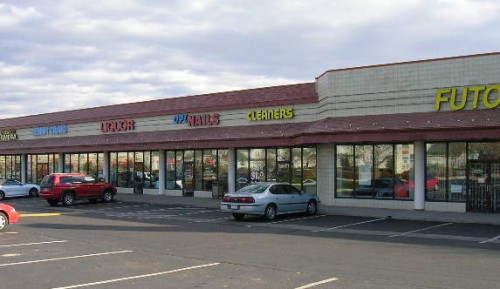
strip mall in the suburbs

In my first week back in New Jersey from Tel Aviv I have been taking a special glee from listening to James Kunstler’s Kunstlercast, a weekly podcast devoted to “the tragic comedy of suburban sprawl.” Kunstler, the author of “The Geography of Nowhere,” “The Long Emergency,” and other books on the environment and urban planning, believes that suburbs are the worst waste of resources committed in world history, and he eagerly looks forward to their demise when what he calls our “oil fiesta” is over.

In his podcasts, which usually run for 15 to 30 minutes, Kunstler visits suburban shopping malls, where he remarks on the irony of sitting on wooden Adirondak chairs outside an L.L. Bean outdoor goods shop when the only outdoors is the parking lot. He also coins new terms to describe the bleak realities of suburban life, such as “parking lagoons” that sprawl around shops. And he analyzes why America has “a rail system that even Bulgaria would be ashamed of,” and recommends rebuilding it immediately as the first step toward energy independence.

It is easy to hate American suburbs; they are an unusual blend of ugliness and environmental destruction. Moreover, because Israelis are following America’s terrible example, it’s important to understand why the strip malls and shopping centers sprouting faster than a JNF forest may not be the best of news.

Yet Kunstler’s biting sarcasm and his knowledgeable comments infuse a new life into the debate, and you may not even notice how much you learn because you will be laughing so hard.

Photo: http://www.freewebs.com/jadeindustrailmaintenance/

Daniella Cheslow
Daniella Cheslowhttp://www.greenprophet.com
Daniella Cheslow grew up in a car-dependent suburb in New Jersey, where she noticed strip malls and Wal-Marts slowly replacing farmland. Her introduction to nature came through hiking trips in Israel. As a counselor for a freshman backpacking program at Northwestern University, Daniella noticed that Americans outdoors seemed to need to arm themselves with performance clothing, specialized water bottles and sophisticated camping silverware. This made her think about how to interact with and enjoy nature simply. This year, Daniella is getting a Master’s in Geography from Ben Gurion University of the Negev. She also freelance writes, photographs and podcasts. In her free time, she takes day trips in the desert, drops off compost and cooks local foods like stuffed zucchini, kubbeh and majadara. Daniella gets her peak oil anxiety from James Howard Kunstler and her organic food dreams from Michael Pollan. Read more at her blog, TheTruthHerzl.com. Daniella can be reached at daniella (at) greenprophet (dot) com.

Read More

2 COMMENTS
  1. It is rough here, though I must say that there are some suburbs in the US that impress me in how much they incorporate forests and green space. My family lives in a very suburban town that borders that great swamp, New Jersey’s largest wildlife refuge, and the town itself is filled with forests, farmland and open space, much of which is slowly being more and more developed. I don’t mean to offer a defense of the suburb, but merely another perspective.

    All that said, I’ve driven more in two weeks in New Jersey than I have in 12 months in Israel. It’s a real shame and it is definitely the least sustainable way of life imaginable.

TRENDING

Black fathers live longer than non-fathers, new study

Researchers found that fatherhood was associated with lower rates of early death among Black men, while early fatherhood was linked to poorer long-term health outcomes.

Can Scientists Predict Coral Bleaching Before It Happens?

Now researchers at the Woods Hole Oceanographic Institution (WHOI) in the US say they have developed a way to predict coral bleaching five to six months before it occurs, potentially giving reef managers enough time to intervene and save vulnerable corals.

AI data centers are triggering panic, instead of cleantech opportunities

AI may unintentionally become the economic engine that finally modernizes America’s aging grid. California is experiencing a massive AI data center boom, ranking 3rd in the U.S. with 227 operating centers and 54 more in development as of April 2026, according to Stanford.

Abortion Pills, Plan B and Mifepristone and what the new US mail ban means

Abortion pills, often confused with Plan B (the morning-after pill), and historically referred to as RU486 (mifepristone), are part of a broader category of reproductive health medications that women have been using for decades. But they are not the same thing.

SunZia comes online and America’s 11B, and largest renewable project begins wind power

The impact is already being felt. California has broken its wind generation record multiple times in recent weeks as SunZia begins feeding electricity into the grid. It’s a glimpse of what a renewable-powered future could look like when large-scale infrastructure finally comes online. Can we start saying goodbye to Saudi Aramco and Arabian Gulf oil? 

Locals From Rishon Fight IKEA

Big Box stores are a pretty new concept in Israel, and thank God that not every Israeli city wants them in their backyard. A word from someone who has see the beautiful farmland around her hometown Newmarket, Ontario stripped and converted into vulgar strip malls of big box shops: they have no place in a healthy and sustainable town or city.

The Jewish National Fund Meets An Inconvenient Truth

According to the JNF, it has transformed thousands of acres of barren land into green forests in Israel. They state that each person emits about 23 tons of carbon per year, estimating that each tree planted can absorb one ton of carbon in its lifetime. That's a whole lot of trees you'd need to be planting. Could so many fit in Israel?

How to quiet noise from construction in your office

Streets need to be resurfaced in New York but the humming and grinding noise is unsettling. Noise is environmental pollution. 

EarthX and a blueprint for sustainable investing

Trammell S. Crow, a Dallas-based businessman and father of four, is focusing his efforts on impact investing, and media that focuses on saving the planet through EarthX.

Mining Afghanistan’s Mineral Discoveries Similar to Avatar

Now that American forces in Afghanistan are commemorating the longest period of any war that America has been involved in, including the 1965-73 Vietnam War, the recent discoveries of large and extremely valuable mineral and metal deposits may finally bring to light a reason to continue the presence of US fighting forces in this war torn and backward country.

From Pilot Plant to Global Stage: How Aduro Clean Technologies’ 2026 Expansion Signals a Turning Point for Chemical Recycling Investors Like Yazan Al Homsi

The company's Next Generation Process (NGP) Pilot Plant in London, Ontario, has officially moved into initial operating campaigns, generating the kind of structured, repeatable data that separates laboratory promise from commercial viability.

Nobul’s Regan McGee on Shareholder Value: “Complacency Is the Silent Killer” 

Why the governance framework designed to protect shareholders so...

Should You Invest in the Private Market?

startustartup Unlike public stock exchanges, which offer daily trading, strict...

Popular Categories