
Freecycle Cairo: Who Says There’s no Free Lunch?

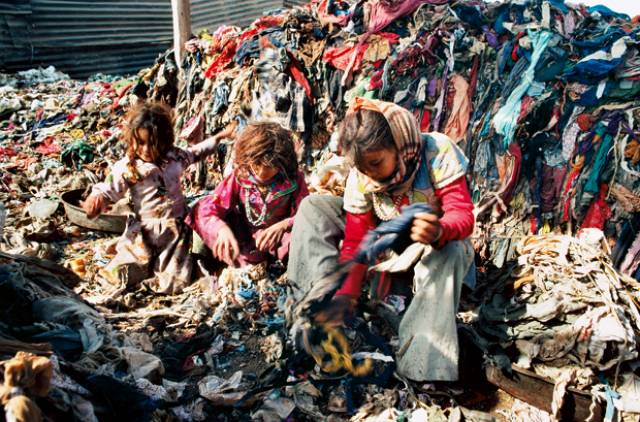
Cairo's Garbage City

Okay, so maybe you won’t get a free lunch, but if you become part of a small but growing number of people who are members of Cairo’s Freecycle Network, you could get a toaster, a couch, cutlery, or even lightly-used clothes – for free. Really, the sky’s the limit, and it doesn’t cost a single piastre to join.

Are you leaving Egypt and looking to give the belongings you’ve accumulated a new home? Post it on the shiny new Freecycle Cairo Facebook page, save a newcomer piles of cash, and spare Egypt’s deeply distressed environment. And if you don’t think this small gesture counts, consider this: the international Freecycle community diverts 500 tons of trash from global landfills every day.

Freecycle Cairo – the beginning

Norwegian graduate student Maikki Fonneløp started the Freecycle Cairo Facebook page on June 28, 2012.

“Dearest future users,” she wrote on the newly-minted wall. “When I decided to donate all my houseware items to other expats in Cairo, I received emails from people telling me how great it was that I started a freecycle. That wasn’t my intention, I just wanted to offer my short-term used items to people who were in need for them, to help decrease the massive consumerism and over-production our planet can’t afford.”

“I wish someone had started this when I moved to Cairo,” Maikki added. “So here it is, the page for you all to share your used items! We have a similar page in Oslo, Norway, where people successfully trade their stuff. This is their little sister in Cairo.”

What is the Freecycled community? On May 1st, 2003, Deron Beal sent out a message to about 30 friends and family, as well as a handful of non-profit organizations in Tucson, Arizona, announcing that he had started The Freecycle Network. After trying to secure goods for underprivileged members of the community as part of his work for the non-profit organization RISE, he decided to streamline the system.

And it worked. Not only that, but the initiative has spread to 85 countries with a total of 5,046 groups and 8,943,789 members! If one were to make a pile of “stuff” diverted that is from global landfills through this system in one year, it would be five times higher than the world’s highest mountain – Mt. Everest at 29,035 ft.

Free stuff is cool and the Moneyless Man

The Freecycle Network was registered in the United States a 501(c)3 in November,2006, and the official Cairo group started in September, 2005. Of the 84.5 million or so people living in Egypt, only 367 are members. But that could change if the group’s Facebook presence gains ground. In one day, 51 people have already “Liked” the page.

Getting free stuff is cool, and don’t think it’s only junk. Mark Boyle (a.k.a. The Moneyless Man) who has survived without money for more than two years lives in a caravan that he obtained through his local Freecycle community in the U.K. In addition to promoting community engagement and generosity, freecycling is a very effective waste management tool.

We recently posted a video of the pollution that surrounds the Giza pyramids – a pervasive burden that the Zabaleen can’t (and shouldn’t) shoulder alone. Freecycle Cairo is one antidote. Want to know how to reduce trash? Stop throwing stuff away. Give it away and feel good about it too.

More on Waste Management and Recycling on Green Prophet:

Video: Giza Pyramids Pollution and What the Brochures Don’t Show

Zabaleen Film Portrays  Cairo’s Garbage City People

Recycling Tires Can Rid Egypt of Fumes, Mosquitoes and Rats

Tafline Laylin
Tafline Laylinhttp://www.greenprophet.com
As a tour leader who led “eco-friendly” camping trips throughout North America, Tafline soon realized that she was instead leaving behind a trail of gas fumes, plastic bottles and Pringles. In fact, wherever she traveled – whether it was Viet Nam or South Africa or England – it became clear how inefficiently the mandate to re-think our consumer culture is reaching the general public. Born in Iran, raised in South Africa and the United States, she currently splits her time between Africa and the Middle East. Tafline can be reached at tafline (at) greenprophet (dot) com.

Read More

1 COMMENT

TRENDING

Self-repairing contact lenses and desalination membranes that fix themselves?

Could the humble contact lens become a sustainability breakthrough? Researchers in Korea have developed a self-healing hydrogel lens that repairs scratches with just one hour of UV light exposure. Beyond reducing waste from disposable contacts, the technology could one day help extend the life of solar panels, water filtration systems, and other plastic-based products.

From Pilot Plant to Global Stage: How Aduro Clean Technologies’ 2026 Expansion Signals a Turning Point for Chemical Recycling Investors Like Yazan Al Homsi

The company's Next Generation Process (NGP) Pilot Plant in London, Ontario, has officially moved into initial operating campaigns, generating the kind of structured, repeatable data that separates laboratory promise from commercial viability.

Egypt building nuclear power

Egypt is building a nuclear energy plant, expected to go online in 2026 when countries like Germany have shut down all its domestic nuclear power. The El Dabaa Nuclear Power Plant is the first nuclear power plant planned for Egypt and will be located at El Dabaa, Matrouh Governorate, Egypt, about 320 kilometers northwest of Cairo. 

Urban miner Sortera raises $45 million USD to pull aluminum from the scrap pile

Sortera Technologies, founded in 2020 by Nalin Kumar and Manuel Garcia, is emerging as a major U.S. circular-industry player. Led by CEO Michael Siemer, the company uses AI and advanced sensors to turn scrap metal into high-value aluminum alloys. Its new ~$45 million funding round signals investor appetite for industrial decarbonisation—where emissions cuts come not from PR-friendly solar installs, but from upgrading the materials that power EVs, solar frames, and construction.

Waste Reform from the Ground Up: How Trash Balers Are Helping Cities Rethink Sustainability

If you’ve ever watched a recycling truck weaving through city streets, you’ve seen the problem firsthand. Most of what we call “recycling” still depends on long-distance transportation and centralized sorting facilities. Those systems are energy-intensive and prone to contamination — the dreaded mix of wet food, plastic wrap, and paper that renders recyclables useless.

Yerukim Forms a New Green Economy Where the Money is Really Green

The Yerukim members who pick up the recyclables get to keep the monetary reward, the public earns "green" bills that can be used in shops, and business owners get to be associated with environmentalism.

Choosing Riyadh over Dubai? What Investors Should Know

Saudi Arabia is deploying capital at unmatched scale to catalyze tourism and advanced industry while rewiring its power-and-water backbone. The investable frontier is widening—especially in renewables, grid storage, water efficiency/desal retrofits, and hospitality operating platforms. Prudent investors will insist on phased delivery, enforceable KPIs (energy, water, biodiversity), and RHQ/zone compliance—while pricing political-economy and reputational risks alongside growth upside.

Sell your cooking oil for biodiesel money

Want to make money on old french fry oil? Sell it.

Qatar Alternative Energy Summit Pairs Investors And Innovators

Alternative energy investors and innovators can meet n' greet in Doha, Qatar March 16 and 17.

Here’s How To Implement The Four Pillars Of Employee Engagement

If you throw a party for your work team and they are vegans, don't make it a barbecue. Know the sustainability values of your team to boost moral and retain good people.

Locals From Rishon Fight IKEA

Big Box stores are a pretty new concept in Israel, and thank God that not every Israeli city wants them in their backyard. A word from someone who has see the beautiful farmland around her hometown Newmarket, Ontario stripped and converted into vulgar strip malls of big box shops: they have no place in a healthy and sustainable town or city.

The Jewish National Fund Meets An Inconvenient Truth

According to the JNF, it has transformed thousands of acres of barren land into green forests in Israel. They state that each person emits about 23 tons of carbon per year, estimating that each tree planted can absorb one ton of carbon in its lifetime. That's a whole lot of trees you'd need to be planting. Could so many fit in Israel?

How to quiet noise from construction in your office

Streets need to be resurfaced in New York but the humming and grinding noise is unsettling. Noise is environmental pollution. 

Popular Categories