Jordan’s Disi Water Conveyance is On Track – but to Where?

Until the well runs dry? Jordan’s Al-Disi Aquifer pipeline is only a temporary water solution

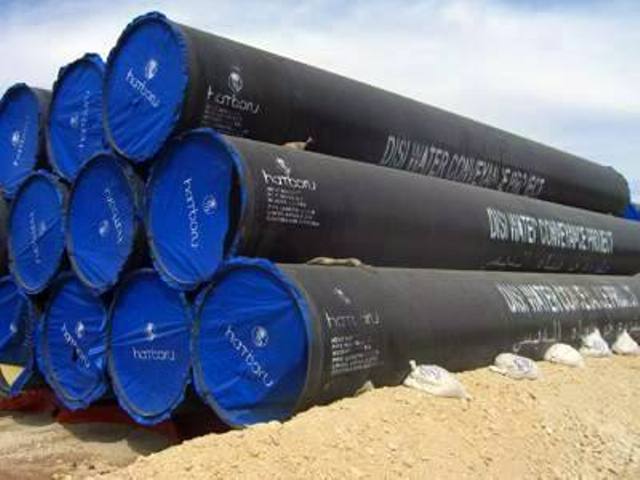
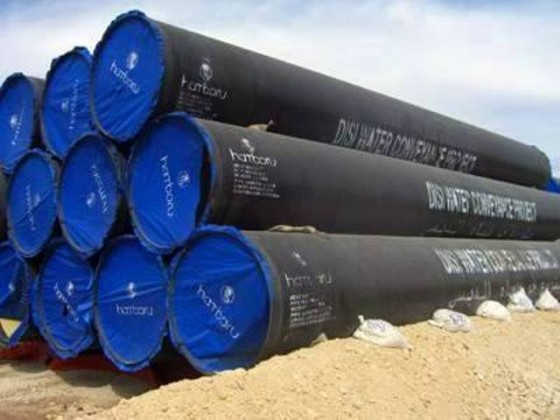
Jordan’s long planned water conveyance project to bring water from an underground aquifer near its border with Saudi Arabia  is now closer to reality with the arrival of  200 km of pipeline from Turkey, according to a December 20 article in the Jordan Times.  The 325 km pipeline, scheduled to be completed in 2013, is estimated to cost upwards to $1 billion, of which Jordan’s equity is $400 million. The remainder of the funding will come from The European Investment Bank and the French Development Agency who have extended two $100 million soft loans to the government for the project. Turkey is also said to be providing funding for the project, and construction will be undertaken by the Turkish firm GAMA and the British Halcrow Company.

The pipeline will bring water from water from the ancient aquifer to the capital Amman was first begun in 2009 and has experienced construction delays, which were later denied , and also considering other projects including building a desalination plant near Aqaba . Jordan is also planning its own version of the Red – Dead Sea water conveyance project, in which Jordan plans to “go it alone” without waiting for neighboring Israel to take part.

The al-Disi aquifer, most of which lies under Saudi Arabia, is estimated to be 325 km long, and is said to be “locked” within non-porous sandstone rock and not subject to recharging by rainfall. It is largely unknown how much water the aquifer contains or its archeological history.

What is known is that the water in the al-Disi is not rechargeable and is quite old (ie. 20,000-30,000 years old). This means it was created during a period when water resources were more plentiful in the region; possibly as a result of last Great Ice Age.

Initial delays in construction had been attributed to the relocation and reconstruction of roads, electricity and communication lines along the stretch between Amman and the Madaba bridge. A source at the Jordanian Ministry for Water and Irrigation said that “once the Amman-Madaba bridge section is completed, the pace of construction will accelerate.”

Since the amount of water in the al-Disi Aquifer is irreplaceable, and due to the fact that the largest portion lies under Saudi territory, the project has caused some friction between the Jordanian and Saudi governments.

Saudi Arabia is not exactly overflowing in natural fresh water reserves, and as a result most of its fresh water supplies is supplied by numerous desalination plants, including the world’s largest desalination plant in the Jubail II Industrial Zone.

In any event, even when the pipeline, with its several pumping stations is up and running the water from the al-Disi aquifer will eventually run out, and after so large an investment, Jordan will be back to “square one” regarding water resources; unless other projects are implemented, including desalination.

::Jordan Times

Read more on Jordan water issues:

Jordanian Water Pipeline Construction Starts

Jordanian Water Conservation Program Goes Straight to the Private Home

Increase in Water Theft in Jordan Has Broad Impact on the Middle East

Maurice Picow
Maurice Picowhttps://www.greenprophet.com/
Maurice Picow grew up in Oklahoma City, U.S.A., where he received a B.S. Degree in Business Administration. Following graduation, Maurice embarked on a career as a real estate broker before making the decision to move to Israel. After arriving in Israel, he came involved in the insurance agency business and later in the moving and international relocation fields. Maurice became interested in writing news and commentary articles in the late 1990’s, and now writes feature articles for the The Jerusalem Post as well as being a regular contributor to Green Prophet. He has also written a non-fiction study on Islam, a two volume adventure novel, and is completing a romance novel about a forbidden love affair. Writing topics of particular interest for Green Prophet are those dealing with global warming and climate change, as well as clean technology - particularly electric cars.

Read More

TRENDING

Can Scientists Predict Coral Bleaching Before It Happens?

Now researchers at the Woods Hole Oceanographic Institution (WHOI) in the US say they have developed a way to predict coral bleaching five to six months before it occurs, potentially giving reef managers enough time to intervene and save vulnerable corals.

AC Water Uses: How to Reuse Air Conditioner Condensate Water for Plants, Cleaning and Water Conservation

That means the water dripping from your air conditioner may already be usable for gardening, cleaning, flushing toilets, topping up humidifiers, or cooling systems — instead of disappearing into the sewer. A new study. Is it safe?

Collecting kinetic energy from roads; REPS turns traffic into a power plant

REPS announced a $23.6M equity financing round to scale...

Hormuz 2026 Conflict Poses an Energy and Food Security Dilemma in a Warming World

As tensions rise in one of the world’s most critical maritime chokepoints, the ripple effects go far beyond oil—touching food systems, climate pressures, and regional stability

Baby teeth read like tree rings paint a picture of toxins in early life

A new study from the Icahn School of Medicine at Mount Sinai in New York offers a striking insight into how the environments we are born into can quietly shape our brains years later. By analyzing naturally shed baby teeth, the ones tucked under pillows for the tooth fairy, researchers have reconstructed a detailed timeline of exposure to environmental metals during pregnancy and early infancy.

Locals From Rishon Fight IKEA

Big Box stores are a pretty new concept in Israel, and thank God that not every Israeli city wants them in their backyard. A word from someone who has see the beautiful farmland around her hometown Newmarket, Ontario stripped and converted into vulgar strip malls of big box shops: they have no place in a healthy and sustainable town or city.

The Jewish National Fund Meets An Inconvenient Truth

According to the JNF, it has transformed thousands of acres of barren land into green forests in Israel. They state that each person emits about 23 tons of carbon per year, estimating that each tree planted can absorb one ton of carbon in its lifetime. That's a whole lot of trees you'd need to be planting. Could so many fit in Israel?

How to quiet noise from construction in your office

Streets need to be resurfaced in New York but the humming and grinding noise is unsettling. Noise is environmental pollution. 

EarthX and a blueprint for sustainable investing

Trammell S. Crow, a Dallas-based businessman and father of four, is focusing his efforts on impact investing, and media that focuses on saving the planet through EarthX.

Mining Afghanistan’s Mineral Discoveries Similar to Avatar

Now that American forces in Afghanistan are commemorating the longest period of any war that America has been involved in, including the 1965-73 Vietnam War, the recent discoveries of large and extremely valuable mineral and metal deposits may finally bring to light a reason to continue the presence of US fighting forces in this war torn and backward country.

From Pilot Plant to Global Stage: How Aduro Clean Technologies’ 2026 Expansion Signals a Turning Point for Chemical Recycling Investors Like Yazan Al Homsi

The company's Next Generation Process (NGP) Pilot Plant in London, Ontario, has officially moved into initial operating campaigns, generating the kind of structured, repeatable data that separates laboratory promise from commercial viability.

Nobul’s Regan McGee on Shareholder Value: “Complacency Is the Silent Killer” 

Why the governance framework designed to protect shareholders so...

Should You Invest in the Private Market?

startustartup Unlike public stock exchanges, which offer daily trading, strict...

Popular Categories