
Egypt To Grow A New Generation Of Wheat, But Where?

egypt wheat millEgypt is planning ahead for climate change with a new generation of wheat. This declaration raises some questions about its intent for Sudan.

Following the drought in Russia, Egypt’s resultant shortage of wheat, and high summer temperatures throughout the Middle East, the Egyptian Agriculture Ministry is taking steps to avert another potential wheat shortfall.

Faced with a population of at least 83 million people for whom wheat is a staple, Egypt is planning to increase its yield with a more resilient seed. In order to do so, it will require 3.1 million hectares, of which 50% will be managed by the government, while private enterprises will cover the rest. The question is where?

Egyptians consume 14 million tons of wheat each year, according to a report published by IRIN earlier this year, but is only capable of producing 60% of that. The country is also the world’s largest wheat importer. So when the Russian drought forced that government to withhold exports in August, Egypt panicked.

In September, the country signed an agreement with Sudan whereby private Egyptian companies would grow crops in the Al-Gejira region south of Khartoum.

The IRIN report claims that Egypt has only 1.26 million hectares with which to play, and that the agreement with Sudan would expand that collective plot up to 2.1 million hectares.

Sources close to the Egyptian government told Almasry Alyoum that the government plans to cultivate 3.1 million hectares of a variety of wheat that will better sustain pending climate changes.

The Minister of Agriculture Amin Abaja has commissioned a report on the current cold snap and upcoming summer, which is expected to be even hotter than 2010, that will determine to which extent wheat crops will be affected.

To assuage any concerns about what kind of crops might be considered to boost local supply, the Agricultural Development Bank that supervises wheat supplies promised that any new developments will accord with ministry standards.

Last year Egypt backtracked on a commitment to keep genetically modified foods out of the country. Faced with the possibility that the country’s population could swell to 100 million by 2021, and challenging climate changes, no doubt the idea of a new and improved superpower wheat has crossed their minds.

At least, this is something to watch out for.

:: Almasry Alyoum

More on wheat and the Arab world’s African land grab:

We Are All Connected: Heat Wave In Russia Affects Egypt’s Wheat

Egypt To Grab Sudanese Land To Meet Its Wheat Needs

Peak Wheat? One Tenth of Iraq’s Wheat Attacked by Killer Fungus

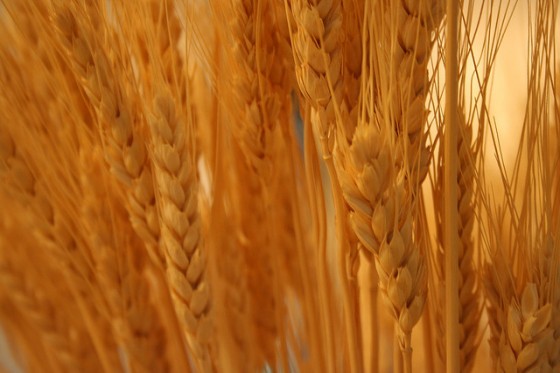
image courtesy of mr.bologna

Image of ancient Egyptian wheat mill via eviljohnius
Tafline Laylin
Tafline Laylinhttp://www.greenprophet.com
As a tour leader who led “eco-friendly” camping trips throughout North America, Tafline soon realized that she was instead leaving behind a trail of gas fumes, plastic bottles and Pringles. In fact, wherever she traveled – whether it was Viet Nam or South Africa or England – it became clear how inefficiently the mandate to re-think our consumer culture is reaching the general public. Born in Iran, raised in South Africa and the United States, she currently splits her time between Africa and the Middle East. Tafline can be reached at tafline (at) greenprophet (dot) com.

Read More

1 COMMENT
  1. Hey! I know this is somjewhat off topic but I was wolndering which blog platform are you uusing for this website?
    I’m getting fed up oof WordPress because I’ve had issues with hackers
    and I’m looking at options for another platform. I would be awesome if you
    could poiint me in the direction of a good platform.

TRENDING

Stardust’s solar geoengineered $10 billion plan to blot out the sun

Israeli-American startup Stardust Solutions has raised $75 million to develop technology that could cool the Earth by reflecting sunlight. Is solar geoengineering becoming a real industry? Or could it be a new threat?

Mongolia rangelands the center of climate change

Mongolia put the world’s overlooked rangelands on the climate agenda at UNCCD COP17, where governments and investors backed new financing for land restoration, drought resilience and pastoral communities.

Did China’s AI Boom Melt the Himalayas? Nepal’s Deadly Floods Raises Question About Data Centers and Climate

Nepal’s devastating floods reveal the growing risks of a warming Himalaya. As glaciers retreat and extreme events intensify, clean energy and climate action are increasingly urgent — and local organizations need support.

Jewish Climate Network founded so innovators don’t leave their identity at the door

Rather than retreating from climate change work, the Jewish Climate Trust organization has backed a new initiative designed to strengthen both climate action and Jewish community.

How a tick bite can lead to a life-threatening meat allergy AFG

Imagine developing a severe allergy to steak after a single tick bite. That's the reality for people with alpha-gal syndrome, a rapidly emerging condition linked to lone star ticks and other tick species. As researchers uncover how tick saliva rewires the immune system, health officials warn that hundreds of thousands of Americans may already be living with this unusual red meat allergy.

Scientists make lead-free perovskite solar cells that can weather the elements

Scientists have developed a “raincoat” for lead-free tin perovskite solar cells, helping them withstand air, moisture and heat while maintaining high efficiency.

The Essential Guide To Sustainability in Project Management

Sustainability is an approach where businesses and individuals balance the environmental, social, and economic aspects of a project such that current and future stakeholders are not overburdened with the impacts of the project in future.

Yerukim Forms a New Green Economy Where the Money is Really Green

The Yerukim members who pick up the recyclables get to keep the monetary reward, the public earns "green" bills that can be used in shops, and business owners get to be associated with environmentalism.

Choosing Riyadh over Dubai? What Investors Should Know

Saudi Arabia is deploying capital at unmatched scale to catalyze tourism and advanced industry while rewiring its power-and-water backbone. The investable frontier is widening—especially in renewables, grid storage, water efficiency/desal retrofits, and hospitality operating platforms. Prudent investors will insist on phased delivery, enforceable KPIs (energy, water, biodiversity), and RHQ/zone compliance—while pricing political-economy and reputational risks alongside growth upside.

Sell your cooking oil for biodiesel money

Want to make money on old french fry oil? Sell it.

Qatar Alternative Energy Summit Pairs Investors And Innovators

Alternative energy investors and innovators can meet n' greet in Doha, Qatar March 16 and 17.

Here’s How To Implement The Four Pillars Of Employee Engagement

If you throw a party for your work team and they are vegans, don't make it a barbecue. Know the sustainability values of your team to boost moral and retain good people.

Locals From Rishon Fight IKEA

Big Box stores are a pretty new concept in Israel, and thank God that not every Israeli city wants them in their backyard. A word from someone who has see the beautiful farmland around her hometown Newmarket, Ontario stripped and converted into vulgar strip malls of big box shops: they have no place in a healthy and sustainable town or city.

Popular Categories