
Celebrate Tu B’Shevat, the New Year of the Trees

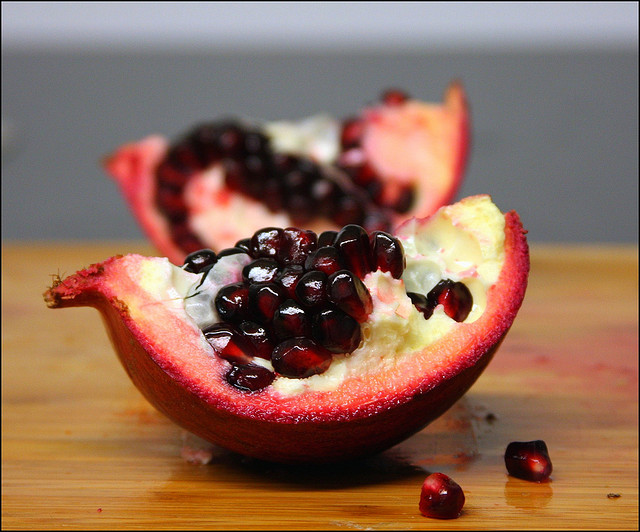
blood red seeds in open pomegranate
Myths and facts about the “Jewish Earth Day”

This Wednesday evening and Thursday, Jews around the world will celebrate the holiday of Tu B’Shevat (15th of the Hebrew month of Shevat).  Tu B’shevat traditions include planting new trees, and eating dried fruit. Tu B’Shevat has also become the  Jewish Earth Day, to celebrate the environment and learn about ecology.

What is Tu B’Shevat all about?

In ancient times, rabbis set Tu B’Shevat as the new year for trees. Since the date of tree’s flowering determined the age of the fruit, a tree whose flowers budded before Tu Beshevat yielded fruit that counted as produce from the previous year.

The rabbis needed to know the age of the fruit for two reasons:

  1. Tithes were taken on a seven-year cycle. For example, during the third and sixth years of the cycle an extra portion was given to the poor. During the seventh (sabbatical) year, the land lay fallow.  Fruit from the seventh year could not be sold—instead it was distributed among the population at no charge
  2. Fruit from trees less than three years old had the status of orlah and could not be eaten, and special rules applied to fruit from the fourth year.

These rules are still observed today, with some accommodations for a modern economy.

The rabbis wanted to set a specific date during the agricultural season to begin counting the age of the tree. They chose one in the middle of the rainy season, when no one was likely to be planting.  That way it would be easier to know whether the fruit, which almost always buds after Tu B’shvat, belonged to this year or to the previous one.

Modern Traditions

Tu B’Shevat has nothing to do with actually planting trees, but that hasn’t stopped generations of Israeli schoolchildren from braving the cold and damp to plant throughout the country. The ecological sentiment has borne fruit, as Israel was one of the few countries to end the last century with more trees than it had at the beginning.

Eating fruit is another worthy tradition for Tu B’shevat, particularly the seven biblical species: olives, dates, figs, pomegranates, and grapes along with barley and wheat. You can incorporate the fruit, along with wine, into a celebratory meal known as a Tu B’Shevat Seder. Many people associate dried fruit with the holiday, because the Jews in Eastern Europe couldn’t get fresh fruit in the winter. Here in the Middle East, one can find fresh dates and pomegranates, along with pickled olives. Israeli markets also feature delicious local produce like avocado, persimmons, and oranges.

Another annual tradition is for the media to warn the public about the chemicals used in processing dried fruit. Look for organic produce.

Read more about Tu B’Shvat:
Celebrate Tu B’Shevat, New Year’s for Trees, Now Jewish Earth Day
What To Do on Tu B’Shvat
Plant a Tree for Tu B’Shvat… Online

Photo credit: Joe Marinaro

Hannah Katsman
Hannah Katsmanhttps://www.greenprophet.com/
Hannah learned environmentalism from her mother, a conservationist before it was in style. Once a burglar tried to enter their home in Cincinnati after noticing the darkened windows (covered with blankets for insulation) and the snow-covered car in the driveway. Mom always set the thermostat for 62 degrees Fahrenheit (17 Celsius) — 3 degrees lower than recommended by President Nixon — because “the thermostat is in the dining room, but the stove’s pilot light keeps the kitchen warmer.” Her mother would still have preferred today’s gas-saving pilotless stoves. Hannah studied English in college and education in graduate school, and arrived in Petach Tikva in 1990 with her husband and oldest child. Her mother died suddenly six weeks after Hannah arrived and six weeks before the first Gulf War, and Hannah stayed anyway. She has taught English but her passion is parental education and support, especially breastfeeding. She recently began a new blog about energy- and time-efficient meal preparation called CookingManager.Com. You can find her thoughts on parenting, breastfeeding, Israeli living and women in Judaism at A Mother in Israel. Hannah can be reached at hannahk (at) greenprophet (dot) com.

Read More

1 COMMENT

TRENDING

Abu Dhabi Put QR Codes on 100,000 Native Trees. Damage One and It Could Cost You $2,700

The Sidr Tree (Ziziphus spina-christi) also known as the jujube tree, may be the most culturally significant of them all. Mentioned in Islamic tradition and valued for its medicinal properties and prized honey, the Sidr has become a symbol of resilience across the Arabian Peninsula.

10 Amazing Facts About the Sidr Tree

Most people in the West have never heard of the Sidr tree. That's strange when you think about it. This tough, thorny desert tree has fed people, bees, birds, and camels for thousands of years. It appears in Islamic tradition. Its honey sells for astonishing prices.

Signs of Shavuot: Grief, Love and Choosing Life

Shavuot is a holiday heavy with symbolism. While it marks the end of the counting of the omer, it also functions as a miniature jubilee. The fiftieth day like a tiny echo of the fifty year cycle. And in each of the seventh years during that cycle, acts of rest and liberation are performed, especially in the fiftieth year.

A Quantum Kaddish? What fungal networks teach us about grief, God and death

Can Zara speak with their recently departed mother through...

Bake a New York Cheesecake for Shavuot

This light, creamy cheesecake fits into your green Shavuot, especially if you make it with organic cheese and eggs. It's also light on sugar.

Yerukim Forms a New Green Economy Where the Money is Really Green

The Yerukim members who pick up the recyclables get to keep the monetary reward, the public earns "green" bills that can be used in shops, and business owners get to be associated with environmentalism.

Choosing Riyadh over Dubai? What Investors Should Know

Saudi Arabia is deploying capital at unmatched scale to catalyze tourism and advanced industry while rewiring its power-and-water backbone. The investable frontier is widening—especially in renewables, grid storage, water efficiency/desal retrofits, and hospitality operating platforms. Prudent investors will insist on phased delivery, enforceable KPIs (energy, water, biodiversity), and RHQ/zone compliance—while pricing political-economy and reputational risks alongside growth upside.

Sell your cooking oil for biodiesel money

Want to make money on old french fry oil? Sell it.

Qatar Alternative Energy Summit Pairs Investors And Innovators

Alternative energy investors and innovators can meet n' greet in Doha, Qatar March 16 and 17.

Here’s How To Implement The Four Pillars Of Employee Engagement

If you throw a party for your work team and they are vegans, don't make it a barbecue. Know the sustainability values of your team to boost moral and retain good people.

Locals From Rishon Fight IKEA

Big Box stores are a pretty new concept in Israel, and thank God that not every Israeli city wants them in their backyard. A word from someone who has see the beautiful farmland around her hometown Newmarket, Ontario stripped and converted into vulgar strip malls of big box shops: they have no place in a healthy and sustainable town or city.

The Jewish National Fund Meets An Inconvenient Truth

According to the JNF, it has transformed thousands of acres of barren land into green forests in Israel. They state that each person emits about 23 tons of carbon per year, estimating that each tree planted can absorb one ton of carbon in its lifetime. That's a whole lot of trees you'd need to be planting. Could so many fit in Israel?

How to quiet noise from construction in your office

Streets need to be resurfaced in New York but the humming and grinding noise is unsettling. Noise is environmental pollution. 

Popular Categories