Somehow vegetables with short seasons excite the imagination and appetite more sharply than produce that’s available all year around. Good Middle Eastern cooks have many recipes for delicate fava beans, and this turmeric-fragrant soup is one.
Somehow vegetables with short seasons excite the imagination and appetite more sharply than produce that’s available all year around. Good Middle Eastern cooks have many recipes for delicate fava beans, and this turmeric-fragrant soup is one.
Somehow vegetables with short seasons excite the imagination and appetite more sharply than produce that’s available all year around. Good Middle Eastern cooks have many recipes for delicate fava beans, and this turmeric-fragrant soup is one.
Somehow vegetables with short seasons excite the imagination and appetite more sharply than produce that’s available all year around. Good Middle Eastern cooks have many recipes for delicate fava beans, and this turmeric-fragrant soup is one.
Somehow vegetables with short seasons excite the imagination and appetite more sharply than produce that’s available all year around. Good Middle Eastern cooks have many recipes for delicate fava beans, and this turmeric-fragrant soup is one.
Somehow vegetables with short seasons excite the imagination and appetite more sharply than produce that’s available all year around. Good Middle Eastern cooks have many recipes for delicate fava beans, and this turmeric-fragrant soup is one.
Somehow vegetables with short seasons excite the imagination and appetite more sharply than produce that’s available all year around. Good Middle Eastern cooks have many recipes for delicate fava beans, and this turmeric-fragrant soup is one.
Somehow vegetables with short seasons excite the imagination and appetite more sharply than produce that’s available all year around. Good Middle Eastern cooks have many recipes for delicate fava beans, and this turmeric-fragrant soup is one.
The United Arab Emirates has launched a moon mission. With notions of colonizing Mars on the horizon, it’s high time for space explorers to get their space legs on the moon. That’s the sentiment in the latest space race, with the UAE launching its lunar mission this month, Dec 11.
The UAE launched the Emirati-made Rashid Rover on a Japanese lunar lander, which was sent to space on a SpaceX Falcon 9 rocket from Cape Canaveral Space Force Station in Florida, USA. Aiming for the moon is a collaborative mission and all global-scale projects should operate this way.
This makes the UAE the first Arab country to launch a mission to the Moon. Israel, nearby and a friend to the UAE, will launch a “moonian” probe in 2025 to see if plants can grow on the moon.
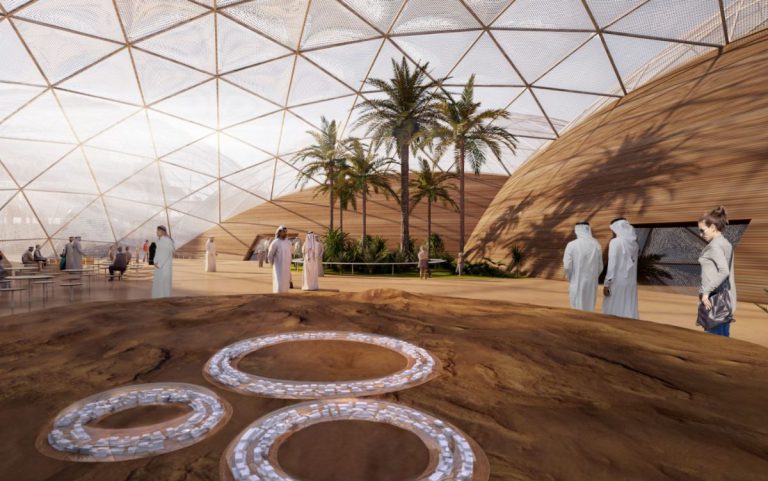
Meanwhile the UAE has plans to live on Mars in 100 years. Some entrepreneurs are also calling for much-earlier moon colonisation. Makes sense as it’s closer to home. But a sustainable idea when the earth is on fire?
About the Rashid Rover
The UAE lunar lander carrying its Rashid Rover will take a five-month 250,000 mile journey to the surface of the Moon.
“We are launching the first-ever Arab mission to the moon by 2024. The lunar rover will send back images & data from new sites of the moon that haven’t been explored by previous lunar missions. The gathered data will be shared with global research centers & institutions,” tweeted the ruler of Dubai and vice president of the UAE, Sheikh Mohammed bin Rashid Al Maktoum.
The four-wheel rover weighs 10kg and was was built at the Mohammed bin Rashid Space Centre in Dubai. It will spend one lunar day (which is 14 Earth days!) on the Moon.
The launch comes just shortly after that of NASA’s Artemis I lunar mission.
Why are Arabs going to the moon?
Arabs also want a shot of living on Mars
The expedition is a science mission to study lunar soil, the petrography and geology of the Moon, along with dust movement, surface plasma, and the mon’s photoelectron sheath. The team isn’t sure, but sure hopes the rover can survive the lunar night when temperatures plunge to -297.4°F (-183°C).
The UAE is already planning its next mission, along with China. And China is one of the reasons that the US is going back to the moon after 50 years. With the Arab world growing close to China in many markets, electric cars are one of them, the US will want to sway the needle over to their direction. Politics is pushing us to the moon as China plans on sending astronauts to the moon in another 8 years.
Nature writes: The rise of powerful private companies such as Elon Musk’s SpaceX, based in Hawthorne, California, has brought new public enthusiasm for space exploration, as well as new ways of delivering it. NASA has contracted SpaceX to deliver Artemis astronauts to the lunar surface using the enormous Starship, with which Musk dreams of colonizing Mars.
The money is there. The interest is there. The politics are pushing.
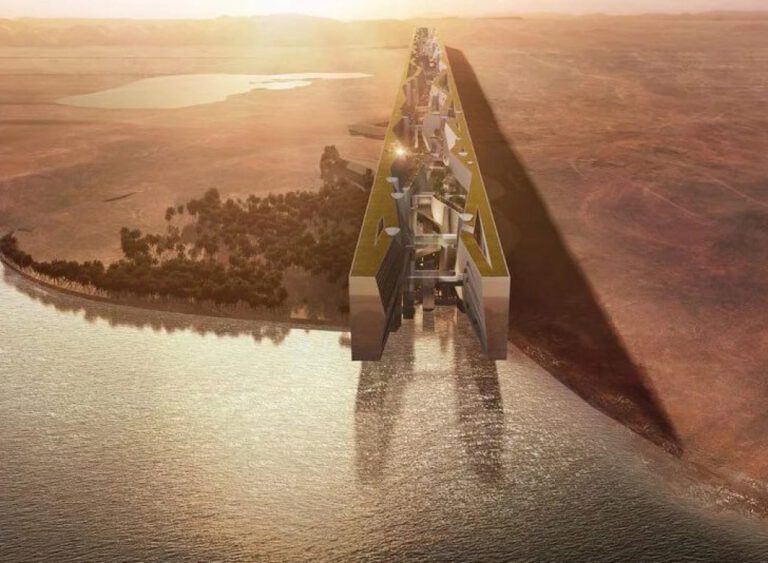
New hidden imagery not found on Google Earth, and hidden since March reveals construction progress on The Line in Saudi Arabia.
Architects are salivating over what money can do, while environmentalists fret over the idiocy of the scale: Saudi Arabia has decided to go ahead with a $500 billion project, a miles long linear city called The Line. The idea is a carless, all-in-one city in the middle of nowhere that extends through the desert into the sea.
The plan was announced in 2021 by Saudi Arabia’s Crown Prince Mohammed bin Salman of Saudi Arabia. MIT Technology Review revealed that it has satellite imagery of the new vertical city with building in progress. The review paper also said that while high-res satellite data is often accessible, for The Line it is not and it is likely someone is paying for it to stay that way.
“The strange gap in imagery raises questions about who gets to access high-res satellite technology. And if the largest urban construction site on the planet doesn’t appear on Google Maps, what else can’t we see?”
Satellite imagery of The Line, under construction. The area of The Line, highlighted in yellow, shows numerous excavators in the area (red dots) moving earth to the areas in purple. Blue dots representing construction vehicles can be seen throughout the base for the construction workers. Arrays of solar panels have been shaded in green.
Soar Earth, an Australian company that aggregates satellite imagery into a digital atlas, suggests that 26 million cubic meters of earth and rock. They haven’t estimated how many people have been displaced for the construction and Saudi Arabia is hiding the murder of an activist Bedouin who refused to be transferred from his land. Members of his family are in prison, facing the death sentence.
The Line will be about 150 miles long and less than half a mile high, with residents zooming around in space age electric taxis and underground shuttles. We suggest Saudi Arabia look to Dubai for a city of the future where the ruler of the UAE emirate announced plans for a 20-minute city.
The Line however is more in line with pouring oil money, as part of the Saudi Vision 2030 project meant to update and modernize Saudi Arabia, bringing jobs to its people. Saudi Arabia claims The Line will create 460,000 jobs and add $48 billion to the country’s GD; that it will diversify its economy, and reduce its reliance on oil.
This so called “zero carbon” megacity, built with oil money, is expected to house 9 million people, with homes to be powered with renewable energy. Expected completion date 2030.
We think that this Iranian version of The Line is a much more practical and sustainable way to build a linear city.
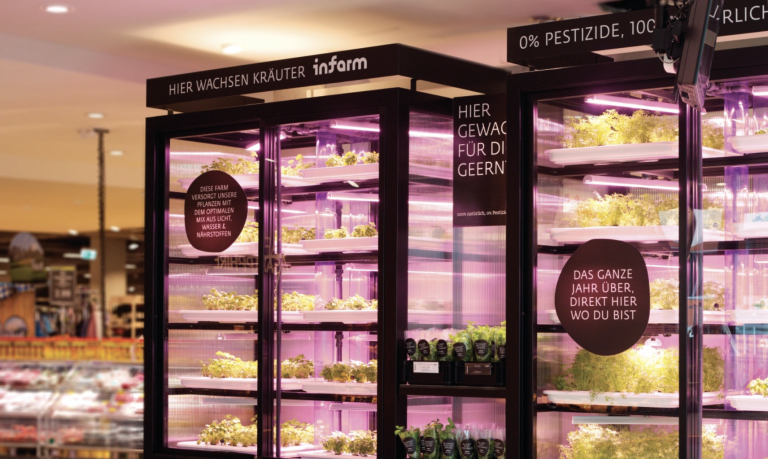
They were the darlings of Europe: an Israeli team planted in Berlin turning the city’s food source from unsustainable to super local. They were building grow chambers in supermarkets for fresh herbs and lettuce and the idea spread like wildfire. Like most and maybe all urban farming projects that rely on hydroponics – growing food in water, with nutrients added, unless you are selling cannabis products (medical marijuana), vertical farming is yet to make much sense beyond education and as a social project.
I know because I had a venture in this space (using IoT and robotics) for about 5 years and time and time again I heard from urban farm owners how difficult it was to turn a profit. Some also told me that no urban farming container project would ever make money. The amount of labor and energy inputs, not to mention set-up costs were prohibiting profitable businesses. Unless, of course, you were using the grow containers to grow weed, making it VERY profitable. The cost of weed per ounce versus the cost of lettuce? You do the math.
Back to this story: in 2020 with Covid fears for food security abounding, InFarm raised millions ($170 million USD to add “farms” to cities). The startup had farms in about 1,800 retail stores in 11 countries. Well we know they aren’t really farms because real farms have dirt and hard manual labor and manure.
Infarm also raised about $604.5 million from the Qatar Investment Authority, Lightrock and others. Like Amazon, Twitter and Meta, Infarm grew faster than it could sustainably handle.
The penny dropped in a recent letter to employees called “Infarmers”. About 50% of the staff would be let go. Could it be that cash-strapped Europeans are now buying non-organic or less local produce as they look to save money on rising fuel costs? No doubt rising fuel costs in Europe amount to higher costs for a venture that relies on electricity for food.
Infarm builds hydroponics chambers in city centers
Here’s part of the letter the team sent to their staff. It is abridged.
Infarmers:In our current setup, we recognise that Infarm cannot withstand the challenging market conditions, particularly with regards to escalating energy prices and tough financial markets. We have to adapt our ambitious growth targets and increase our efficiencies to make our business profitable, and continue the pursuit of our long-term mission.
The tough reality is that this shift and the reduction of our production sites will have a significant impact on people. Exact numbers are still to be determined, but current proposals mean that over half the workforce (around 500 employees) will leave the company.
Recently, some critical market factors have worsened, these directly affect our industry and our operations. Energy prices have escalated (doubled across Europe), which puts a lot of additional pressure on our business and seriously impacts our cost of production in affected markets. This is in addition to inflation, supply chain disruptions and rising material costs. Economically, this is a difficult period across the globe and many people and businesses are impacted.
What Infarms are working
Frankfurt (Germany), Copenhagen (Denmark), and Toronto (Canada) will stay. In these markets, we have established strong retailer relationships and secured contracts of significant volume and can therefore achieve profitability in 2023. In addition, we will open our Growing Centre in Baltimore (Maryland, US) to serve the tri-state area,” the letter states.
We are proposing to downsize our operations in the UK, France and the Netherlands.
We will optimise our InStore farming network to key clusters.
Further, by prioritising our high-yield industrial scale farming units (ACREs) we will continue to reduce production costs and resource use resulting in better-priced and more sustainable produce for consumers. We have already achieved yields of more than 100 kg/ m2/year for herbs, 150 kg for lettuce and have record breaking harvest performance of more than 95%.
We will relocate our modular ACRE farming units to the newly defined core markets.
In Japan, we are reviewing our operations.
Urban farming downturn
Infarm is just one of a series of indoor farming companies to announce layoffs and/or shutdowns. Also in November, the Netherlands-based Glowfarms stopped all activities, and the US vertical farm Fifth Season closed shop. The indoor farm robot startup Iron Ox laid off 50% of its staff and Texas’ AppHarvest reported it’s running out of cash.
Cannabis operations or the growing of high-value nutraceutical crops may save tech greenhouses made for food at least until we have free, sustainable energy. But the move needs to happen fast.
Sheikh Mohammed bin Rashid visited Bustanica, an urban hydroponics farm in Dubai. He plans that 80% of his city will be available to everyone within a 20-minute sustainable bus, train, walk, or bike journey.
Dubai was built in a New York minute, so fast that things like sewers couldn’t be dug to truck out human waste from the Burj. Dubai and the United Arab Emirates, in general, has a scale problem. But this Arab Gulf grouping of territories is open-minded and willing to change. Emiratis build fast, bold, beautiful and tall. They want everything that Europe has (like the Louvre) and they get it. But unlike others in the Middle East (Saudi Arabia’s ruler has delusional ideas about a sustainable city looking like Neom or The Line built from oil money), Dubai’s petroleum and natural gas money is thinking a little about our planet.
Dubai which built Masdar, a failed sustainable city where no one lives, has a new plan. And it’s practical. Sheikh Mohammed bin Rashid, Vice President and Ruler of Dubai has announced that Dubai will become a 20-minute city.
A Vertical Forest for Dubai? Stefano Boeri Architetti
It means he will build out bike lanes, walkways, and transportation so that 80% of what you will want or need from your city is a 20-minute something-sustainable away. In essence the idea is to re-plan Dubai so that it is walkable and bike-able. That’s a healthy city. Like Rotterdam.
With celebrity chefs like Eyal Shani from Tel Aviv moving into Dubai, the city is getting more sustainable by the day. Eyal treats vegetables like minor gods, and insists on using only hyper-local, freshly grown food so Dubai will be stepping up to the plate. (Urban farming is part of the plan for Dubai.)
A peace agreement called the Abraham Accords between Israel and the UAE has turned into a love story. At least for the Israelis who have travelled to Dubai. There will be more cross-pollination in clean tech and startups, we expect.
Sheikh Mohammed Bin Rashid Al Maktoum during the launch of the new phase
But, do consider: climate change mixed with July and August in Dubai sounds pretty fatal for pedestrians or cyclists, so we hope for tree coverage and shade where pedestrians and people will roam. (Modern mashrabiya?) Some estimates suggest that parts of the Middle East will be so hot, even the shade, that they will be inhabitable.
Wild boars are slowly taking over a city in Israel. Over the last 10 years it seems that the sightings of the hairy and strong wild animals have multiplied by double or more. They are found playing in kiddie swimming pools, playing with lawn chairs, eating out of garbage cans, but the boars are becoming more of a problem in recent years as residents have started actively feeding them.
No one really knows why there are so many wild boars running around the northern city of Haifa these days. Some say it was a 2016 wildfire in the nearby forest that destroyed their habitat. Others say it is the 2019 ban on hunting, instated by the mayor. It could also be the COVID pandemic which inadvertently helped cities around the world re-wild. The feeding seems to be the biggest factor.
Grandma feeding the cats, I mean, wild boars. NY Times
“They are controlling the streets now. It’s crazy.” Said one local in a NY Times interview.
When faced with a 300 pound female boar, it’s a dangerous situation. There have been reports of the wild boars attacking children and pets and it’s a matter of time that a tragedy will strike if people don’t stop feeding them.
A new study by the Israel Nature and Parks Authority has found that about 1,000 residents of Haifa are actively feeding the animals, undermining efforts to prevent them from roaming the city streets. (Maybe it’s because they are originally European?) Some of the residents think they are feeding the local street cats but the boars enjoy the cat kibbles just as much as any kitten.
The city has efforts underway to control the wild boars, by pinning down garbage cans so they can’t be overturned, and fencing has been put up to limit access to the city, but the continued feeding has dampened any success.
Feeding them by hand lessens the natural fear response the boars should have to humans. The boars who show signs of aggression are euthanised and the city says they have euthanised about 200 in the last years.
Imagine Canadians feeding wild bears? It basically wouldn’t happen. People who live in the wild know the dangers of the wild. The wild boar problem in Israel is not the problem of nature. It’s the problem of us. It’s a social problem. If we keep expanding, creating habitat loss, the animals will have no where to go.
Hey ma, I’ve run away and joined a sustainable sea circus.
Dreams evolve with the times: 50 or 100 years ago, running away to join the circus was a far-fetched dream for plenty of kids and some adults. But today circuses are no longer about freak shows or entraining lions and elephants to do tricks. A sustainable circus of today features humans and tricksters, acrobats, aerialists and artists. With “circus” a class at my kids’ Waldorf School in Tel Aviv, we better plan for a lot more of our kids running away to join the circus.
But where will they go? Perhaps to the sustainable circus at sea, The Sea Clown Sailing Circus currently travelling around our part of the woods in the Mediterranean.
Clowning around. Via the NY Times.
What makes the Sea Clown Sailing Circus sustainable is that the crew of 8 and sometimes more, moves from Greek island to island by sailboat, using the motor as infrequently as possible. If you are a musician, an acrobat or a sailor you are welcome to apply to the circus. If you have all 3 skills even better.
“Our nomadic band of merry musicians and acrobatic activists combine the playful and daring spirit of the traveling circus with an attention to low-emissions travel and environmental impact,” write members of the Sea Clown Sailing Circus. “We have been inspiring and motivating audiences with our shows and unconventional modes of transportation for over 20 years, evolving from bicycles to boats and hoping one day to fly.”
Maybe by a salt, crystal or solar-powered airplane, because by choosing fair and sustainable practices such as sailing, rowing, cycling and solar energy, the sea circus says, “we try to maintain a mindful relationship with the ecosystems we come in contact with.
“While living communally on our small fleet of restored boats, we embrace recycling, repairing and re-using as a way of living, striving to have a regenerative effect on the planet and leave no harm in our wake.”
Tips for joining a circus
If you want to join the sustainable sea circus which docks at various Greek islands, you can reach out here. Just ask.
I had a friend who joined a circus crew in France, a land-based circus, and in practice they played and built ideas together and then the group busked for a living on the streets in major cities and tourist stops. If street performance and acrobats is where you headed just try where you are local. Look for street performers and ask them about groups, mentors or places you can go to start.
Acrobatics courses are becoming mainstream. While you may not live near a place that offers a high-wire there are plenty of aerial acrobats and aerial calisthenics and yoga classes in most major cities around the world.
Get good at an instrument. Pianos and the contrabass aren’t good travellers, but taking up the accordion, trumpet or clarinet could be a good start.
If you want to travel sustainably, you can always find and sail your own boat or outfit a floating home: I had another friend who built a raft from plastic bottles (way before David de Rothschild built Plastiki) and sailed around the North Sea out of Germany as a sort of art and environmental statement.
Art and clowning around, if done sustainably could be a far more satisfying job than being a global nomad tied to your laptop and selling NFTs. While it may not be a calling that will last forever, the Sea Clown Sailing Circus, at least some members from the group, have been making a life of it for 15 years.
With the effects of climate change increasing each year, it is high time for a few critical decisions. Consumers can contribute to the cause, which sometimes means limiting their use of particular tech gadgets. Or choose better.
Learn about the benefits of green tech gadgets and tech gear, alongside the viable options you can purchase for yourself or as a gift in the coming days.
How to Classify Green Tech?
With so much information about green technology, it can be challenging to distinguish genuinely green gadgets. Green tech not only helps you reduce your carbon footprint but also allows for responsible and environment-friendly employment of most people who are part of its supply chain.
Green tech means devices designed to have a lower impact on the environment. Many companies proclaim or plan carbon neutrality, and it is wise to pay attention to how companies perform these tasks.
Why Choose Green Tech Gadgets?
Utilizing green tech gadgets can bring forth several positive changes.
Eco-Friendly Lifestyle
You can reduce your carbon footprint by using green devices which are more energy efficient or which run using solar power. Furthermore, many donate to charities worldwide to support afforestation and other eco-initiatives.
Promoting Responsible Supply Chains
When buying a green gadget, you support a responsible supply chain that doesn’t harm the environment.
Low Energy Costs
As several green devices are powered by solar panels, you need to charge them less frequently than regular gadgets. It also translates to a less expensive energy bill for the user.
Microsoft Ocean Plastic Mouse
A mouse made from plastic collected at sea
About 20% of this mouse’s shell is made from plastic filtered from oceans and waterways. That plastic is ground into fine bits and mixed with materials to create a scroller that offers a comfortable user experience. Microsoft even ships the ocean plastic mouse with packaging material consisting of wood and sugarcane. So, you can throw it away in your local backyard without harming any plants in or around it.
Google Nest Smart Thermostat
The Nest smart thermostat, owned by Google
It can be tedious to manage the air conditioning and heating of your home efficiently. The Google Nest Smart Thermostat does the job for you by integrating all systems and lending you intelligent control via your phone.
You can adjust the setting in real-time and calculate your electricity savings. The system can also adapt to maintain the perfect balance of comfort and efficiency by monitoring your daily energy consumption. Smart lights are also a great solution to save electricity and waste less energy.
Casetify Biodegradable Phone Cases
Whether you broke your phone or are just looking for an aesthetic change, biodegradable phone cases can help you keep your device’s looks and the Earth cool. Such cases take only weeks to break down into safer components for the soil, even enriching it with nutrients. While you can browse through several manufacturers, Casetify is an excellent choice for both Apple and Android smartphones.
Fossil FB-01 Solar-Powered Watch
Made entirely from plastic waste recycled from the ocean, this rugged watch offers a tough look on any wrist. The primary highlight is its microscopic solar cells that continuously replenish its battery so long a bright enough light source is present. Theoretically, you can wear this watch for decades without the dials coming to a halt. Not to mention that the strap is quite comfortable as well.
Adidas RPT-02 SOL Headphones
You may use your headphones for jogging or gym sessions to listen to motivating tunes. But the Adidas SOL-series headphones take that one step further by charging themselves with solar energy. The batteries can power them for up to 80 hours (for the RPT-02) after dark. Additionally, 87% of the plastic in the headphones is recycled.
Conclusion
And that concludes our list of the top green gadgets and gear you can use in 2023. No matter which one you choose, or all of them, you’ll be supporting an economy that is more responsive to the environment and the people as part of their manufacturing.
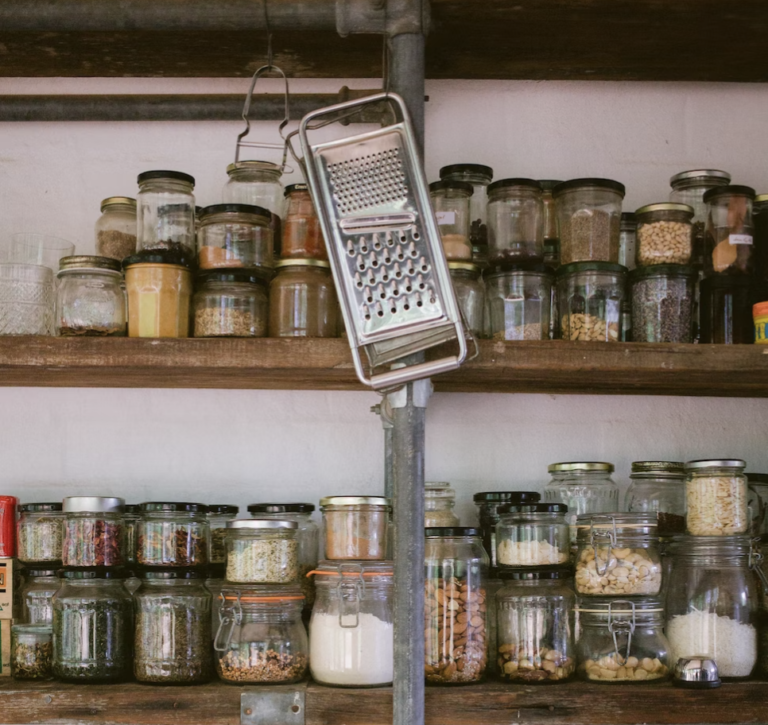
A sustainable kitchen has loads of easily accessible shelves. So you know what you have and don’t buy twice.
Considering the impact of climate change, now more than ever, homeowners should choose an eco-friendly design for their kitchens. Fortunately, there are many ways to reduce the carbon footprint of your cooking space. It’s all about making conscious decisions that won’t harm the planet, such as using the right materials and construction methods.
There are many factors to consider in the design of a kitchen, and homeowners want to make the most of their cooking space so it can both look and feel good. Thus, they follow the kitchen triangle rule to achieve comfort and ensure there’s enough space for movement in the room. So, understandably, homeowners may wonder whether they can build a green kitchen without compromising its functionality and aesthetics. We’re here to tell you that’s definitely possible! Keep reading to learn more.
Consider cabinetry
Experts state that kitchen cabinets last up to 20 years until you have to replace them. Sadly, many homeowners opt for new cabinetry, even if the old one is still functional, only because they get bored of its aspect and want a different look in their kitchen. Unless your kitchen cabinets are highly damaged and don’t work properly anymore, there’s no point in replacing them. If you really want to breathe new life into your kitchen, you can do so by changing only the cabinet doors. Doing this is both cost-efficient and more convenient than buying new cabinetry. Alternatively, consider refacing your units instead of renovating them entirely.
Opt for eco-friendly flooring
The type of flooring you choose for your kitchen also plays a role in turning it into a sustainable space. The good news is that different green options are available, such as lino and cork. These two are genuinely sturdy, making them the perfect choice if you’re looking for durable, beautiful flooring obtained from renewable materials. Both are made from natural materials and can be a great addition to your kitchen, perfectly fitting the existing colour scheme.
Linoleum and cork flooring both provide significant benefits, like underfoot warmth. However, the difference is that the latter requires less maintenance as it’s resistant to mould, water and scratches.
Add antique furniture
Reducing waste is at the core of sustainable living. So, if you’re designing your kitchen with this in mind, you’ll likely succeed in making it as eco-friendly as possible. But don’t worry! You can still create the kitchen you’ve been dreaming of, as there’s no need to put up with those pieces you dislike. For instance, painting wood furniture is an excellent way to update your old pieces.
Alternatively, you can opt for antique furniture that will add a sense of charm to your cooking space while also helping you contribute to a healthier planet. This type of furniture is timeless and an excellent way to incorporate quality craftsmanship into your home. It’s definitely a worthy investment that adds character to any modern home, making it look spectacular.
Be energy efficient
Lighting is a vital element of a kitchen’s design, and when it comes to sustainable spaces, you want to be as energy efficient as possible. Prioritising this aspect isn’t only beneficial for the planet but also for your finances. Make informed decisions when choosing lighting for your kitchen and ensure key areas get sufficient natural light. For instance, glass doors can maximise daylight in the area dedicated to cooking.
Consider replacing traditional bulbs with LEDs – they are cost-effective and have an increased lifespan of around 30,000 hours, which will help you save money in the long run. When selecting LEDs for your kitchen, make sure to check both their brightness level and the colour temperature. While warm whites create a cosy feel in your cooking space, cooler tones are suitable to work by.
Shop local
Buying from local kitchen suppliers is one of the best ways to reduce your kitchen’s harmful effects on the environment. That’s because it reduces the air miles of the materials and the final product, which translates into fewer vehicle emissions. If shopping locally isn’t possible for you, consider checking the eco policies of the company you want to purchase the materials from. That way, you’ll ensure whether they implement sustainable practices. You can also buy handmade products to showcase your kitchen’s uniqueness.
Use recycled materials
Buy local and without plastic bags. Refill dried goods at co-ops or bulk shops.
Recycling is essential in creating a green kitchen. Luckily, many interior design brands have options for the eco-conscious homeowner, whether cabinetry, lighting, flooring or tiles. Opt for composite work surfaces and ensure the cabinet fronts are created with recycled materials. But most importantly, make sure they can be recycled at the end of their lifespan. For instance, most stainless-steel sinks are 100% recyclable and are aesthetically versatile, offering a modern vibe. Copper and bronze designs are also recyclable and durable.
Avoid toxic chemicals
Everyone wants to keep their space clean, but many people don’t know that cleaning products contain many toxic ingredients that harm the planet and individuals alike. Thus, make sure you purchase biodegradable detergents from reliable natural cleaning businesses. If you’re a DIY enthusiast, you can create the cleaning products yourself, as it is really easy – you only need everyday ingredients like baking soda and vinegar. This is a fun and budget-friendly way to create a sustainable kitchen.
Choose freestanding design instead of fitted
Freestanding kitchens are more than just a trend – they are a sustainable alternative to designing a cooking space. An unfitted kitchen is more flexible than a generic one, allowing you to make changes whenever needed and incorporate new pieces. It provides a unique feel due to the materials it is made of, turning your kitchen into a timeless and splendid room. You can reuse cupboards however you want, something you wouldn’t be able to do in a fitted kitchen.
When designing a freestanding kitchen, you can choose among many designs. For instance, you may want to choose a farmhouse table that adds personality and interest to the room. Or, if you wish to exhibit a luxurious look, consider mixing different components. The options are truly endless – it’s all about choosing what best matches your preferences!
Last words
The kitchen is among the most wasteful rooms in your home, and it can have a detrimental effect on the planet. Following the tips above will help you create an eco-friendly cooking space; that way, you’ll play your part in protecting Planet Earth, which is your first home.
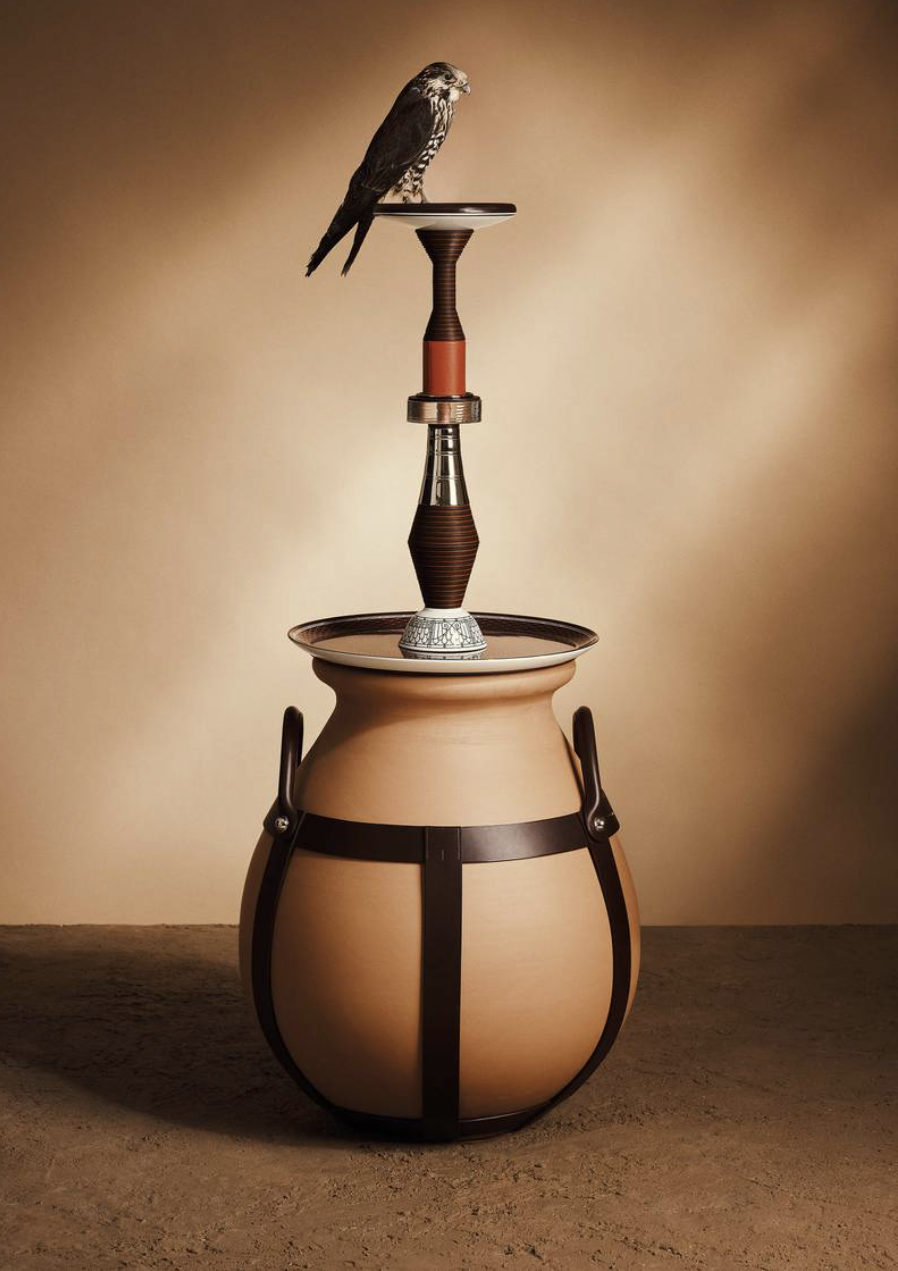
Hermes pop-up shop Petit h creates a falcon stand for Dubai mall shop
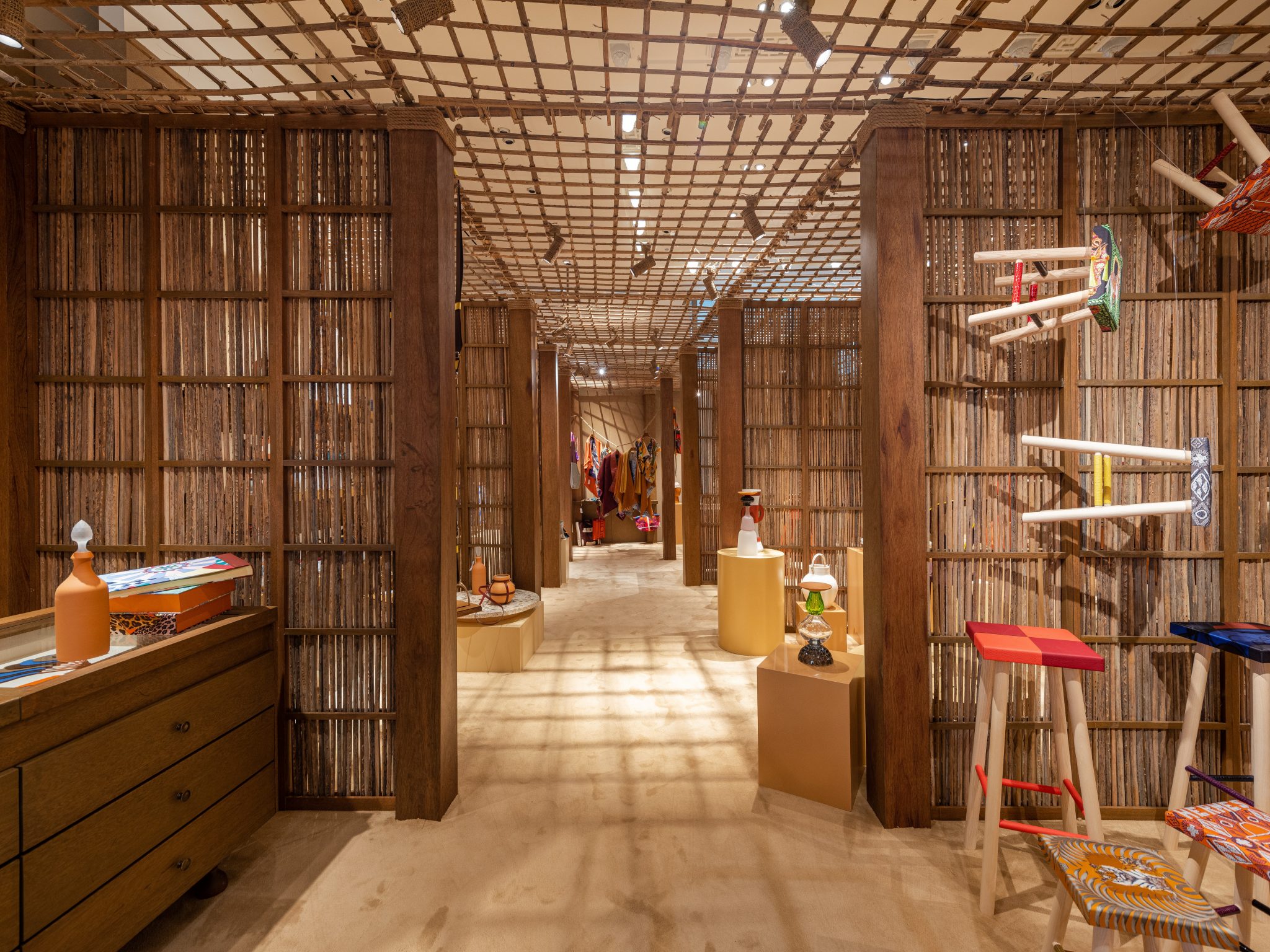
Even though the idea started more than 10 years ago, Hermes shows it’s never to late to embrace upcycling and recycling. The French luxury design house established in 1837 which specializes in leather goods, lifestyle accessories, home furnishings, watches and ready-to-wear brought its upcycled shop Petit h to Dubai last month. They called it Petit h Souk. Souk means market in Arabic.
Items in the “souk” at Petit h, DubaiScraps of luxury fabrics and leathersA guitar and chair made from a horse saddle
The items on display are made from scraps and materials from the Hernes workshop while some products like the falcon stand (top image) appear to be made mainly out of new materials such as ceramic.
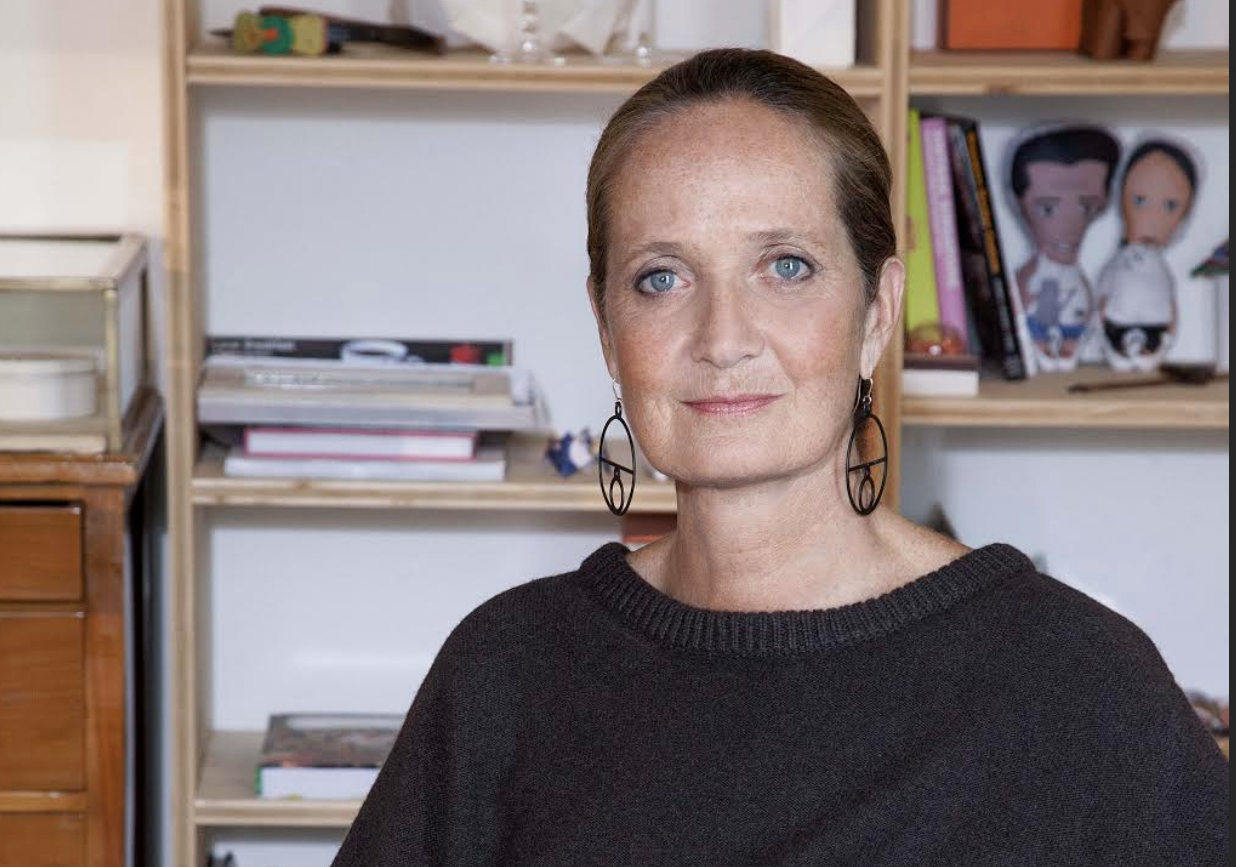
The idea of Petit h began as a sustainable solution to the waste problem at the workshop where the project’s founder, Pascale Mussard, frolicked as a young girl.
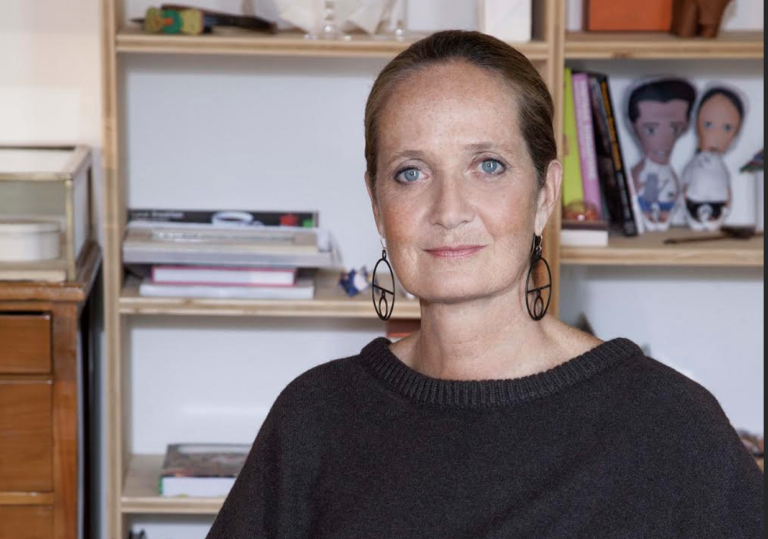
Pascale Mussard, Petit h, Hermes
The direct descendent of Hermès father, Thierry Hermès, Mussard grew up running around the atelier surrounded by the world of Hermès and the luxury products made by her family, but she also noticed the wasteful habit of throwing the leftover material away. Every scrap of leather and silver had potential for a new product or idea. She decided to launch a new atelier to create something beautiful out of what would have gone unused and unappreciated.
The Petit h is a traveling pop-up collection that has travelled to main cities around the world with its assortment of products such as leather animals and chairs and guitars made from horse saddles, in a manner where, Mussard explained, “creation takes place in reverse, because work here does not start with a preconceived idea or grand design, but with materials such as leather, silk, crystal and porcelain for which the other métiers have no further use, and with which artisans, artists and designers improvise by combining, assembling and altering them in a thousand and one ways.”
The resulting collections are full of one-off – or close to one-off – pieces that are whimsical and offer a touch of mischief. Like a guitar made with a horse saddle.
The Petit h collection was in Dubai in November bringing it with it a few pieces inspired by the region. The objects were staged in a space inside the brand’s The Dubai Mall store, custom designed by Emirati architect Abdalla Almulla. The area was reminiscent of a souk – all earthy tones, terracotta, clay, fabric and wood structures.
Objects created specifically for the tastes of Dubai include a falcon stand that brings together terracotta with leather.
An organic, locally-produced and sourced charterie plate might seem like a good idea if you are not getting enough B12. Vegans should test their blood to see if a lack of this essential vitamin is making you feel low in energy.
When it comes to supplements of any kind, do your homework before taking any. Be sure that whatever supplement you happen to be considering has been studied extensively for efficacy and safety. Also, talk to your physician over the phone, in-person, or through a telehealth visit before starting any new supplement. This is especially important if you have any health issues.
Many nutritional supplements are nothing more than marketing hype. That said, some of them truly seem to work. They might assist with health challenges or even with losing fat and gaining lean muscle. In the following paragraphs, you’ll learn about some of the supplements out there that actually work and what they do.
Vitamin B12
This vitamin plays a critical role in the formation of red blood cells, nerve function, cell metabolism, and the actual production of DNA. You can get it from Vitamin B12 supplements, and food sources such as dairy, fish, meat, and poultry products. There are even some foods that it’s added to, like fortified breakfast cereals. If you need it, you can also get it as an injection or in the form of a nasal spray.
Amino Acids
The most critical benefits of this particular supplement include the possibility of increasing the loss of fat, less fatigue, a boost in cognitive function, less inflammation, more rapid growth of muscle, more endurance, and it offers support to repair processes. While all of those benefits are all well and good, there may be a side effect or two when you take amino acid supplements. These include things like a loss of coordination and fatigue. As with anything, if you’re planning on beginning to take this supplement, talk with your doctor first.
Rhodiola
This is an herb that’s native to more arctic regions. It’s been used for centuries as a medicinal plant in Greece, Russia, France, Sweden, and Iceland. People who use rhodiola say that it may help to reduce fatigue and improve cognition. Even though this herb is considered to be safe, it may cause effects like excessive saliva production in some people and dry mouth for others, and even dizziness. If you’re pregnant or breastfeeding, you should stay away from this supplement as there hasn’t been enough research to determine if it’s safe for you and the baby.
Probiotics
As far as probiotics go, you need to be careful. Many foods that claim to have probiotic content don’t actually contain the strains that are able to survive the severe conditions inside the stomach. You should also know that more strains of probiotics don’t always necessarily mean better.
The crucial thing is to find a strain or product that’s been studied to treat whatever health condition you want to improve. Have a conversation with your doctor about which ones you should be taking for which conditions. Remember that lifestyle and diet remain the most critical determining factors when it comes to the composition of gut microbes.
Zinc
Zinc is more than just an essential trace mineral. It’s also the second most plentiful metal found in humans. Since our bodies don’t store this metal in excess of what we need, it needs to be consumed on a regular basis as a part of our diet. Some of the benefits you may see from taking a zinc supplement include things like a boost to the immune system and a decrease in respiratory tract infections, the flu, ear infections, and the common cold.
Some side effects can include stomach and kidney damage, metallic taste, diarrhea, vomiting, and nausea. Side effects that might occur when zinc is applied to the skin include things like tingling, itching, stinging, and burning.
When it comes to supplements of any kind, do your homework before taking any. Be sure that whatever supplement you happen to be considering has been studied extensively for efficacy and safety. Also, talk to your physician before starting any new supplement. This is especially important if you have any health issues.
Yeah my mom told me that Dr. Phil told her to put down the lid of the toilet when we flush. But do droplets of urine, faeces and infectious viruses like Covid spread with every flush?
According to scientists reporting in a new study at Nature, they do. The researchers used lasers to illuminate in unprecedented detail the aerosol cloud emitted by a flushing toilet of a common type in US public restrooms. Sort of in the way Laurie Tumer illuminated the spread of pesticides in her photographic artwork (see my Grist story from 2005).
So maybe Dr. Phil started it, but more than a decade now, researchers have been saying that lidless toilets do eject droplets of water containing things that might harm us. The droplets carry urine, faeces and, potentially, infectious diseases such as Covid-19 and norovirus. What wasn’t clear to the scientists is how quick and wide the particles spread after the flush.
The lidless toilet setup in the lab. A green laser catches droplets of toilet matter as it flies in the air
Within 8 seconds, these toilet drops shoot up to our breathing zone and no doubt we are putting them inside our body. Time for a toilet redesign at public restrooms which typically do not have lids? Lead researcher John Crimaldi thinks so; “Look at the video,” he says. “It couldn’t possibly be worse.”
How high poop particles soar when we flush
In the study the researchers from University of Colorado positioned a laser to beam a laser of green light above the lidless bowl: If any normally invisible particles emerged as the toilet flushed they would scatter the light and appear as green dots. To record the physics of the toilet, the team rigged up a camera a few feet away.
Then … flush.
What happened silenced everyone: “We were all just stunned,” recalls Crimaldi. “We saw this incredibly energetic jet of particles shooting up towards the ceiling.”
A cloud of particles flew into the air and hovered.
“People just started laughing. They were like, ‘Oh, my God, you’ve got to be kidding me. That’s what happens when you flush the toilet?’” he recalls.
Should we be worried about lidless toilets?
“The bowl water in a toilet contains elevated levels of pathogens for dozensof flushes after that contaminated feces was put in there,” Crimaldi says.
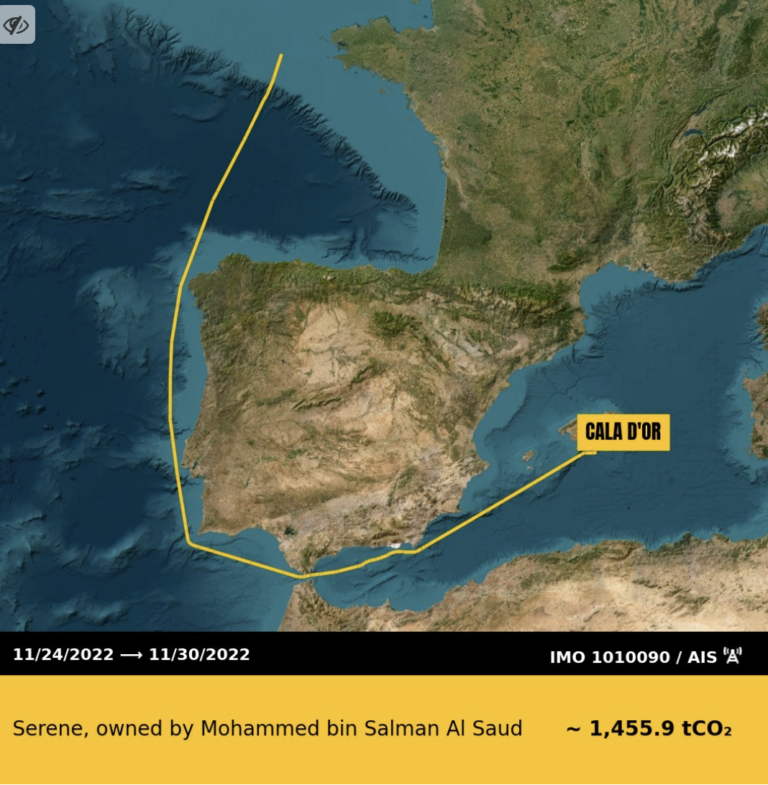
The yacht Serene, owned by Saudi Arabian Prince Mohammed bin Salman Al Saud, sailed for 5 days over 2,552 km at the end of November, reports climate chnage yacht tracker Politiyacht.
During this voyage at sea, Politiyacht writes, the yacht produced at least 1,456 tons of CO₂. Its itinerary was calculated using global sea routes.
Politiyacht tracks yachts owned by politicians, world leaders and their allies using data from the AIS network. It then estimates CO₂ emissions, a proxy for understanding greenhouse gas emissions.
Mohammed bin Salman Al Saud is the Crown Prince and Prime Minister of #SaudiArabia. He and his family own the largest company in the world, which happens to be the largest oil company in the world, Saudi Aramco. They also own the Public Investment Fund pouring money into destination travel to sites like The Rig.
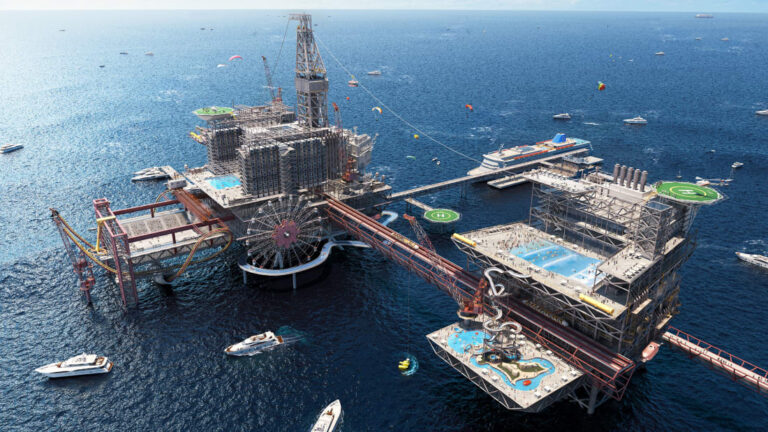
The Rig, a converted oil rig turned into a theme park, hotels, restaurants
Neom and The Line are a couple other mega travel destinations and cities planned by the Saudi Arabian royal. He also serves as the chairman of the Council of Economic and Development Affairs and chairman of the Council of Political and Security Affairs.
Follow your favorite oligarchs and polluters here.
Make plastic products 100% from natural items and make them biodegradable. It’s a challenge making a “plastic” from plants or minerals that doesn’t degrade when you are using it or when it gets wet.
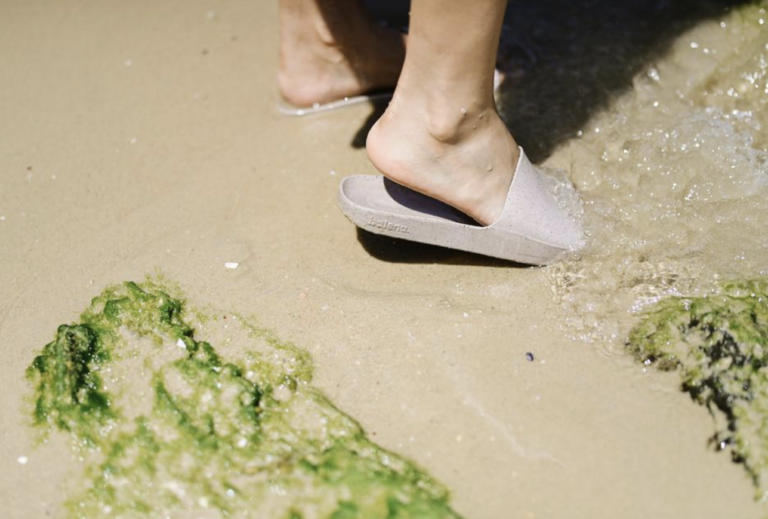
An Israeli-Italian company, Balena, may have made our plastic dreams come true but they are hush about the source of raw materials, leaving us with cinnamon as a natural colorant to their first product, the Balena slide.
Balena, which means “whale” in Italian, is a nice combination of Italian craftsmanship and design matched with Israeli innovation. Balena claims their new shoe BioCir Slides are 100% biodegradable, which means a complete return to the earth and not in tiny plastic bits. This is if the shoes are returned to their own facility where a special process breakdowns BioCir to natural materials.
The shoes, which are both flexible and compostable, will not decompose when you are wearing them or when they get wet, but when their treads are thin and the shoes’ life is over, you can send them back and be rest assured that they will be processed back to the earth.
The company is not presenting itself as a design house but more of a bio-plastics product and material company that has launched a product to prove its impact. They have sent 1000 pairs to Tel Aviv, a city of people who wear flip-flops and slides to all occasions including weddings.
BioCycling, they note, is the ability to control a product’s end-of-life status. The Balena product goes through decomposition and biodegradation in a biological environment without leaving any waste or contamination behind that could be dangerous to the earth and seas.
More on BioCir and the plastic recycling system
Balena’s BioCir, is according to Balena, “the first fully moldable, biodegradable elastomer, provides a viable alternative to the polluting plastic materials currently used by fashion brands for clothing and footwear.”
Its BioCycling facility helps complete the end of life cycle for the shoes, or for any materials made from BioCir. Once a customer has finished using the slides, instead of tossing them into the garbage on their way to a landfill, they can instead return them to designated take-back spots throughout the city where they are collected for full biodegradation.
This model, aimed at reducing fashion’s contribution to plastic waste, can be replicated around the world. But it will only work if BioCir finds a dominant place in the market. Even with easier to recycle items like batteries, there are depots for collections in cities, consumers still toss them into the trash.
The world is addicted to fast fashion. Balena aims to create a circular model that relies on the power of composting to lower fashion’s footprint on the global environment.
The biodegradable material Balena creates can be used in injection molding and integrated into existing manufacturing lines for plastics, the company maintains.
“The global fashion industry is one of the world’s biggest polluters. At Balena, our goal is to help turn this around,” said David Roubach, Founder and CEO of Balena.
“We’re doing this by creating our own viable biodegradable plastic alternatives and fully circular systems that can be easily scaled, and copied and pasted across the globe.
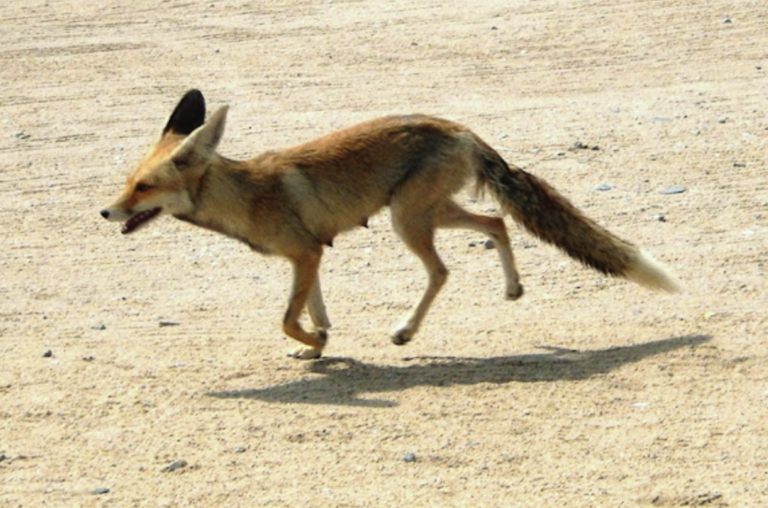
An Arabian Red Fox spotted on Camp Arifjan, Kuwait. Via Project Noah
He thought he was doing a good deed but it turns out a man in the United Arab Emirates (UAE) mistook a fox for a dog. The Arabian fox was caught and brought to the shelter and surprised the staff who posted on their social account:
Caretaker: Madam I catch dog in trap Me: So cute but that’s not a dog! Caretaker: But he small maybe puppy Me: Not a dog he’s a fox Caretaker: ??? Me: Release him ???
Now we know whose eating the food we put out every night for the illusive, roaming desert dog ??? Cats oh and now foxes ???
The incident took place at the Stray Dogs Center, a long-running animal shelter based in UAE emirate Umm Al Quwain. The shelter shared a video of the unwilling fox (see above) who didn’t need help but who was happy for a free meal.
One commenter noted that wild animals should be brought to the Sharjah Wild Arabian Animals Center, in Sharjah where they have a breeding and conservation program.
Another said, “It is a pleasant surprise to see real wildlife which is extremely rare in the ever expanding city [Dubai}.”
Sadly, another local had seen foxes too but the outcome wasn’t good: “Is he skinny or in good health? Poor foxy, I saw a few at the mangroves in Abu Dhabi and by the time the entity responded to save them they went and found them dead. We were too late.”
Jubail mangrove walk, Abu Dhabi
Wild and stray animals need our help in the UAE, and all over the Middle East and the world. But in different ways. Here are a few ways you can help the animals.
Domesticated animals and abused farm animals need shelter, loving homes and farms. There are shelters globally that help rehome stray cats and dogs. If you can’t adopt, consider volunteering to help the animals or offer donations. Money is always needed and vets and staff at these shelters are notoriously underpaid and overworked.
Helping Wild Animals
While it’s in vogue with princes, kings and sheikhs in the Middle East who can be found walking cheetahs on a leash (Dubai Porsche driver walks cheetah on a leash) or hanging out with them in their cars, wild pets should never be kept as pets.
The Abu Dhabi Zoo for instance has been accused of smuggling in wild animals and it’s also known that many of the animal traffickers smuggling animals from Africa make their way to the Middle East:
Don’t buy a wild animal. Rehome a dog or a cat. If you find an injured wild animal or bird bring it to a local wildlife animal hospital.
Common sense also says that wild animals not be fed as it encourages the animals to fraternize with people. We learn this from Canadians who avoid feeding bears at all cost.
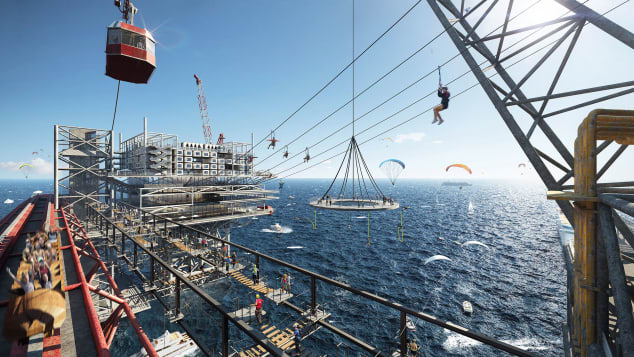
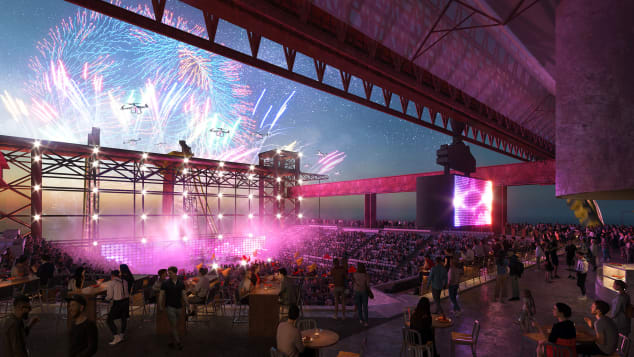
The Rig is a revamped oil rig off the coast of Saudi Arabia, to be steam-punked into 3 hotels, 800 rooms, 11 restaurants, a roller coaster, a water slide, a Ferris wheel
Saudi Aramco, the largest company in the world, and now publicly-traded on the Saudi Arabian stock exchange, bankrolls oil money so you can come visit Saudi Arabia and be impressed by oil money and teach the kids how oil rigs work. The new “extreme park” theme park set to be ready by 2025 will revamp an out-dated Saudi Arabian oil rig turning its shafts and platforms into hotels, restaurants, roller coasters and water slides that soar into the Red Sea.
Get in line early as only 50 yachts can dock at its port. Otherwise you will need to arrive by cruise ship or helicopter.
If you think about The Rig, and the practice of repurposing the built environment, it is actually a better idea than all of other hair-brained ideas that Westerners have sold to Saudi’s prince and which he has green-lit, with more than a bit of green-washed marketing and PR rolled into the result. I’ll give the Saudis this: Taking existing structures and repurposing them for tourism and travel al la Mad Max is a smart idea. Saudis don’t need to hide their oil history. And we can’t be so 2-faced to not acknowledge that modern life is fuelled by cheap oil.
A sensational stop in the Red SeaExtreme, extreme sportsConcerts and venue hallDine at The Rig’s underwater hotelEvery room has an endless view
The scale of it, in terms of energy needs (how will it run?), water and food, and human waste and garbage – are questions that need good answers. We know that Gulf countries might like to think about those unimportant things as an afterthought — consider Burj Khalifa, that giant tower, where trucks of human waste get hauled away each day.
The Rig’s not right in a climate crisis
“Offshore platforms were created for discovery,” advertises the project in marketing copy. “The Rig takes that legacy to the next level. This is the ultimate living laboratory for pioneering new thrills, extreme sports and adventure. Climb aboard and experience the future of adventure.”
A Gizmodo writer hates the idea, calling it evil: “Now, all of that might sound cool in an alternate reality in which our planet wasn’t in a climate crisis and where fomenting needless pollution was a good idea. But we live in this reality, where fossil fuel companies are wrecking the climate and humanity is in a “code red.
“In this reality, Saudi Arabia’s shameless attempt to court the public’s favor for its oil rigs by literally creating a nice, shiny, and fun rig is despicable. It’s also dangerous because it downplays the challenges posed by climate change.”
Turaif, the original House of Saud home in Saudi Arabia



 New hidden imagery not found on Google Earth, and hidden since March reveals construction progress on The Line in Saudi Arabia.
























 It’s a whale of an idea. A biodegradable plastic that returns to the earth with a little bit of help.


 An Arabian Red Fox spotted on Camp Arifjan, Kuwait. Via