The Rig theme park turns Saudi money steampunk

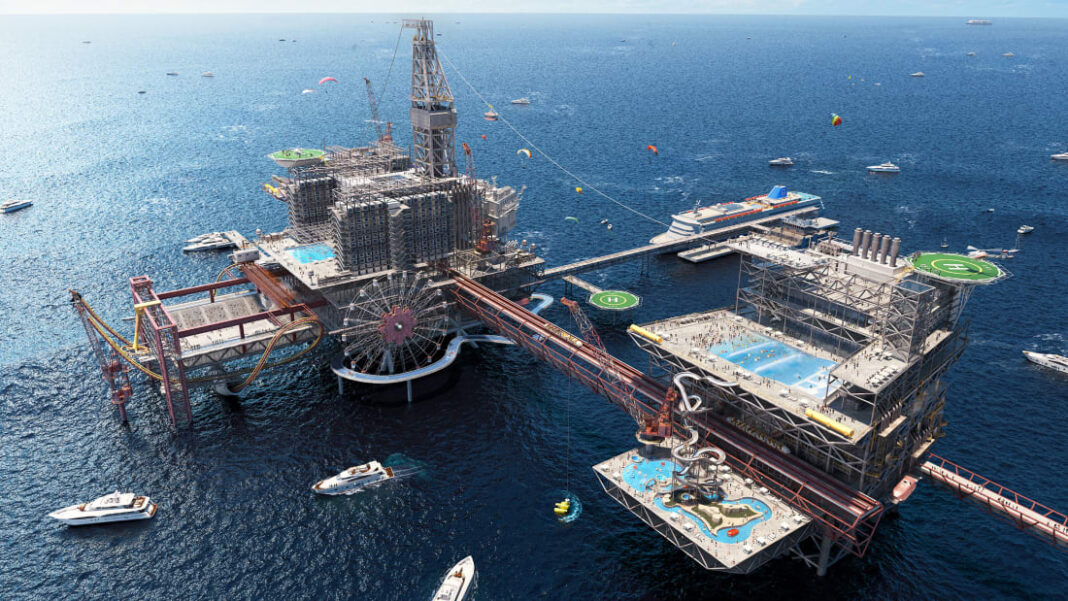
Saudi Arabia, the rig, oil rig theme parkThe Rig is a revamped oil rig off the coast of Saudi Arabia, to be steam-punked into 3 hotels, 800 rooms, 11 restaurants, a roller coaster, a water slide, a Ferris wheel

Saudi Aramco, the largest company in the world, and now publicly-traded on the Saudi Arabian stock exchange, bankrolls oil money so you can come visit Saudi Arabia and be impressed by oil money and teach the kids how oil rigs work. The new “extreme park” theme park set to be ready by 2025 will revamp an out-dated Saudi Arabian oil rig turning its shafts and platforms into hotels, restaurants, roller coasters and water slides that soar into the Red Sea.

Get in line early as only 50 yachts can dock at its port. Otherwise you will need to arrive by cruise ship or helicopter.

Saudi Aramco, owned by Mohammed bin Salman Al Saud and his family, puts money into the Public Investment Fund (PIF), which then goes on to build outrageous, out of touch so-called “sustainable” mega projects like Neom, The Line and Trojena, a skill hill in the hot desert

If you think about The Rig, and the practice of repurposing the built environment, it is actually a better idea than all of other hair-brained ideas that Westerners have sold to Saudi’s prince and which he has green-lit, with more than a bit of green-washed marketing and PR rolled into the result. I’ll give the Saudis this: Taking existing structures and repurposing them for tourism and travel al la Mad Max is a smart idea. Saudis don’t need to hide their oil history. And we can’t be so 2-faced to not acknowledge that modern life is fuelled by cheap oil.

the rig, oil rig hotel in Saudi Arabia
A sensational stop in the Red Sea
the rig, oil rig hotel in Saudi Arabia
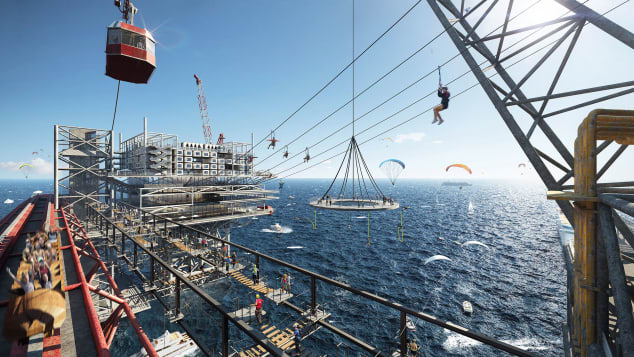
Extreme, extreme sports
the rig, oil rig hotel in Saudi Arabia
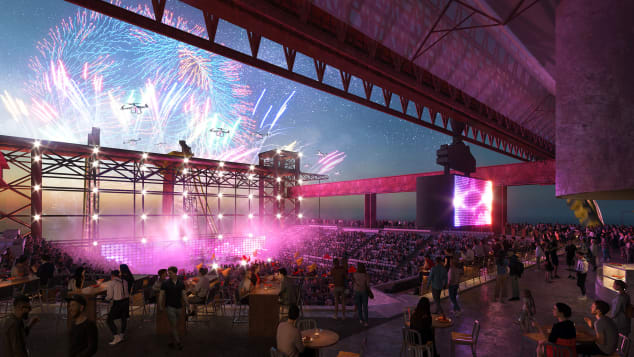
Concerts and venue hall
The rig underwater hotel
Dine at The Rig’s underwater hotel
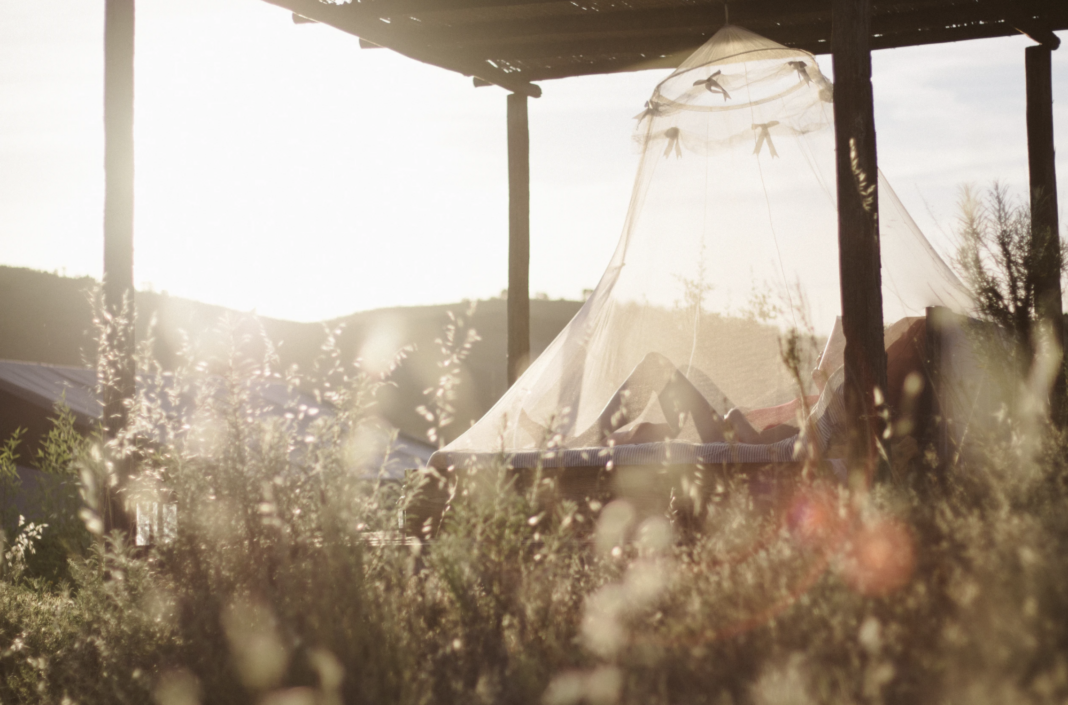
An oil rig room with a view
Every room has an endless view

The scale of it, in terms of energy needs (how will it run?), water and food, and human waste and garbage – are questions that need good answers. We know that Gulf countries might like to think about those unimportant things as an afterthought — consider Burj Khalifa, that giant tower, where trucks of human waste get hauled away each day. 

The Rig’s not right in a climate crisis

“Offshore platforms were created for discovery,” advertises the project in marketing copy. “The Rig takes that legacy to the next level. This is the ultimate living laboratory for pioneering new thrills, extreme sports and adventure. Climb aboard and experience the future of adventure.”

A Gizmodo writer hates the idea, calling it evil: “Now, all of that might sound cool in an alternate reality in which our planet wasn’t in a climate crisis and where fomenting needless pollution was a good idea. But we live in this reality, where fossil fuel companies are wrecking the climate and humanity is in a “code red.

“In this reality, Saudi Arabia’s shameless attempt to court the public’s favor for its oil rigs by literally creating a nice, shiny, and fun rig is despicable. It’s also dangerous because it downplays the challenges posed by climate change.”

House of Saud, Turaif, saudi Arabia mud palace, UNESCO site
Turaif, the original House of Saud home in Saudi Arabia

Well… from all the ideas that have been funded by Saudi’s PIF recently, we like this one the best along with opening up the ancestral House of Saud, a mud palace in Turaif.  If you are starting out as an architect and looking for a sensible sustainable direction don’t look to The Rig, start with Rotterdam


Karin Kloosterman
Karin Kloostermanhttp://www.greenprophet.com
Karin Kloosterman is an award-winning journalist, innovation strategist, and founder of Green Prophet, one of the Middle East’s pioneering sustainability platforms. She has ranked in the Top 10 of Verizon innovation competitions, participated in NASA-linked challenges, and spoken worldwide on climate, food security, and future resilience. With an IoT technology patent, features in Canada’s National Post, and leadership inside teams building next-generation agricultural and planetary systems — including Mars-farming concepts — Karin operates at the intersection of storytelling, science, and systems change. She doesn’t report on the future – she helps design it. Reach out directly to [email protected]

Read More

TRENDING

Different Types of Hair Loss Treatments Explained

efore exploring treatments, it helps to understand why hair falls. Hair loss isn't one condition — it has different causes, and those causes affect which treatments actually work.

Dead Sea Scroll mystery may be solved by a calendar that lost touch with the seasons

The 364-day calendar did not disappear entirely. Instead, it may have survived as an ideal: a memory of perfect time at Creation and perhaps a calendar to be restored in the End of Days.

Mysterious metal space balls wash up on Australian shore

Mysterious metallic spheres dubbed "space balls" washed ashore on Forrest Beach in Queensland, Australia. The objects were identified by the Australian Space Agency as pressure vessels from a space launch vehicle that re-entered Earth's atmosphere, and crews successfully removed the safe debris.

Kansas City’s Second Attempt at a Conversion Therapy Ban: What the Proposed Ordinance Does and Why It’s Being Rewritten

Kansas City is attempting to revive protections against conversion therapy with a new ordinance carefully designed to withstand recent First Amendment challenges. Rather than banning conversion therapy by name, the proposal targets harmful therapeutic practices linked to increased risks of depression and self-harm, creating what supporters hope could become a legal model for other U.S. cities.

What to Look for in a Senior Living Community That Truly Delivers

Choosing a sustainable senior living community means looking beyond appearances to care quality, nutrition, safety, social connection, and long-term well-being.

The Essential Guide To Sustainability in Project Management

Sustainability is an approach where businesses and individuals balance the environmental, social, and economic aspects of a project such that current and future stakeholders are not overburdened with the impacts of the project in future.

Yerukim Forms a New Green Economy Where the Money is Really Green

The Yerukim members who pick up the recyclables get to keep the monetary reward, the public earns "green" bills that can be used in shops, and business owners get to be associated with environmentalism.

Choosing Riyadh over Dubai? What Investors Should Know

Saudi Arabia is deploying capital at unmatched scale to catalyze tourism and advanced industry while rewiring its power-and-water backbone. The investable frontier is widening—especially in renewables, grid storage, water efficiency/desal retrofits, and hospitality operating platforms. Prudent investors will insist on phased delivery, enforceable KPIs (energy, water, biodiversity), and RHQ/zone compliance—while pricing political-economy and reputational risks alongside growth upside.

Sell your cooking oil for biodiesel money

Want to make money on old french fry oil? Sell it.

Qatar Alternative Energy Summit Pairs Investors And Innovators

Alternative energy investors and innovators can meet n' greet in Doha, Qatar March 16 and 17.

Here’s How To Implement The Four Pillars Of Employee Engagement

If you throw a party for your work team and they are vegans, don't make it a barbecue. Know the sustainability values of your team to boost moral and retain good people.

Locals From Rishon Fight IKEA

Big Box stores are a pretty new concept in Israel, and thank God that not every Israeli city wants them in their backyard. A word from someone who has see the beautiful farmland around her hometown Newmarket, Ontario stripped and converted into vulgar strip malls of big box shops: they have no place in a healthy and sustainable town or city.

The Jewish National Fund Meets An Inconvenient Truth

According to the JNF, it has transformed thousands of acres of barren land into green forests in Israel. They state that each person emits about 23 tons of carbon per year, estimating that each tree planted can absorb one ton of carbon in its lifetime. That's a whole lot of trees you'd need to be planting. Could so many fit in Israel?

Popular Categories