The Line has started construction, Bedouin protestors evicted sentenced to death

The Line, drone footage, construction, bedouin sentenced to death
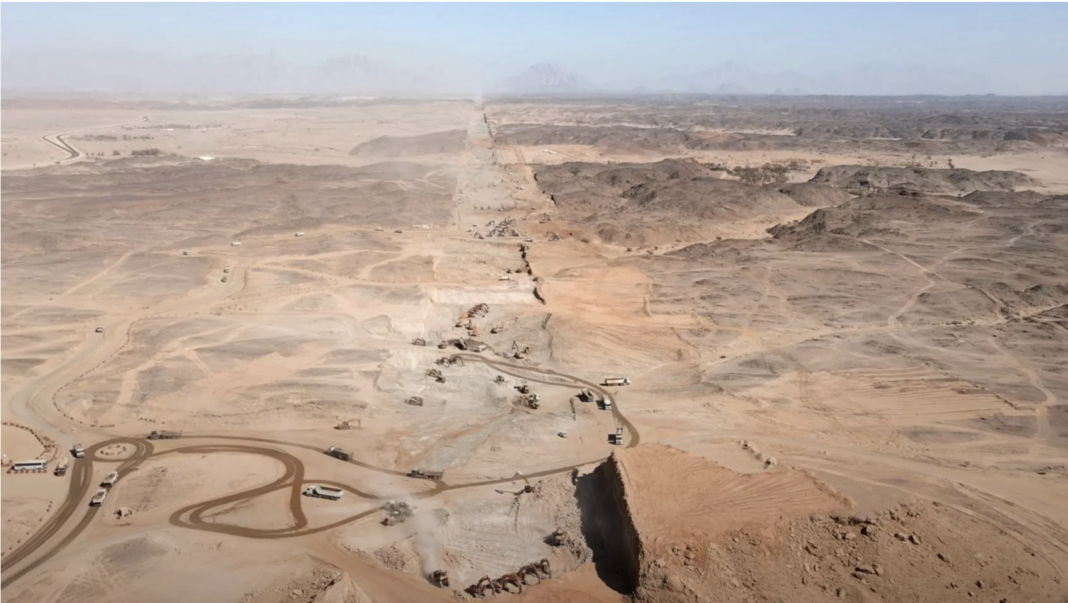
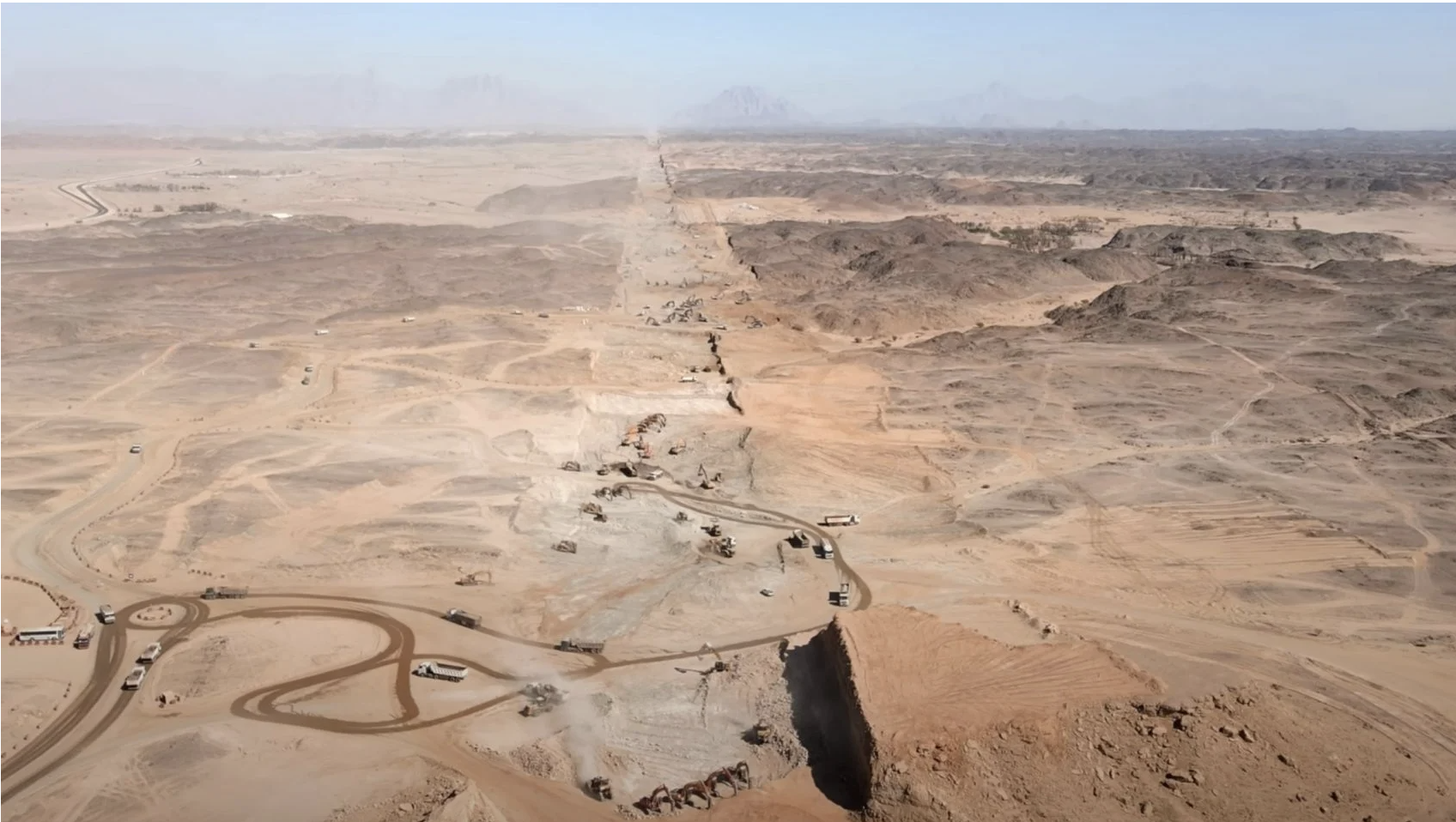
Drone footage of The Line underway. Meanwhile Bedouin who live there are sentenced to death.

Drone footage shows that Saudi Arabia’s multi-billion dollar project, The Line is underway. The vertical mega city will jut out from the Red Sea, against criticisms of Saudi Arabia being short-sighted about environmental goals, human rights abuses and sustainable housing for people who already live there.
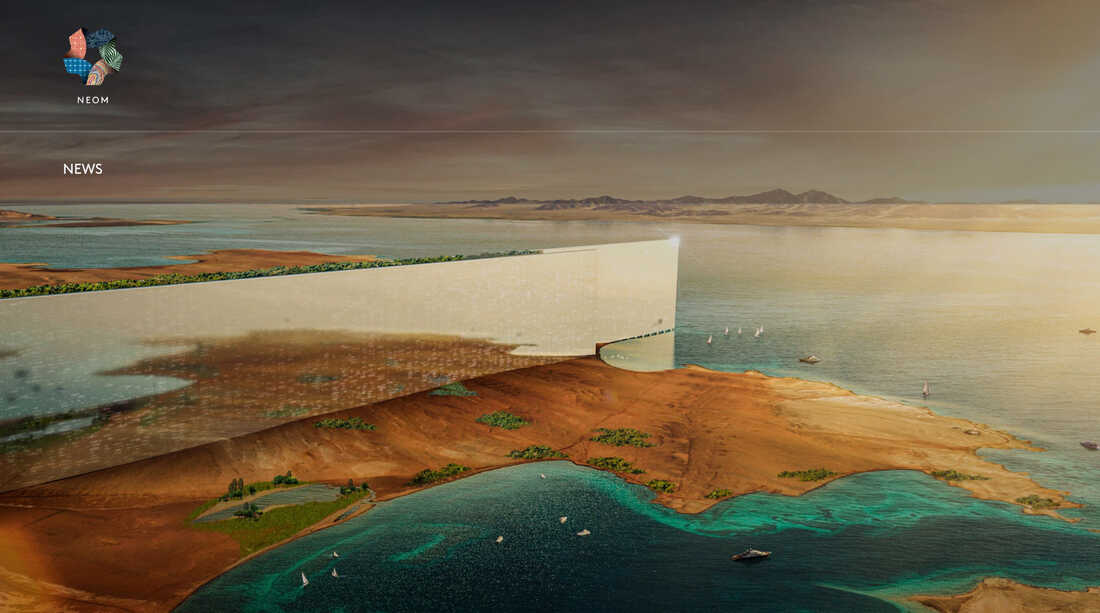
The Line, vertical mega city, Saudi Arabia

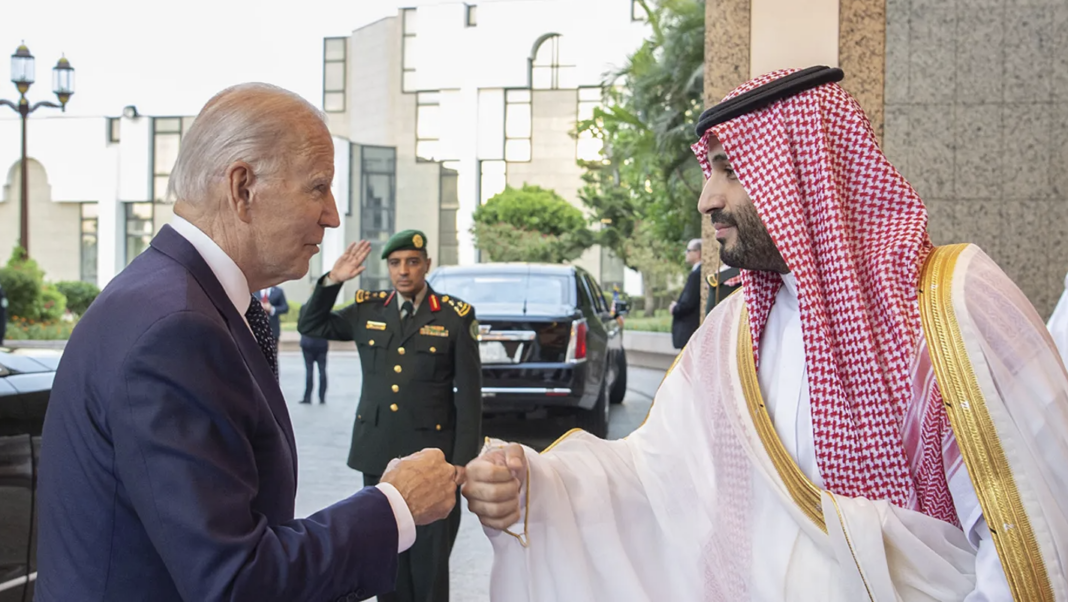
But the Saudi Crown Prince is adamant about being in favor with the west. A recent announcement that the Saudi Government-owned Lucent Motors (NASDAQ:LCNT) will start a manufacturing plant in Saudi Arabia said exactly that. They want favor with the West. This is not how you do it.

Drone footage by aerial photography company Ot Sky showed that work has begun on the construction of The Line in Saudi Arabia, which is part of Neom development. Excavators at work are seen digging trenches for the linear city, which is set to be 150 miles long (170km), 550 yards tall (500 meters) with a heavily mirrored facade.
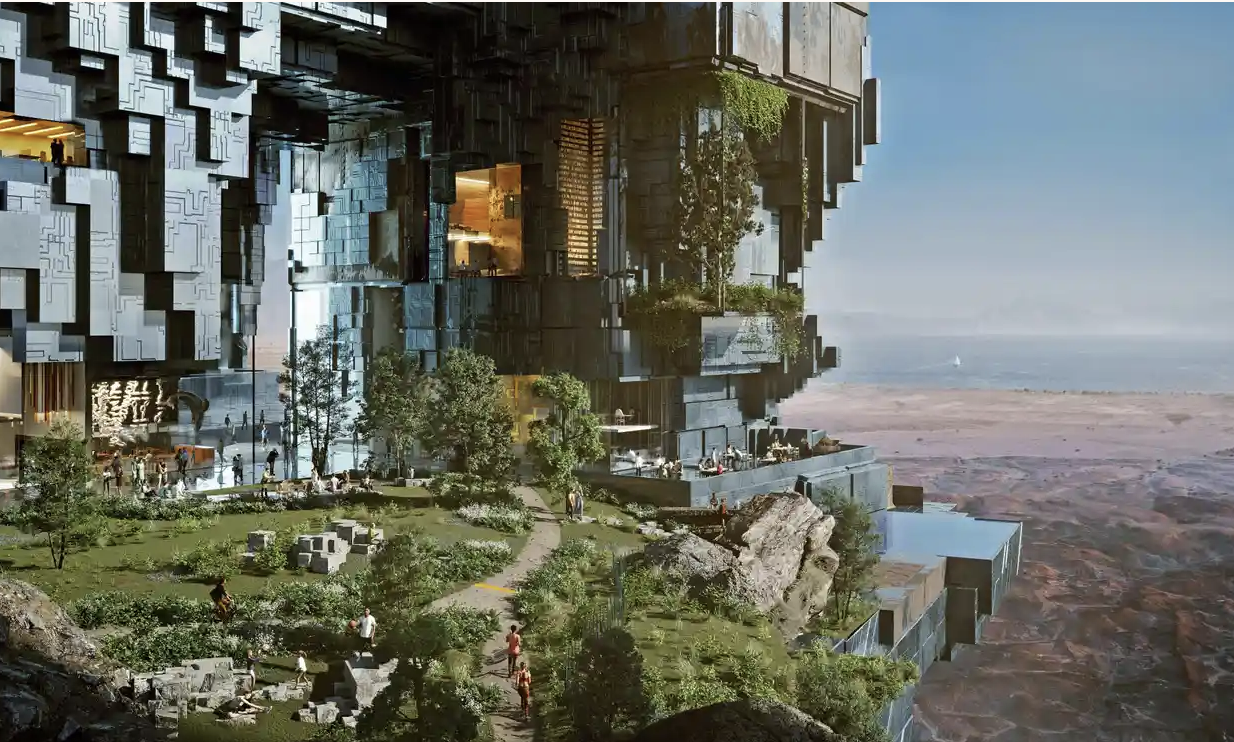
The Line, Neom, rendering, vertical city
Rending of The Line, near the Red Sea

Skeptics (especially us, along with Greenpeace) are critical of the development but footage shows that construction of The Line is well underway.  The bigger plan is mapped out below.
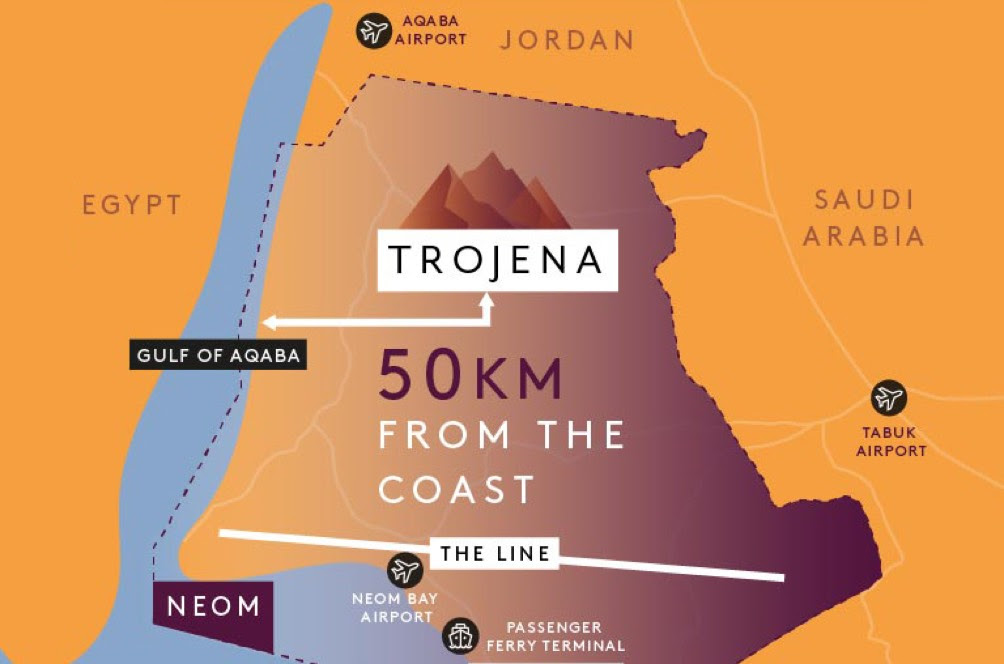
The Line, Neom, Oxagon
Mapping out Neom’s new development including the vertical city, The Line, and Oxagon, an industrial center

Saudi Arabia has already murdered a Bedouin protestor who was forcibly removed from his land but wouldn’t give it up for Neom, the name of the land development project.
Neom promotional text
Neom has hired great copywriters, probably the best that money can buy. But great copy won’t whitewash human rights abuses that have been at the core of developing Neom where Bedouin tribes already live.

Human rights organisation ALQST reports that Saudi Arabia has sentenced three men to death who had been forcibly evicted from the Neom site. One of them is the brother of the man who was murdered in 2020. They are Bedouin tribespeople, a nomadic race of people found in Saudi Arabia, Egypt, Jordan, Syria, Israel and the Palestinian Authority, usually treated as second class citizens to their government or rulers. 

The Bedouin, Beduin, or Bedu are nomadic Arab tribes who have historically inhabited the desert regions in the Arabian Peninsula, North Africa, the Levant, and Mesopotamia. The Bedouin originated in the Arabian Desert but spread across the rest of the Arab world in West Asia and North Africa after the spread of Islam (Wikipedia).

Sentenced to death for protesting in Saudi Arabia

Protesting in the Middle East can land you a death sentence or torture. Like protestors against the treatment of Lake Urmia.  Or going against the modesty code in Iran

Shadli al-Huwaiti, Ibrahim al-Huwaiti and Ataullah al-Huwaiti, who are members of the Huwaitat Bedouin tribe, were sentenced to death after being “forcibly evicted and displaced to make way for the Neom megaproject”, according to a human rights organization ALQST, based in London and founded by Yahya Assiri.
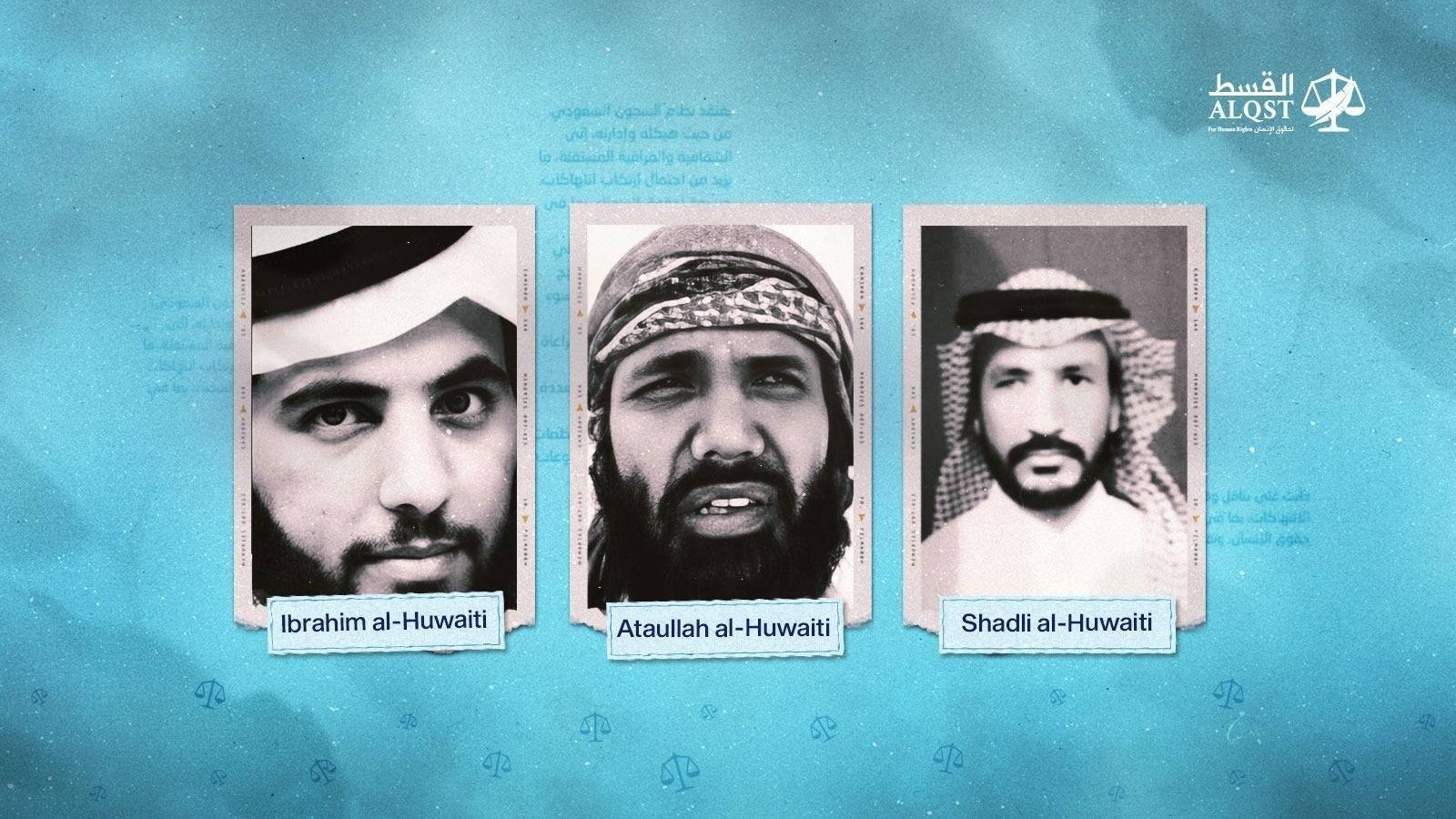
death sentences for men protesting Neom
Shadli al-Huwaiti, Ibrahim al-Huwaiti and Ataullah al-Huwaiti sentenced to death for protesting their eviction.

Shadli al-Huwaiti is the brother of Abdul Rahim al-Huwaiti, shot dead by security forces in April 2020 in his home in Al-Khariba, in the part of Tabuk province earmarked for the Neom project, after he posted videos on social media opposing the displacement of local residents to make way for the project.

In May this year Shadli went on hunger strike in protest against ill-treatment and being placed in solitary confinement, and after two weeks the Dhahban Prison administration inserted a tube into his stomach to force-feed him, also a form of torture, according to ALQST.

Even before the April 2020 killing of Abdul Rahim al-Huwaiti, other members of the Huwaitat tribe had been arrested for refusing to be evicted from their homes, and others have been arrested since. Some have been sentenced to extraordinary prison terms: Abdullah and Abdulilah al-Huwaiti were each sentenced in August 2022 to 50 years.
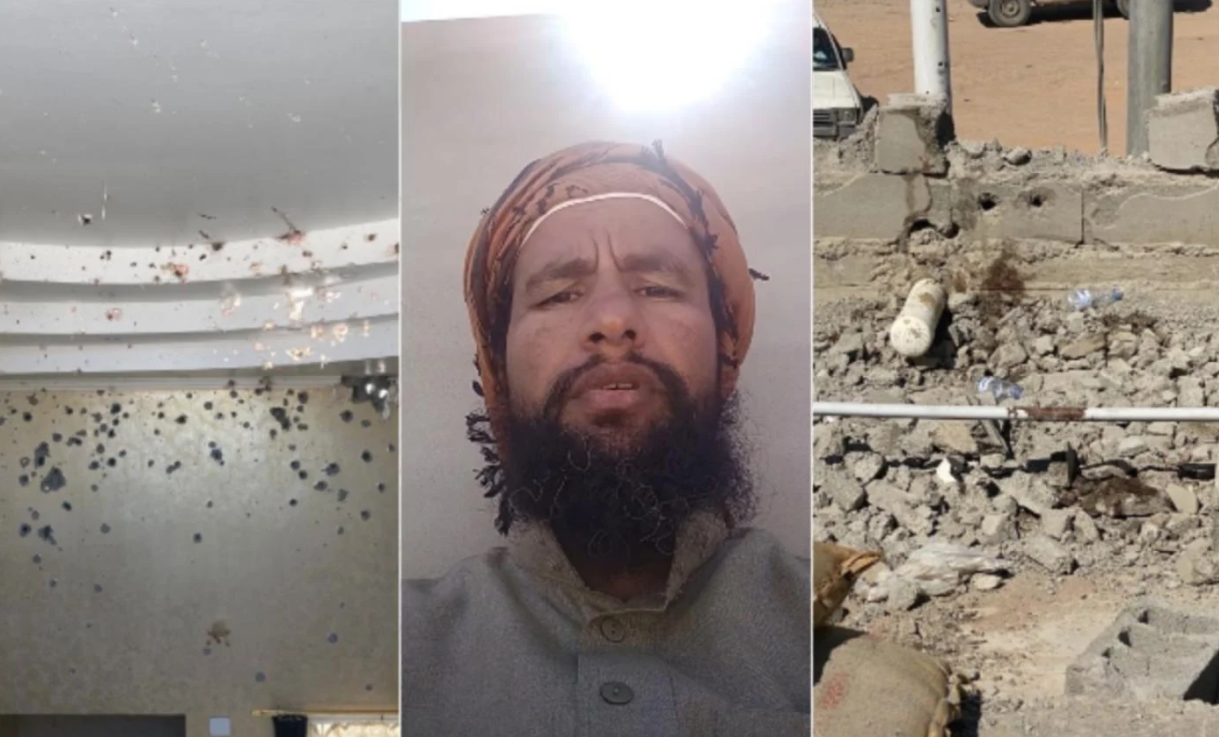
Abdul-Rahim al-Howeiti
Abdul Rahim al-Huwaiti murdered while protesting the development of Neom

After killing Abdul Rahim al-Huwaiti and arresting several others who opposed eviction, the authorities set about trying to force other members of the tribe to endorse the authorities’ actions and to disown Abdul Rahim, by promising to pay them 100,000 rials ($26,000 USD) each, or 300,000 for those they appointed as tribal sheikhs, to take part in a propaganda pageant dissociating themselves from Abdul Rahim and the others, and “renewing their allegiance”, as the authorities put it.

If you visit or work for NEOM, you are complicit

The Saudi authorities have repeatedly resorted to forced evictions to clear areas of their residents, according to ALQST, in operations characterised by a lack of transparency and abuses such as failure to pay adequate compensation.

The authorities even employed armed force in the case of the Huwaitat in Tabuk in 2020, and in the bulldozing of the historic Al-Musawwara district of Awamiya in the eastern part of the country in 2017. 

Saudi Arabia resorts to despotic methods to pursue their plans, with no respect for peoples’ rights to decent housing, and without those who wish to raise complaints having any recourse to justice. 

Anyone who visits, works for, or publicises positive feedback about The Line, Trojena, or any of the Neom projects are complicit in the pursuit of Saudi’s terrible actions against its own people.

Saudi Arabia has a criminal justice system based on a form of Shari’ah reflecting a particular state-sanctioned interpretation of Islam. Execution is usually carried out by beheading with a sword but may occasionally be performed by shooting.

Saudi Arabia performs public executions.

According to ALQST Saudi authorities have carried out 122 executions in 2022. In March alone they executed 104 prisoners including 81 on a single day, roughly half of whom were from al-Qatif and al-Ahsa in eastern Saudi Arabia, areas that had seen widespread demonstrations calling for reform during the previous decade.

Saudi Arabia may desperately want to be accepted by the west in business and leisure, and to be a green and eco super hero, spearheading renewable energy and EVs. But its ruler’s behavior of disappearing protestors and journalists shows that it’s still about 2400 years in the past. 

We sent an email from Neom and are waiting for some answers. 

Rowan Moore at The Guardian calls on architects to answer to the abuses. Neom, he writes, “is aided and abetted by western consultancies such as the once-hip Californian practice of Morphosis (which is designing The Line) and the London-based Zaha Hadid Architects (at work in Trojena), both of them winners of the biggest prize in architecture, the Pritzker. How might they square what’s left of their progressive reputations with a real estate endeavour where objectors get killed?”

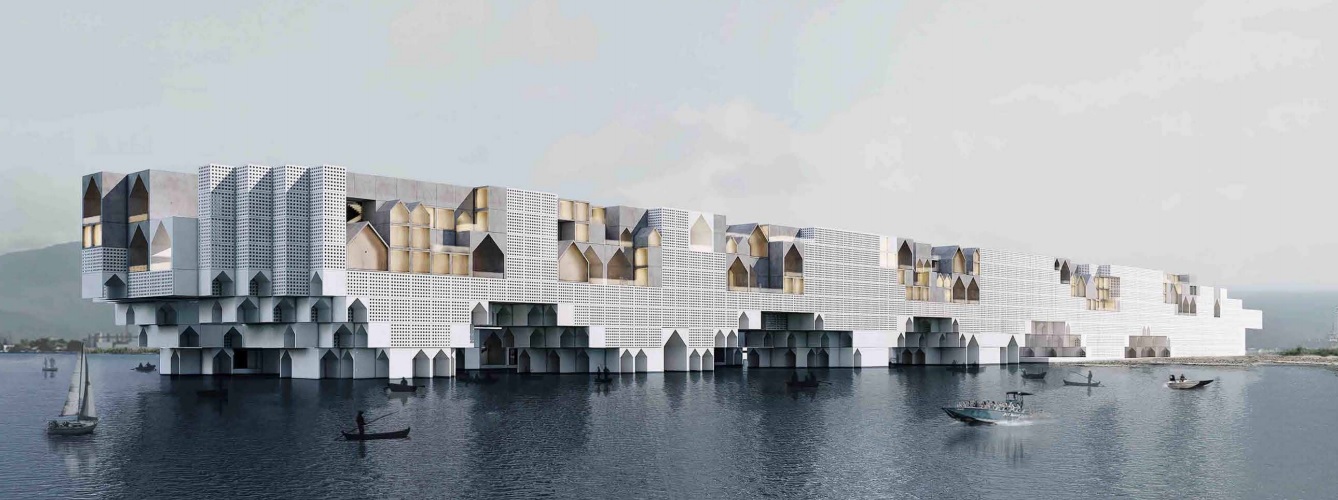
Is The Line a knock-off from an Iranian Architect’s floating city?
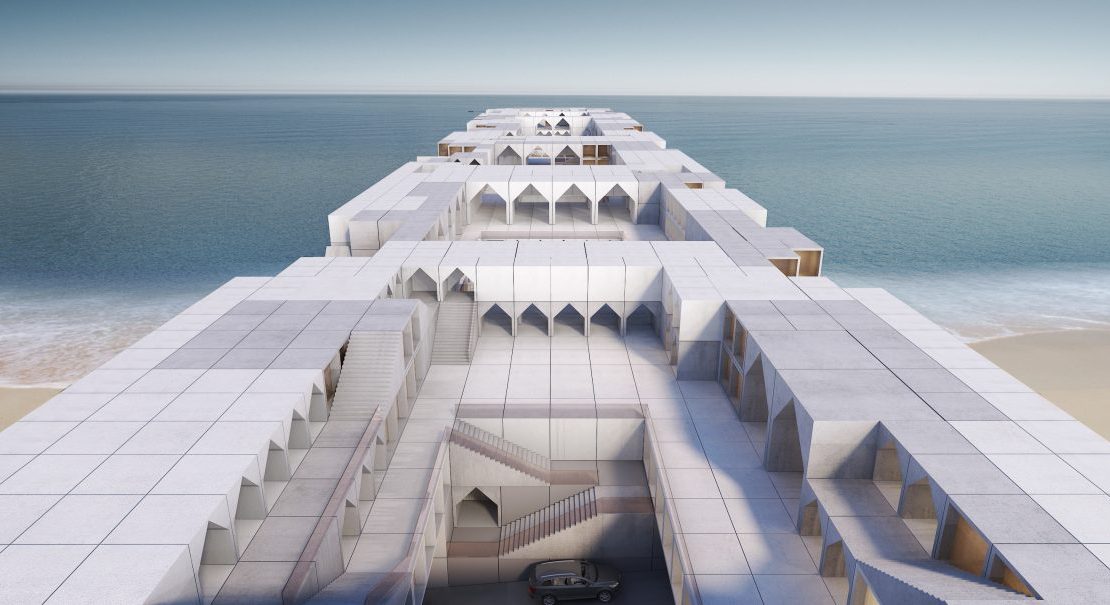
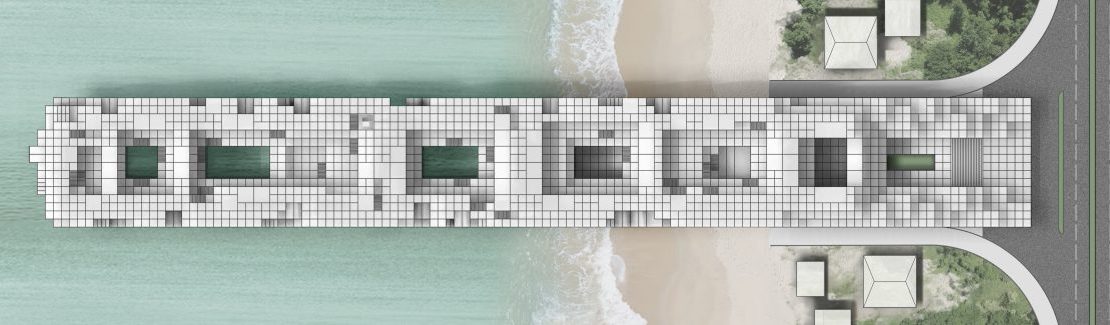
On top of all this, The Line looks like a steroidal knock-off from this 2018 rendition of a floating city by the Iranian architect Kamran Heirati. Heirati had a lot more common sense and concern for his people when he came up with the concept.


Karin Kloosterman
Karin Kloostermanhttp://www.greenprophet.com
Karin Kloosterman is an award-winning journalist, innovation strategist, and founder of Green Prophet, one of the Middle East’s pioneering sustainability platforms. She has ranked in the Top 10 of Verizon innovation competitions, participated in NASA-linked challenges, and spoken worldwide on climate, food security, and future resilience. With an IoT technology patent, features in Canada’s National Post, and leadership inside teams building next-generation agricultural and planetary systems — including Mars-farming concepts — Karin operates at the intersection of storytelling, science, and systems change. She doesn’t report on the future – she helps design it. Reach out directly to [email protected]

Read More

TRENDING

Understanding Food Production: Karl Studer on the Urban-Rural Knowledge Gap

Karl Studer occupies an unusual position in American business. As President of Quanta Services, he oversees electrical infrastructure operations across the United States, Canada, and Australia, managing thousands of employees and multibillion-dollar projects.

Tigris River oil spill highlights Iraq’s environmental oversight and our addiction to oil

A fresh oil spill in the Tigris River, filmed by an Iraqi university student, has reignited concern over Iraq's polluted waterways. From ancient Mesopotamia to modern Basra, the country's dependence on oil has come at a steep environmental and human cost, with activists warning that unchecked contamination is putting ecosystems and public health at risk.

Doctor-Led Direct Hair Transplant: What Surgeon Involvement Means for Outcomes

Hair restoration technology continues to evolve, but the surgeon behind the procedure remains the most important factor. Doctor-led hair transplants emphasize careful diagnosis, conservative donor management, natural hairline design, and long-term planning rather than simply maximizing graft counts. By treating donor hair as a limited resource and tailoring each procedure to the patient's future hair loss, experienced surgeons can reduce the need for corrective surgery while delivering more natural, sustainable results.

Data centers in Space? Sophia Space and Apex plan on busing them in

Can data centers really be built in space? Pasadena-based Sophia Space is partnering with Apex to test the idea by launching modular AI computing systems into low Earth orbit in 2027. Using radiation-hardened compute TILEs cooled by passive radiative systems and mounted on scalable satellite buses, the companies aim to prove that edge computing can operate reliably in space. While challenges remain, the project represents an important step toward distributed orbital computing networks that could support everything from climate monitoring and pollution tracking to autonomous spacecraft navigation in an increasingly crowded orbital environment.

Mona Khalil, Orange House Project founder, sea turtle protector killed in Lebanon

Mona Khalil spent decades protecting Lebanon's sea turtles and coastal ecosystems. Her death in the ongoing conflict between Israel and Hezbollah shines a light on a broader environmental tragedy unfolding across northern Israel and southern Lebanon. From damaged wetlands and disrupted bird migrations to threatened seed banks and endangered wildlife, the region's ecosystems are becoming casualties of a war with no clear end in sight.

Yerukim Forms a New Green Economy Where the Money is Really Green

The Yerukim members who pick up the recyclables get to keep the monetary reward, the public earns "green" bills that can be used in shops, and business owners get to be associated with environmentalism.

Choosing Riyadh over Dubai? What Investors Should Know

Saudi Arabia is deploying capital at unmatched scale to catalyze tourism and advanced industry while rewiring its power-and-water backbone. The investable frontier is widening—especially in renewables, grid storage, water efficiency/desal retrofits, and hospitality operating platforms. Prudent investors will insist on phased delivery, enforceable KPIs (energy, water, biodiversity), and RHQ/zone compliance—while pricing political-economy and reputational risks alongside growth upside.

Sell your cooking oil for biodiesel money

Want to make money on old french fry oil? Sell it.

Qatar Alternative Energy Summit Pairs Investors And Innovators

Alternative energy investors and innovators can meet n' greet in Doha, Qatar March 16 and 17.

Here’s How To Implement The Four Pillars Of Employee Engagement

If you throw a party for your work team and they are vegans, don't make it a barbecue. Know the sustainability values of your team to boost moral and retain good people.

Locals From Rishon Fight IKEA

Big Box stores are a pretty new concept in Israel, and thank God that not every Israeli city wants them in their backyard. A word from someone who has see the beautiful farmland around her hometown Newmarket, Ontario stripped and converted into vulgar strip malls of big box shops: they have no place in a healthy and sustainable town or city.

The Jewish National Fund Meets An Inconvenient Truth

According to the JNF, it has transformed thousands of acres of barren land into green forests in Israel. They state that each person emits about 23 tons of carbon per year, estimating that each tree planted can absorb one ton of carbon in its lifetime. That's a whole lot of trees you'd need to be planting. Could so many fit in Israel?

How to quiet noise from construction in your office

Streets need to be resurfaced in New York but the humming and grinding noise is unsettling. Noise is environmental pollution. 

Popular Categories