

Can the future of sustainable fashion be technologically complex and materially simple?Fashion designer Danit Peleg has been working with 3D-printed clothing for more than a decade. Her latest experiments bring together artificial intelligence, desktop manufacturing and printable bio-based materials, including ingredients derived from algae. The idea is that clothing might eventually be designed for your body, printed when you need it, and returned to a material cycle when you’re finished wearing it.
Her service is online and makers can design a file, upload it the Danit Peleg servers and have it 3D printed.

It is a beautiful idea. But is it a business? We’ve seen extraordinary materials come and go at Green Prophet. Earlier this year, we reported on the insolvency of Ananas Anam, the British company behind Piñatex, the leather alternative made from pineapple leaves. We spoke with Dr. Carmen Hijosa who said, “that is a big question – the brand’s interest was there, the finances and the upscaling just did not happen and the investors did not follow. It’s usually at the point of upscaling that the bridge collapses.”

Pinatex was a material with an excellent story, celebrated by the sustainable fashion world, such as Stella McCartney but a story alone couldn’t keep the company operating. Fashion designer Stella McCartney has built part of her reputation around experimenting with innovative materials. It’s an interesting model: an established luxury brand can showcase emerging technologies without necessarily carrying all the financial risk of developing them. For the entrepreneur inventing the material, the challenge is considerably greater.
A breakthrough in a design studio doesn’t automatically translate into a factory, a supply chain, an affordable product or a viable company. Sometimes it takes an investor who believes in the person as much as the invention.
What interests me about Peleg’s work is that it suggests another direction for fast fashion. Not necessarily faster consumption, but faster, more personal production and the fact that the material is biodegradable is an upsell and also a down-sell. Will my dress melt in the rain? Is it a one time use item?
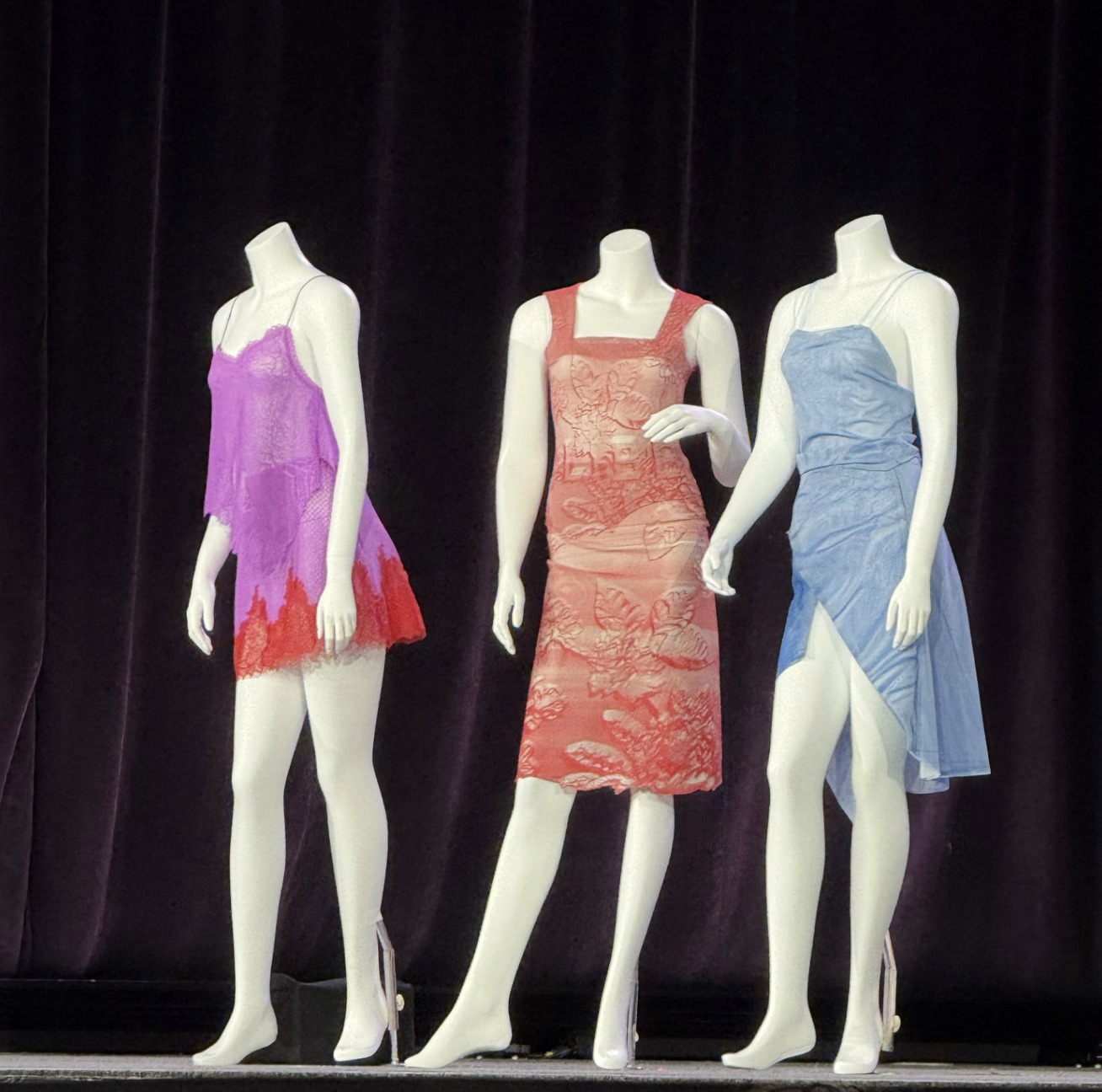

Clothing printed to fit, manufactured on demand, perhaps without the cutting waste or unsold inventory we associate with conventional fashion. And ideally, designed for circularity from the beginning. So where is Peleg at now?
In 2026, Peleg developed an AI-powered workflow that converts conventional sewing patterns into printable files for soft, wearable textiles. Working with Algenesis Labs and Dutch 3D-printing materials company colorFabb, she is experimenting with filaments derived from algae, hemp and castor oil.

Her vision is ambitious: clothing produced locally, customized to individual measurements, and manufactured only when someone wants it. She presented the technology at Figma’s Config 2026 conference in San Francisco and is now introducing the process to sportswear and luxury fashion brands.
Her longer-term goal is closed-loop design, where garments can return to a useful material cycle rather than become landfill waste. Design for recyclability becomes part of the manufacturing process. But an algae-derived textile isn’t automatically zero-waste or fully biodegradable. Those claims require independent verification of the finished material, its durability and end-of-life performance.
We recently featured NEUMÜHLE, a Swiss company making a $170 hoodie that sounds almost comically ordinary. But then again they are Swiss and so much that comes out of Switzerland is extraordinary. The Circular Mono Hoodie is made with organic cotton, including its sewing thread, without the usual hidden synthetics and elastane that complicate recycling. It’s a boring idea, in the most beautiful sense. Make a sweatshirt that can be recycled more easily because its materials aren’t fighting one another in the recycling machines.

Peleg is approaching fashion from almost the opposite direction. Rather than simplifying a conventional garment, she’s rethinking the tools that make one. Both approaches belong to a larger movement toward circular fashion, an ambition that Europe is now translating into regulations, product transparency requirements and new standards for textiles.
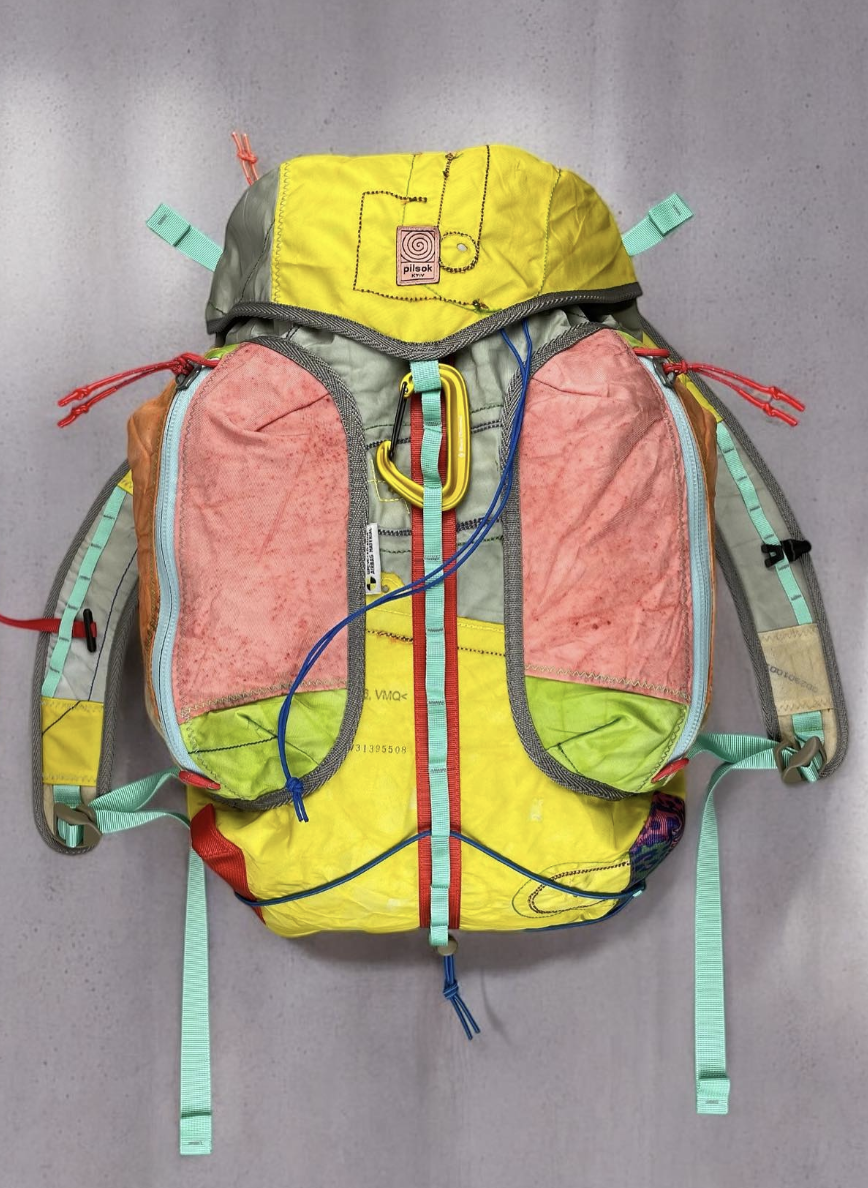
Related: Pilsok turns airbags into backbacks
I remember seeing an early demonstration of 3D-printed food at Brain Bar Budapest, a wonderful conference that brought together people thinking about the future. A Dutch woman was printing food, and I remember being fascinated less by what she made than by what the machine suggested. Once we have the tools, the question becomes what we choose to make with them. For her, back then, she was just using scrambled up materials and reframing them.
A printer doesn’t guarantee sustainability. An algae-based material isn’t automatically biodegradable, recyclable or environmentally harmless. Think of the cardboard bicycle by Izhar Gafni that we all got excited about. At the end of the day if you add enough toxic glue to woodchips, bamboo, or cardboard, it’s still a pile of toxic glue.

But inventions don’t have to solve every problem immediately to be worth pursuing. Some of these companies will succeed, some will have a second of fame on the runway or make a successful Kickstarter campaign. Others will fail. Some of their materials will disappear while their ideas find their way into new products and businesses that will be transformative.