
Refugees code their way to assylum

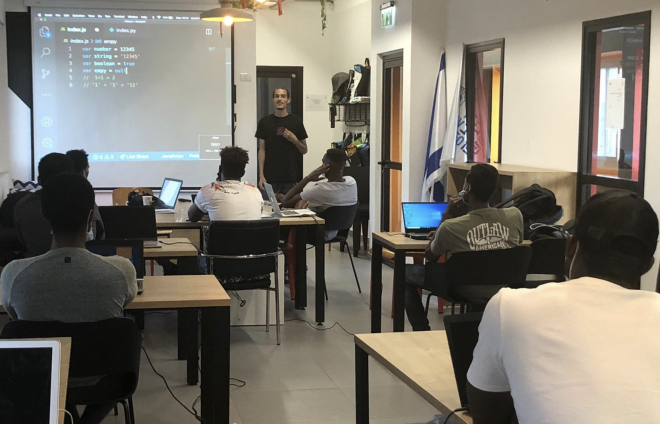
refugees learning code in a classroom in tel aviv
Coding their way into asylum

A new girlfriend, once interning for O., Oprah’s magazine, lent me an old review copy of Life in Code, by Ellen Ullman. It’s a series of essays by Silicon Valley programmer and author Ullman, one of the rare women who helped build the early days of computer programming, that which our future world of artificial intelligence will be built on. I know from my work founding a tech startup (read Mountain Thinking) that the coders who build algorithms today, are creating the foundations of tomorrow. 

In her book Ullman explores the personality that engineers transmit to their code. She explores the racism, sexism, classism that pervaded and still pervades Silicon Valley. She tells us how programs built 40 years ago by the world’s first coders are inexorably intwined with the foundations of every new line of code written today. 

Knowing the implications of having a 27-year-old guy who drinks Soylent and who can barely speak to real people –– building the foundations of machine learning and artificial intelligence –– is frightening.

While I don’t wish the life of a coder on anyone – it can be isolating, disconnected from reality, anxiety-inducing –– I do wish that those who go for it come with a set of values that embrace whole planet thinking. How? We need equal opportunities in teaching people how to code. (Read our past story on anglers in A.I.) And we need that code to consider religion, gender, age, opinions, fake news, real news, the language of plants…animals, minerals.

And that is why I like to hear about cities that stand up and teach code to anyone who is not like them.

Asylum seekers to Israel from violent countries like Sudan and Eritrea have had a challenging time integrating into Israel. They’ve crossed deserts, evaded live fire at the Egyptian border –- yet have never really felt at home in the Promised Land.

Social projects in Neve Shaanan

A new project by the City of Tel Aviv-Jaffa is offering a coding course to selected refugees, giving them a jumpstart to a new career path. And in my eyes a chance to influence the machine. 

The program is launched by The Platform, a municipal entrepreneurship center located in Tel Aviv’s Neve Shaanan neighborhood, and PresenTense, a social entrepreneurship program in Israel.

Neve Shaanan is the same neighbourhood as the location of the hydroponic urban farm project for refugees

hydroponics urban farming tel aviv
Refugees from Sudan learn how to be modern farmers

The coding program is organized in close partnership with the African Refugee Development Center, a non-profit founded in 2004 by asylum seekers and Israeli citizens to empower African refugees, asylum seekers and migrant workers. 

The 10-week coding course provides basic coding in Python and entrepreneurial skills to asylum seekers who wish to pursue future studies in the field.

A pilot welcomed a total of 10 students, who were selected from a pool of over 50 applicants following a basic computer and logic skills test, and an interview. All 10 students completed the course successfully and expressed interest in pursuing advanced-level coding programs in future.

Fisseha Tsegai Tesfamichael, an asylum seeker from Eritrea and graduate of the course said, “My hope for the future is to teach young people from my community and share with them what I know and have experienced. The journey of life is short, so let’s make the world better together.”

Shana Krakowski, director of The Platform said: “The dedication of the students in the course exceeded our expectations, with students never missing a class and improving their skills in such a short time. We hope this will be the first of many.”

The course was guided by Ismail Kharoub, a self-taught coder and successful entrepreneur from Jaffa who was able to teach participants in Arabic, Hebrew and English. 
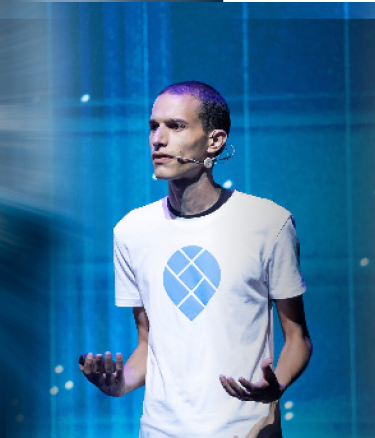
Ismail Kharoub
Ismail Kharoub

While some students hope that the course will represent their first step toward a tech career, others ultimately hope to start their own businesses building websites or their own applications.

Others aim to transfer their newly acquired knowledge to their respective communities, narrowing digital divides and expanding sought-after opportunities to enter a hi-tech industry that has remained resilient during the COVID-19 pandemic.

coding teaching refugees Kenya
Refugee students studying online in one of the computer labs at Arrupe Learning Center, Kakuma Refugee Camp in Kenya. Via Abdul Patient

You can now find coding workshops all over the world. One of the best workshops I have been exposed to is General Assembly in New York. But you can find classes and mentors at community colleges and online everywhere. Founded by an Israeli, there is also a tuition-free degree and diploma program at University of the People. 


Karin Kloosterman
Karin Kloostermanhttp://www.greenprophet.com
Karin Kloosterman is an award-winning journalist, innovation strategist, and founder of Green Prophet, one of the Middle East’s pioneering sustainability platforms. She has ranked in the Top 10 of Verizon innovation competitions, participated in NASA-linked challenges, and spoken worldwide on climate, food security, and future resilience. With an IoT technology patent, features in Canada’s National Post, and leadership inside teams building next-generation agricultural and planetary systems — including Mars-farming concepts — Karin operates at the intersection of storytelling, science, and systems change. She doesn’t report on the future – she helps design it. Reach out directly to [email protected]

Read More

TRENDING

Mona Khalil, Orange House Project founder, sea turtle protector killed in Lebanon

Mona Khalil spent decades protecting Lebanon's sea turtles and coastal ecosystems. Her death in the ongoing conflict between Israel and Hezbollah shines a light on a broader environmental tragedy unfolding across northern Israel and southern Lebanon. From damaged wetlands and disrupted bird migrations to threatened seed banks and endangered wildlife, the region's ecosystems are becoming casualties of a war with no clear end in sight.

Dan Zaslavsky’s energy tower dream is rising again in Iran and China

The Energy Tower idea never made the leap from drawings and engineering studies to full-scale construction. But nearly two decades after most people stopped talking about it, the concept is quietly evolving in two unexpected places: China and Iran. The concept let dreamers dream and doers do - figuring out more pleasing designs and engineering.

A visit to Amirim, Israel’s first all-vegetarian village in the Galilee

Just 15 kilometers from Tzfat there is a moshav that was founded in the late 50s that was ideologically influenced by organic, vegetarian and vegan principles. My hostess at Ohn-Bar, the tzimmer where I stayed, explained that the people of Amirim were among the pioneers of Israel’s strong vegetarian movement.

Israeli Hydrogen Startup H2Pro Are Trying to Solve Clean Energy’s Hardest Problem

The company has attracted backing from major investors including Breakthrough Energy Ventures, the climate fund founded by Bill Gates, along with industrial partners such as Sumitomo, ArcelorMittal, and Temasek, a multi-billion dollar company that owns Singapore airlines. H2Pro has raised more than $100 million USD and is moving from pilot projects toward commercial-scale deployments.

Desalination experts debunk Aqua Solaire, the floating desalination barge

AI makes it easy to dream, develop, and create images of what could be world-changing ideas, until the reality sets in. A new project making the rounds is Aqua Solaire, an allged French concept for a solar-powered desalination vessel designed to bring drinking water to coastal communities facing drought, storms, and infrastructure failures.

Yerukim Forms a New Green Economy Where the Money is Really Green

The Yerukim members who pick up the recyclables get to keep the monetary reward, the public earns "green" bills that can be used in shops, and business owners get to be associated with environmentalism.

Choosing Riyadh over Dubai? What Investors Should Know

Saudi Arabia is deploying capital at unmatched scale to catalyze tourism and advanced industry while rewiring its power-and-water backbone. The investable frontier is widening—especially in renewables, grid storage, water efficiency/desal retrofits, and hospitality operating platforms. Prudent investors will insist on phased delivery, enforceable KPIs (energy, water, biodiversity), and RHQ/zone compliance—while pricing political-economy and reputational risks alongside growth upside.

Sell your cooking oil for biodiesel money

Want to make money on old french fry oil? Sell it.

Qatar Alternative Energy Summit Pairs Investors And Innovators

Alternative energy investors and innovators can meet n' greet in Doha, Qatar March 16 and 17.

Here’s How To Implement The Four Pillars Of Employee Engagement

If you throw a party for your work team and they are vegans, don't make it a barbecue. Know the sustainability values of your team to boost moral and retain good people.

Locals From Rishon Fight IKEA

Big Box stores are a pretty new concept in Israel, and thank God that not every Israeli city wants them in their backyard. A word from someone who has see the beautiful farmland around her hometown Newmarket, Ontario stripped and converted into vulgar strip malls of big box shops: they have no place in a healthy and sustainable town or city.

The Jewish National Fund Meets An Inconvenient Truth

According to the JNF, it has transformed thousands of acres of barren land into green forests in Israel. They state that each person emits about 23 tons of carbon per year, estimating that each tree planted can absorb one ton of carbon in its lifetime. That's a whole lot of trees you'd need to be planting. Could so many fit in Israel?

How to quiet noise from construction in your office

Streets need to be resurfaced in New York but the humming and grinding noise is unsettling. Noise is environmental pollution. 

Popular Categories