
New pancreas cancer drug brings miracles to “incurable” cancer

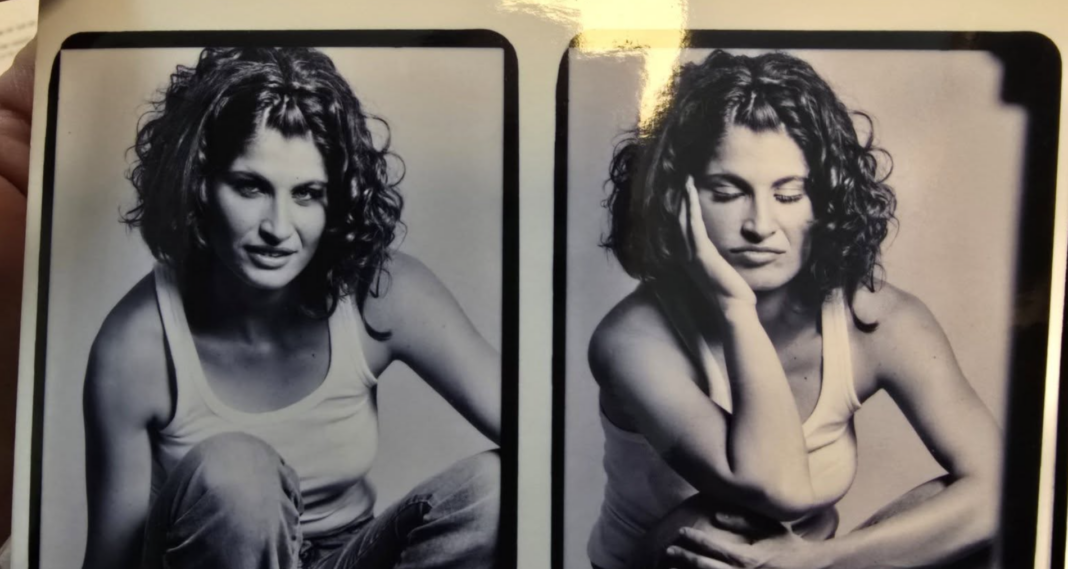
Dalit Hakim on old school rollerskates

For Dalit Hakim: Two weeks ago, my wild and crazy friend Dalit Hakim died from pancreatic cancer. Not the kind of cancer story we tell ourselves we can prepare for. Not a long battle measured in years. Not a gradual fading. For Dalit it was six weeks.

From the first stomach pains to the moment hot baths no longer eased the agony and she rushed to the hospital, only six weeks passed.

Dalit was young, healthy, vibrant. She ran a surfing company in Jaffa, she volunteered to feed hungry people. In her past life she had worked as a model. When I first met her, she was skateboarding down a street in Jaffa, radiating the kind of freedom and confidence that made strangers turn their heads and smile. She was one of those people who arrived like the sunshine on a grey morning as she walked into any room.

The contrast between that vitality and a six-week descent into pancreatic cancer is heartbreaking. She lived a life worth living. And then, suddenly, she was gone. We didn’t have a chance to say goodbye.
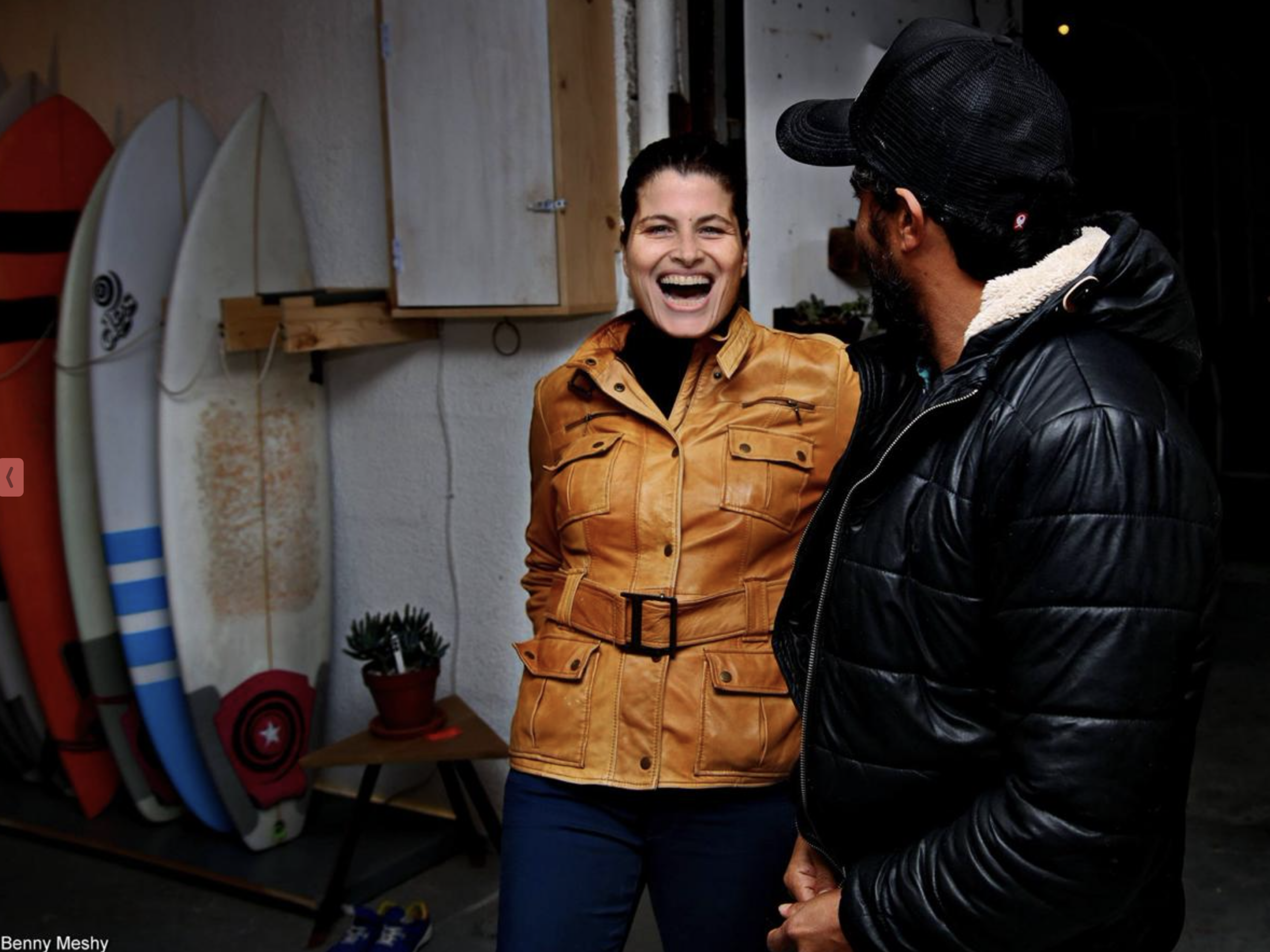
Dalit Hakim
Dalit Hakim

Pancreatic cancer has long been one of the most feared diagnoses in medicine. By the time symptoms appear, it is often too late. Doctors have traditionally described it as a cancer that can only truly be beaten if caught early, before it has spread. For most patients, that chance never comes.

That is why news emerging this week from the American Society of Clinical Oncology (ASCO) meeting struck me with such force.

An experimental drug called daraxonrasib has shown results that oncologists are calling extraordinary. In a trial involving 500 people with advanced pancreatic cancer, the pill reduced the risk of death by 60 percent compared with chemotherapy. Patients lived an average of 13.2 months instead of 6.7 months. Many experienced less pain and a better quality of life in those months.

Related: Turmeric can help fight cancer

The drug works by targeting RAS proteins—mutations found in roughly 90 percent of pancreatic cancers. For decades, these mutations were considered among the most difficult targets in cancer biology, earning the label “undruggable.” The success of daraxonrasib in pancreatic cancer now offers hope not only against this devastating disease but against other cancers long considered beyond the reach of modern medicine.

“These results are landscape-changing for metastatic pancreatic cancer patients with a KRAS mutation,” said ASCO doctors in a combined statement. “We are seeing unprecedented survival and efficacy in second-line treatment with an expected safety profile. The RAS revolution is here, and this study is proof of principle that targeting KRAS in pancreatic cancer is feasible and effective,” said Rachna Shroff, MD, MS, FASCO, Chief of the Division of Hematology/Oncology at the University of Arizona Cancer Center and an ASCO Expert in gastrointestinal cancers.
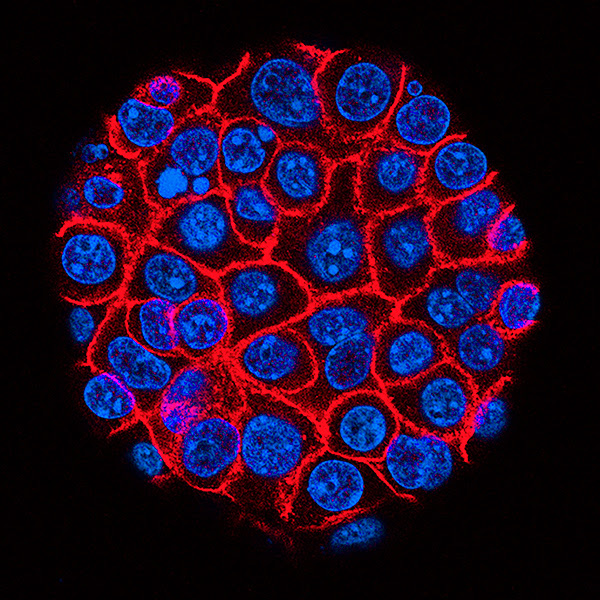
The success of daraxonrasib in pancreatic cancer offers hope against other cancers long-considered ‘undruggable’. (USC Norris Comprehensive Cancer Center/National Cancer Institute/SPL)
Pancreatic cancer cells. Fluorescence light micrograph of pancreatic cancer cells (nuclei in blue) growing as a sphere encased in membranes (red). These cells have been cultured, grown in a laboratory. This allows researchers to study factors that promote and prevent the formation of malignant tumours (cancers).

One oncologist involved in the research, Dr. Rachna Shroff, said the results were so powerful that she cried in clinic.

I cried too, but for a different reason: because the news arrived two weeks too late for Dalit.

It won’t bring back the woman on the skateboard. It won’t bring back the entrepreneur building her dreams around the sea. It won’t give her more sunsets, more waves, more laughter with friends.

But it may mean that future families receive a different phone call. It may mean that future patients are given time—months, perhaps years—that people with pancreatic cancer were rarely offered before. Every medical breakthrough has invisible passengers: the people who never got the chance to benefit from it, the people whose stories become part of the reason scientists keep pushing forward.

Dalit is one of those people for me. And her memory now sits beside a piece of news that offers something pancreatic cancer patients have rarely been given: Hope.

I will miss you more than you can know, Dalit. May your memory be a blessing.

Dalit Hakim on a skateboard
Karin Kloosterman
Karin Kloostermanhttp://www.greenprophet.com
Karin Kloosterman is an award-winning journalist, innovation strategist, and founder of Green Prophet, one of the Middle East’s pioneering sustainability platforms. She has ranked in the Top 10 of Verizon innovation competitions, participated in NASA-linked challenges, and spoken worldwide on climate, food security, and future resilience. With an IoT technology patent, features in Canada’s National Post, and leadership inside teams building next-generation agricultural and planetary systems — including Mars-farming concepts — Karin operates at the intersection of storytelling, science, and systems change. She doesn’t report on the future – she helps design it. Reach out directly to [email protected]

Read More

TRENDING

Married People Have Lower Cancer Risk, But the Reason is Complex

According to the research, cancer risk was 68% higher in never-married men and 85% higher in never-married women.

Is artificial turf bad for your health?

Artificial turf, the green plastic stuff that is supposed to look like grass, was sold to many home-owners as a clever compromise: a green-looking surface that makes you feel homey, but which needs no mowing. It survives heavy use, and in dry places like Middle East deserts, and in California or Texas, it can replace thirsty lawns. But it is toxic.

Oil pollution in Basrah’s soil is 1,200% higher than it should be

Soil pollution levels in parts of Basra are 1,200% to 3,300% higher than those typically measured in cities like Toronto or New York, according to new comparative soil data. It's getting into water.

Factors That Determine the Payout of Asbestos Cases

Asbestos is found in eye shadow and talc. Know your rights of this deadly environmental hazard.

Mini medical machines destroy pancreas cancer cells in new study

The idea of using MENPs to wirelessly control local electric fields was first proposed by Khizroev and Liang in 2011. Over the past decade, the concept evolved through global research partnerships and technological breakthroughs, culminating in this study.

How to quiet noise from construction in your office

Streets need to be resurfaced in New York but the humming and grinding noise is unsettling. Noise is environmental pollution. 

EarthX and a blueprint for sustainable investing

Trammell S. Crow, a Dallas-based businessman and father of four, is focusing his efforts on impact investing, and media that focuses on saving the planet through EarthX.

Mining Afghanistan’s Mineral Discoveries Similar to Avatar

Now that American forces in Afghanistan are commemorating the longest period of any war that America has been involved in, including the 1965-73 Vietnam War, the recent discoveries of large and extremely valuable mineral and metal deposits may finally bring to light a reason to continue the presence of US fighting forces in this war torn and backward country.

From Pilot Plant to Global Stage: How Aduro Clean Technologies’ 2026 Expansion Signals a Turning Point for Chemical Recycling Investors Like Yazan Al Homsi

The company's Next Generation Process (NGP) Pilot Plant in London, Ontario, has officially moved into initial operating campaigns, generating the kind of structured, repeatable data that separates laboratory promise from commercial viability.

Nobul’s Regan McGee on Shareholder Value: “Complacency Is the Silent Killer” 

Why the governance framework designed to protect shareholders so...

Should You Invest in the Private Market?

startustartup Unlike public stock exchanges, which offer daily trading, strict...

How to build a 100-year-company

Kongō Gumi is a Japanese construction company, purportedly founded in 578 A.D., making it the world's oldest documented company. What can we learn about building sustainable businesses from them?

How AI Helps SaaS Companies Reduce Repetitive Customer Support Work

SaaS products are designed for large numbers of users with different levels of experience, and also in renewable energy.

Popular Categories