Anthropic, Google and Stripe put nearly $1 Billion on carbon removal

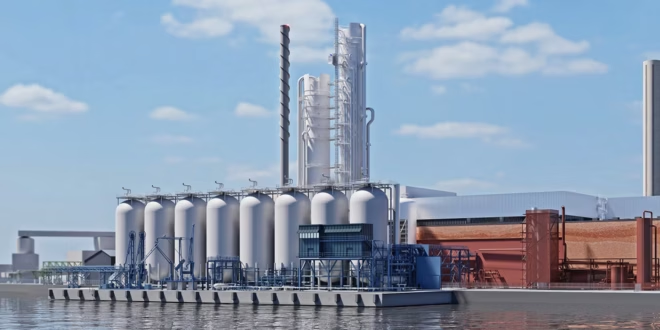
The Stockholm Exergi carbon capture-and-storage facility in the Swedish capital. Photo: Stockholm Exergi

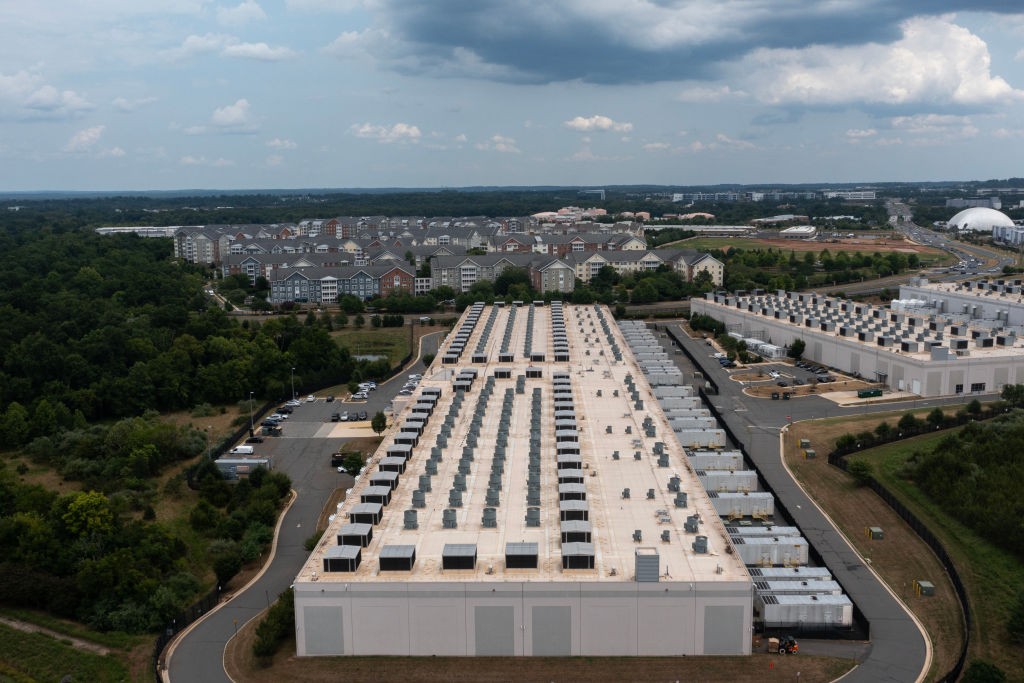
Artificial intelligence is often blamed for accelerating climate change because data centers cropping up like mushrooms, consume enormous amounts of electricity. AI models require staggering computing power and every new chatbot, image generator and digital assistant comes with a growing carbon footprint. Now some of the companies driving that demand are making one of the largest climate bets in history.

According to The Wall Street Journal, a coalition led by Frontier, backed by Stripe, Google, Salesforce and newly joined AI company Anthropic, has committed an additional $915 million to remove carbon dioxide from the atmosphere. The pledge adds to a previous $1 billion commitment and brings Frontier’s total buying power to nearly $2 billion.

The money isn’t going toward solar panels or wind farms. Instead, it is being used to create a market for technologies designed to pull carbon directly out of the sky and lock it away permanently. We learned in the early days that planting trees isn’t enough: Coldplay collected money to sequester carbon, then the trees died. And hey if Dubai can buy 20% of Zimbabwe for carbon projects, certainly Silicon Valley can play their part.

“The question today in carbon removal is whether demand will keep pace with that technology development,” Frontier head Hannah Bebbington Valori told the Wall Street Journal. “That’s why we’ve raised this growth advanced market commitment.”

The technologies sound like science fiction.

Some companies use giant fans to suck carbon dioxide from the atmosphere. Others spread crushed basalt rock on farmland where natural chemical reactions absorb carbon. Some are experimenting with changing ocean chemistry to increase carbon storage. Others capture emissions from bioenergy plants and store the carbon underground. They promise golden bullets but no carbon sequester technology is there yet.

For decades environmentalists argued that reducing emissions should be enough. Today many scientists acknowledge that even aggressive reductions may not be sufficient. Humanity has already emitted so much carbon that removing some of it may become essential.

The carbon-removal market has exploded from a niche experiment into a multi-billion-dollar industry. According to carbon-removal database CDR.fyi, companies have now purchased roughly 49 million carbon-removal credits worth around $12 billion.

Much of the market depends on a surprisingly small group of buyers. Microsoft alone accounts for roughly three-quarters of all engineered carbon-removal purchases and don’t be surprised if they earn tax breaks or perks on that.

If major tech companies stop buying, the industry could struggle.

That makes Frontier’s new commitment more significant than the dollar amount itself. The group is attempting to prove there will be long-term demand for carbon removal, giving startups confidence to build infrastructure that otherwise might never leave the laboratory.

In Sweden, carbon-removal developer Stockholm Exergi told the Journal that Frontier’s commitments helped unlock government support for its projects. Public money and private money are beginning to work together to build an entirely new climate industry.

The most interesting part of the story is not the technology itself. It is that some of the world’s largest AI and software companies are effectively creating a market from scratch.


Karin Kloosterman
Karin Kloostermanhttp://www.greenprophet.com
Karin Kloosterman is an award-winning journalist, innovation strategist, and founder of Green Prophet, one of the Middle East’s pioneering sustainability platforms. She has ranked in the Top 10 of Verizon innovation competitions, participated in NASA-linked challenges, and spoken worldwide on climate, food security, and future resilience. With an IoT technology patent, features in Canada’s National Post, and leadership inside teams building next-generation agricultural and planetary systems — including Mars-farming concepts — Karin operates at the intersection of storytelling, science, and systems change. She doesn’t report on the future – she helps design it. Reach out directly to [email protected]

Read More

TRENDING

Who Owns the Farm Robot? A State of Jefferson Startup Takes on Carbon Robotics

In California's self-proclaimed State of Jefferson, a small agricultural technology company is challenging the dominant laser-weeding business model. Laudando & Associates believes farmers should own and repair their AI-powered weeding tools rather than pay ongoing subscription fees. The approach has put the company on a collision course with industry leader Carbon Robotics, sparking a patent dispute that has pushed the Jefferson startup toward overseas markets while raising broader questions about ownership, right-to-repair, and the future of farm automation.

Weston Higginbotham found dead in a Kyoto forest: is climate anxiety part of the story?

In some ways, Weston has become a symbol of a generation wrestling with environmental and technological anxiety. Friends and family described him as deeply concerned about environmental issues. Reports also noted that he questioned the growing role of artificial intelligence in daily life, even reportedly disagreeing with his mother about her use of AI.

Robot Monk Gabi Takes Vows in Seoul. What Would the Buddha Have Thought?

  How many of us looked twice when we saw...

Australia’s $25 Billion AI Moment: Infrastructure Is the Easy Part

  Microsoft's record investment in Australia will build data centres....

AI data centers are triggering panic, instead of cleantech opportunities

AI may unintentionally become the economic engine that finally modernizes America’s aging grid. California is experiencing a massive AI data center boom, ranking 3rd in the U.S. with 227 operating centers and 54 more in development as of April 2026, according to Stanford.

Yerukim Forms a New Green Economy Where the Money is Really Green

The Yerukim members who pick up the recyclables get to keep the monetary reward, the public earns "green" bills that can be used in shops, and business owners get to be associated with environmentalism.

Choosing Riyadh over Dubai? What Investors Should Know

Saudi Arabia is deploying capital at unmatched scale to catalyze tourism and advanced industry while rewiring its power-and-water backbone. The investable frontier is widening—especially in renewables, grid storage, water efficiency/desal retrofits, and hospitality operating platforms. Prudent investors will insist on phased delivery, enforceable KPIs (energy, water, biodiversity), and RHQ/zone compliance—while pricing political-economy and reputational risks alongside growth upside.

Sell your cooking oil for biodiesel money

Want to make money on old french fry oil? Sell it.

Qatar Alternative Energy Summit Pairs Investors And Innovators

Alternative energy investors and innovators can meet n' greet in Doha, Qatar March 16 and 17.

Here’s How To Implement The Four Pillars Of Employee Engagement

If you throw a party for your work team and they are vegans, don't make it a barbecue. Know the sustainability values of your team to boost moral and retain good people.

Locals From Rishon Fight IKEA

Big Box stores are a pretty new concept in Israel, and thank God that not every Israeli city wants them in their backyard. A word from someone who has see the beautiful farmland around her hometown Newmarket, Ontario stripped and converted into vulgar strip malls of big box shops: they have no place in a healthy and sustainable town or city.

The Jewish National Fund Meets An Inconvenient Truth

According to the JNF, it has transformed thousands of acres of barren land into green forests in Israel. They state that each person emits about 23 tons of carbon per year, estimating that each tree planted can absorb one ton of carbon in its lifetime. That's a whole lot of trees you'd need to be planting. Could so many fit in Israel?

How to quiet noise from construction in your office

Streets need to be resurfaced in New York but the humming and grinding noise is unsettling. Noise is environmental pollution. 

Popular Categories