
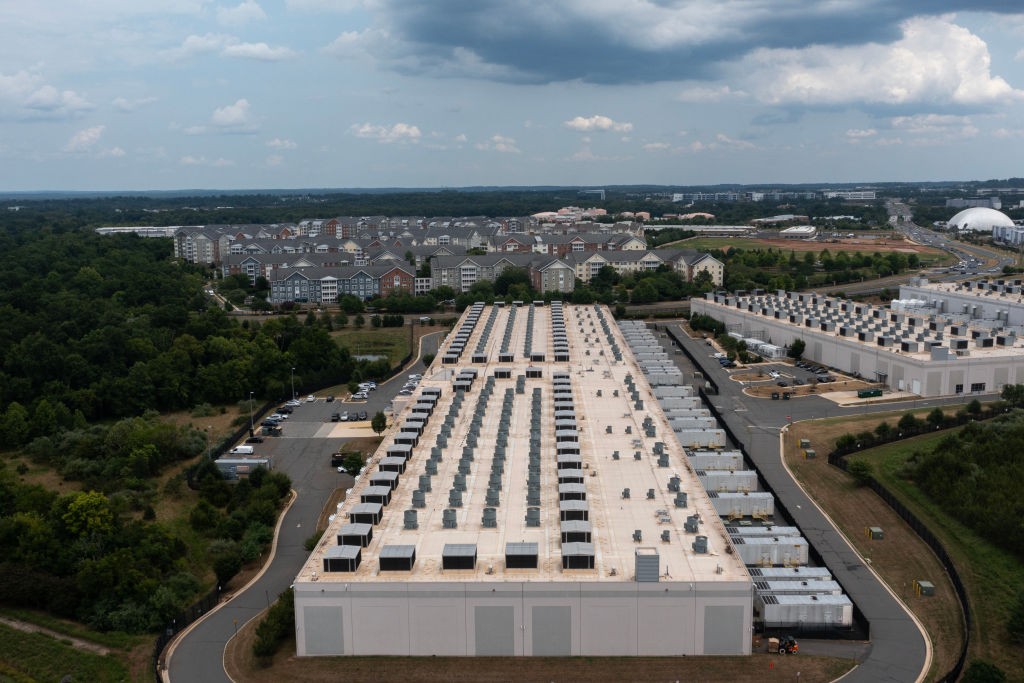
AI may unintentionally become the economic engine that finally modernizes America’s aging grid. California is experiencing a massive AI data center boom, ranking 3rd in the U.S. with 227 operating centers and 54 more in development as of April 2026, according to Stanford.
AI is triggering a new energy panic in America. Across the US states of California, Virginia, Texas, Arizona, and Georgia, residents are pushing back against the explosive growth of data centers powering artificial intelligence. People are worried about rising electricity bills, water use, backup diesel generators, massive transmission lines, and entire landscapes being transformed into server farms. They worry about the expansion and the business around it and believe that AI data centers will exploit the land, and give back little to the people in the communities.
The energy demand from AI is unlike anything the internet economy has seen before. Goldman Sachs estimates data center electricity demand could rise more than 160% by 2030. Utilities that spent years planning for flat electricity growth are suddenly scrambling to build power generation again. In places like Northern Virginia, now nicknamed “Data Center Alley,” local resistance has become fierce. Residents complain about noise, visual pollution, water consumption, and fears that ordinary households will subsidize the AI boom through higher utility costs.
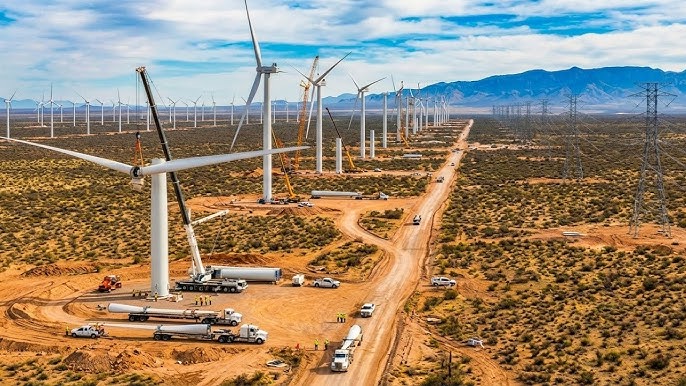
But there’s another side to the story that should be getting attention instead of fear. Renewable energy projects like SunZia — the giant new wind and transmission project connecting New Mexico wind power to California — may show how the AI boom could also accelerate the renewable energy transition.
SunZia is enormous:
- 3.5 gigawatts of wind energy
- a 550-mile high-voltage transmission line
- enough electricity for roughly 3 million people
- one of the largest renewable infrastructure projects in North American history.
And it’s arriving at exactly the right moment. The question is how does it scale without becoming an out of date boondoggle like the Ivanpah solar energy project? We interviewed Moshe Luz, one of the executives and founders of the company who has ideas up for grabs.
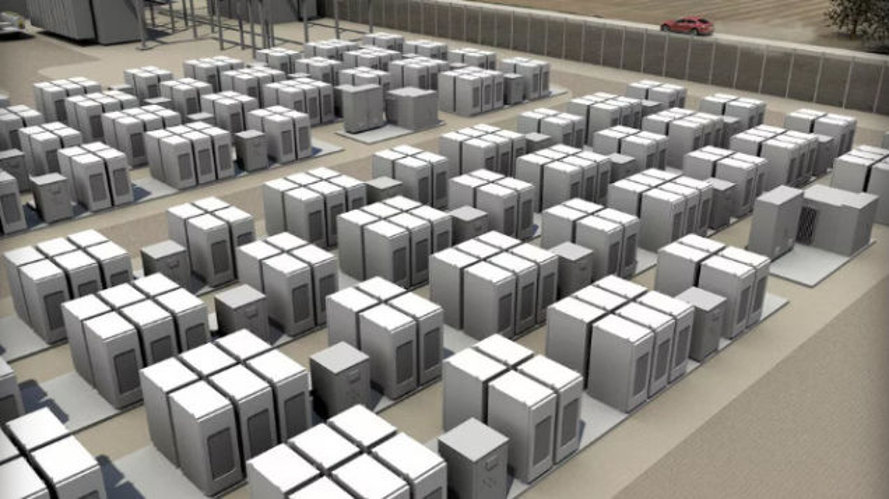
California already produces huge amounts of daytime solar energy, but AI workloads continue around the clock. Solar fades in the evening just as electricity demand rises. So the innovation doesn’t need to come in adding more solar panels, it’s the need for better battery storage and nighttime renewables. Wind, wave, and geothermal might help.
SunZia’s New Mexico wind profile helps solve that problem because wind often strengthens later in the day and overnight. Instead of relying entirely on natural gas plants after sunset, California can increasingly balance its grid using distant wind resources combined with battery storage.
The project is already beginning to send electricity into California while final testing continues. SunZia is not alone.
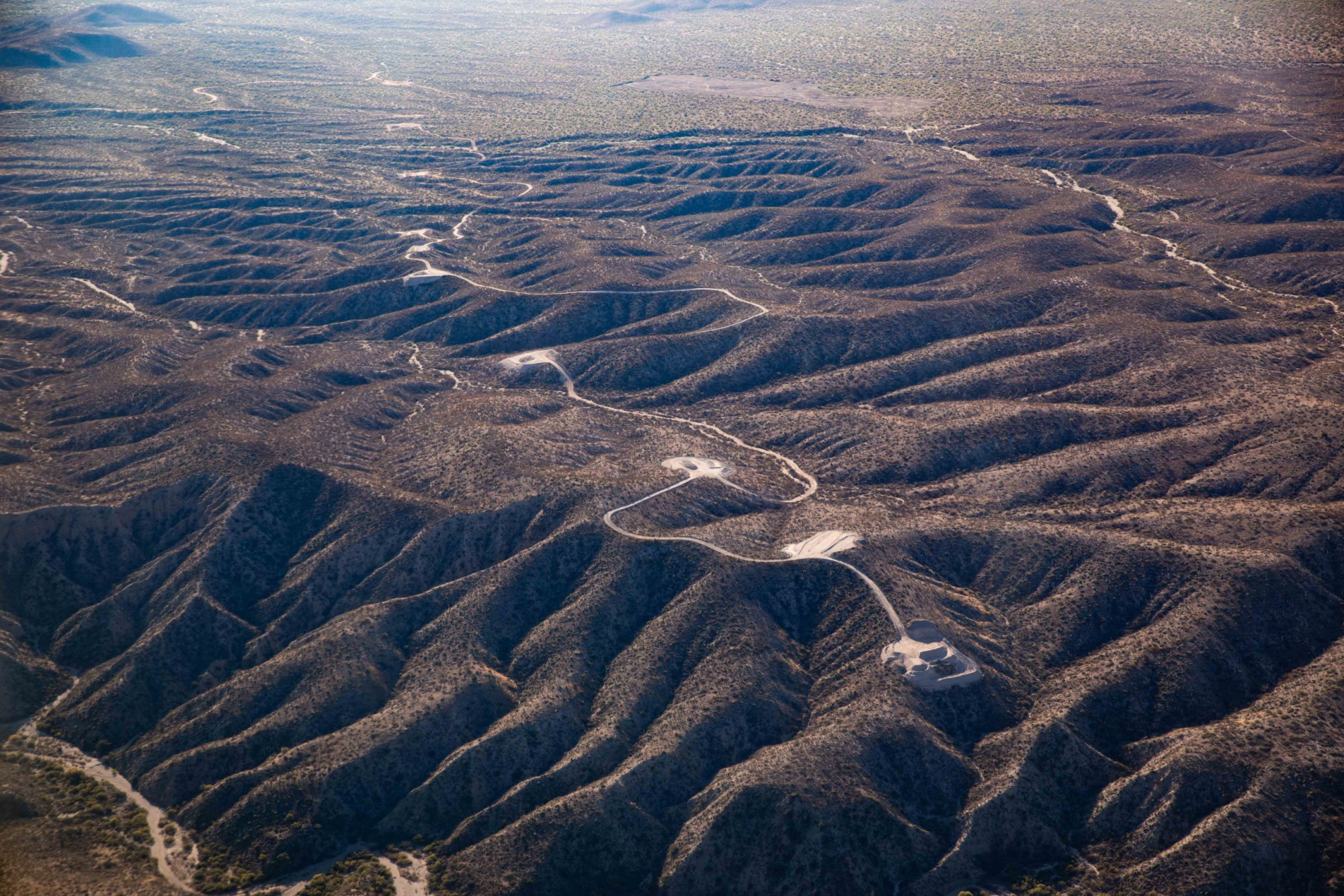
Alex Binford-Walsh/Archaeology Southwest, with the support of Lighthawk
Across the American West, a quiet clean-energy arms race is emerging around AI infrastructure.
In California’s Kern County, the Edwards & Sanborn project combines nearly 900 megawatts of solar with one of the world’s largest battery systems. In Nevada, the Gemini Solar project near Las Vegas pairs utility-scale solar with giant batteries designed to stabilize evening demand.
Texas has become perhaps the most radical experiment of all. Massive wind farms, sprawling solar installations, and grid-scale batteries are now increasingly handling short demand spikes that were once served by gas “peaker” plants. Texas leads America in wind energy, boasting over 30,000 MW of capacity from over 150 wind farms as of 2020, often supplying over 20% of the state’s electricity.
Meanwhile, Google and Microsoft are investing in enhanced geothermal energy projects in Nevada and Utah. Unlike solar and wind, geothermal can run 24 hours a day, making it attractive for AI-driven electricity demand that never sleeps.

The bigger shift underway is that AI may unintentionally become the economic engine that finally modernizes America’s aging grid.
For decades, utilities hesitated to build large transmission systems because electricity demand grew slowly. Now AI companies, cloud providers, and electrification trends are forcing states to rethink energy infrastructure entirely.
Ironically, the same technology many fear could overheat the planet may also become one of the biggest drivers of renewable energy investment in modern history.
There are tradeoffs.
Projects like SunZia still face lawsuits from Indigenous groups who argue transmission corridors damage sacred landscapes and fragile ecosystems. It’s difficult to get ecological assessments across state lines. Renewable energy itself is now colliding with difficult questions about land use, mining prime materials, water, and who benefits from “green growth.”