Saving Gourmet Wild Plants For The Future

Israeli authorities confiscate illegally harvested plants
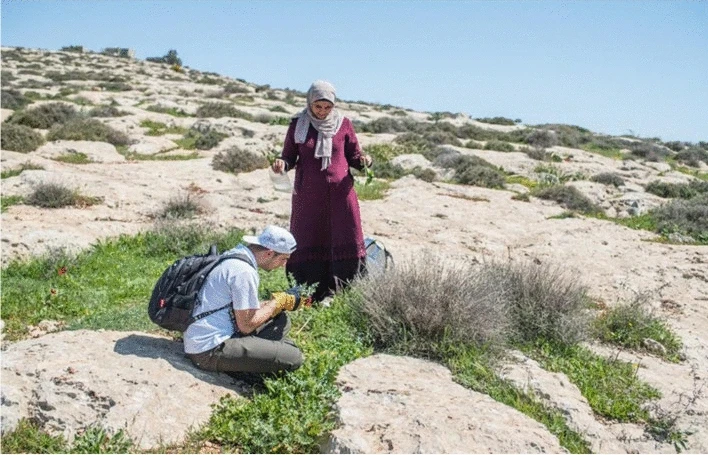
Photo credit: Oriya and Zana/Israel Nature and Parks Authority

Think of truffles, a gourmet wild food. The European tuber commands astronomical prices because of its inimitable flavor, rarity, and difficult harvesting. Oregano-like za’atar herb and thorny akub (Gundelia tournefortii) are desired in the Middle East in the same way. Read our post on the delicious truffles that grow in the desert.

Akoub and za’atar grow wild in the arid hills of Cyprus, Lebanon, Israel, the Sinai Peninsula (Egypt), Syria, and Turkey. In Israel both za’atar and akoub are protected species. Both can be cultivated. Both may be collected from the wild for personal use, in moderate amounts. We even have a recipe for za’atar pesto from chef Moshe Basson.

But traders illegally picking them for sale collect them by hundreds of kilos. Often they uproot the whole za’atar plant. With akoub, taking the edible flower head means no seed left for the next year. As a result, wild za’atar and akub are on the brink of extinction.

I myself grow za’atar in a container on my balcony; it’s a hardy Mediterranean herb that flourishes from year to year in the same spot. I bought the seedling from a plant nursery. I’ve also seen contraband sacks of the herb in Arab open-air markets.
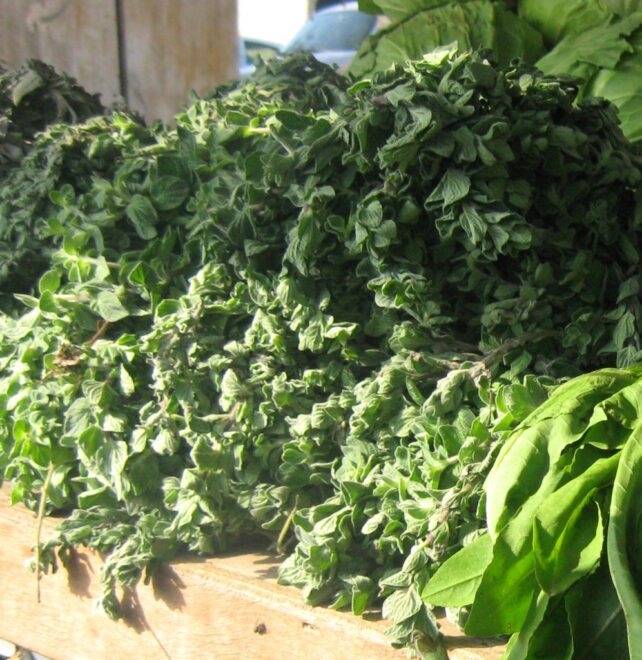
contraband za'atar
Photo by Miriam Kresh for Green Prophet

But admittedly you need to be a farmer to grow akoub, because propagation is tricky, the season is short, and the sharp thorns surrounding the delicious leaves and flowers make harvesting hard.
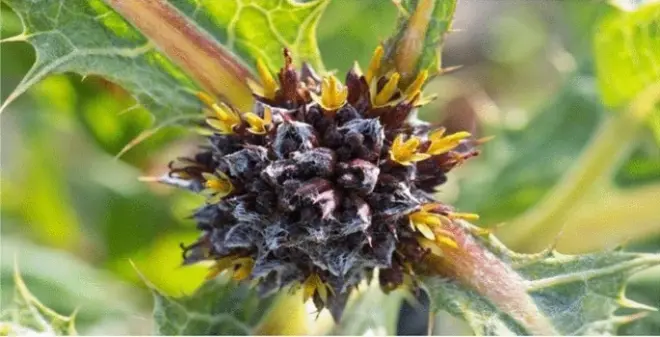
Wild akoub
Photo credit: : P. Gomez Barreiro, BG Kew

When living in northern Israel, I’d buy fresh akoub from a Beduin vendor in the local open-air market. It was expensive because of the labor involved in harvesting – I’ve seen robed Beduin slowly walking over the hills, stooping to pry the akoub away from the earth with a knife, then stripping the thorns off the edible stems.

I cooked both the flower and the stem. And yes, it was delicious, with its artichoke-like flavor. But now I wonder where that delicious akoub came from, and if I’d contributed to its overharvesting.
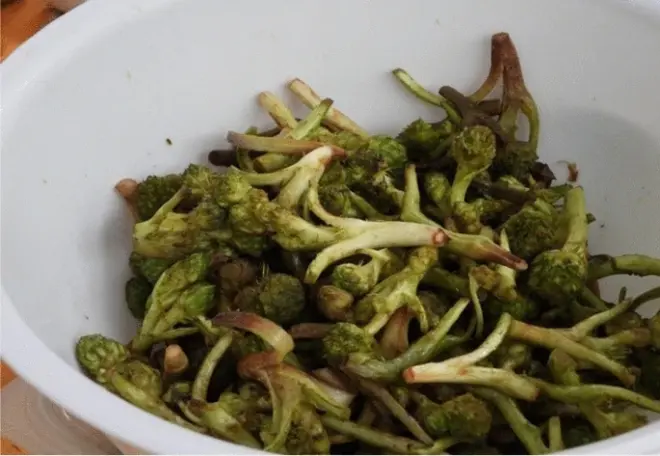
Aoub prepared for cooking
fPhoto credit: N. Hani, SBR via Springer Link

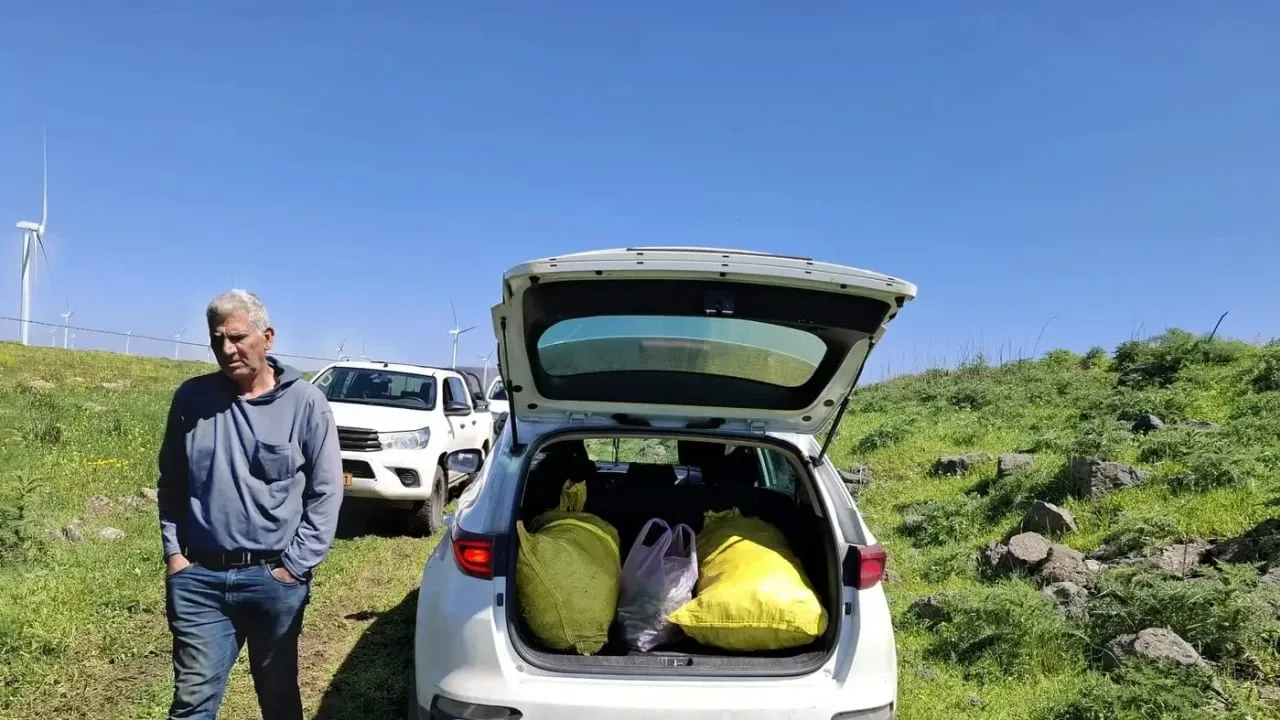
The Israel Nature and Parks Authority in the Golan have confiscated hundreds of kilos of za’atar and akoub. Some were meant to be sold in local markets, but much of this illegal produce makes its way across the border to Jordan.

Yaron Maderchi, head of the Investigations Department at the Israel Nature and Parks Authority, states that the fight against the illegal picking of wild plants is first and foremost a struggle to preserve them for future generations.

“We focus on strict enforcement against traders, not on picking for personal use,” said Maderchi. “There’s room for tradition and for responsible use of natural resources, but when picking is carried out on a commercial scale and without oversight, it leads to severe damage and even local extinction of species.”

The Israel Nature and Parks Authority noted that overpicking is driven mostly by financial incentives.

“Akoub is a highly sought-after product in the market, and illegal harvesting can generate profits of thousands of shekels per day,” said Oriya Vazana, a regional inspector in the central Golan for the Israel Nature and Parks Authority.

“Economic pressure leads people to enter these areas in large numbers,” said Vazana. “The entire market operates in cash, without oversight. Beyond the damage to the plant itself, we are also seeing collateral harm: cutting fences, opening gates, damage to grazing lands, and safety risks on roads. This is a complex issue that requires significant resources, manpower, and targeted enforcement throughout the short harvesting season.”

The plant has significant ecological importance, serving as a food source for pollinators and insects and contributing to biodiversity. Left unharvested, the flower head dries up and tumbles on the ground, dispersing seed.

About 240 kilos of akoub and 25 kilos of za’atar were seized by the Israel Nature and Parks Authority in the Golan, working with border police.
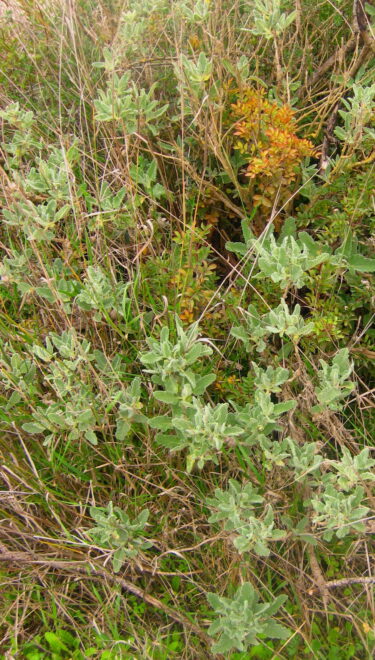
wild za'atar
Za’atar growing wild in Israel. Photo credit: Miriam Kresh for Green Prophet


Miriam Kresh
Miriam Kreshhttps://www.greenprophet.com/
Miriam Kresh is an American ex-pat living in Israel. Her love of Middle Eastern food evolved from close friendships with enthusiastic Moroccan, Tunisian and Turkish home cooks. She owns too many cookbooks and is always planning the next meal. Miriam can be reached at miriam (at) greenprophet (dot) com.

Read More

TRENDING

Self-repairing contact lenses and desalination membranes that fix themselves?

Could the humble contact lens become a sustainability breakthrough? Researchers in Korea have developed a self-healing hydrogel lens that repairs scratches with just one hour of UV light exposure. Beyond reducing waste from disposable contacts, the technology could one day help extend the life of solar panels, water filtration systems, and other plastic-based products.

5 Reasons Why You Should Save Seeds (and plant them)

Saving seeds from tomatoes, peppers, herbs and flowers helps preserve biodiversity, strengthen food security, and keep heirloom varieties alive. Even a small balcony garden can make a difference.

Collecting kinetic energy from roads; REPS turns traffic into a power plant

REPS announced a $23.6M equity financing round to scale...

Make Guarapo De Piña (it’s fermented pineapple juice)

In Cuba, guarapo is simply freshly-pressed sugar cane juice, and is drunk on the spot, without waiting for it to ferment. But in Colombia, Venezuela, Peru and Mexico, they homebrew guarapo from pineapples or oranges, and the fragrant fluid sits on the kitchen counter top to ferment until it's bubbly.

Baby teeth read like tree rings paint a picture of toxins in early life

A new study from the Icahn School of Medicine at Mount Sinai in New York offers a striking insight into how the environments we are born into can quietly shape our brains years later. By analyzing naturally shed baby teeth, the ones tucked under pillows for the tooth fairy, researchers have reconstructed a detailed timeline of exposure to environmental metals during pregnancy and early infancy.

Yerukim Forms a New Green Economy Where the Money is Really Green

The Yerukim members who pick up the recyclables get to keep the monetary reward, the public earns "green" bills that can be used in shops, and business owners get to be associated with environmentalism.

Choosing Riyadh over Dubai? What Investors Should Know

Saudi Arabia is deploying capital at unmatched scale to catalyze tourism and advanced industry while rewiring its power-and-water backbone. The investable frontier is widening—especially in renewables, grid storage, water efficiency/desal retrofits, and hospitality operating platforms. Prudent investors will insist on phased delivery, enforceable KPIs (energy, water, biodiversity), and RHQ/zone compliance—while pricing political-economy and reputational risks alongside growth upside.

Sell your cooking oil for biodiesel money

Want to make money on old french fry oil? Sell it.

Qatar Alternative Energy Summit Pairs Investors And Innovators

Alternative energy investors and innovators can meet n' greet in Doha, Qatar March 16 and 17.

Here’s How To Implement The Four Pillars Of Employee Engagement

If you throw a party for your work team and they are vegans, don't make it a barbecue. Know the sustainability values of your team to boost moral and retain good people.

Locals From Rishon Fight IKEA

Big Box stores are a pretty new concept in Israel, and thank God that not every Israeli city wants them in their backyard. A word from someone who has see the beautiful farmland around her hometown Newmarket, Ontario stripped and converted into vulgar strip malls of big box shops: they have no place in a healthy and sustainable town or city.

The Jewish National Fund Meets An Inconvenient Truth

According to the JNF, it has transformed thousands of acres of barren land into green forests in Israel. They state that each person emits about 23 tons of carbon per year, estimating that each tree planted can absorb one ton of carbon in its lifetime. That's a whole lot of trees you'd need to be planting. Could so many fit in Israel?

How to quiet noise from construction in your office

Streets need to be resurfaced in New York but the humming and grinding noise is unsettling. Noise is environmental pollution. 

Popular Categories