Asia Powers Ahead in Global Renewable Boom, But Africa Risks Being Left Behind

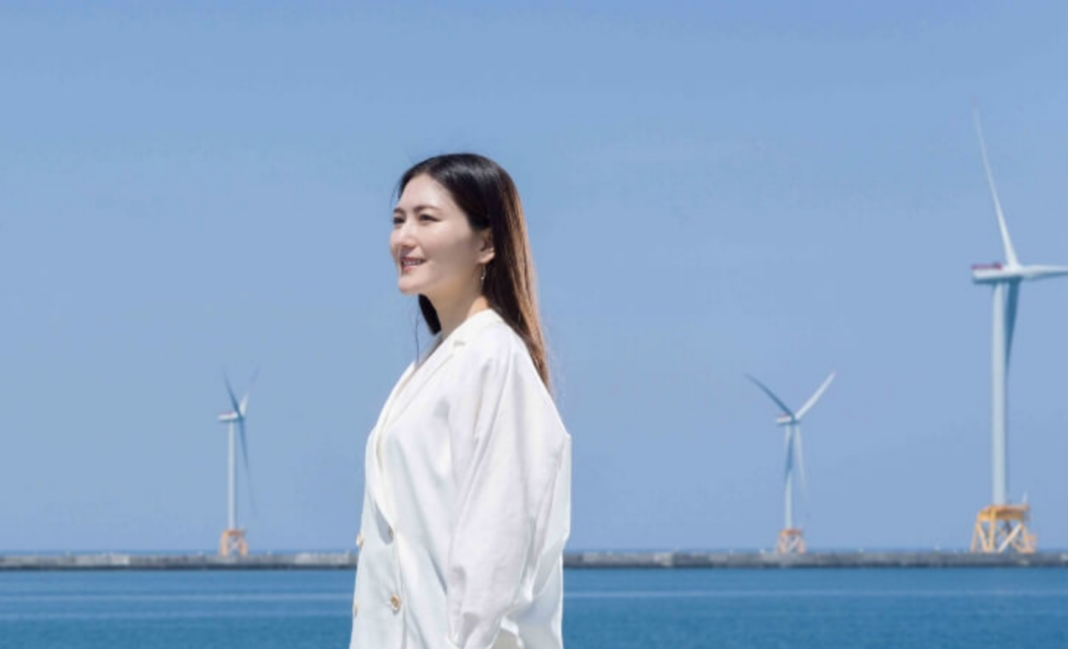
Japanese singer Ayako Tanaka visits Japan's Jera wind farm
Japanese singer Ayako Tanaka visits Japan’s Jera wind farm

The latest Renewable Energy Statistics 2025 report from the International Renewable Energy Agency (IRENA) based in the United Arab Emirates reveals a widening global divide in the renewable energy transition. While Asia added the lion’s share of new renewable energy capacity in 2024—an astounding 71%—regions such as Africa, Central America, and the Caribbean collectively contributed only 2.8% to global growth.

Africa, in particular, expanded its renewables capacity by just 7.2%, despite its vast untapped resources and pressing need for energy access.

This imbalance poses a serious challenge to the global goal of tripling renewable capacity by 2030, as agreed at COP28. If the current growth trajectory continues, the world will reach only 10.3 terawatts (TW) of installed renewables by 2030—falling 0.9 TW short of the 11.2 TW target. To stay on course, annual capacity must grow by at least 16.6% over the next five years.
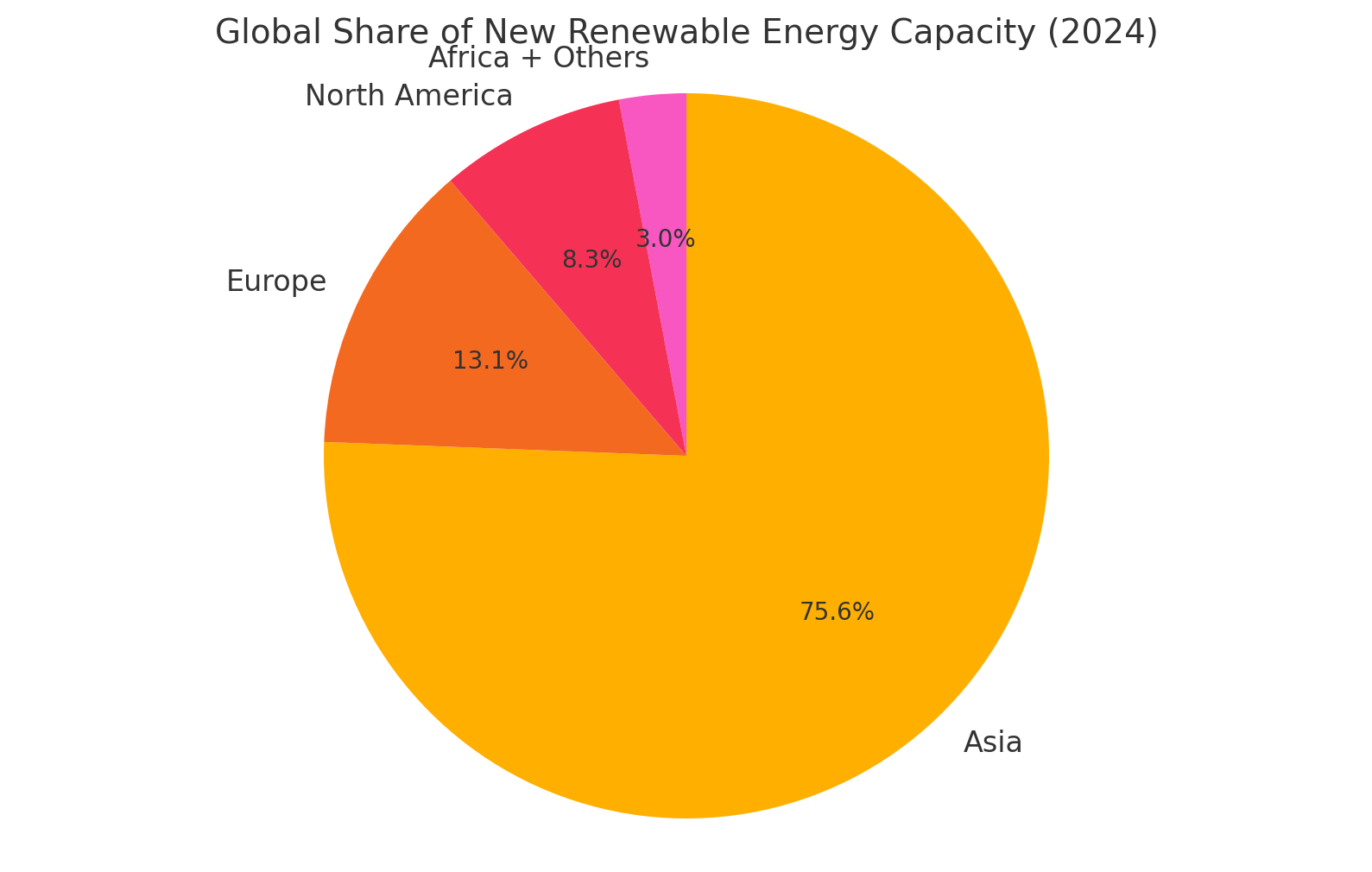
Here is a simple infographic showing the global divide in new renewable energy capacity additions for 2024. Asia dominates with 71%, while Africa and other developing regions together account for just 2.8%, highlighting the urgent need for more equitable investment. Would you like a version with additional data or annotations?

Francesco La Camera, Director-General of IRENA, underscores the urgency of closing this investment and infrastructure gap. “The renewable energy boom is transforming global energy markets, driving economies and creating vast investment opportunities,” La Camera said. “However, the growing regional divide highlights that not everyone is benefiting equally from this transition.”

Indeed, countries that have succeeded in attracting renewable investment—particularly in Asia and parts of Europe—are now reaping broader economic rewards, including increased energy security, job creation, and industrial growth.

The 2024 data also highlights the overwhelming dominance of solar and wind energy, which accounted for 97.5% of all net renewables additions. Solar energy alone contributed 453 GW, reinforcing its position as the most cost-competitive and rapidly scalable clean energy source on the planet. Wind followed with 114 GW.

With renewables now representing 46.2% of global installed power capacity—nearly equal to fossil fuels at 47.3%—the economic and environmental case for continued investment is stronger than ever. Renewable electricity generation grew by 5.6% in 2023 compared to 2022, reaching 8,928 terawatt-hours, while non-renewable generation grew by only 1.2%.

Still, the benefits of this energy revolution are not evenly shared. As La Camera notes, “Bridging the divide and closing the investment gap between countries and regions is critical. It requires targeted policies, international financing, and partnerships that unlock capital and technology where they are needed most.”

UN Climate Change Executive Secretary Simon Stiell echoed this call to action: “To deliver on the global agreement at COP28 to triple renewables by 2030, we need to move much further and faster, and make more progress on the key enablers for vulnerable developing countries. The investments required will pay huge dividends—cutting emissions, driving economic growth, creating jobs, and supporting affordable, secure energy for all.”

The message is clear: the green energy future is well underway, but unless more inclusive policies and financing mechanisms are put in place, the clean energy divide could become the defining inequity of the 21st century.


Read More

TRENDING

Wave wind energy for Nvidia’s next AI energy boom?

As AI factories consume unprecedented amounts of electricity, NVIDIA is looking beyond chips and data centers to the ocean. The company recently spotlighted Israel's Eco Wave Power and its wave energy projects in Jaffa and Los Angeles, highlighting how AI, digital twins and renewable energy can work together to meet future power demands. The collaboration reflects a growing realization that the future of artificial intelligence may depend as much on clean energy infrastructure as it does on computing power.

Collecting kinetic energy from roads; REPS turns traffic into a power plant

REPS announced a $23.6M equity financing round to scale...

AI data centers are triggering panic, instead of cleantech opportunities

AI may unintentionally become the economic engine that finally modernizes America’s aging grid. California is experiencing a massive AI data center boom, ranking 3rd in the U.S. with 227 operating centers and 54 more in development as of April 2026, according to Stanford.

Korean researchers create battery from greenhouse gases

Professor Ji-Soo Jang, in collaboration with Professor Taekwang Yoon of Ajou University and Professor Hansel Kim of Chungbuk National University, has developed a novel energy device that generates electricity during the process of capturing greenhouse gases.

Eco-Friendly Flashlights for Off-Grid Travel and Home Preparedness

Reliable light matters in more places than ever. It matters on a back road after sunset, in a cabin with limited power, and at home during a storm outage. Research across sustainability guidance, preparedness resources, and off-grid living coverage points to one clear takeaway: people want lighting that works well, lasts longer, and creates less waste.

Yerukim Forms a New Green Economy Where the Money is Really Green

The Yerukim members who pick up the recyclables get to keep the monetary reward, the public earns "green" bills that can be used in shops, and business owners get to be associated with environmentalism.

Choosing Riyadh over Dubai? What Investors Should Know

Saudi Arabia is deploying capital at unmatched scale to catalyze tourism and advanced industry while rewiring its power-and-water backbone. The investable frontier is widening—especially in renewables, grid storage, water efficiency/desal retrofits, and hospitality operating platforms. Prudent investors will insist on phased delivery, enforceable KPIs (energy, water, biodiversity), and RHQ/zone compliance—while pricing political-economy and reputational risks alongside growth upside.

Sell your cooking oil for biodiesel money

Want to make money on old french fry oil? Sell it.

Qatar Alternative Energy Summit Pairs Investors And Innovators

Alternative energy investors and innovators can meet n' greet in Doha, Qatar March 16 and 17.

Here’s How To Implement The Four Pillars Of Employee Engagement

If you throw a party for your work team and they are vegans, don't make it a barbecue. Know the sustainability values of your team to boost moral and retain good people.

Locals From Rishon Fight IKEA

Big Box stores are a pretty new concept in Israel, and thank God that not every Israeli city wants them in their backyard. A word from someone who has see the beautiful farmland around her hometown Newmarket, Ontario stripped and converted into vulgar strip malls of big box shops: they have no place in a healthy and sustainable town or city.

The Jewish National Fund Meets An Inconvenient Truth

According to the JNF, it has transformed thousands of acres of barren land into green forests in Israel. They state that each person emits about 23 tons of carbon per year, estimating that each tree planted can absorb one ton of carbon in its lifetime. That's a whole lot of trees you'd need to be planting. Could so many fit in Israel?

How to quiet noise from construction in your office

Streets need to be resurfaced in New York but the humming and grinding noise is unsettling. Noise is environmental pollution. 

Popular Categories