Catfish slime the next antibiotic?

In Jewish dietary law, known as kashrut, fish must have fins and scales to be kosher. Since catfish lacks scales, they are not kosher.
Catfish may help you overcome the next infection

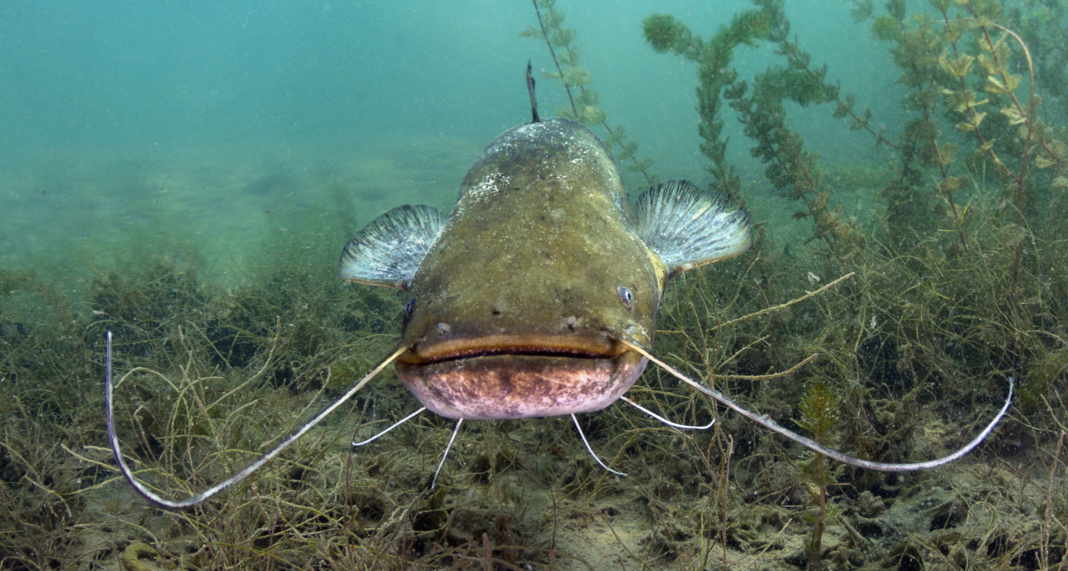
Catfish and all manners of fish have a mucus and slimy outer coating on their bodies making them hard to hold onto. That mucus might be the key to the next antibiotic, say scientists who have worked with the skin of the scaleless, farmed African catfish.

Additional testing is necessary to prove the compound is safe and effective for use as future antibiotic, but it could be a potent new tool against antimicrobial-resistant bacteria such as extended-spectrum beta-lactamase (ESBL) producing E. coli.

Read Also: Biomimicry in buildings

“The global public health threat due to antimicrobial resistance necessitates the search for safe and effective new antibacterial compounds,” says Hedmon Okella, a postdoctoral researcher at the University of California, Davis, and led the project.“In this case, fish-derived antimicrobial peptides present a promising source of potential leads.”

For the study, the researchers extracted several peptides (short chains of amino acids) from African catfish skin mucus and used machine learning algorithms to screen them for potential antibacterial activity.

They then chemically synthesized the most promising peptide, called NACAP-II, and tested its efficacy and safety on ESBL-E. coli and mammalian blood cells, respectively.

In Jewish dietary law, known as kashrut, fish must have fins and scales to be kosher. Since catfish lacks scales, they are not kosher.

These tests showed that NACAP-II caused the bacteria to break open, or lyse, without appearing to harm the mammalian blood cells. “Preliminary findings indicate that this promising peptide candidate potentially disrupts the bacterial cell envelope to cause lysis at a very low concentration,” Okella said.

The place where the peptide was found — in the mucus on the skin of farmed African catfish — is not as unlikely as it may seem. As anyone who has tried to hold one can attest, fish are enveloped in a slippery layer of mucus. This mucus is known to protect the fish against infections by physically carrying germs off of the skin and by producing antimicrobial compounds such as the one Okella’s team isolated.

Read Also: 7 Gulf fish totally okay to eat

Many existing medicines are based on compounds that were first found in nature, and scientists speculate that marine and aquatic organisms represent a particularly rich — though largely untapped — source of bioactive compounds. Ever pick up a snail and try to wash off the slime it leaves behind?

As a next step, the researchers plan to study the peptide’s effects in animal models and explore strategies to produce it inexpensively. “We are currently utilizing chemical synthesis to upscale the production of this peptide that we believe will one day be of use as drug candidate in the battle against antimicrobial resistance,” Okella said.

Karin Kloosterman
Karin Kloostermanhttp://www.greenprophet.com
Karin Kloosterman is an award-winning journalist, innovation strategist, and founder of Green Prophet, one of the Middle East’s pioneering sustainability platforms. She has ranked in the Top 10 of Verizon innovation competitions, participated in NASA-linked challenges, and spoken worldwide on climate, food security, and future resilience. With an IoT technology patent, features in Canada’s National Post, and leadership inside teams building next-generation agricultural and planetary systems — including Mars-farming concepts — Karin operates at the intersection of storytelling, science, and systems change. She doesn’t report on the future – she helps design it. Reach out directly to [email protected]

Read More

TRENDING

Bricks and Minifigs, and the Future of Circular Play

A second-hand LEGO marketplace keeps plastic bricks circulating for years instead of ending up forgotten in basements or discarded in landfills. It gives children access to building materials at lower prices. It extends the lifespan of a product that was originally designed to last generations.

The Ocean’s Hidden ‘Dark Web’ Is Being Fished Before Scientists Understand It

Deep below the ocean's surface, in a dimly lit region known as the twilight zone, millions of fish are being caught every year. Scientists say the consequences are largely unknown.

Barnacle glue could fix coral reefs, inspire new advances in building and medicine

Aalto University researchers create a protein-based adhesive inspired by barnacles and mussels that works underwater and could aid coral reef restoration.

Why wombats have cubed poop – with photos

Why is wombat poop cubed? Plus great photos.

How Termites and Ants Built the Tropics’ Best Soil

This is like discovering that the pyramids weren’t built by natural erosion, but by ancient engineers

Yerukim Forms a New Green Economy Where the Money is Really Green

The Yerukim members who pick up the recyclables get to keep the monetary reward, the public earns "green" bills that can be used in shops, and business owners get to be associated with environmentalism.

Choosing Riyadh over Dubai? What Investors Should Know

Saudi Arabia is deploying capital at unmatched scale to catalyze tourism and advanced industry while rewiring its power-and-water backbone. The investable frontier is widening—especially in renewables, grid storage, water efficiency/desal retrofits, and hospitality operating platforms. Prudent investors will insist on phased delivery, enforceable KPIs (energy, water, biodiversity), and RHQ/zone compliance—while pricing political-economy and reputational risks alongside growth upside.

Sell your cooking oil for biodiesel money

Want to make money on old french fry oil? Sell it.

Qatar Alternative Energy Summit Pairs Investors And Innovators

Alternative energy investors and innovators can meet n' greet in Doha, Qatar March 16 and 17.

Here’s How To Implement The Four Pillars Of Employee Engagement

If you throw a party for your work team and they are vegans, don't make it a barbecue. Know the sustainability values of your team to boost moral and retain good people.

Locals From Rishon Fight IKEA

Big Box stores are a pretty new concept in Israel, and thank God that not every Israeli city wants them in their backyard. A word from someone who has see the beautiful farmland around her hometown Newmarket, Ontario stripped and converted into vulgar strip malls of big box shops: they have no place in a healthy and sustainable town or city.

The Jewish National Fund Meets An Inconvenient Truth

According to the JNF, it has transformed thousands of acres of barren land into green forests in Israel. They state that each person emits about 23 tons of carbon per year, estimating that each tree planted can absorb one ton of carbon in its lifetime. That's a whole lot of trees you'd need to be planting. Could so many fit in Israel?

How to quiet noise from construction in your office

Streets need to be resurfaced in New York but the humming and grinding noise is unsettling. Noise is environmental pollution. 

Popular Categories