
Renewable energy investment matchmaking platform

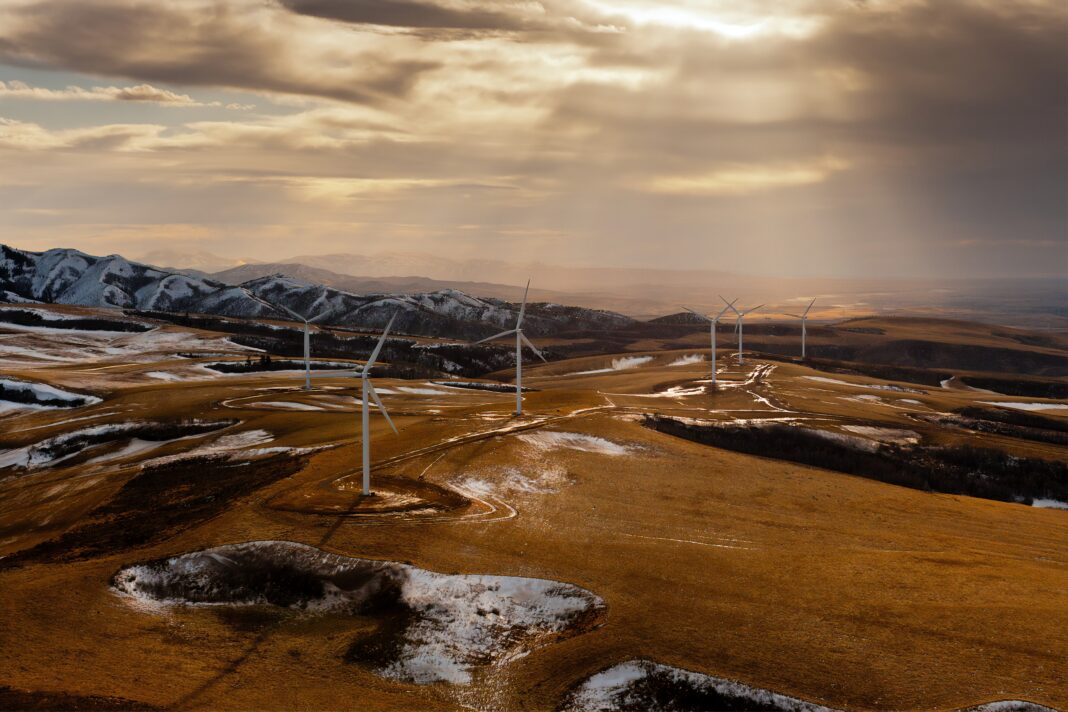
wind turbines
Renewable energy installations can provide round the clock energy in continents like Africa, where more than half of the people are without power. This is important for industries like gold mining, who need to use polluting diesel in offgrid locations.

Advancing the renewables-based energy transformation is an opportunity to meet international climate goals while boosting economic growth, creating millions of jobs and improving human welfare by 2050, finds the first Global Renewables Outlook released by the International Renewable Energy Agency – IRENA. They are like the United Nations for Renewable Energy and are based in Abu Dhabi.

While a pathway to deeper decarbonisation requires total energy investment up to USD 130 trillion, the socio-economic gains of such an investment would be massive, the Outlook reveals. Transforming the energy system could boost cumulative global GDP gains above business-as-usual by USD 98 trillion between now and 2050. It would nearly quadruple renewable energy jobs to 42 million, expand employment in energy efficiency to 21 million and add 15 million in system flexibility.

IRENA’s Director-General Francesco La Camera said: “Governments are facing a difficult task of bringing the health emergency under control while introducing major stimulus and recovery measures. The crisis has exposed deeply embedded vulnerabilities of the current system. IRENA’s Outlook shows the ways to build more sustainable, equitable and resilient economies by aligning short-term recovery efforts with the medium-and long-term objectives of the Paris Agreement and the UN Sustainable Development Agenda.”

“By accelerating renewables and making the energy transition an integral part of the wider recovery, governments can achieve multiple economic and social objectives in the pursuit of a resilient future that leaves nobody behind.”

The Global Renewables Outlook examines building blocks of an energy system along with investment strategies and policy frameworks needed to manage the transition. It explores ways to cut global CO2 emissions by at least 70 per cent by 2050.

Green Hydrogen?

A new perspective on deeper decarbonisation shows a path towards net-zero and zero emissions. Building on five technology pillars, particularly green hydrogen and extended end-use electrification could help replace fossil-fuels and slash emissions in heavy industry and hard-to-decarbonise sectors.

Low-carbon investment would significantly pay off, the Outlook shows, with savings eight times more than costs when accounting for reduced health and environmental externalities. A climate-safe path would require cumulative energy investments of USD 110 trillion by 2050 but achieving full carbon neutrality would add another USD 20 trillion.

The Outlook also looked at energy and socio-economic transition paths in 10 regions worldwide. Despite varied paths, all regions are expected to see higher shares of renewable energy use, with Southeast Asia, Latin America, the European Union and Sub-Saharan Africa poised to reach 70-80 per cent shares in their total energy mixes by 2050.

Similarly, electrification of end uses like heat and transport would rise everywhere, exceeding 50 per cent in East Asia, North America and much of Europe. All regions would also significantly increase their welfare and witness net job gains in the energy sector despite losses in fossil fuels. However, economy-wide, regional job gains are distributed unevenly. While regional GDP growth would show considerable variation, most regions could expect gains.

Raising regional and country-level ambitions will be crucial to meet interlinked energy and climate objectives and harvest socio-economic welfare. Stronger coordination on international, regional and domestic levels will be equally important, the Outlook concludes, with financial support being directed where needed including to the most vulnerable countries and communities.

As partner of the Climate Investment Platform, launched to drive clean energy uptake and mobilise clean investment, IRENA will advance collaborative action targeted to help countries create enabling conditions and unlock renewable investment.

Karin Kloosterman
Karin Kloostermanhttp://www.greenprophet.com
Karin Kloosterman is an award-winning journalist, innovation strategist, and founder of Green Prophet, one of the Middle East’s pioneering sustainability platforms. She has ranked in the Top 10 of Verizon innovation competitions, participated in NASA-linked challenges, and spoken worldwide on climate, food security, and future resilience. With an IoT technology patent, features in Canada’s National Post, and leadership inside teams building next-generation agricultural and planetary systems — including Mars-farming concepts — Karin operates at the intersection of storytelling, science, and systems change. She doesn’t report on the future – she helps design it. Reach out directly to [email protected]

Read More

TRENDING

Collecting kinetic energy from roads; REPS turns traffic into a power plant

REPS announced a $23.6M equity financing round to scale...

AI data centers are triggering panic, instead of cleantech opportunities

AI may unintentionally become the economic engine that finally modernizes America’s aging grid. California is experiencing a massive AI data center boom, ranking 3rd in the U.S. with 227 operating centers and 54 more in development as of April 2026, according to Stanford.

24 7 renewable energy: how solar, wind, batteries and AI SaaS replace fossil fuels

A new report from the International Renewable Energy Agency based in Abu Dhabi makes something clear that many in the industry already suspected. When solar and wind are paired with battery storage, they can deliver reliable, round the clock electricity at costs that compete with, and often beat, fossil fuels.

Japan wants to build a solar panel ring around the moon

Unlike solar power on Earth, which is limited by night cycles, weather, and seasons, the Moon offers something close to uninterrupted exposure to the Sun. By placing solar infrastructure in orbit or along the lunar surface, engineers could generate continuous clean energy at a scale that may exceed global electricity demand,  the Japanese scientists say.

Korean researchers create battery from greenhouse gases

Professor Ji-Soo Jang, in collaboration with Professor Taekwang Yoon of Ajou University and Professor Hansel Kim of Chungbuk National University, has developed a novel energy device that generates electricity during the process of capturing greenhouse gases.

Yerukim Forms a New Green Economy Where the Money is Really Green

The Yerukim members who pick up the recyclables get to keep the monetary reward, the public earns "green" bills that can be used in shops, and business owners get to be associated with environmentalism.

Choosing Riyadh over Dubai? What Investors Should Know

Saudi Arabia is deploying capital at unmatched scale to catalyze tourism and advanced industry while rewiring its power-and-water backbone. The investable frontier is widening—especially in renewables, grid storage, water efficiency/desal retrofits, and hospitality operating platforms. Prudent investors will insist on phased delivery, enforceable KPIs (energy, water, biodiversity), and RHQ/zone compliance—while pricing political-economy and reputational risks alongside growth upside.

Sell your cooking oil for biodiesel money

Want to make money on old french fry oil? Sell it.

Qatar Alternative Energy Summit Pairs Investors And Innovators

Alternative energy investors and innovators can meet n' greet in Doha, Qatar March 16 and 17.

Here’s How To Implement The Four Pillars Of Employee Engagement

If you throw a party for your work team and they are vegans, don't make it a barbecue. Know the sustainability values of your team to boost moral and retain good people.

Locals From Rishon Fight IKEA

Big Box stores are a pretty new concept in Israel, and thank God that not every Israeli city wants them in their backyard. A word from someone who has see the beautiful farmland around her hometown Newmarket, Ontario stripped and converted into vulgar strip malls of big box shops: they have no place in a healthy and sustainable town or city.

The Jewish National Fund Meets An Inconvenient Truth

According to the JNF, it has transformed thousands of acres of barren land into green forests in Israel. They state that each person emits about 23 tons of carbon per year, estimating that each tree planted can absorb one ton of carbon in its lifetime. That's a whole lot of trees you'd need to be planting. Could so many fit in Israel?

How to quiet noise from construction in your office

Streets need to be resurfaced in New York but the humming and grinding noise is unsettling. Noise is environmental pollution. 

Popular Categories