Turkish locals displaced coal, new report by 350.org

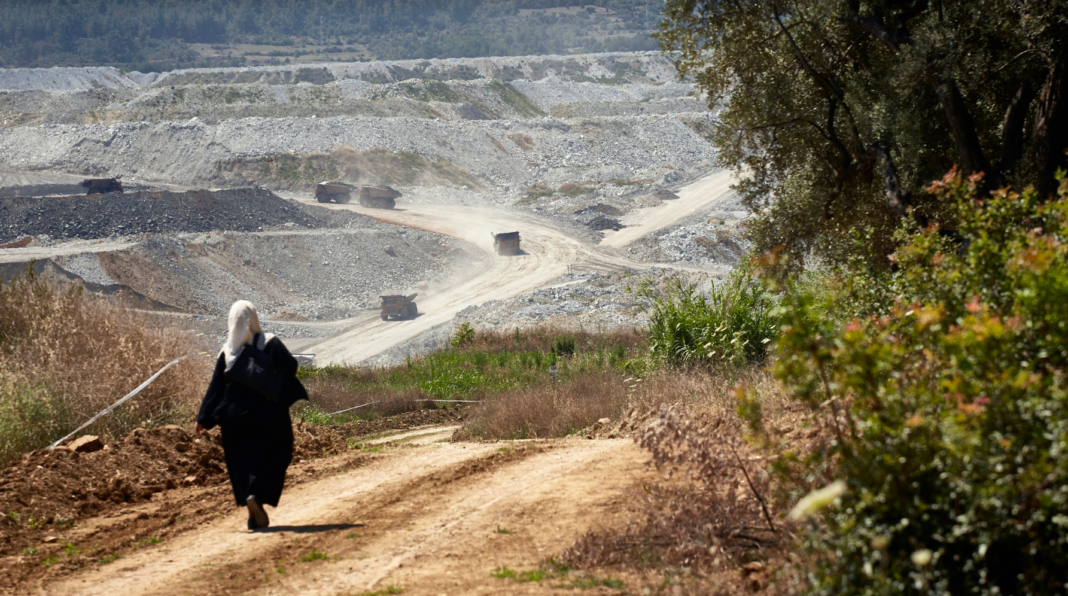
Muğla (Turkey): The impacts coal is having on the environment around Muğla, Turkey.
Photo by Servet Dilber, 2019.

The global climate crisis, mainly generated by the biggest fossil fuel corporations in the world, is seriously aggravating the already extensive and heavy set of human rights violations caused by this same industry, warns a report released this Friday, February 7th, by 350.org. The whole report can be found here (links to PDF) and offers great research for anyone researching how fossil fuels and coal extraction, like in the case of Turkey, harms human rights. 

Oil, gas and coal companies are directly or indirectly responsible for some of the worst human rights abuses committed by corporations around the world in the last three decades, as shown by the 10 cases mentioned in the publication.

Considering just a few major cases of violations, the fossil fuel industry was directly responsible for about 45,000 premature deaths caused by health issues, the dump of more than 18 billion gallons of toxic wastewater into rivers and the opening of almost 2.5 million acres of previously inaccessible indigenous homeland to land speculation, colonization and deforestation. 

The violations have been committed by both local companies and industry giants like Chevron-Texaco and Shell. In some cases included in the report, companies have acted in tandem with governments or private security groups in an illegal or non-transparent manner. 

350.org’s Phil Aroneanu On How To Build An Environmental Movement In The Middle East

Abuses include the murder or arbitrary arrest of community leaders in Mexico and Nigeria, restrictions on the right to protest in the United States, the forced removal of communities in Turkey, threats to water security in Australia, contamination of rivers and fish stocks in indigenous territories in the Ecuadorian Amazon, and contributing to the premature deaths of thousands of people from respiratory causes in Bangladesh.

With the aggravation of the climate crisis, the negative environmental and social impacts of the actions of fossil fuel companies in several of these cases – and similar ones – are getting worse.

“The pollution and contamination often caused by fossil fuel industry activities mainly affect the poorest populations, as well as the climate crisis. Vulnerable communities are being doubly exposed to losses or scarcity of land, fish stocks and water, for example,” said Aaron Packard, manager of the Climate Defenders program at 350.org.

In addition, the report highlights that there is a growing understanding among civil society and Human Rights scholars and practitioners that fossil fuel production is an attack on the millions of people most directly affected by the climate crisis. In the Netherlands, individuals and organizations such as Friends of the Earth are taking legal action against Shell claiming they neglect their legal duties in relation to climate change, as the report mentions. Also, other legal cases against fossil fuel companies for the damages caused by their activities are underway in several places of the United States.

“Even in the face of the clearest scientific evidence that burning fossil fuels is literally setting the planet on fire, this sector continues to invest in the same old model and often misinforms society about the climate crisis and its causes. In doing so, companies are actively disregarding the right of entire populations to a healthy environment, sufficient and quality food, and a political and social scenario of stability,” stated Aaron Packard.

The 350.org report also highlights the need for local and national governments to act to protect climate defenders, such as community leaders who are at the forefront of mobilizations for the rights of affected families. Many of them are targets of threats, aggression, torture or murder.

An exemplary case mentioned by the report is the one of Samir Flores Soberanes, a journalist and leader of a Nahuátl Indigenous community in Mexico. In February 2019, he was murdered in his home after receiving several threats for publicly opposing the construction of a pipeline and two new thermal power plants in the community’s territory.

“Many of the countries where these violations are committed have signed international treaties obliging them to protect threatened individuals, guarantee the right to protest and respect the decisions of Indigenous communities about their territories. Legal mechanisms exist, but they have to be enforced, legitimized and respected,” said Nicole Oliveira, Managing Director of 350.org in Latin America.

Karin Kloosterman
Karin Kloostermanhttp://www.greenprophet.com
Karin Kloosterman is an award-winning journalist, innovation strategist, and founder of Green Prophet, one of the Middle East’s pioneering sustainability platforms. She has ranked in the Top 10 of Verizon innovation competitions, participated in NASA-linked challenges, and spoken worldwide on climate, food security, and future resilience. With an IoT technology patent, features in Canada’s National Post, and leadership inside teams building next-generation agricultural and planetary systems — including Mars-farming concepts — Karin operates at the intersection of storytelling, science, and systems change. She doesn’t report on the future – she helps design it. Reach out directly to [email protected]

Read More

TRENDING

How a tick bite can lead to a life-threatening meat allergy AFG

Imagine developing a severe allergy to steak after a single tick bite. That's the reality for people with alpha-gal syndrome, a rapidly emerging condition linked to lone star ticks and other tick species. As researchers uncover how tick saliva rewires the immune system, health officials warn that hundreds of thousands of Americans may already be living with this unusual red meat allergy.

Understanding Food Production: Karl Studer on the Urban-Rural Knowledge Gap

Karl Studer occupies an unusual position in American business. As President of Quanta Services, he oversees electrical infrastructure operations across the United States, Canada, and Australia, managing thousands of employees and multibillion-dollar projects.

Wave wind energy for Nvidia’s next AI energy boom?

As AI factories consume unprecedented amounts of electricity, NVIDIA is looking beyond chips and data centers to the ocean. The company recently spotlighted Israel's Eco Wave Power and its wave energy projects in Jaffa and Los Angeles, highlighting how AI, digital twins and renewable energy can work together to meet future power demands. The collaboration reflects a growing realization that the future of artificial intelligence may depend as much on clean energy infrastructure as it does on computing power.

Weston Higginbotham found dead in a Kyoto forest: is climate anxiety part of the story?

In some ways, Weston has become a symbol of a generation wrestling with environmental and technological anxiety. Friends and family described him as deeply concerned about environmental issues. Reports also noted that he questioned the growing role of artificial intelligence in daily life, even reportedly disagreeing with his mother about her use of AI.

Billie Eilish’s Mom Takes the Stage at Hollywood Climate Summit — But Does Hollywood Still Care About Climate Change?

Hollywood once promised to help save the planet. Leonardo DiCaprio warned of climate catastrophe from awards stages. Celebrities flew to climate conferences. Studios pledged greener productions. Streaming platforms rushed to commission environmental documentaries. But in 2026, with the aftermath of wildfires, heatwaves and floods becoming routine, a question lingers: Does Hollywood still care about climate change?

Yerukim Forms a New Green Economy Where the Money is Really Green

The Yerukim members who pick up the recyclables get to keep the monetary reward, the public earns "green" bills that can be used in shops, and business owners get to be associated with environmentalism.

Choosing Riyadh over Dubai? What Investors Should Know

Saudi Arabia is deploying capital at unmatched scale to catalyze tourism and advanced industry while rewiring its power-and-water backbone. The investable frontier is widening—especially in renewables, grid storage, water efficiency/desal retrofits, and hospitality operating platforms. Prudent investors will insist on phased delivery, enforceable KPIs (energy, water, biodiversity), and RHQ/zone compliance—while pricing political-economy and reputational risks alongside growth upside.

Sell your cooking oil for biodiesel money

Want to make money on old french fry oil? Sell it.

Qatar Alternative Energy Summit Pairs Investors And Innovators

Alternative energy investors and innovators can meet n' greet in Doha, Qatar March 16 and 17.

Here’s How To Implement The Four Pillars Of Employee Engagement

If you throw a party for your work team and they are vegans, don't make it a barbecue. Know the sustainability values of your team to boost moral and retain good people.

Locals From Rishon Fight IKEA

Big Box stores are a pretty new concept in Israel, and thank God that not every Israeli city wants them in their backyard. A word from someone who has see the beautiful farmland around her hometown Newmarket, Ontario stripped and converted into vulgar strip malls of big box shops: they have no place in a healthy and sustainable town or city.

The Jewish National Fund Meets An Inconvenient Truth

According to the JNF, it has transformed thousands of acres of barren land into green forests in Israel. They state that each person emits about 23 tons of carbon per year, estimating that each tree planted can absorb one ton of carbon in its lifetime. That's a whole lot of trees you'd need to be planting. Could so many fit in Israel?

How to quiet noise from construction in your office

Streets need to be resurfaced in New York but the humming and grinding noise is unsettling. Noise is environmental pollution. 

Popular Categories