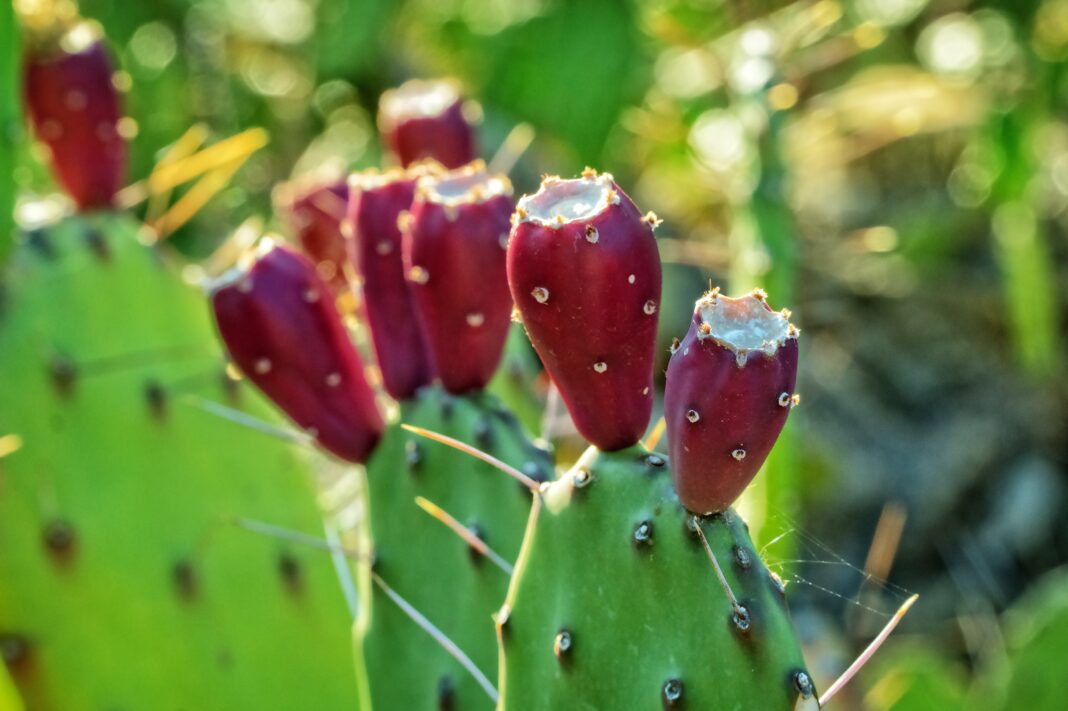

 Sabras – prickly pears – opuntia ficus-indica. The reddish-purple sabra fruit is ripening in empty lots and gardens all over Israel and the Levant. But you have to know how to pick them. As one who ignored the warning cries of experienced foragers and grasped a ripe sabra with my bare hand, I know. The innocent-looking fuzzy patches on the fruit are actually clusters of minuscule, barely-visible needles that embed themselves in the skin, and sting and itch like crazy. It was days before the torment stopped.
So I learned to gather sabras the right way. Cut the fruit off the cactus with a long-handled knife, or pick it with tongs. Let it drop into a shallow basket with handles, so you don’t touch it. There are also those who nail a tin can to a stick and nudge the fruit off.
To remove the needles, put on gloves and scrub the fruit with a stiff brush. Or impale the fruit on a fork and burn the needles off over a gas flame.
It’s a good idea to wear gloves to skin the fruit, even after processing it, just in case you missed a cluster of needles. Make a slit in the peel and work your knife around the fruit to slip it off entirely.
Is it worth all that trouble? Well, if you love the thrill of foraging – harvesting what you did not sow – yes. If you’re diligent, there’s lots of free fruit out there to harvest, as sabras grow in abundance wherever they take root. On the other hand, many supermarkets sell sabras already de-fanged. If sabras are common in your part of the world, you too may find them cleaned for sale.
It’s said that the cactus was brought to other parts of the Levant from Spain, by the Moors, centuries ago. Israel’s sabras are wild descendants of ornamental Mexican plants that someone brought over for his or her garden.
It’s true that the plant is easy to grow: just slice off one of the leaves, or paddles as they’re called, and let it dry, upright, until a scab forms on the cut part. Depending on the weather, this will take from a few days to a few weeks. Plant the paddle, cut side down, in sandy compost. It won’t need watering right away, as it provides its own moisture at first. When the paddle stands up by itself, it has made roots. Then water it, but only once a month afterward.
A plague of aphids from Lebanon appeared in Israel’s north, destroying many of these iconic plants. But there’s hope. In June of 2017, the Volcani Institute in the Arava imported Mexican ladybugs that eat the aphids. The BioBee farm on kibbutz Sde Eliyau raised them, and the Keren Kayemet LeIsrael set them loose to feast on the pests. The plan is apparently working; infected sabra plants treated with ladybug therapy have recovered and returned to good health.
There are many ways to enjoy the fruit. One, and maybe the best, is to put several ready-to-eat raw sabras in a bowl of ice water and eat them raw and chilled. You can also make jam from the fruit, or a fruity syrup that makes a delicious base for mojitos. The paddles, also known by their Mexican name, nopales, are edible too, but that’s a topic for another post.
Sabra Jam
Weigh the peeled fruit.
Weigh out the same quantity of white sugar.
Cook the fruit with the sugar over low heat, until the sugar is dissolved.
Place into a large saucepan with the same weight in sugar.
Add the juice of one lemon or one lime.
Bring the jam to a boil over high heat. Lower heat to medium and continue cooking until you have obtained a thick gel.
Strain the jam through cloth or a fine sieve to remove the seeds.
Store in sterilized jars.
Rosy Sabra Syrup
A base for cocktails and sorbets.
Ingredients:
12 large sabra fruits
2 cups white sugar
Juice of 1 large lemon
Chop the fruit and scrape it into a large saucepan. Cover it with water.
Bring the fruit and water to a boil. Lower the heat to a simmer and cook another 15 minutes.
Strain the liquid. Lacking cheesecloth or a jelly bag, a large, clean kitchen towel with a loose weave works too.
Measure the liquid. Rinse the saucepan out and pour the sabra liquid back into it.
Add the sugar and lemon juice to the sabra liquid. Bring the mixture to a boil; reduce heat when the sugar has dissolved.
Skim off any foam that forms on the surface of the syrup.
Pour the syrup into clean jars while it’s still hot – make sure to place a metal or wooden spoon in the jars before pouring the syrup in.
Close the jars and allow the syrup to cool.
Refrigerate the syrup and use within one month.