Cutting down ancient trees to make way for Jaffa’s eco-train

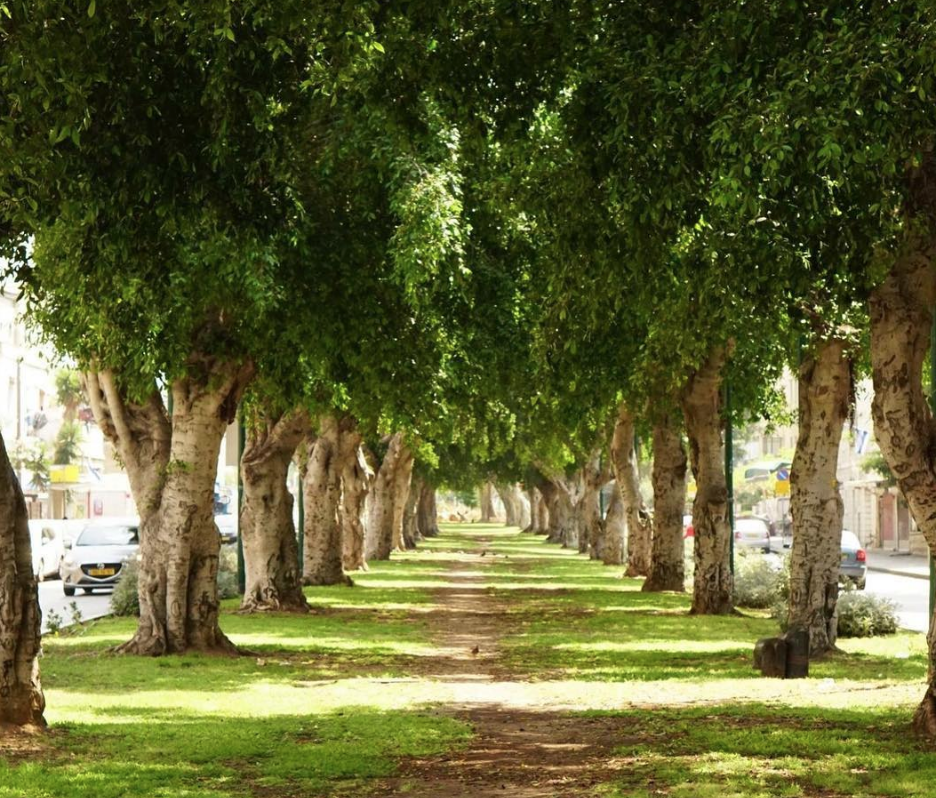
Fig trees on the southern side of Jerusalem Boulevard. Their days are numbered.

Tel Aviv is a relatively new city, but its older sister city next door, to which it shares the same municipality is home to dozens of hundreds of ancient trees, some which the city of Tel Aviv is hellbent on cutting down.

Since 2002, the city has proposed a light rail train to traverse the sister cities of Tel Aviv and Jaffa and to connect them to the suburbs. It’s a great idea, but there is a slight problem. How will passengers get on and off the train with the old trees in the way?

Why cut them down of course!

The trees in question grow on the main artery road Jerusalem Boulevard in Jaffa. There are at least 29 trees from 70 to 102 years old, all historical, and selected to be cut down to make space for train train stations. The city has already starting marking the trees destined for removal, arguing that they are sick anyway, says Vered Navon, activist and photographer working on a book about the trees. She helped found a group called Save the Trees, of which there are 500 members. And they are fighting to save the trees.
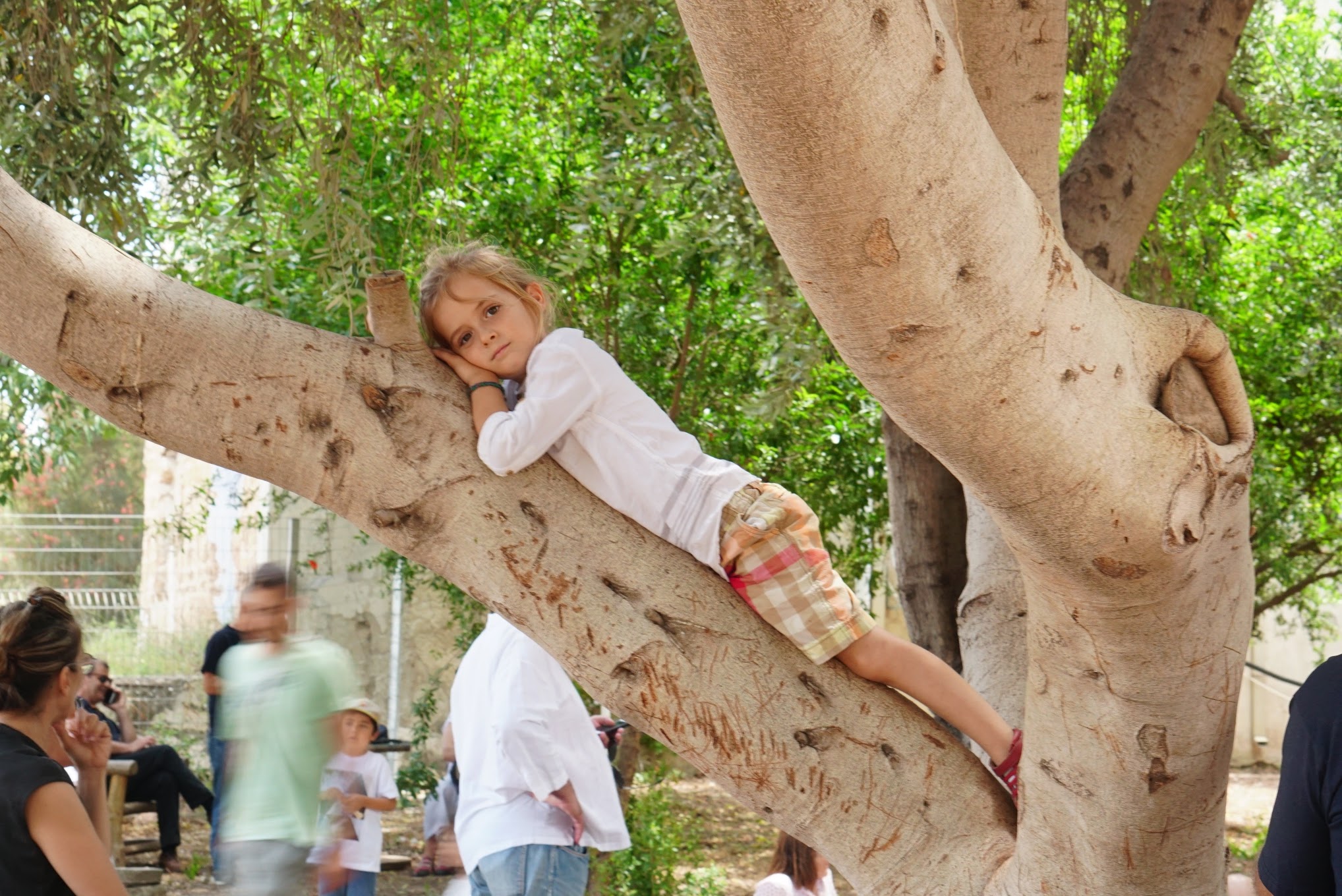
fig tree, ficus, mikve israel
A boy on a fig tree in Mikve Israel

A meeting next Tuesday night in Jaffa is set up to inform the public about what the city plans to do. Professors and activists will explain the situation and propose alternatives.

Says Navon, “They in the city, they don’t think about the trees. They only consider the electricity and water it will take to maintain them. They don’t understand that they give us shelter, shade, clean air. It’s Jaffa’s green lung.”

The trees slated for removal are 102-year old spindly Washington palms and 70-year old sprawling fig trees with arms hugging in every direction. The figs were planted when Israel became a state 70 years ago. The figs give enormous amounts of shade and are home to birds and bats that eat berries and bugs. The vision is to turn the boulevard, or at least part of it, into a pedestrian only area, with the train connecting people to shops, cafes and their homes.

Instead of the dozens of buses that run down the street every few minutes, a smooth and easy electric train will traverse the city in speed and style. Activists say that the trees don’t need to be cut down. That one of the city planners that is on the side of the trees says that the stations can be moved 20 meters and the trees can be spared. But the city isn’t listening.

The activists propose that the company the city hired, Netta, can carry out the engineering work and simply move the three stations along the boulevard to spots where the doors of the trains can open with ease.

The palm trees are a common variety, the Washington palm. But they are uncommonly tall, and have some history: “The ancient palms were planted by the students of Elihau Krause, the founder of Mikve Israel,” says Vered, citing Israel’s first agriculture college located in Holon. Funded by the Rothschilds and other prominent figures, it is this school that in the 1800s already was growing cultivars tolerant to desert climates. It is this school and its researchers that gave Israel the ability and spirit to transform the country into an agriculture dynasty.
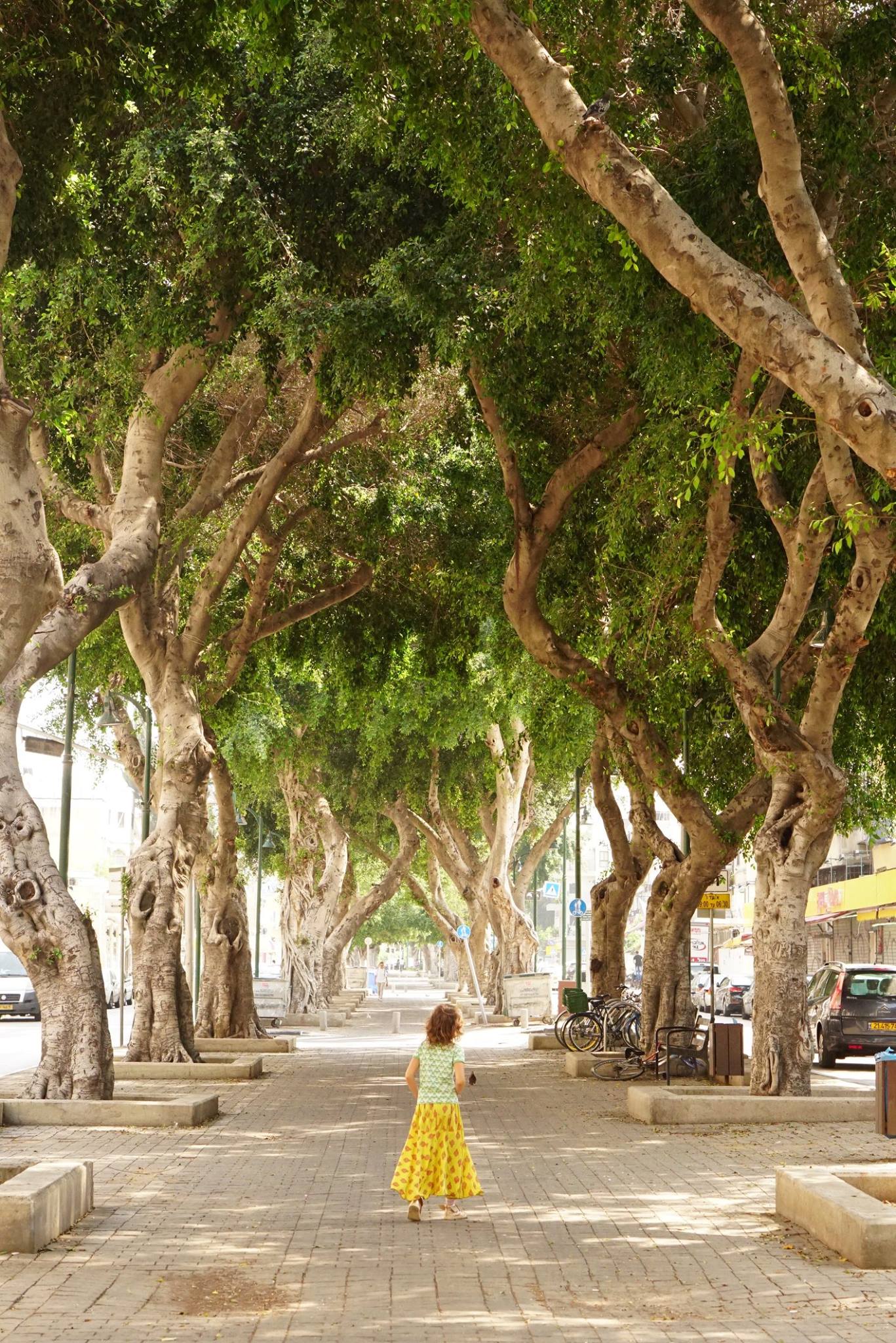
Fig trees on Jerusalem Boulevard

Jaffa resident Yisrael Borochov who lives on Dr. Paul Erlich Street, one of the proposed train stops said that the city has a history of doing what it wants, without regard for the environment or what’s right for the future. He tells Green Prophet: “They cut down two Washington palm trees on Erlich without asking anyone, and when I turned to Nitza Smoke, in charge of preserving the environment for the city, she didn’t even reply. The trees were about 120 years old. From that moment I lost faith in the establishment because I understood they do whatever they want to do, whenever they want to do, and it’s going to happen today with the train.

“There are not too many ancient trees in Jaffa or Tel Aviv. The city of Tel Aviv should be proud of every single tree and not looking for a reason to cut them down.”

Navon says that the same trees, the fig trees, were not cut down on the wealthier established part of Tel Aviv along Rothschild Boulevard. She insinuates that the reason the city is marking the so-called “sick trees” is because the weaker demographic of Jaffa won’t resist what the city wants to do.

We wrote the city for feedback and will post in the comments or update the article when we get their reply.

Meanwhile, want to fight for the trees? Join the Tuesday evening event in Jaffa. Details here.

Karin Kloosterman
Karin Kloostermanhttp://www.greenprophet.com
Karin Kloosterman is an award-winning journalist, innovation strategist, and founder of Green Prophet, one of the Middle East’s pioneering sustainability platforms. She has ranked in the Top 10 of Verizon innovation competitions, participated in NASA-linked challenges, and spoken worldwide on climate, food security, and future resilience. With an IoT technology patent, features in Canada’s National Post, and leadership inside teams building next-generation agricultural and planetary systems — including Mars-farming concepts — Karin operates at the intersection of storytelling, science, and systems change. She doesn’t report on the future – she helps design it. Reach out directly to [email protected]

Read More

TRENDING

90% of Americans worry about microplastics

Microplastics are showing up everywhere—from dollar store toys and synthetic clothing to bottled water, toothbrushes and even human sperm. A new Ocean Conservancy survey finds that nearly 9 in 10 Americans are concerned about the health impacts of microplastics, while support is growing for tougher regulations. As scientists uncover plastic particles in the heart, placenta and reproductive organs, the question is no longer whether microplastics are affecting our lives, but how much damage they are already doing.

Understanding Food Production: Karl Studer on the Urban-Rural Knowledge Gap

Karl Studer occupies an unusual position in American business. As President of Quanta Services, he oversees electrical infrastructure operations across the United States, Canada, and Australia, managing thousands of employees and multibillion-dollar projects.

Tigris River oil spill highlights Iraq’s environmental oversight and our addiction to oil

A fresh oil spill in the Tigris River, filmed by an Iraqi university student, has reignited concern over Iraq's polluted waterways. From ancient Mesopotamia to modern Basra, the country's dependence on oil has come at a steep environmental and human cost, with activists warning that unchecked contamination is putting ecosystems and public health at risk.

Doctor-Led Direct Hair Transplant: What Surgeon Involvement Means for Outcomes

Hair restoration technology continues to evolve, but the surgeon behind the procedure remains the most important factor. Doctor-led hair transplants emphasize careful diagnosis, conservative donor management, natural hairline design, and long-term planning rather than simply maximizing graft counts. By treating donor hair as a limited resource and tailoring each procedure to the patient's future hair loss, experienced surgeons can reduce the need for corrective surgery while delivering more natural, sustainable results.

Data centers in Space? Sophia Space and Apex plan on busing them in

Can data centers really be built in space? Pasadena-based Sophia Space is partnering with Apex to test the idea by launching modular AI computing systems into low Earth orbit in 2027. Using radiation-hardened compute TILEs cooled by passive radiative systems and mounted on scalable satellite buses, the companies aim to prove that edge computing can operate reliably in space. While challenges remain, the project represents an important step toward distributed orbital computing networks that could support everything from climate monitoring and pollution tracking to autonomous spacecraft navigation in an increasingly crowded orbital environment.

Yerukim Forms a New Green Economy Where the Money is Really Green

The Yerukim members who pick up the recyclables get to keep the monetary reward, the public earns "green" bills that can be used in shops, and business owners get to be associated with environmentalism.

Choosing Riyadh over Dubai? What Investors Should Know

Saudi Arabia is deploying capital at unmatched scale to catalyze tourism and advanced industry while rewiring its power-and-water backbone. The investable frontier is widening—especially in renewables, grid storage, water efficiency/desal retrofits, and hospitality operating platforms. Prudent investors will insist on phased delivery, enforceable KPIs (energy, water, biodiversity), and RHQ/zone compliance—while pricing political-economy and reputational risks alongside growth upside.

Sell your cooking oil for biodiesel money

Want to make money on old french fry oil? Sell it.

Qatar Alternative Energy Summit Pairs Investors And Innovators

Alternative energy investors and innovators can meet n' greet in Doha, Qatar March 16 and 17.

Here’s How To Implement The Four Pillars Of Employee Engagement

If you throw a party for your work team and they are vegans, don't make it a barbecue. Know the sustainability values of your team to boost moral and retain good people.

Locals From Rishon Fight IKEA

Big Box stores are a pretty new concept in Israel, and thank God that not every Israeli city wants them in their backyard. A word from someone who has see the beautiful farmland around her hometown Newmarket, Ontario stripped and converted into vulgar strip malls of big box shops: they have no place in a healthy and sustainable town or city.

The Jewish National Fund Meets An Inconvenient Truth

According to the JNF, it has transformed thousands of acres of barren land into green forests in Israel. They state that each person emits about 23 tons of carbon per year, estimating that each tree planted can absorb one ton of carbon in its lifetime. That's a whole lot of trees you'd need to be planting. Could so many fit in Israel?

How to quiet noise from construction in your office

Streets need to be resurfaced in New York but the humming and grinding noise is unsettling. Noise is environmental pollution. 

Popular Categories