Jordan Valley Boasts the Lowest Museum on Earth

dead sea Museum Jordan at the Lowest Point on Earth

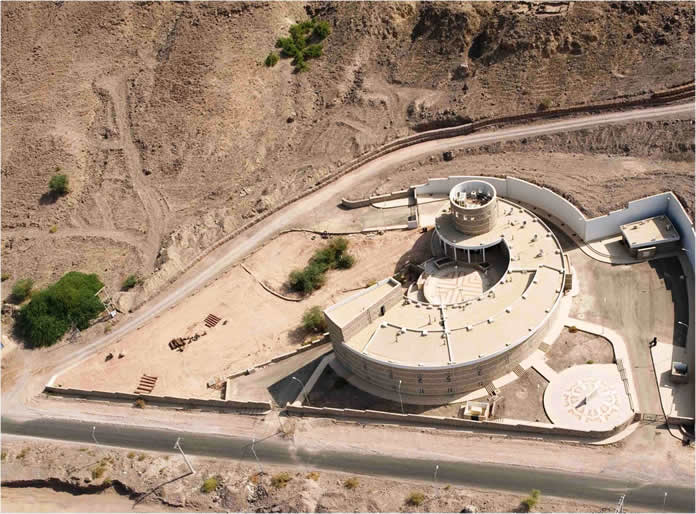
Built at the lowest elevation on earth, and less than a year old, this jewel-box of a museum showcases the Dead Sea region’s rich past.

After Israel, no nation has as many Biblical sites as Jordan.  The Dead Sea gets several mentions in the Bible, and it’s where the Dead Sea scrolls were found.  Jesus was baptized by John in Bethany-Beyond-the-Jordan, before the baptist lost his head in Machaerus.

Jordan was a favorite stomping ground for Moses: he struck a rock in ‘Ain Musa and his people and their livestock drank of its flowing waters. He gazed across the Jordan Valley to the Promised Land, then died at Mount Nebo.

And there’s Lot’s Cave, where the prophet and his daughters sought refuge after the fiery destruction of Sodom and Gomorrah. That’s perhaps the Bible’s spiciest story: clan Lot narrowly escapes annihilation in the ancient “sin cities”,  the missus turns to salt, and dad runs with his daughters into the Jordan hills for a future seeped in alcohol and incest. And now you can step right in to see where it all went down.

The Museum at the Lowest Place on Earth is located 1,329 feet below sea level at the southern edge of the Dead Sea, a stone’s throw from the Byzantine monastery that commemorates Lot’s cave. The museum, spearheaded by Dr. Konstantinos Politis, was developed by the Hellenic Society for the Near East (HSNES) in collaboration with the British Museum.

It features well-lit gallery spaces  filled with important antiquities recovered from the Ghor-es-Safi region by Dr. Politis and his team of archaeologists.   Clear storyboards describe the diverse populations that have inhabited the Dead Sea shores over millennia.
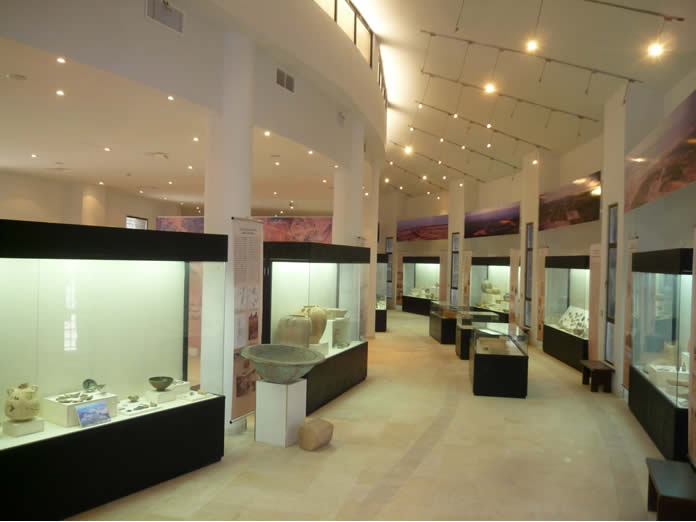
dead sea Museum Jordan at the Lowest Point on Earth, Dead Sea MuseumVisitors can see 4,500-year-old pottery excavated from Bab edh-Dhra and Numeira (commonly considered to be the biblical towns of Sodom and Gomorrah).  There are architectural elements and mosaics salvaged from the Byzantine monastery, preserved Greco-Roman garments, and Bronze Age ceramics recovered from inside Lot’s cave.

Ancient tombstones unearthed from the region’s many cemeteries help tell the story of the Arab, Jewish and Christian communities that settled sequentially in Zoar /Zoora.

A final gallery displays objects from Ghor es-Safi’s more recent past, including artifacts from the intensive sugar industry that flourished in Zoar /Zoora during the Mamluk period (13th–16th centuries), as well as handicrafts and daily implements used by the Bedouin and villagers who live in the area today.  (See a basket rendered in typical style using plastic bags collected from village roadsides, below.)
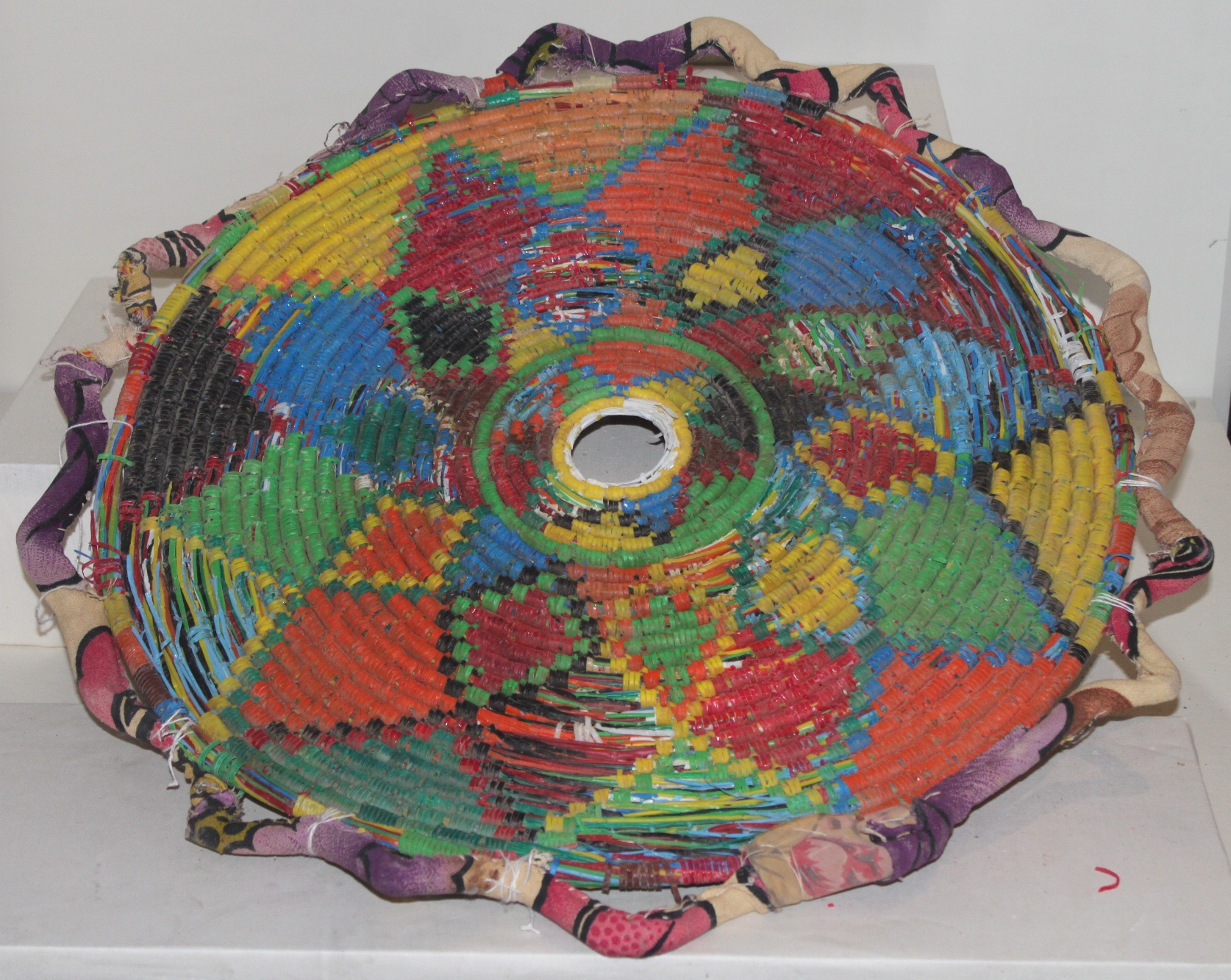
dead sea Museum Jordan at the Lowest Point on Earth Upcycled plastic bags

Visitors can sit in a small indoor theater and enjoy short films about the project’s mosaic conservation efforts or the geology of the Dead Sea and the Rift Valley, and the museum is planning special exhibits including “Seafaring on the Dead Sea” to “Zoar’s Pottery Through the Ages.”

Facilities include a large conservation laboratory, library, a multimedia center, and a shop run by the local women’s co-operative.  Publications about the museum’s findings are available via the HSNES website.

Most trips to Jordan include a dip in the Dead Sea, and all along its northern shoreline, public beaches and a cluster of posh resorts offer that experience to every price point.

Backpackers and couchsurfers tend towards open camping and minimalist eco-accommodation, depending on Trip Advisor and Lonely Planet for self-guided tourism. Wealthier travelers tend towards the larger hotels offering luxury spas and pricey restaurants, where there is some encouragement by concierge staff for visitors on extended stay to visit nearby sites like Karak Castle and Mount Nebo.

In the area? Check out this quiet gem.  It’s an easy day tripping option within the coastal area’s wider tourism menu.

Museum photos from Dr. Konstantinos Politis; basket photo by author

Read More

TRENDING

Mona Khalil, Orange House Project founder, sea turtle protector killed in Lebanon

Mona Khalil spent decades protecting Lebanon's sea turtles and coastal ecosystems. Her death in the ongoing conflict between Israel and Hezbollah shines a light on a broader environmental tragedy unfolding across northern Israel and southern Lebanon. From damaged wetlands and disrupted bird migrations to threatened seed banks and endangered wildlife, the region's ecosystems are becoming casualties of a war with no clear end in sight.

Dan Zaslavsky’s energy tower dream is rising again in Iran and China

The Energy Tower idea never made the leap from drawings and engineering studies to full-scale construction. But nearly two decades after most people stopped talking about it, the concept is quietly evolving in two unexpected places: China and Iran. The concept let dreamers dream and doers do - figuring out more pleasing designs and engineering.

A visit to Amirim, Israel’s first all-vegetarian village in the Galilee

Just 15 kilometers from Tzfat there is a moshav that was founded in the late 50s that was ideologically influenced by organic, vegetarian and vegan principles. My hostess at Ohn-Bar, the tzimmer where I stayed, explained that the people of Amirim were among the pioneers of Israel’s strong vegetarian movement.

Israeli Hydrogen Startup H2Pro Are Trying to Solve Clean Energy’s Hardest Problem

The company has attracted backing from major investors including Breakthrough Energy Ventures, the climate fund founded by Bill Gates, along with industrial partners such as Sumitomo, ArcelorMittal, and Temasek, a multi-billion dollar company that owns Singapore airlines. H2Pro has raised more than $100 million USD and is moving from pilot projects toward commercial-scale deployments.

Desalination experts debunk Aqua Solaire, the floating desalination barge

AI makes it easy to dream, develop, and create images of what could be world-changing ideas, until the reality sets in. A new project making the rounds is Aqua Solaire, an allged French concept for a solar-powered desalination vessel designed to bring drinking water to coastal communities facing drought, storms, and infrastructure failures.

Yerukim Forms a New Green Economy Where the Money is Really Green

The Yerukim members who pick up the recyclables get to keep the monetary reward, the public earns "green" bills that can be used in shops, and business owners get to be associated with environmentalism.

Choosing Riyadh over Dubai? What Investors Should Know

Saudi Arabia is deploying capital at unmatched scale to catalyze tourism and advanced industry while rewiring its power-and-water backbone. The investable frontier is widening—especially in renewables, grid storage, water efficiency/desal retrofits, and hospitality operating platforms. Prudent investors will insist on phased delivery, enforceable KPIs (energy, water, biodiversity), and RHQ/zone compliance—while pricing political-economy and reputational risks alongside growth upside.

Sell your cooking oil for biodiesel money

Want to make money on old french fry oil? Sell it.

Qatar Alternative Energy Summit Pairs Investors And Innovators

Alternative energy investors and innovators can meet n' greet in Doha, Qatar March 16 and 17.

Here’s How To Implement The Four Pillars Of Employee Engagement

If you throw a party for your work team and they are vegans, don't make it a barbecue. Know the sustainability values of your team to boost moral and retain good people.

Locals From Rishon Fight IKEA

Big Box stores are a pretty new concept in Israel, and thank God that not every Israeli city wants them in their backyard. A word from someone who has see the beautiful farmland around her hometown Newmarket, Ontario stripped and converted into vulgar strip malls of big box shops: they have no place in a healthy and sustainable town or city.

The Jewish National Fund Meets An Inconvenient Truth

According to the JNF, it has transformed thousands of acres of barren land into green forests in Israel. They state that each person emits about 23 tons of carbon per year, estimating that each tree planted can absorb one ton of carbon in its lifetime. That's a whole lot of trees you'd need to be planting. Could so many fit in Israel?

How to quiet noise from construction in your office

Streets need to be resurfaced in New York but the humming and grinding noise is unsettling. Noise is environmental pollution. 

Popular Categories