Is Urbanizing the Solution to Israel’s Housing Crisis?

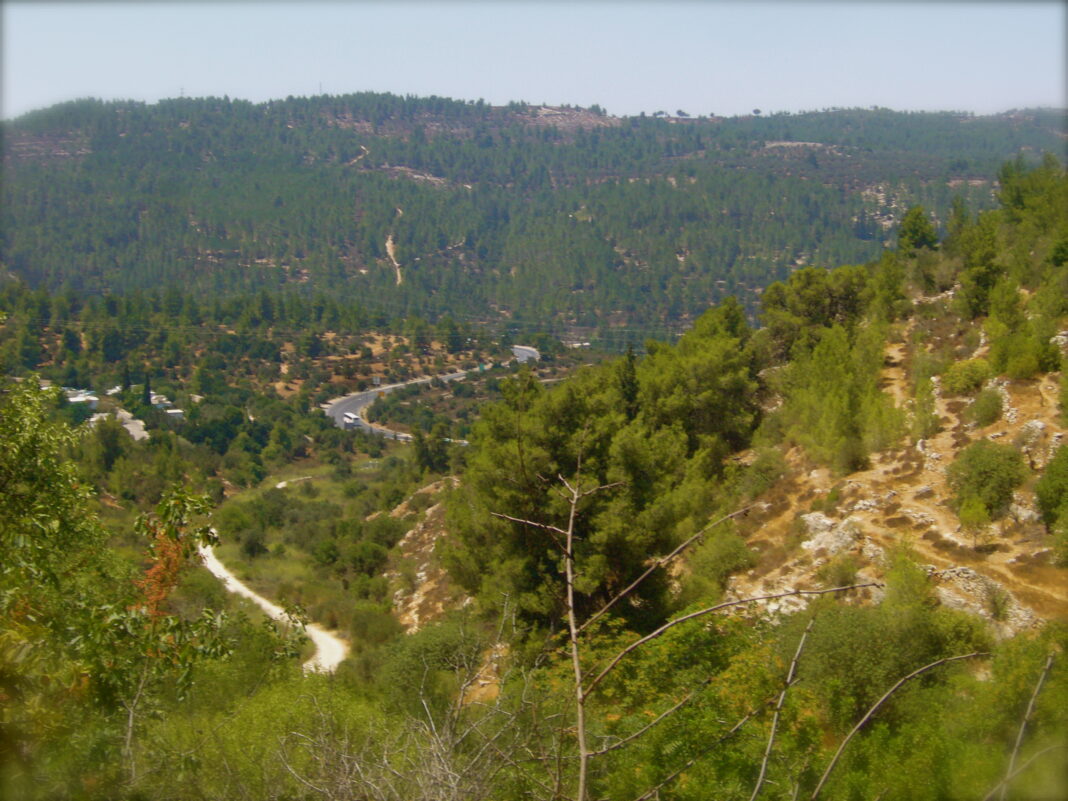
central israel forestsForest in central Israel, as seen from Ein Karem

Some architects and economists are proposing Israel solve its affordable housing crisis by turning central Israel into a “megacity,” similar to Hong Kong, and moving the nation’s lush nature reserves and agricultural lands to the Negev and the Galilee. Supporters of this solution insist it would not harm the environment if public transportation was improved and public parks increased.

According to the Israeli Ministry of Foreign Affairs, the country produces around 93% of their domestic food requirements. As of 2002 central Israel held 39% of the country’s agricultural land. As we’ve seen in numerous nearby Arab nations, food security continues to be a divisive issue among Middle Eastern populations. It’s hard to imagine that paving so much of Israel’s fertile land would be beneficial in the long run.

Turning Israel into predominately urban/suburban landscape directly contradicts the Zionist ideals it was founded upon, an ideology that galvanizes agricultural work and spacious, dispersed population centers. Indeed it would contradict one of the founding characteristics of Israeli culture.

In Israel a group of teenagers is just as likely to go hiking or camping as they are to go see a movie. On multiple occasions I have stumbled upon groups of Israelis feverishly discussing the beauty of a fresh, ripe, locally grown tomato. The visceral connection Israelis have to their homeland and the food it produces is among the most admirable qualities of the national culture. Delineating agricultural land to the country’s northern and southern fringes would undoubtedly impact that mindset.

The Negev desert in southern IsraelThe Negev desert in southern Israel

We can only hope that the Israeli public will have a say in how the nation resolves its housing crisis. Prime Minister Netanyahu’s urban and environmental planning reform recently received its second pejorative ‘Black Globe Award,’ the first of which was awarded in 2010. Israeli judges criticized the reform in an article by Haaretz newspaper, saying:

“It allows those with power and money to impact the lives of each and every one of us by diminishing the Environmental Protection Ministry’s authority and creating the basis by which the environment in general, and open spaces in particular, can be infringed upon.”

With such a strong, majority coalition in the Israeli parliament, the Knesset, if Netanyahu decided he wanted central Israel turned into a mega-city there would be none of the usual checks and balances to challenge him.

But there is already a bristling awareness among Israelis that their country is running out of virgin land to develop. Since wilderness and agriculture are both so central to the national character, the optimist in us feels confident that mega-city proposals will be scoffed at and ignored.

::Ynetnews

Images by Leigh Cuen

Leigh Cuen
Leigh Cuenhttp://www.greenprophet.com
Leigh Cuen is a freelance journalist currently reporting from Israel. She has written for the Earth Island Journal, the San Francisco Public Press, the Palestinian News Network, J. weekly newspaper and the Women News Network. Follow her @La__Cuen.

Read More

1 COMMENT
  1. Obviously, Israel needs a stable population to live within the land’s ability to support it; and the same for every other nation on Earth. Only macho politics wants a growing population for aggressive nationalism.

TRENDING

Mona Khalil, Orange House Project founder, sea turtle protector killed in Lebanon

Mona Khalil spent decades protecting Lebanon's sea turtles and coastal ecosystems. Her death in the ongoing conflict between Israel and Hezbollah shines a light on a broader environmental tragedy unfolding across northern Israel and southern Lebanon. From damaged wetlands and disrupted bird migrations to threatened seed banks and endangered wildlife, the region's ecosystems are becoming casualties of a war with no clear end in sight.

Who Owns the Farm Robot? A State of Jefferson Startup Takes on Carbon Robotics

In California's self-proclaimed State of Jefferson, a small agricultural technology company is challenging the dominant laser-weeding business model. Laudando & Associates believes farmers should own and repair their AI-powered weeding tools rather than pay ongoing subscription fees. The approach has put the company on a collision course with industry leader Carbon Robotics, sparking a patent dispute that has pushed the Jefferson startup toward overseas markets while raising broader questions about ownership, right-to-repair, and the future of farm automation.

Regenerative Wool or Greenwashing? Zentera Responds to Critics

Zentera responds to questions about ZQ wool, animal welfare, regenerative farming, ethical fashion and the fallout from PETA's New Zealand investigation.

Dan Zaslavsky’s energy tower dream is rising again in Iran and China

The Energy Tower idea never made the leap from drawings and engineering studies to full-scale construction. But nearly two decades after most people stopped talking about it, the concept is quietly evolving in two unexpected places: China and Iran. The concept let dreamers dream and doers do - figuring out more pleasing designs and engineering.

A visit to Amirim, Israel’s first all-vegetarian village in the Galilee

Just 15 kilometers from Tzfat there is a moshav that was founded in the late 50s that was ideologically influenced by organic, vegetarian and vegan principles. My hostess at Ohn-Bar, the tzimmer where I stayed, explained that the people of Amirim were among the pioneers of Israel’s strong vegetarian movement.

Yerukim Forms a New Green Economy Where the Money is Really Green

The Yerukim members who pick up the recyclables get to keep the monetary reward, the public earns "green" bills that can be used in shops, and business owners get to be associated with environmentalism.

Choosing Riyadh over Dubai? What Investors Should Know

Saudi Arabia is deploying capital at unmatched scale to catalyze tourism and advanced industry while rewiring its power-and-water backbone. The investable frontier is widening—especially in renewables, grid storage, water efficiency/desal retrofits, and hospitality operating platforms. Prudent investors will insist on phased delivery, enforceable KPIs (energy, water, biodiversity), and RHQ/zone compliance—while pricing political-economy and reputational risks alongside growth upside.

Sell your cooking oil for biodiesel money

Want to make money on old french fry oil? Sell it.

Qatar Alternative Energy Summit Pairs Investors And Innovators

Alternative energy investors and innovators can meet n' greet in Doha, Qatar March 16 and 17.

Here’s How To Implement The Four Pillars Of Employee Engagement

If you throw a party for your work team and they are vegans, don't make it a barbecue. Know the sustainability values of your team to boost moral and retain good people.

Locals From Rishon Fight IKEA

Big Box stores are a pretty new concept in Israel, and thank God that not every Israeli city wants them in their backyard. A word from someone who has see the beautiful farmland around her hometown Newmarket, Ontario stripped and converted into vulgar strip malls of big box shops: they have no place in a healthy and sustainable town or city.

The Jewish National Fund Meets An Inconvenient Truth

According to the JNF, it has transformed thousands of acres of barren land into green forests in Israel. They state that each person emits about 23 tons of carbon per year, estimating that each tree planted can absorb one ton of carbon in its lifetime. That's a whole lot of trees you'd need to be planting. Could so many fit in Israel?

How to quiet noise from construction in your office

Streets need to be resurfaced in New York but the humming and grinding noise is unsettling. Noise is environmental pollution. 

Popular Categories