Israel Corporation Subsidiary to Build 510 MW Hydro Project in Peru

Israel-Peru-hydro-electricity-510mw

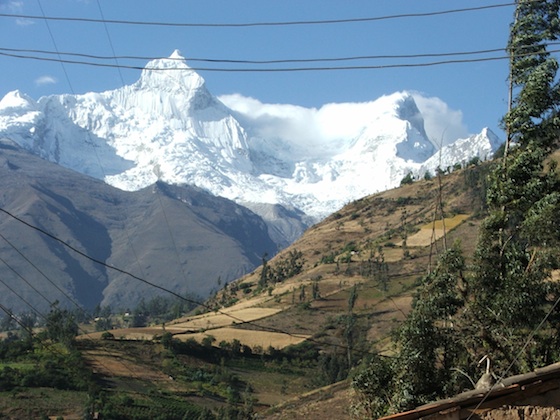
Israel Corporation subsidiary Inkia Energy has signed an engineering procurement contract for the construction of a huge 510 MW hydro-electric project in Peru. Its Cerro del Águila Hydroelectric Power Plant will be located in the province of Tayacaja.

Peru is a country that already gets 48% of its electricity from hydropower, which depends on water at elevation for its operation. Peru’s Energy and Mines Ministry, Pedro Sanchez said in a press release that the project is one of three hydroelectric plants it was seeking tenders for building and operating, that will require a combined investment of $1.7 billion.

Sanchez hailed the awarding of the contracts and said the cumulative hydroelectric capacity of the three projects, 911 MW, is enough to supply 20% of the current nationwide demand of 4,500 MW. About half of the power produced by all three proposed hydro projects will go to the mining industry in Peru, which accounts for 59% of all its exports.

Israel Corporation had moved Inkia Energy’s headquarters to Peru in 2007, where it owns 75% of the fifth largest power company in Peru, and a small share of the largest. But, notably, most of the electricity in the Inkia Energy portfolio is produced not from hydro but from natural gas, a much less sustainable form of of electricity.

Inkia Energy will begin with an environmental impact review and will try to get the financing for the 510 MW hydro-electric project. It has six months. If it is unable to get the financing, it can cancel, but if it can get financing, it will then have four years to get it built. The construction of the project is to be carried out by Italian firm Astaldi SpA and Peru’s Graña y Montero SA.

In March, the company signed a 15-year power purchase agreement (PPA) with Peru’s government-owned electricity company, to begin upon completion of the proposed project in the second half of 2015.

The success of the project depends on Peru still having a rich source of water, from its glaciers, to supply the meltwater that hydro-electricity needs over the long term. Already it has lost 22% of its glaciers since 1970. It is widely expected to be one of the first nations to suffer the effects of climate change on water supplies.

Related stories:
Ethiopia Can’t Afford The New Nile Dam
Morocco to Pioneer 1 GW Hydro-Wind Hybrid Power
Hydropower Could Meet More Of Turkey’s Energy Demand

Read More

TRENDING

Stardust’s solar geoengineered $10 billion plan to blot out the sun

Israeli-American startup Stardust Solutions has raised $75 million to develop technology that could cool the Earth by reflecting sunlight. Is solar geoengineering becoming a real industry? Or could it be a new threat?

Mongolia rangelands the center of climate change

Mongolia put the world’s overlooked rangelands on the climate agenda at UNCCD COP17, where governments and investors backed new financing for land restoration, drought resilience and pastoral communities.

Did China’s AI Boom Melt the Himalayas? Nepal’s Deadly Floods Raises Question About Data Centers and Climate

Nepal’s devastating floods reveal the growing risks of a warming Himalaya. As glaciers retreat and extreme events intensify, clean energy and climate action are increasingly urgent — and local organizations need support.

Jewish Climate Network founded so innovators don’t leave their identity at the door

Rather than retreating from climate change work, the Jewish Climate Trust organization has backed a new initiative designed to strengthen both climate action and Jewish community.

The Hidden Components Powering the Renewable Energy Revolution

A rooftop solar system looks simple: panels, an inverter, a battery and a few cables. But beneath that simplicity lies a bill of materials thousands of lines long, where tiny current sensors, magnetic cores, gate drivers, capacitors and connectors quietly determine efficiency, safety and lifespan. These overlooked components—not the solar panels themselves—are why today's residential solar systems are smaller, smarter and far more reliable than those of a decade ago.

Scientists make lead-free perovskite solar cells that can weather the elements

Scientists have developed a “raincoat” for lead-free tin perovskite solar cells, helping them withstand air, moisture and heat while maintaining high efficiency.

The Essential Guide To Sustainability in Project Management

Sustainability is an approach where businesses and individuals balance the environmental, social, and economic aspects of a project such that current and future stakeholders are not overburdened with the impacts of the project in future.

Yerukim Forms a New Green Economy Where the Money is Really Green

The Yerukim members who pick up the recyclables get to keep the monetary reward, the public earns "green" bills that can be used in shops, and business owners get to be associated with environmentalism.

Choosing Riyadh over Dubai? What Investors Should Know

Saudi Arabia is deploying capital at unmatched scale to catalyze tourism and advanced industry while rewiring its power-and-water backbone. The investable frontier is widening—especially in renewables, grid storage, water efficiency/desal retrofits, and hospitality operating platforms. Prudent investors will insist on phased delivery, enforceable KPIs (energy, water, biodiversity), and RHQ/zone compliance—while pricing political-economy and reputational risks alongside growth upside.

Sell your cooking oil for biodiesel money

Want to make money on old french fry oil? Sell it.

Qatar Alternative Energy Summit Pairs Investors And Innovators

Alternative energy investors and innovators can meet n' greet in Doha, Qatar March 16 and 17.

Here’s How To Implement The Four Pillars Of Employee Engagement

If you throw a party for your work team and they are vegans, don't make it a barbecue. Know the sustainability values of your team to boost moral and retain good people.

Locals From Rishon Fight IKEA

Big Box stores are a pretty new concept in Israel, and thank God that not every Israeli city wants them in their backyard. A word from someone who has see the beautiful farmland around her hometown Newmarket, Ontario stripped and converted into vulgar strip malls of big box shops: they have no place in a healthy and sustainable town or city.

Popular Categories