
Arab Apathy Leads To Middle East Water Apocalypse

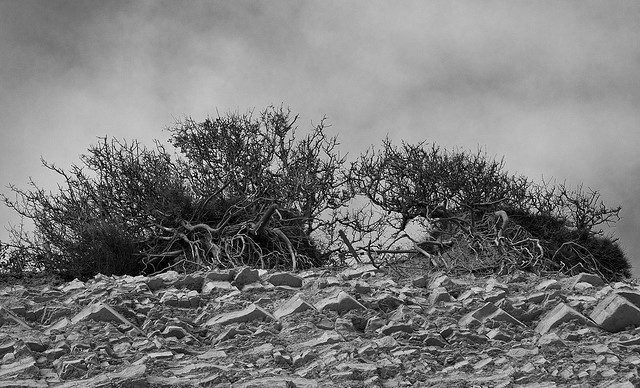
dry-tree-water-shortageBy calling the Middle East water problem an apocalypse, AFED Secretary General attempts to draw attention to the real and immediate danger shortages represent.

While bureaucrats push paper in their plush offices, the citizens they represent face what one senior researcher calls a water apocalypse. Yemen’s aquifers could dry up as early as 2012, thereby exacerbating the security problems there, and the United Arab Emirates would already be a wasteland if it weren’t for the many desalination plants that keep it afloat.

And yet government allows for investors to pad their pockets with profligate building schemes that will usurp even more water resources, essentially robbing the poorer population of their share. At last week’s Arab Forum for Environment and Development (AFED) in Beirut, 500 delegates from 52 countries sounded a collective call to establish better regulation, better efficiency, and to embrace technology that can deliver more freshwater resources.

Unfortunately, many of the issues sited as cause for the Middle East’s water problems (apart from the fact that water has never been the ME’s trump card) are the same indicators that real change will happen quickly enough to avert disaster.

In Depth News sites political and management shortcomings, fragmented water institutes, insufficient water legal systems, constrained public water budgets, and water policies that are not informed by science as contributing factors.

Dr. Farouk El-Baz, an Egyptian-American scientist who worked with a NASA exploration of the moon, recommended that satellite images may reveal further groundwater resources that would help to alleviate what everyone agrees is a “critical” situation that “demands immediate attention.”

How critical is critical? According to IDN, by 2015 some countries’ per capita freshwater resource will dip below 500 cubic meters, and as low as 100 cubic in some places. The international average is 6500 cubic meters and anything below 500 is considered dangerously low.

Let’s put that in perspective: 100 cubic meters is equivalent to approximately 72 gallons a day per person. Flushing a toilet requires approximately three gallons and a ten minute shower could use up to 42 gallons. On average, people use one gallon to wash their hands and brush their teeth, five gallons to wash a sink full of dishes, and ten to hand-wash a load of clothing.

If in one day a person takes one shower, flushes a toilet three times and washes their hands afterward, and if they brush their teeth twice, wash two loads of dishes and one of clothing, then they will already have used up their daily quota. That doesn’t take into account the amount of water required for drinking, or for industrial agriculture and energy production, which in America amounts to 1,430 gallons per person per day.

To say that 100 cubic meters of water is insufficient to sustain life would be a gross understatement. But how do we prevent our populace from having to endure such hydrological poverty? Some of the solutions proposed at AFED include making existing water systems more efficient, improving agriculture (“more crop per drop”) and embracing better technology such as desalination. But since government is notoriously slow to unfold, a grassroots initiative would also go a long way to reducing the water burden.

Take shorter showers, turn off the tap while brushing teeth, use water efficient appliances, don’t even think about having a lawn or swimming pool – which are both heinously water intensive. Wash your cars less or consider using waterless car washes such as this one in Dubai. And then, treat the water resources we do have, (including rivers, etc.) as though they were your last drop.

:: IDN

More water news from the Middle East:
In the Face of “Nile-lessness” Egyptians Protest Water Shortages

Is the Middle East taking Climate Change Seriously?

Tafline Laylin
Tafline Laylinhttp://www.greenprophet.com
As a tour leader who led “eco-friendly” camping trips throughout North America, Tafline soon realized that she was instead leaving behind a trail of gas fumes, plastic bottles and Pringles. In fact, wherever she traveled – whether it was Viet Nam or South Africa or England – it became clear how inefficiently the mandate to re-think our consumer culture is reaching the general public. Born in Iran, raised in South Africa and the United States, she currently splits her time between Africa and the Middle East. Tafline can be reached at tafline (at) greenprophet (dot) com.

Read More

166 COMMENTS

TRENDING

Saving Gourmet Wild Plants For The Future

Think of truffles, a gourmet wild food. The European...

Middle-Eastern spices and natural medicine (A through C)

In the Middle East, aromatic traditional foods are regarded...

What Happens When Hyenas Pee On Bedouins?

According to an anecdote Bedouin people believe that if a hyena urinates on them, it will proceed to drag them to a cave and feast on their body. Because of this, they won't hesitate to kill them on the spot if they come across one.

Iran’s water mafia and thirst for war leaves the country on brink of being dry

Iran’s Lake Urmia, once the Middle East’s largest saltwater lake, has shrunk by 90 percent due to mismanagement, dams, and drought. As Tehran pours billions into foreign conflicts, water activists face repression at home. The crisis mirrors Syria’s drought-driven unrest, showing how water scarcity can destabilize entire regions.

Iran is sinking in sinkholes from overwatering

What's that sinking feeling? In Iran, the very ground under...

Locals From Rishon Fight IKEA

Big Box stores are a pretty new concept in Israel, and thank God that not every Israeli city wants them in their backyard. A word from someone who has see the beautiful farmland around her hometown Newmarket, Ontario stripped and converted into vulgar strip malls of big box shops: they have no place in a healthy and sustainable town or city.

The Jewish National Fund Meets An Inconvenient Truth

According to the JNF, it has transformed thousands of acres of barren land into green forests in Israel. They state that each person emits about 23 tons of carbon per year, estimating that each tree planted can absorb one ton of carbon in its lifetime. That's a whole lot of trees you'd need to be planting. Could so many fit in Israel?

How to quiet noise from construction in your office

Streets need to be resurfaced in New York but the humming and grinding noise is unsettling. Noise is environmental pollution. 

EarthX and a blueprint for sustainable investing

Trammell S. Crow, a Dallas-based businessman and father of four, is focusing his efforts on impact investing, and media that focuses on saving the planet through EarthX.

Mining Afghanistan’s Mineral Discoveries Similar to Avatar

Now that American forces in Afghanistan are commemorating the longest period of any war that America has been involved in, including the 1965-73 Vietnam War, the recent discoveries of large and extremely valuable mineral and metal deposits may finally bring to light a reason to continue the presence of US fighting forces in this war torn and backward country.

From Pilot Plant to Global Stage: How Aduro Clean Technologies’ 2026 Expansion Signals a Turning Point for Chemical Recycling Investors Like Yazan Al Homsi

The company's Next Generation Process (NGP) Pilot Plant in London, Ontario, has officially moved into initial operating campaigns, generating the kind of structured, repeatable data that separates laboratory promise from commercial viability.

Nobul’s Regan McGee on Shareholder Value: “Complacency Is the Silent Killer” 

Why the governance framework designed to protect shareholders so...

Should You Invest in the Private Market?

startustartup Unlike public stock exchanges, which offer daily trading, strict...

Popular Categories