


The recent salmonella outbreak in the U.S. provoked a debate: are local eggs really safer than eggs from industrial farms?
Over this past summer, half a billion eggs were recalled in the U.S. due to salmonella contamination. Salmonella, a debilitating and potentially life-threatening illness, is caused by the salmonella enteriditis bacteria. The eggs came from two Iowa industrial egg farms, each producing millions of eggs daily. According to the Centers for Disease Control and Prevention, about 1, 608 people across the U.S. fell sick with with salmonella poisoning from those eggs.
With market withdrawals, public safety alerts, and new health measures in place at egg farms, the outbreak has been contained. But the question arises: are eggs from small, local farms safer ?The locavore lifestyle supports sustainable food, as we learned from locavore expert Leda Meredith. Sustainable food expert Michael Pollan, whose latest book we reviewed here on Green Prophet, writes extensively on the effect industrial agriculture has on our health. But when it comes to salmonella in the omelet, we should consider all sides of the local vs. industrial issue.
Chickens may become contaminated with salmonella bacteria from contaminated feed or from mice droppings that hens pick up while eating (where there’s feed lying around, mice will try to get in). The bacteria gets inside the hen’s ovaries, and the new eggs are contaminated even while still in the body of the hen. The FDA determined that the recent American outbreak was caused by mice droppings.
This may happen in any farm. Iowa State University’s poultry diagnostician, Dr. Darrell Trampel, states that free-range chickens are just as susceptible to salmonella as industrially-raised ones.
“Any producer that’s unfortunate enough to have a contaminated mouse enter their premises can end up with salmonella enteritidis,” says Dr. Trampel. “So this particular problem is not associated with the size of the production facility. We have seen this in small flocks, even organic flocks, all the way up to the large egg producers.”
Small farmers personally spend time with their chickens every day, so they immediately notice anything going wrong in the henhouse. Their production is relatively small. Their foods are sold and consumed locally – little time elapses between when the eggs are gathered and when they’re stowed away in the customer’s refrigerator. Even if salmonella develops in the small farmer’s flock, these factors limit the reach of an outbreak.
For industrial egg farms, however, the sheer numbers of hens prevents close observation. To make things more difficult, a hen may be infected with salmonella bacteria and not show any symptoms. Addressing this, Dr. Trampel recommends vaccinating the hens against salmonella. This video from the Iowa Public Television’s Market to Market program discusses the salmonella outbreak and includes an interview with Dr. Trampel.
We may groan, “More vaccinated produce for us to eat!” and be glad that the FDA decided against hen vaccination in July of this year. But consider this article from the New York Times, revealing how salmonella has been almost eliminated in England through vaccination.
Bottom line? We think that local eggs are the best option, if we’re certain that the farmer uses effective rodent prevention, keeps the coop clean, and has frequent, routine lab tests done on the eggs. Any conscientious farmer will be glad to answer your questions. And if supermarket eggs from anonymous factory farms are your only option, observe the safety rules.
More on sustainable farming from Green Prophet:
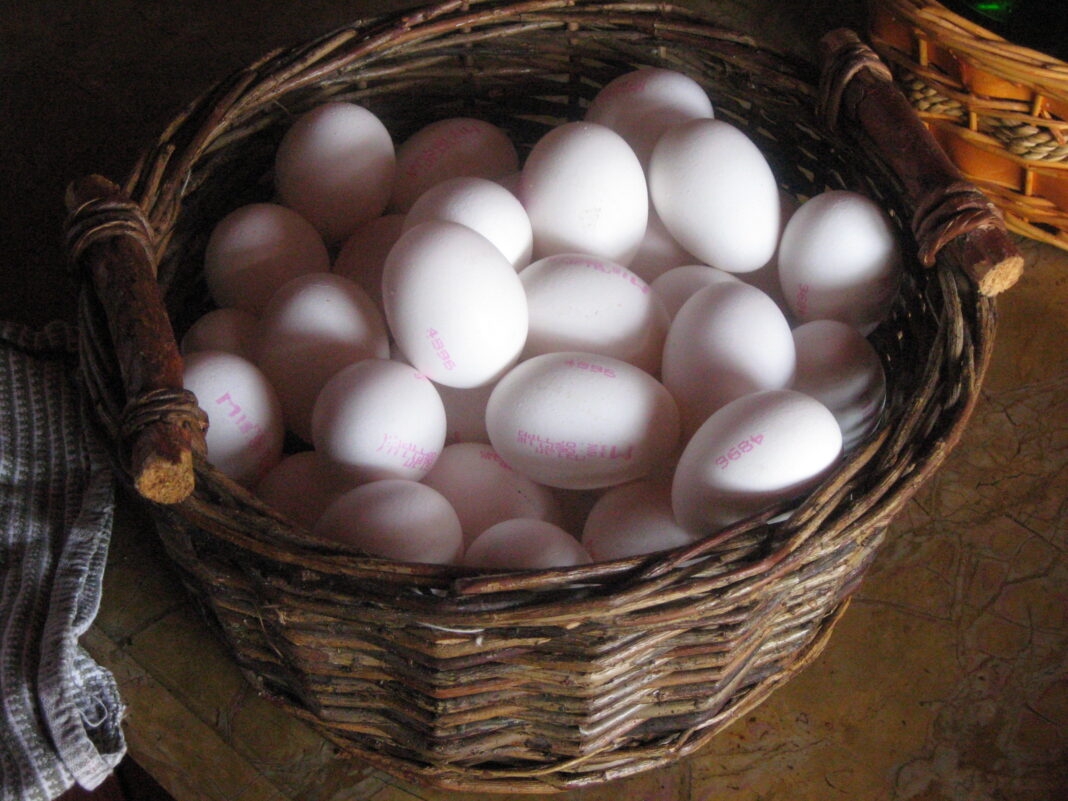
Photo of eggs in a basket by Miriam Kresh
Miriam Kresh writes a food blog: www.israelikitchen.com




I’m glad the information helped, Karin.
Since I am in the process of building a coop – hoping to get my hens tomorrow – this post was most valuable. Keep those mice away!