Cellular Phones, WiFi and Bee Collapse? Israeli Bee Boss Not Buying It

bee colony collapse
Bee colony collapse disorder is a worldwide phenomenon decimating bee colonies worldwide. Bees, you see, are pretty important. Without them much of our food can’t be pollinated. And the true reason why America lost about one third of its bees last year is largely unknown. Some believe it’s because there is lack of pollen as crops producing nectar decline. Some others say conventional pesticides, while more recently European researchers are blaming cellular phone antennas and WiFi connections (which is also now linked to male infertility). But Israeli bee scientists aren’t buying the “radiation” link.

Israel’s Honeybee Council head Herzl Avigdor is skeptical of the link, reports Haaretz covering a honeybee conference in Israel. He says it is climate change, and viruses attacking bees’ weakened immune system. Knowing nature and the delicate balance it maintains, the real cause might be all of the above.

Whatever the reason, colonies are still collapsing. Israel has reportedly lost 30 percent of its bees, and the UK about 50%. Worldwide honey production is down 20%. This is scary stuff -– enough to get every day people starting bee colonies in their backyards and on their roofs.

Israel has ancient roots in beekeeping. Some answers might lie in the Holy Land: Read Miriam’s journey on how Israeli beekeepers are breeding bees back to their ancestral size.

::Haaretz

Read more about the bees:
Renegade Urban Beekeeping
Bee Stings Are Sweet in Israel
Organic Honey or Mass-Produced?

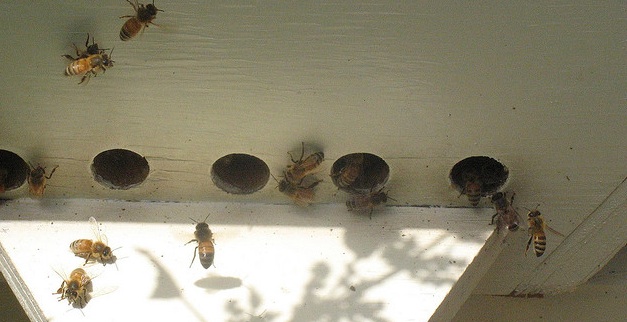
Image via orinrobertjhn

Karin Kloosterman
Karin Kloostermanhttp://www.greenprophet.com
Karin Kloosterman is an award-winning journalist, innovation strategist, and founder of Green Prophet, one of the Middle East’s pioneering sustainability platforms. She has ranked in the Top 10 of Verizon innovation competitions, participated in NASA-linked challenges, and spoken worldwide on climate, food security, and future resilience. With an IoT technology patent, features in Canada’s National Post, and leadership inside teams building next-generation agricultural and planetary systems — including Mars-farming concepts — Karin operates at the intersection of storytelling, science, and systems change. She doesn’t report on the future – she helps design it. Reach out directly to [email protected]

Read More

5 COMMENTS
  1. I as an insect toxicologist agree with David, according to many research findings Neonicotinoids made by Bayer are most responsible and please remember that bees that are going to be extinct soon, are not only for honey production but their main role is production of %30 of all food products by pollination and so a few years from now we will have one more billion hungry people on the planet! what we are doing to this beautiful planet?

LEAVE A REPLY

Please enter your comment!
Please enter your name here

TRENDING

Desalination experts debunk Aqua Solaire, the floating desalination barge

AI makes it easy to dream, develop, and create images of what could be world-changing ideas, until the reality sets in. A new project making the rounds is Aqua Solaire, an allged French concept for a solar-powered desalination vessel designed to bring drinking water to coastal communities facing drought, storms, and infrastructure failures.

AI data centers are triggering panic, instead of cleantech opportunities

AI may unintentionally become the economic engine that finally modernizes America’s aging grid. California is experiencing a massive AI data center boom, ranking 3rd in the U.S. with 227 operating centers and 54 more in development as of April 2026, according to Stanford.

Abortion Pills, Plan B and Mifepristone and what the new US mail ban means

Abortion pills, often confused with Plan B (the morning-after pill), and historically referred to as RU486 (mifepristone), are part of a broader category of reproductive health medications that women have been using for decades. But they are not the same thing.

SunZia comes online and America’s 11B, and largest renewable project begins wind power

The impact is already being felt. California has broken its wind generation record multiple times in recent weeks as SunZia begins feeding electricity into the grid. It’s a glimpse of what a renewable-powered future could look like when large-scale infrastructure finally comes online. Can we start saying goodbye to Saudi Aramco and Arabian Gulf oil? 

40 more migratory animals need protecting, warns UN group

The Convention on the Conservation of Migratory Species of Wild Animals (CMS), governments agreed to extend protection to 40 more migratory species, from cheetahs and striped hyenas to snowy owls, giant otters, and great hammerhead sharks. Too many of them are slipping toward extinction .

How to quiet noise from construction in your office

Streets need to be resurfaced in New York but the humming and grinding noise is unsettling. Noise is environmental pollution. 

EarthX and a blueprint for sustainable investing

Trammell S. Crow, a Dallas-based businessman and father of four, is focusing his efforts on impact investing, and media that focuses on saving the planet through EarthX.

Mining Afghanistan’s Mineral Discoveries Similar to Avatar

Now that American forces in Afghanistan are commemorating the longest period of any war that America has been involved in, including the 1965-73 Vietnam War, the recent discoveries of large and extremely valuable mineral and metal deposits may finally bring to light a reason to continue the presence of US fighting forces in this war torn and backward country.

From Pilot Plant to Global Stage: How Aduro Clean Technologies’ 2026 Expansion Signals a Turning Point for Chemical Recycling Investors Like Yazan Al Homsi

The company's Next Generation Process (NGP) Pilot Plant in London, Ontario, has officially moved into initial operating campaigns, generating the kind of structured, repeatable data that separates laboratory promise from commercial viability.

Nobul’s Regan McGee on Shareholder Value: “Complacency Is the Silent Killer” 

Why the governance framework designed to protect shareholders so...

Should You Invest in the Private Market?

startustartup Unlike public stock exchanges, which offer daily trading, strict...

How to build a 100-year-company

Kongō Gumi is a Japanese construction company, purportedly founded in 578 A.D., making it the world's oldest documented company. What can we learn about building sustainable businesses from them?

How AI Helps SaaS Companies Reduce Repetitive Customer Support Work

SaaS products are designed for large numbers of users with different levels of experience, and also in renewable energy.

Popular Categories