Saudi Oil Minister Calls Renewable Energy a "Nightmare"

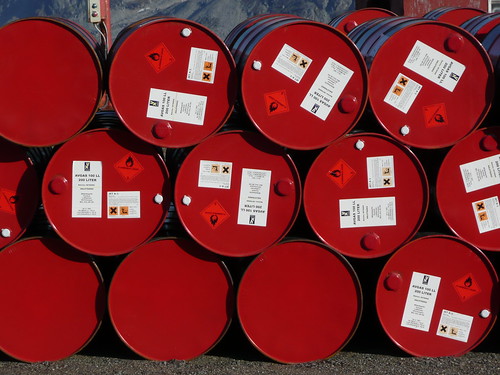
oil drums saudi arabia photo

This week, executives of major oil companies met at the Cambridge Energy Research Associates (CERA) annual conference in Houston, Texas and (finally!) expressed a willingness to help combat global climate change.  This is a major step, because these companies denied the existence of global warming and deliberately tried to obstruct political progress on the issue for decades.

Unfortunately, not everyone was equally supportive of transitioning to a renewable energy economy.  In a speech to conference participants, Saudi Arabia’s Oil Minister Ali Naimi warned that promoting the rapid growth of renewable energy without continuing to invest in oil would create a “nightmare scenario.”

“We must be mindful that efforts to rapidly promote alternatives could have a ‘chilling effect’ on investment in the oil sector,” he said. “A nightmare scenario would be created if alternative energy supplies fail to meet overly optimistic expectations, while traditional energy suppliers scale back investment.”

Although Mr. Naimi, an influential voice in the Organization of Petroleum Exporting Countries (OPEC), acknowledged that the world is moving away from fossil fuels, he indicated renewable energy technologies may be unable to grow to the same scale as crude oil.

He called the current energy infrastucture “highly efficient and economical,” and said the costs of replacing it with alternatives would be “prohibitive” in the short term. “A prudent approach demands we recognize that the massive scale of the global energy system makes rapid change costly and impractical,” he said.

At the Poznan climate talks last year, Wael Hmaidan of the Arab Climate Alliance commented that oil wealthy countries, especially Saudi Arabia, rely on the world’s oil dependence as a source of political power, so they act to obstruct or diminish the political will for clean, renewable energy.

The timing of Mr. Naimi’s statement strikes me as suspicious, and seem to confirm Mr. Hmaidan’s conclusions.  Crude oil prices are very low, surely affecting the economies of oil-producing nations (many of which are right here in the Middle East).  OPEC members have even postponed 35 oil-production projects in development because oil prices are so low.  Meanwhile, the new Obama administration has already signaled its commitment to renewable energy and to both domestic and international climate mitigation, which will likely further diminish both the profits and political bargaining chips of oil-rich nations.

All of these facts leave me wondering whether Mr. Naimi’s remarks reflect a genuine concern for the health of the global economy, or a continuation of the international power politics and individual greed that imperil our climate and the future of our world.

:: Environmental Capital – WSJ

Image: Ezioman

For more on renewable energy in the Middle East:
Even Oil Rich Gulf Countries Look to Renewable Energy
Israel, Egypt & Abu Dhabi All Set Renewable Energy Goals

Masdar “Zero Carbon” Super City Breaks Ground This Month in Abu Dhabi


Rachel Bergstein
Rachel Bergsteinhttps://www.greenprophet.com/
When her vegan summer camp counselor explained to a fifteen-year-old Rachel how the dairy industry pollutes the groundwater in poor rural communities and causes global warming, there was no turning back. Her green fire lit, Rachel became increasingly passionate about the relationship between human societies and the natural environment, particularly about the systemic injustices associated with environmental degradation. After snagging a B.A. in Peace and Justice Studies at the University of Maryland, where she wrote an undergraduate thesis on water injustice in Israel/Palestine and South Africa, Rachel was awarded the New Israel Fund/Shatil’s Rabbi Richard J. Israel Social Justice Fellowship to come and spread the green gospel in Israel for the 2009-2010 academic year. She currently interns for Friends of the Earth Middle East in their Tel Aviv office. When Rachel is not having anxiety about her ecological footprint, carbon and otherwise, she can be found in hot pursuit of the best vegetarian food Tel Aviv has to offer. She also blogs about her experience as an NIF fellow and environmentalist in Israel at organichummus.wordpress.com. Rachel can be reached at rachelbergstein (at) gmail (dot) com.

Read More

6 COMMENTS
  1. The Oil supply constraints in the last 5 years were caused by a sharp shortfall in investment back in the late 1990’s. Mr. Naimi was simply warning against such under-investment that may lead to even worse oil shocks in the future.

    What a cheap shot!

TRENDING

Weston Higginbotham found dead in a Kyoto forest: is climate anxiety part of the story?

In some ways, Weston has become a symbol of a generation wrestling with environmental and technological anxiety. Friends and family described him as deeply concerned about environmental issues. Reports also noted that he questioned the growing role of artificial intelligence in daily life, even reportedly disagreeing with his mother about her use of AI.

Billie Eilish’s Mom Takes the Stage at Hollywood Climate Summit — But Does Hollywood Still Care About Climate Change?

Hollywood once promised to help save the planet. Leonardo DiCaprio warned of climate catastrophe from awards stages. Celebrities flew to climate conferences. Studios pledged greener productions. Streaming platforms rushed to commission environmental documentaries. But in 2026, with the aftermath of wildfires, heatwaves and floods becoming routine, a question lingers: Does Hollywood still care about climate change?

Can Scientists Predict Coral Bleaching Before It Happens?

Now researchers at the Woods Hole Oceanographic Institution (WHOI) in the US say they have developed a way to predict coral bleaching five to six months before it occurs, potentially giving reef managers enough time to intervene and save vulnerable corals.

10 Amazing Facts About the Sidr Tree

Most people in the West have never heard of the Sidr tree. That's strange when you think about it. This tough, thorny desert tree has fed people, bees, birds, and camels for thousands of years. It appears in Islamic tradition. Its honey sells for astonishing prices.

Collecting kinetic energy from roads; REPS turns traffic into a power plant

REPS announced a $23.6M equity financing round to scale...

Locals From Rishon Fight IKEA

Big Box stores are a pretty new concept in Israel, and thank God that not every Israeli city wants them in their backyard. A word from someone who has see the beautiful farmland around her hometown Newmarket, Ontario stripped and converted into vulgar strip malls of big box shops: they have no place in a healthy and sustainable town or city.

The Jewish National Fund Meets An Inconvenient Truth

According to the JNF, it has transformed thousands of acres of barren land into green forests in Israel. They state that each person emits about 23 tons of carbon per year, estimating that each tree planted can absorb one ton of carbon in its lifetime. That's a whole lot of trees you'd need to be planting. Could so many fit in Israel?

How to quiet noise from construction in your office

Streets need to be resurfaced in New York but the humming and grinding noise is unsettling. Noise is environmental pollution. 

EarthX and a blueprint for sustainable investing

Trammell S. Crow, a Dallas-based businessman and father of four, is focusing his efforts on impact investing, and media that focuses on saving the planet through EarthX.

Mining Afghanistan’s Mineral Discoveries Similar to Avatar

Now that American forces in Afghanistan are commemorating the longest period of any war that America has been involved in, including the 1965-73 Vietnam War, the recent discoveries of large and extremely valuable mineral and metal deposits may finally bring to light a reason to continue the presence of US fighting forces in this war torn and backward country.

From Pilot Plant to Global Stage: How Aduro Clean Technologies’ 2026 Expansion Signals a Turning Point for Chemical Recycling Investors Like Yazan Al Homsi

The company's Next Generation Process (NGP) Pilot Plant in London, Ontario, has officially moved into initial operating campaigns, generating the kind of structured, repeatable data that separates laboratory promise from commercial viability.

Nobul’s Regan McGee on Shareholder Value: “Complacency Is the Silent Killer” 

Why the governance framework designed to protect shareholders so...

Should You Invest in the Private Market?

startustartup Unlike public stock exchanges, which offer daily trading, strict...

Popular Categories