

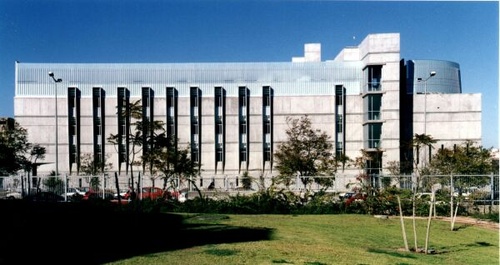
Ben Gurion University to Host International Desertification Conference

ben gurion university desertification conference image

Convening at the Ben Gurion University’s Sede Boqer campus on December 14-17, over 350 people from 40 countries are expected to meet and map out ways to combat desertification around the world. The four-day gathering is the largest international conference ever held in Israel focused on an environmental topic, and probably the largest international academic forum ever on desertification. Delegates will be coming from as close as Jordan, and as far away as China, North Africa, India and Pakistan.

Amid warnings by the United Nations of a looming desertification crisis in both the developed and underdeveloped world, the Jacob Blaustein Institutes for Desert Research (BIDR) at Ben-Gurion University of the Negev will be hosting a major conference aimed at examining new ideas to combat the phenomenon.

Beyond the academic and practical aspects of the conference, the forum will also serve as a meeting place for scientists, farmers and bureaucrats from across the globe to share their experiences and exchange ideas.

Participants and journalists will also be able to attend field trips for a close-up look at Israel’s work in the field. These include examining eco-tourism in deserts, social challenges, afforestation, solar energy, conservation, desert agriculture, desalination and more.

“The Blaustein Institutes are the only academic institution in the world trying to look at desertification from an inter-disciplinary approach,” says Prof. Avigad Vonshak, director of BIDR.

According to conference organizer Prof. Alon Tal, also from the BIDR, a UN study has found that one-third of the Earth’s population – about two billion people – are potential victims of desertification’s creeping effect. From sub-Sahara Africa to the former Soviet republics in central Asia, human abuse and malpractice of the land are making the matter worse. “But Israel’s success in changing large sections of the Negev into fecund agricultural lands and forested parks makes its record somewhat unique in a world where most of the desertification trends are negative,” he explains.

Tal anticipates that the conference this year will be twice the size as the first one held in 2006. Enjoying dozens of sponsors, including UNESCO and Israel’s Foreign Ministry – some 100 African experts, practitioners and officials will be participating as part of the MASHAV program, learning from Israel’s experience in the field.


Read More

2 COMMENTS
  1. When studying desertification, do not skip one of its main causes: aquatic weeds. Water hyacinth, water lettuce, Typha and others clog the waters of Africa and elsewhere, sucking them dry. The Typha Australis infestation in Lake Chad and its tributaries is the dessication machine expanding the Sahel. All of these aquatic weeds need clearing, but clearing them is a never ending task. Without a profit, it will bankrupt anyone. Typha can be harvested at a profit in food and fuel and fiber. It is an extremely productive crop, but not just any can be eaten- aquatic weeds like pollutants and collect them. It is excellent feedstock for ethanol and can be made into “green charcoal” for traditional African use. The frontline against the desert is in the wetlands, turning swamps back into rivers and lakes.

TRENDING

Mona Khalil, Orange House Project founder, sea turtle protector killed in Lebanon

Mona Khalil spent decades protecting Lebanon's sea turtles and coastal ecosystems. Her death in the ongoing conflict between Israel and Hezbollah shines a light on a broader environmental tragedy unfolding across northern Israel and southern Lebanon. From damaged wetlands and disrupted bird migrations to threatened seed banks and endangered wildlife, the region's ecosystems are becoming casualties of a war with no clear end in sight.

Idols of Ganesh in Canadian lakes are causing local environmental concerns

Immersing religious idols in Canada's lakes, rivers and coastal waters remains a contentious issue. While the practice is an important tradition for many Hindu communities during festivals such as Ganesh Chaturthi, environmental regulations in many jurisdictions prohibit the disposal of foreign materials into natural waterways, even when the objects are intended as religious offerings.

Dan Zaslavsky’s energy tower dream is rising again in Iran and China

The Energy Tower idea never made the leap from drawings and engineering studies to full-scale construction. But nearly two decades after most people stopped talking about it, the concept is quietly evolving in two unexpected places: China and Iran. The concept let dreamers dream and doers do - figuring out more pleasing designs and engineering.

A visit to Amirim, Israel’s first all-vegetarian village in the Galilee

Just 15 kilometers from Tzfat there is a moshav that was founded in the late 50s that was ideologically influenced by organic, vegetarian and vegan principles. My hostess at Ohn-Bar, the tzimmer where I stayed, explained that the people of Amirim were among the pioneers of Israel’s strong vegetarian movement.

Israeli Hydrogen Startup H2Pro Are Trying to Solve Clean Energy’s Hardest Problem

The company has attracted backing from major investors including Breakthrough Energy Ventures, the climate fund founded by Bill Gates, along with industrial partners such as Sumitomo, ArcelorMittal, and Temasek, a multi-billion dollar company that owns Singapore airlines. H2Pro has raised more than $100 million USD and is moving from pilot projects toward commercial-scale deployments.

Yerukim Forms a New Green Economy Where the Money is Really Green

The Yerukim members who pick up the recyclables get to keep the monetary reward, the public earns "green" bills that can be used in shops, and business owners get to be associated with environmentalism.

Choosing Riyadh over Dubai? What Investors Should Know

Saudi Arabia is deploying capital at unmatched scale to catalyze tourism and advanced industry while rewiring its power-and-water backbone. The investable frontier is widening—especially in renewables, grid storage, water efficiency/desal retrofits, and hospitality operating platforms. Prudent investors will insist on phased delivery, enforceable KPIs (energy, water, biodiversity), and RHQ/zone compliance—while pricing political-economy and reputational risks alongside growth upside.

Sell your cooking oil for biodiesel money

Want to make money on old french fry oil? Sell it.

Qatar Alternative Energy Summit Pairs Investors And Innovators

Alternative energy investors and innovators can meet n' greet in Doha, Qatar March 16 and 17.

Here’s How To Implement The Four Pillars Of Employee Engagement

If you throw a party for your work team and they are vegans, don't make it a barbecue. Know the sustainability values of your team to boost moral and retain good people.

Locals From Rishon Fight IKEA

Big Box stores are a pretty new concept in Israel, and thank God that not every Israeli city wants them in their backyard. A word from someone who has see the beautiful farmland around her hometown Newmarket, Ontario stripped and converted into vulgar strip malls of big box shops: they have no place in a healthy and sustainable town or city.

The Jewish National Fund Meets An Inconvenient Truth

According to the JNF, it has transformed thousands of acres of barren land into green forests in Israel. They state that each person emits about 23 tons of carbon per year, estimating that each tree planted can absorb one ton of carbon in its lifetime. That's a whole lot of trees you'd need to be planting. Could so many fit in Israel?

How to quiet noise from construction in your office

Streets need to be resurfaced in New York but the humming and grinding noise is unsettling. Noise is environmental pollution. 

Popular Categories