Palestinian Agro-Industrial Park: A Sustainable Plan?

Leaders from Israel, Jordan and the Palestinian Authority concluding talks in Tokyo yesterday with the announcement that they plan to start building an agro-industrial park in the Palestinian Territories by next year.

The agro-industrial park could provide jobs for up to 6,000 Palestinians in the West Bank. According to Japanese Foreign Minister Masahiko Komura, the park’s “success would provide local people with new jobs, promote the economic development of Palestine and hope for the future (full story from AFP).”

While we applaud the efforts of all four sides to work cooperatively towards achieving a viable Palestinian state with a successful economy, we wonder if this is  another example of improper consideration of environmental concerns…

According to the plans, Palestinians working in the new agro-industrial park will grow fruits and vegetables, and export them through Jordan. Although there are few specific details besides what is just coming through the newswires, there are a few scary thoughts that pop into mind:

First of all, this region is in the worst water crisis it has seen in decades! A large-scale, industrial agricultural project will require enormous imports of water. Where will it come from? On the other side of the Green Line, Israeli Minister of National Infrastructure Binyamin Eliezer is already talking about cutting down water quotas for Israeli farmers because the crisis is so severe, so it seems illogical that Palestinians are planning to massively increase their water consumption – via agriculture – as a basis for economic growth.
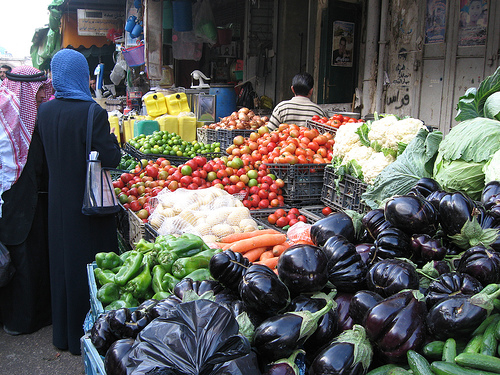
If the agro-industrial park is based on conventional agriculture (which it most likely will be), then it also poses a risk to soil and groundwater. Conventional agriculture can quickly and easily strip soil of its nutrients, which causes a need for fertilizer inputs (on top of the inevitable pesticide inputs). These chemicals can leach into the groundwater, of which Palestinians already have preciously little, posing a threat to human health.

Additionally, the process of conventional agriculture is very fossil fuel intensive, in terms of machinery, chemicals, packaging and shipping, etc. In an era of climate change and skyrocketing oil prices it seems both environmentally irresponsible and economically unwise to tie an infant economy to petroleum.

The Japanese are planning to begin a feasibility study in November. Again, while we congratulate our political leaders on striving towards regional peace, let’s also remind them that a sustainable peace requires sustainable environmental and economic solutions.

Related Prophecies :: Green News from the Arab Blogosphere :: Israelis and Palestinians: Teaming Up for the Environment

Photo credits: AFP and ahote’s_photolog

Rachel Bergstein
Rachel Bergsteinhttps://www.greenprophet.com/
When her vegan summer camp counselor explained to a fifteen-year-old Rachel how the dairy industry pollutes the groundwater in poor rural communities and causes global warming, there was no turning back. Her green fire lit, Rachel became increasingly passionate about the relationship between human societies and the natural environment, particularly about the systemic injustices associated with environmental degradation. After snagging a B.A. in Peace and Justice Studies at the University of Maryland, where she wrote an undergraduate thesis on water injustice in Israel/Palestine and South Africa, Rachel was awarded the New Israel Fund/Shatil’s Rabbi Richard J. Israel Social Justice Fellowship to come and spread the green gospel in Israel for the 2009-2010 academic year. She currently interns for Friends of the Earth Middle East in their Tel Aviv office. When Rachel is not having anxiety about her ecological footprint, carbon and otherwise, she can be found in hot pursuit of the best vegetarian food Tel Aviv has to offer. She also blogs about her experience as an NIF fellow and environmentalist in Israel at organichummus.wordpress.com. Rachel can be reached at rachelbergstein (at) gmail (dot) com.

Read More

TRENDING

Who Owns the Farm Robot? A State of Jefferson Startup Takes on Carbon Robotics

In California's self-proclaimed State of Jefferson, a small agricultural technology company is challenging the dominant laser-weeding business model. Laudando & Associates believes farmers should own and repair their AI-powered weeding tools rather than pay ongoing subscription fees. The approach has put the company on a collision course with industry leader Carbon Robotics, sparking a patent dispute that has pushed the Jefferson startup toward overseas markets while raising broader questions about ownership, right-to-repair, and the future of farm automation.

Regenerative Wool or Greenwashing? Zentera Responds to Critics

Zentera responds to questions about ZQ wool, animal welfare, regenerative farming, ethical fashion and the fallout from PETA's New Zealand investigation.

Can Scientists Predict Coral Bleaching Before It Happens?

Now researchers at the Woods Hole Oceanographic Institution (WHOI) in the US say they have developed a way to predict coral bleaching five to six months before it occurs, potentially giving reef managers enough time to intervene and save vulnerable corals.

Tanner Winterhof on the Custom Harvesters Quietly Holding American Agriculture Together

In late January, in a Des Moines hotel ballroom that smelled faintly of diesel and convention coffee, Tanner Winterhof spent three days hosting the members and attendees of the  U.S. Custom Harvesters Inc. annual convention on his podcast as Farm4Profit’s official media partner for the show.

AC Water Uses: How to Reuse Air Conditioner Condensate Water for Plants, Cleaning and Water Conservation

That means the water dripping from your air conditioner may already be usable for gardening, cleaning, flushing toilets, topping up humidifiers, or cooling systems — instead of disappearing into the sewer. A new study. Is it safe?

Yerukim Forms a New Green Economy Where the Money is Really Green

The Yerukim members who pick up the recyclables get to keep the monetary reward, the public earns "green" bills that can be used in shops, and business owners get to be associated with environmentalism.

Choosing Riyadh over Dubai? What Investors Should Know

Saudi Arabia is deploying capital at unmatched scale to catalyze tourism and advanced industry while rewiring its power-and-water backbone. The investable frontier is widening—especially in renewables, grid storage, water efficiency/desal retrofits, and hospitality operating platforms. Prudent investors will insist on phased delivery, enforceable KPIs (energy, water, biodiversity), and RHQ/zone compliance—while pricing political-economy and reputational risks alongside growth upside.

Sell your cooking oil for biodiesel money

Want to make money on old french fry oil? Sell it.

Qatar Alternative Energy Summit Pairs Investors And Innovators

Alternative energy investors and innovators can meet n' greet in Doha, Qatar March 16 and 17.

Here’s How To Implement The Four Pillars Of Employee Engagement

If you throw a party for your work team and they are vegans, don't make it a barbecue. Know the sustainability values of your team to boost moral and retain good people.

Locals From Rishon Fight IKEA

Big Box stores are a pretty new concept in Israel, and thank God that not every Israeli city wants them in their backyard. A word from someone who has see the beautiful farmland around her hometown Newmarket, Ontario stripped and converted into vulgar strip malls of big box shops: they have no place in a healthy and sustainable town or city.

The Jewish National Fund Meets An Inconvenient Truth

According to the JNF, it has transformed thousands of acres of barren land into green forests in Israel. They state that each person emits about 23 tons of carbon per year, estimating that each tree planted can absorb one ton of carbon in its lifetime. That's a whole lot of trees you'd need to be planting. Could so many fit in Israel?

How to quiet noise from construction in your office

Streets need to be resurfaced in New York but the humming and grinding noise is unsettling. Noise is environmental pollution. 

Popular Categories