
Sustainable Break-up Tips To Turn Your Blues Green

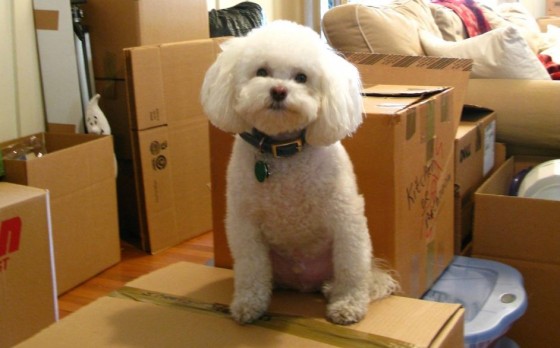
moving day dog poodle on boxes
Laura offers tips on unloading the stuff that comes between you and a broken heart.

Broken relationships may leave us sad, lonely, or even relieved, but they also leave us with a pile of stuff acquired over that love-lifetime.  Oh, the twaddle we collect in a romantic stupor. Maybe your lonely-heart loot has amped up value: pretty jewelry now tarnished by ugly memories, or the ultimate heartbreak flotsam: a wedding dress, tux, or the Ring?

Never Liked It Anyway offers post-relationship cleansing for your closets and your soul. It’s a website where “once-loved gifts from once-loved partners get a second chance”. The site was conceived when its owner, après wrenching break-up, realized she held a useless plane ticket for a now-cancelled getaway. With simple blogging software, she created a combination online group hug/swap meet. A brilliant website where newly singled users could vent their blues while offloading the detritus of disastrous unions, in an unintentionally green way.

Convert that impulse to torch the stuff into a sensible recycling exercise with environmental and financial upside.  The loveless clear out memory-laden loot. The loot, picked up at bargain prices, is diverted from landfills. Sellers pocket some cash. Shoppers get added entertainment reading heart-wrenching/hilarious back stories.  A wedding band selling at half it’s original price comes with the tale, “Prince Charming turned into a toad and gave me divorce warts. I’m not bitter, just BETTER.”  A guy unloading an engagement ring says, “I’d like to get this ring onto the hand of someone who loves her partner more than her parents.” Ouch.

For saying Good Riddance to bulkier items, like your cedar Hope Chest or loveseat, check out second-hand furniture dealers. Nefertiti Furniture is an Emirati supplier of used furniture. Their website boasts that stock is “from European and American expatriates who only buy the best.“ I can vouch that a few of those discerning expats were motivated to sell by changes in marital status. Their eyes may’ve been red, but by locally reselling quality goods at fractional prices, their actions were quite green.

While you’re at it, divorce yourself from middle men (and women).

Why not dump things directly? Craigslist is a forum for posting classifieds, services and goods swapping with branches specific to Kuwait, Lebanon, Palestine and Israel. Post things you want taken away, for free or for a price. Freecycle is a nonprofit that’s all about reuse and keeping good stuff out of garbage bins. When I lived in recycling-crazed Ireland, rather than paying to dispose of 140 cardboard shipping boxes at the county waste center, I posted on Dublin Freecycle. Four different guys responded and in a matter of days, carted away all the cartons. This stuff works. There are Freecycle groups active in Cairo, Damascus, Tel Aviv, Haifa and Ankara.

Say it with (dead) flowers.

Not quite ready to move on?  Itching to get in the last word? Take a peek at a novel niche in the billion dollar floral industry. Companies such as Dirty Rotten Flowers will deliver a custom arrangement to the object of your obsession; the kicker is the flowers are dead. Stems are sourced from traditional florists after their sell-by date, ensuring that your gift is green, even though the bouquet is decidedly brown.

Break the mashup between “heart” and “ache” by choosing positive  actions in your move forward.  Put a green-lining in your breakups.  

Image via mbtrama

Read More

TRENDING

From Pilot Plant to Global Stage: How Aduro Clean Technologies’ 2026 Expansion Signals a Turning Point for Chemical Recycling Investors Like Yazan Al Homsi

The company's Next Generation Process (NGP) Pilot Plant in London, Ontario, has officially moved into initial operating campaigns, generating the kind of structured, repeatable data that separates laboratory promise from commercial viability.

Urban miner Sortera raises $45 million USD to pull aluminum from the scrap pile

Sortera Technologies, founded in 2020 by Nalin Kumar and Manuel Garcia, is emerging as a major U.S. circular-industry player. Led by CEO Michael Siemer, the company uses AI and advanced sensors to turn scrap metal into high-value aluminum alloys. Its new ~$45 million funding round signals investor appetite for industrial decarbonisation—where emissions cuts come not from PR-friendly solar installs, but from upgrading the materials that power EVs, solar frames, and construction.

Waste Reform from the Ground Up: How Trash Balers Are Helping Cities Rethink Sustainability

If you’ve ever watched a recycling truck weaving through city streets, you’ve seen the problem firsthand. Most of what we call “recycling” still depends on long-distance transportation and centralized sorting facilities. Those systems are energy-intensive and prone to contamination — the dreaded mix of wet food, plastic wrap, and paper that renders recyclables useless.

Scientists Crack the Code for Low-Cost, Low-Carbon Plastic Recycling

While enzymatic recycling offers hope for managing existing plastic waste, scientists and environmental advocates agree it must be paired with the development of bio-based plastics—materials made from renewable biological sources like corn starch, sugarcane, or algae. Unlike conventional plastics derived from fossil fuels, bio-based alternatives can dramatically reduce carbon emissions at the production stage and are often compatible with closed-loop recycling.

Regenx builds urban mines for the rarest of metals

Regenx from Canada has evolved the concept of mining: they are urban mining in the classic sense and pointing the way to cleaner and more sustainable ways of recovering minerals from industry.

Yerukim Forms a New Green Economy Where the Money is Really Green

The Yerukim members who pick up the recyclables get to keep the monetary reward, the public earns "green" bills that can be used in shops, and business owners get to be associated with environmentalism.

Choosing Riyadh over Dubai? What Investors Should Know

Saudi Arabia is deploying capital at unmatched scale to catalyze tourism and advanced industry while rewiring its power-and-water backbone. The investable frontier is widening—especially in renewables, grid storage, water efficiency/desal retrofits, and hospitality operating platforms. Prudent investors will insist on phased delivery, enforceable KPIs (energy, water, biodiversity), and RHQ/zone compliance—while pricing political-economy and reputational risks alongside growth upside.

Sell your cooking oil for biodiesel money

Want to make money on old french fry oil? Sell it.

Qatar Alternative Energy Summit Pairs Investors And Innovators

Alternative energy investors and innovators can meet n' greet in Doha, Qatar March 16 and 17.

Here’s How To Implement The Four Pillars Of Employee Engagement

If you throw a party for your work team and they are vegans, don't make it a barbecue. Know the sustainability values of your team to boost moral and retain good people.

Locals From Rishon Fight IKEA

Big Box stores are a pretty new concept in Israel, and thank God that not every Israeli city wants them in their backyard. A word from someone who has see the beautiful farmland around her hometown Newmarket, Ontario stripped and converted into vulgar strip malls of big box shops: they have no place in a healthy and sustainable town or city.

The Jewish National Fund Meets An Inconvenient Truth

According to the JNF, it has transformed thousands of acres of barren land into green forests in Israel. They state that each person emits about 23 tons of carbon per year, estimating that each tree planted can absorb one ton of carbon in its lifetime. That's a whole lot of trees you'd need to be planting. Could so many fit in Israel?

How to quiet noise from construction in your office

Streets need to be resurfaced in New York but the humming and grinding noise is unsettling. Noise is environmental pollution. 

Popular Categories