
Home Blog Page 94

Bluewalker 3 satellite outshines the stars and worries astronomers

0
Bluewalker 3 satellite
Launched in 2022, BlueWalker 3 is the first of a new series of satellites aimed to become orbital cell towers. Credit Michael Tzukran

Astronomers are worried about the launch of the latest satellite to Earth’s orbit, the Bluewalker 3. The new satellite which unfolded in Low Earth Orbit in November, measures about 700 square feet in size, about the same size as a studio apartment in New York City. The satellite is meant to be used for cellular communication, but the amount of light pollution it emits makes it harder for astronomers to see the night sky. At its peak BlueWalker 3, which looks like a Tetris block flying across the sky, is as bright as two of brightest stars we can see with our eyes.

Bluewalker’s bright light is about the same stars Procyon and Achernar, two of the brightest stars in the night sky. And this satellite is just the first of dozens of constellations of satellites planned for Low Earth Orbit.

“After BlueWalker 3 unfolded its 64m2 array it is visible in both dark sky and urban skies, though in urban settings, this will be limited to when Bluewalker 3 passes overhead,” said Jeremy Tregloan-Reed, a co-author in the new study from the Universidad de Atacama in Chile.

Bluewalker satellite
The Bluewalker 3 satellite by AST SpaceMobile

But the appearance of the satellite is a growing concern as satellite groups like Elon Musk’s Starlink eject thousands of light-polluting satellites to our skies, all of which become space junk at the end of their days. Astronomers are outlining the problem of Bluewalker 3 as a wake up call as more and more companies like Starlink race to cover the world in high speed internet – even if Starlink can help Iranian dissidents.

Other companies, such as Amazon and OneWeb, have similar ambitions to launch satellites in space, and many countries are developing their own private communications constellations. Astronomers are very worried.

Watch the video of Bluewalker 3 below captured by astromers

A ground telescope tracks the BlueWalker 3 satellite in orbit on April 3, 2023. Dimmer Starlink satellites are also visible. Credit Marco Langbroek/Delft Technical University

“Large constellations of bright artificial satellites in low Earth orbit (LEO) pose significant challenges to ground-based astronomy,” the study’s authors write in the journal Nature.

Tregloan-Reed explains, among other problems, a large reflective brightness interferes with space telescopes like Hubble. When a satellite crosses the detector of a telescope, it often leaves a streak of light that can be difficult to remove.

Observations by the Hubble telescope have been affected by Starlink streaks because the telescope was in a LEO, sitting below that of the Starlink constellation.

While the researchers acknowledge that efforts are being made by the aerospace industry, policymakers, astronomers and others to mitigate the impact of such satellites, “the trend towards the launch of increasingly larger and brighter satellites continues to grow,” they write.

It’s sort of like asking the petroleum industry to regulate the use of fossil fuels.

BlueWalker 3, built by AST SpaceMobile, is a predecessor to a planned constellation of satellites nicknamed BlueBirds. AST SpaceMobile plans to make cellular broadband connections available to people who are currently without –– a solution that could help alleviate poverty or save lives in remote locations.

AST SpaceMobile BlueWalker 3’s array is so large, they say, so they can beam strong cellular coverage directly to phones on Earth. The satellite is comprised of small antennas which connect to existing smartphones. This is different than Starlink which requires a ground antenna or dish.

AST SpaceMobile has agreements and understandings with mobile network operators globally that have over 1.8 billion existing subscribers, including a mutual exclusivity with Vodafone in 24 countries. Interconnecting with AST SpaceMobile’s planned network including Vodafone Group, Rakuten Mobile, AT&T, Bell Canada, MTN Group, Orange, Telefonica, Etisalat, Indosat Ooredoo Hutchison, Smart Communications, Globe Telecom, Millicom, Smartfren, Telecom Argentina, Telstra, Africell, Liberty Latin America and others, the ability to offer extended cellular broadband coverage to their customers who live, work and travel in areas with poor or non-existent cell coverage, with the goal of eliminating dead zones with cellular broadband from space.

“We want to close coverage gaps in our markets, particularly in territories where terrain makes it extremely challenging to reach with a traditional ground-based network. Our partnership with AST SpaceMobile – connecting satellite directly to conventional mobile devices – will help in our efforts to close the digital divide,” said Luke Ibbetson, Head of Group R&D, Vodafone and an AST SpaceMobile director.

AST SpaceMobile issued a statement that the company is working on anti-reflective materials for the next generation of satellites and they they will avoid broadcasting in the US National Radio Quiet Zone. But the frequency sound waves they use are close to those used by astronomers today making interference an issue with ongoing and future studies.

The latest research on Bluewalker 3 was done by amateur and professional astronomers from Chile, the US, Mexico, New Zealand,Netherlands and Morocco.

Indigenous groups and the astronomy community are now invested in protecting the night skies: “We shouldn’t have progress at any cost,” Tregloan-Reed said. “It’s like building a brand-new development over a historical site. You can’t just do that. You have to protect these things.”

While astronomers don’t own the night sky they don’t want to see it taken by the highest bidder in the name of progress: “What we’d like to do is share the night sky and get the public to understand that this is a potential issue,” he said.

Meet Earth in 250 million years where Canada and Nigeria are neighbors

0
earth landmass in the future
Earth is drifting and when the parts collide it will not be disastrous but it will be grim. Only a fraction of the planet’s surface will be habitable to mammals when the next supercontinent, Pangaea Ultima, forms. Image Credit: Alex Farnsworth and Chris Scotese

When we think of the effects of climate change we worry about our future, our children’s future and maybe we skip ahead to a grandchild. But most of us don’t think beyond a hundred years but we should when it comes to sustainable investments and building companies that last. Also consider we have a long future as a species ahead of us. Or do we? Have you thought about thousands or millions of years into the future? In a few billion years life is no longer expected to be sustainable on earth but it could happen sooner.

You may or may not know it but the earth’s landmasses do drift. And Up to 92% of Earth could be uninhabitable to mammals in 250 million years according to a new Nature paper.

As our home planet’s landmasses drift, a merged Afro-Eurasian continent will eventually crash into the Americas to form a new supercontinent: Pangaea Ultima. This means Canadians will be next-door-neighbors to Nigeria. Americans will be bordered by Botswana and Angola.

Pangea Ultima, via Vivid Maps 

The supercontinent’s creation will drive volcanism, which will increase carbon dioxide levels and turn most of the land into a barren, hot desert. In a worst-case scenario, just 8% of the planet’s surface would be habitable to most mammalian life, which would lead to a mass extinction:

The researchers report: “Mammals have dominated Earth for approximately 55 million years thanks to their adaptations and resilience to warming and cooling during the Cenozoic. All life will eventually perish in a runaway greenhouse once absorbed solar radiation exceeds the emission of thermal radiation in several billions of years.

“However, conditions rendering the Earth naturally inhospitable to mammals may develop sooner because of long-term processes linked to plate tectonics (short-term perturbations are not considered here). In about 250  million years all continents will converge to form Earth’s next supercontinent, Pangea Ultima.

“It does seem like life is going to have a bit more of a hard time in the future,” says Hannah Davies, a geologist at the GFZ German Research Centre for Geosciences in Potsdam. “It’s a bit depressing.”

Revolutionizing agriculture: Treetoscope raises $7M in seed funding for smart drip irrigation

0
Treetoscope’s ingenious system monitors plant indicators in real time to provide worldwide farmers a SaaS platform to optimize irrigation at substantial water savings
The Treetoscope sensor collects information about water and soil nutrients to turn on irrigation systems at the right time

Plant stressor sensor Treetoscope has raised $7M USD in a seed fundraising round. The IoT device gives farmers information when using drip irrigation, helping them automate precise water and fertilizer use when the plants are hungry and thirsty. The tech can automate drip irrigation by applying AI and sensors to understand plant water needs real time. Investment will be applied towards expanding company sales and R&D. 

Treetoscope’s technology gives insight and automation to the amount of water and fertilizer to give to plants and trees, reducing wasted water and efficiently managing plant nutrient levels. Environmentalists tend to support organic agriculture with a push to regenerative farming practices where no pesticides or soil-enhancing fertilizers are used at all. But that’s in a more perfect world.

Israel, where Treetoscope was born, is the home to the inventor of modern-day drip irrigation Simcha Blass. Drip irrigation applies long plastic pipes incised with tiny holes throughout a farm. There are variations on the way it is applied, but this is the most common method. The pressure in the pipes administers water only at the root or base area of the plant to avoid unnecessary evaporation and loss of water. In general this technology is very primitive, much like plumbing is today, with the majority of applications using timers to turn the water on only at night when the plants can best absorb it.

In the last 15 years or so dozens if not hundreds of companies from Israel have emerged looking to take on parts of the equation to make every drop of water, fertilizer and pesticide count. Fertigation is the term often used in the industry.

The Treetoscope app

With areas like the Dead Sea shrinking because of fertlizer harvesting, and countries like China looking for intensive agricultural solutions to feed a growing in affluence population, solutions like Treetoscope will be more and more in demand.

In areas of the United States where climate change makes farming areas of almond farms impossible due to ongoing droughts, Israel-made sensor tech might save the day.

Some solutions like the wildly successful CropX operate in the same space as Treetoscope and my company Flux was operating in the cannabis and hydroponics space in this niche (see Future Crop $30M investment), quite likely too early for only a infant market for hydroponics 10 years ago. Back then investors told me hydroponics sensors and AI was a “nice” to have solution but more like a vitamin than a bandaid, as goes their analogy.

Covid changed thinking, supply chains and investments as the need for local food sources that don’t depend on the political climates of other countries such as the Ukraine and Russia. InFarm, a team of Israelis, were heralding in the golden era of hydroponics but focusing on a consumer model. They raised almost $200M to expand into grocery stores but then had to lay off over half their staff by December last year.

Israeli farmers take on Berlin
The InFarm team

The investment in Treetoscope fortifies the more sober area of conventional farming and it was led by Champel Capital venture capital fund, a leading European-Israeli fund focusing on impact technology investments. Other strategic investors include Leon Recanati’s GlenRock fund, SeedIL, YYM-Ventures, and previous fundraising investors, as per their press announcement.

This builds on $3M USD already raised which includes grants from the Israel Innovation Authority from the Offices of the Chief Scientist and BIRD, a joint Israel-US government fund which funds medicine and hightech ventures between Israel and the United States.

Treetoscope is currently operating in in North America and Europe via collaborations with such leading enterprises as The Toro Company, Netafim, and Hektas, with 20 employees in total. Treetoscope’s manpower includes 20 employees in Israel and internationally.

Treetoscope dashboard

“Humanity is currently facing one of its greatest challenges – a lack of freshwater resources,” says Dotan Eshet, CEO of Treetoscope. “Today, 70% of the world’s freshwater consumption is used by the agricultural sector, with this consumption expected to increase by approximately 60% by 2025.”

Through the technology Treetoscope has developed, according to them farmers can save approximately 30% in irrigation expenses, increase the yield, as well as the weighted profit of the farmers in Europe and the US, by ~$32 billion per year. 

“Treetoscope has developed a unique solution to one of the most painful problems in the worldwide food chain, where fresh water is becoming a rare, expensive commodity,” says Amir Weitman, managing partner at Champel Capital. “We are proud to help the company make solutions available to farmers to save significant amounts of water and create a genuine impact in the world.”

About Champel Capital 

Champel Capital is a venture capital fund that invests in Israeli startups in the realms of foodtech, agritech, medtech, industry 4.0, fintech and traffic. To date, the fund has made 21 investments, yielding 4 exits and 1 unicorn – Lemonade. Champel Capital is headed by partners Amir Weitman and Arié Benguigui, who have been investing in the Israeli venture capital scene since 2017. The advisory committee is Eyal Waldman, Omer Moav, Raoul Bino, Eyal Orion and Hillel Fuld.

::Treetoscope

Where to go for a sustainable ski holiday?

0
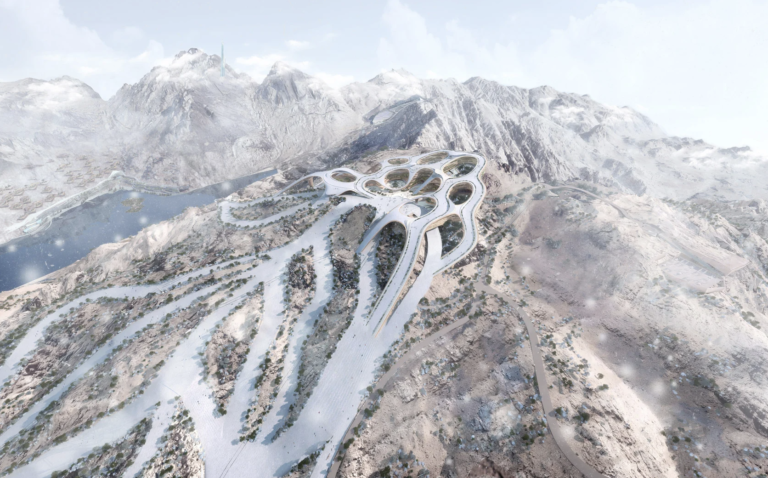
Trojena, Saudi Arabia, ski resort, Neom, Asian Winter Games, Zaha Hadid, Unstudio
Trojena, a new ski resort planned for Saudi Arabia is the opposite of sustainable

Skiing is an extremely popular middle-class winter sport that sees thousands of enthusiasts jet around the globe to slide down the slopes, only to return home a few days later after pursuing an environmentally unfriendly pastime.

Resort skiing is an energy consuming operation and across the European Alps ski resort owners are striving to meet the ever increasing energy demands for grooming slopes, running lifts and keeping their resorts warm.

This increasing movement towards reducing the carbon footprint, ski destinations have had to adapt. Resorts are tightening guidelines to ensure properties are using sustainable methods to provide a greener alpine experience. 

So the next time you are planning to go for an eco-friendly and green ski holiday, consider visiting any of the below mentioned sustainable ski destinations and booking with reputed providers like Alpine Elements

Skiing in 1940

Tignes

Tignes was the first ski resort which was awarded the Green Globe Label, way back in 1995, which is an international certificate program that rewards those organisation’s in the tourist industry that contribute positively to people and the planet.

Tignes wins green award. 

Apart from dismantling and removing over 100 lift towers from the ski area, Tignes has introduced a number of waste management initiatives like complementary pocket ashtrays and eco-responsive use of products where possible.

Every year fresh grass is transplanted to carefully blend the ski runs into the landscape in order to provide the snowpack with a more stable base.

Where to stay in Tignes: Skiers looking for a great location and a cosy mountain retreat should look no further than Chalet Marilyn a charming place to stay for eight persons.The accommodation lies just two minutes from the Chaudanne and Pacquis chair lifts, means you can ski back to within 100 m of the chalet.

Avoriaz 

The brainchild of former Olympic champion skier Jean Vuarnet,this purpose built ski resort of Avoriaz was established in the 1960s and its striking appearance sets it apart from all other ski destinations in the Portes des Soleil ski area.

Avoriaz is a totally ski-out resort which means you don’t have to lug your heavy ski equipment to the slopes and moreover, as far the environment is concerned, the resort is completely car free.

Apart from the Green Globe certificate Avoriaz has been awarded an ISO 14001 Environmental Management award for being the most innovative resort for sustainability.Since 2016, the ski resorts of Avoriaz have been powered 100% by solar power and hydro wind.

Where to stay in Avoriaz; Enjoying a wonderful location and Chalet Marie lies right on the piste near the centre of Avoriaz. This incidentally is the only ski-in and ski-out chalet in the Portes des Soleil ski area and a firm favorite among snowboarders and skiers.

La Plagne

Plagne for sustainable skiing

La Plagne is another very popular ski destination that has contributed much to sustainable tourism by using 100% renewable electricity to power its lift system which is shared with Les Arcs and is committed to a more sustainable and greener future.

Since energy is the essential element of any resort, La Plagne Centre has installed a biomass heating plant,which has been running since 2009, and has been supplying 90% of the energy the resort needs.

As far as transport is concerned, the tourism office has opted for only electric vehicles to prevent emission of greenhouse gases when skiers travel around. Connected with a dynamic rail network,there is no need to take a car to access the resort.

Where to stay in La Plagne; Chalet Charmant lies bang in the centre of Plagne village near some of the best ski slopes in the region at minimal walking distance.The chalet sleeps up to 12 adults and is perfect for a self-catered chalet experience.

Meribel

Meribel, like all other resorts in the Three Valley Skiing area, sources the energy it needs to power the snow cannons and lifts from renewable sources in the form of hydro power generated by the hydroelectric dams located throughout the region.

Additionally, the ski area in Morzine also utilizes solar energy for all radio communication that is necessary to maintain the slopes as well as for powering the swimming pool and the ice rink.

The green plan Meribel encourages more and more people to walk that provides the perfect solution to reduce traffic in not only Meribel,but in the surrounding villages as well. The free bus service has helped reduce local emissions by eliminating the need for private cars.

Where to stay in Meribel: Chalet Jolie in Meribel, offers a large self-appointed staying option with 10 ensuite bedrooms for twenty guests.The chalet has a hot tub, sauna and skiers can ski back to within 300 m of the chalet. Not only that, the free bus service stops just outside the chalet, making it very easy to access the place from the Meribel city centre and the Chaudanne chair lift. Your package will include breakfast on each day, afternoon tea and cakes and a three course dinner with complimentary wine for six nights 

Morzine 

The French ski resort of Morzine was the ninth winner of the Flocon Vert,or “Green Snowflake” sustainability label at a ceremony in September 2020.The award is given by the Mountain Riders, a European organization,to resorts that endorse sustainable development measures.

This includes various schemes aimed at introducing environment-friendly public transport, opening more pedestrian areas, traffic reduction and incorporating waste reduction techniques.

Moreover,the Montagne Verte organization is based in Morzine and has succeeded in encouraging both tourists as well as locals to act sustainably by cutting their carbon footprints by consuming local food and products.

Where to stay in Morzine: For a truly luxurious travel experience,the Chalet Well in Morzine is a premium property which can sleep 14 persons, looking for a high standard of service. Apart from oozing alpine charm from every corner,the chalet sits high overlooking Morzine, providing sweeping views of the valley below,not to forget a warm hot-tub awaiting you at the end of a hard day on the slopes.


How to Quit Smoking For Good

0

quit smoking

Are you ready to finally quit smoking for good? If so, then you’ve come to the right place! Quitting smoking can be as difficult as finding real estate leads without Haines, but it is possible with the right strategies and support. In this blog post we will go over some key strategies to help ease your transition away from cigarettes and onto a healthier lifestyle. We’ll talk about ways to manage cravings, make healthy habits stick, and build a supportive network of family and friends who can help you along your journey. We know how hard quitting can be–but don’t worry! With the resources in this blog post, you’ll have all the information you need on hand in order for quitting smoking for good!

Identify your reasons for wanting to quit smoking and become clear about them

Deciding to quit smoking is a big step, and it’s important to be clear about why you’re making that choice. Maybe you’re tired of feeling winded after a short walk, or maybe you’re concerned about the impact smoking is having on your health. You may be ready to save money by kicking the habit, or you might be motivated by a desire to set a positive example for your kids or loved ones. Whatever your reasons, taking the time to identify them can help you stay focused and committed as you work towards a smoke-free life. So take a deep breath, reflect on what matters most to you, and let those reasons serve as your guiding light as you embark on this journey towards better health and wellbeing.

Create a plan to quit smoking – find replacement behaviors, medication, and other methods that work best for you

Chiang Mai is the ultimate place to relax at this four seasons

Quitting smoking can be challenging, but it is an incredibly worthwhile and important endeavor. The good news is that many replacement behaviors, medications, and other methods are available to help you kick the habit. For example, some people find success in chewing gum or hard candies to replace the oral fixation of smoking, while others turn to nicotine gum, patches, or other prescription medications to help ease withdrawal symptoms. Additionally, exercise, mindfulness practices, and support groups can all be beneficial in helping to quit smoking. Ultimately, the most successful plan to quit smoking will be tailored to your specific needs and preferences, so don’t hesitate to try different methods to find what works best for you.

Get rid of all the cigarettes and related items in the house

It’s time to clear the air and get rid of all those cigarettes and smoking paraphernalia that may be lurking in your home. Whether you’re a smoker trying to quit or simply want to promote a healthier environment for yourself and your loved ones, getting rid of these items is a powerful first step. Dispose of those lingering cigarette butts, empty the ashtrays, and toss out any unused lighters or smokeless tobacco products. By removing these triggers and reminders from your environment, you’ll be better equipped to say goodbye to smoking for good. So take a deep breath, gather your resolve, and start cleaning house to embrace a healthier future.

Essential Tips for Going Vegan

0
Are you a vegan who has decided it’s time to move?

Are you considering leading a vegan lifestyle (maybe moving to a vegan community or the forest) after a major life change such as a relocation with Black Tie Moving? Making the switch to a plant-based diet and moving away from animal products can be daunting. However, the many benefits make it an exciting choice. With these essential tips, you can go vegan with ease and quickly find yourself feeling healthier, more energized, and much happier!

Research vegan recipes and ingredients to get familiar with plant-based meals

Exploring the world of vegan cooking can be exciting and delicious. With more people incorporating plant-based meals into their diets, researching vegan recipes and ingredients can be a great way to get started. By experimenting with ingredients like lentils, tofu, and fresh vegetables, you can discover new and tasty ways to prepare your meals. Vegan cooking doesn’t have to be bland or boring, and with so many recipes available online, you can find something to fit your tastes and preferences. Some staples to keep on hand when cooking plant-based meals include whole grains, nuts, and a variety of spices. So why not dive in and give it a try? Who knows, you may discover a new favorite dish!

VioLife 100% vegan mac and cheese

Stock your pantry and fridge with vegan-friendly items, such as tofu, nuts, vegetables, and legumes

Making the decision to transition to a vegan lifestyle can feel intimidating at first, but stocking your pantry and fridge with vegan-friendly items can make all the difference. Tofu, nuts, vegetables, and legumes are not only delicious and nutritious, but they also provide a wide array of options for meat-free meals. Whether you’re looking to make a stir-fry with tofu and mixed vegetables or whip up a hearty lentil soup, these vegan staples have got you covered. Plus, not only will incorporating more plant-based foods into your diet benefit your health, but it’s also a great way to reduce your carbon footprint and help protect the planet. So, go ahead and give it a try – your taste buds (and the planet) will thank you!

Try out new products like vegan cheese or mayo to replace non-vegan foods

oat milk
Non dairy oat ilk

As more people become conscious about the impact of their food choices on the environment and animal welfare, the demand for vegan alternatives is on the rise. Trying out new products like vegan cheese or mayo can be an exciting and delicious way to replace non-vegan foods in your diet. With more and more companies offering innovative and tasty plant-based options, it’s easier than ever to make the switch. Whether you’re a dedicated vegan or simply interested in incorporating more plant-based foods into your meals, experimenting with new products is a great way to keep things interesting and discover your new favorite foods. So why not give vegan cheese or mayo a try? You might just be pleasantly surprised.

Upgrading China’s steel plants could save the world years of carbon emissions

Think about the business opportunities for engineers who can build retrofit solutions. Time for impact investors to start creating incentives for new technologies.

Upgrading, or retrofitting, the world’s iron and steel processing plants early could reduce carbon emissions by up to 70 gigatonnes by 2050, roughly equivalent to two years’ worth of net global carbon emissions, according to a new study led by UCL researchers.

Published in the journal Nature, the researchers found that by upgrading the world’s iron and steel production facilities, carbon emissions can be reduced by 58.7 gigatonnes between 2020 and 2050, roughly equivalent to two years’ worth of net global carbon emissions. In addition, they found that by bumping forward emissions reduction retrofits five years ahead of when they would be typically scheduled, it would reduce emissions by 69.6 gigatonnes over that time frame. Iron and steel production contributes about 7% to total global carbon emissions.

To develop this schedule, the team created a comprehensive database of 19,678 individual processing units located in 4,883 individual iron and steel plants around the world, inventoried by their technical characteristics, including their locations, processing technologies, operating details, status and age.

Iron and steel production is a carbon emissions heavy process. The researchers found that as of 2019, the last year that data is available, 74.5% of the world’s steel was produced in coal powered plants that release considerable carbon emissions. Technologies exist to reduce these admissions, but upgrades are expensive and time consuming and so are usually only undertaken at the end of a processing unit’s operational lifetime.

Refining is also hard on the equipment, and the individual processing units within each plant need to be retrofitted periodically to prolong their operational lifetimes. Overall, 43.2% of global iron and steel plants have been retrofitted with new technologies or have otherwise enhanced their processes to extend their operating lifetime. The frequency of their retrofits depends on the technique they employ and how old they are, but typically they occur after 15 to 27 years of use.

The researchers found that if all currently operating processing units were upgraded to incorporate low-emissions technology at their predicted time of their refit, total emissions from the iron and steel sector could be reduced by 58.7 gigatonnes between 2020 and 2050, but if all the refits and upgrades were bumped forward and completed five years early, the total carbon savings would be 16% greater at 69.6 gigatonnes.

But the team also emphasises that mitigation efforts will have to take place at the individual facility level, and that the decarbonisation of the entire iron and steel industry depends on the efforts undertaken by every single plant. Because of the complexity and variety of methods involved in steel production around the world, there’s no one-size-fits-all decarbonisation technology or solution for the entire sector, and each processing unit should be upgraded individually according to its technical specification.

Dabo Guan
Dabo Guan

Senior author Professor Dabo Guan from the UCL Bartlett School of Sustainable Construction said: “Our results lend vivid background to the possibility of achieving net-zero carbon emissions in iron and steel production in the future. By retrofitting existing plants with low-carbon technologies, and improving scrap collecting and recycling, the iron and steel sector can dramatically reduce its carbon emissions. This study sheds light on the specific emissions reductions that are possible within the iron and steel industry.”

About 63% of the world’s steel production is from some type of blast oxygen furnace, while most of the remaining capacity is produced by electric arc furnaces. Upgrading the global inventory of blast oxygen furnaces will yield the greatest net carbon savings, about 74% of the total projected carbon savings. Upgrades to electric arc furnaces would account for the second highest net carbon savings, at about 16% of the projected whole, though this may be limited by the total amount of stock scrap available worldwide as the technique is dependent on recycling existing metals.

The researchers hope that this data can be used to identify improved ways to update ageing steel plants with emission reduction technologies in order to reach net-zero carbon emissions more quickly. Compiling this publicly available global database of iron and steel plants and tracking all their ages and technologies has significantly improved the detail of data around the carbon emission of global iron and steel production.

The researchers emphasise that because of the wide range of production methods and plant designs, the particulars of individual upgrades and mitigation effort of each processing unit will have to be done on an individual basis. Their research will help policymakers create a roadmap of when and how to upgrade iron and steel plants to meet emissions reduction targets.

The top five carbon emitting iron and steel plants contribute 7% of the total CO2 emissions from the global iron and steel industry but only make up 0.1% of the total 4,883 plants.

They are:

  1. Anshan Iron & Steel (China)
  2. Posco – Pohang Iron & Steel (South Korea)
  3. Shanghai Baosteel (China)
  4. Jiangsu Shagang (China)
  5. Maanshan Iron & Steel Group (China).

The researchers say that retrofitting these plants to lower their carbon emissions would demonstrate the feasibility for other, similar plants. The research was led by UCL and conducted in collaboration with Tsinghua University, Peking University and King’s College London.

Deep sea mining for concrete

0
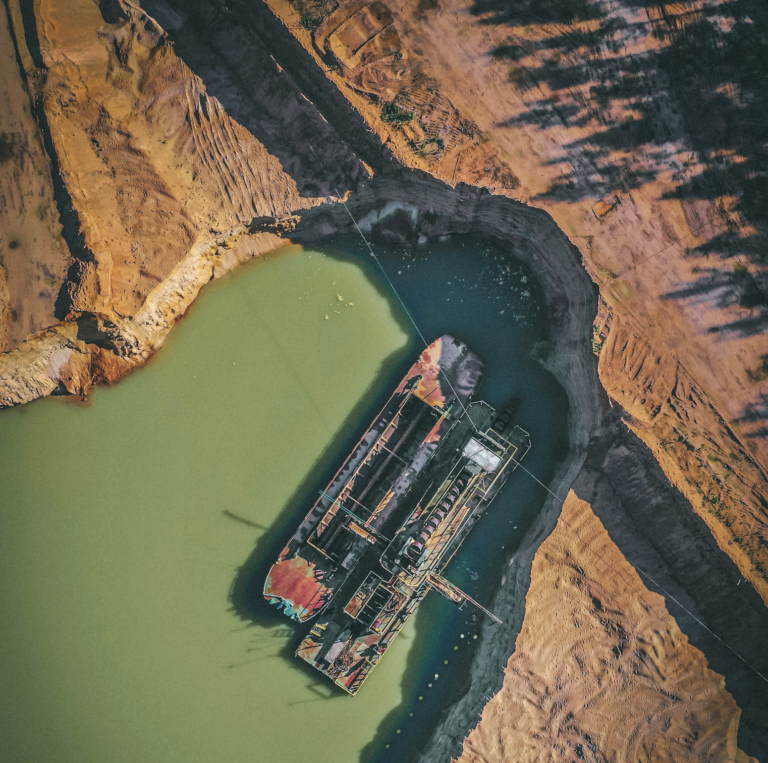
Sand mining in the Czech Republic

The excellent article on Green Prophet: Deep sea mining and killing the seas so you can drive an electric car was timely and extremely relevant. Deep sea mining is not only taking place for minerals and metals, but also for a very basic element found on the sea bed: sand.

One of the most common uses of beach or sea sand in general, is in construction. Sand is one of the ingredients in the production of concrete and other building materials. Concrete is made up of a mixture of water, cement, and aggregate, which is composed of crushed rock, gravel and sand. Sea sand is also used as a raw material in the glass, silicon and ceramic industries and for land restoration. 

The construction industry consumes about 4 billion tons of cement every year and 40 billion tons of sand for construction. The total use of sand worldwide is estimated at 50 billion tons annually. The dredging industry for sand is active in South China Sea, the North Sea and the East Coast of the United States, according to the University of Geneva, with China, the Netherlands, the United States and Belgium being the most active countries in this field. Interestingly enough, although deserts have plenty of sand, the desert sand is unsuitable for construction. Its rounded faces and high dust content, give concrete of very low quality, that does not comply with the industry standards.

Regulating sand mining from the seas

sand mining on the beach in Morocco
Illegal sand mining activities linked to Spain are devastating Moroccan beaches. Image via the ISS

Sand is one of the world’s most consumed natural resource on the planet, after water. But, despite the damage it causes, it is still unregulated. According to the UN the practice is unsustainable and could irreparably affect marine life. Pascal Penducci, director of UNEP’s Global Resources Database, described the marine sand dredging as a “giant vacuum cleaner”, draining the seabed by removing all the micro-organisms that support sea life.

Consider, what the ISS reports: “state developments in Morocco require an estimated 30 million tons of sand every year. Coastal sand along the western seaboard and Mediterranean is increasingly extracted, legally and illegally, by both registered companies and traffickers. The result is a series of lunar-like landscapes along Morocco’s coastline, which damages fragile ecosystems and increases the vulnerability of infrastructure to storms and rising sea levels.”

The ECOWEEK week of lectures, films and design workshops address design and construction practices and promote sustainable design and circular practices primarily among graduate and undergraduate students of architecture and design in 17 countries.

In 2018, ECOWEEK hosted the Today Tomorrow project of EUNIC (European Union National Institutes for Culture) in Tel Aviv. Within this collaboration the film “Sand Wars” was screened. Released in 2013 it is directed by Denis Delestrac.

The film “Sand Wars” tracks the contractors, smugglers and property developers hoarding sand from legal or illegal mining on sea shores and sea bed dredging. It presents the unsuccessful efforts by Municipalities, draining municipal budgets, to replenish seashores with sand. Only to be washed away, due to the voids created by deep sea mining. The film also presents the struggle of local communities to protect their sea shore residences from coastal erosion and damage and the loss of coastal shorelines, caused by sand extraction from the sea and shores.

If electric cars are a luxury – as compared to other modes of sustainable transportation, such as, public buses, light rail, bicycles and walking – mining sand for concrete is essential for construction. Especially, when trying to cope with destruction caused by earthquakes or floods. Building in concrete seems like an inevitable choice for relative resilience. However, the increasing use of concrete, and sand mining, makes cities more vulnerable and destroys ecosystems that support life. Read about this Israeli desert sand dunes being cleared for concrete.

Like in every story, there may be a happy end in this story too: recycled glass. Recycled glass is obtained from recycling old and waste glass. Glass can be recycled endlessly without affecting quality and purity, through crashing, melting and blending with other materials. Unlike desert sand, recycling glass is an acceptable replacement to sea sand for construction.

How much of this dome house in Santorini is built from sand?

The recycled glass market is estimated at $1.1B USD. It is low carbon, requires lower energy consumption, lower melting temperature, and less wear and tear on the manufacturing furnace. In terms of volume it is estimated at about 40,000 tons annually.

From grassroots initiatives like the recycling program “Glass Half Full” in Louisiana, to major industries, recycled glass is widely used in the food and beverages, automotive, healthcare, aerospace and defense industries. It is also used in construction. To provide more recycled glass for construction, an increase in the practice of glass recycling, is needed. More government and municipal initiatives and regulations in waste management are needed, raising public awareness and encouraging more initiatives in that direction by local industries.

Many cities today are engaged in urban renewal. This involves extensive demolition of existing buildings. Yet, with a disappointingly low rate of recycling and reclaiming of old materials, such as glass. Regulating demolition – and increasing refurbishment and retrofit, would considerably reduce construction waste, and wisely utilize the embodied carbon from producing these products in the first place. Less demolition would also reduce the need for new construction and use of concrete and sand.

Related: Peak sand

There is no doubt that the debate is relevant and urgent today. Not only, among architects and designers. But, among municipalities as well. With recycling rates ranging from 10 to 90%, there is a long way to go to reach 50% reduction in carbon by 2030 and zero carbon by 2050. And to reduce waste, particularly construction waste, estimated at one third of total waste.

Superuse Studio
A Superuse Studio project reusing waste wood in new creative uses

Architectural practices, such as the Dutch Superuse Studio and architect Thomas Rau, are leading the way on circular design in small and large scale projects, materials passports for buildings and reuse of waste, from wood to wind turbines at the end of their lifetime (20 years). 

A Super Reuse studio circular economy project using CNC waste as building façade

It is time for other architects and designers to take the lead too. To seriously reconsider the impact of design and construction on the planet. To consider only specifying construction methods that are local, low-carbon, low-impact and circular. Even start putting a cap on construction, densifying and utilizing existing buildings and reducing the floor area of modern apartments, as alternative construction methods and materials are becoming limited and the need to reduce the carbon footprint of construction is becoming imperative. 

Thomas Rau: Triodos Bank Headquarters | Photography: Bert Rietberg

The debate on the impact of the construction industry is complex yet essential. It certainly must engage professionals more than just designing planters on the balconies or the roofs, or specifying recycled wood for façade facing. These are nice gestures, but view them more like a “greenwash”. And compare them to the unregulated and unprecedented destruction of life and ecosystems taking place with every single new concrete formwork.

Elias Messinas, Ecoweek
Elias Messinas

Elias Messinas is a Yale-educated architect and urban planner, creator of ECOWEEK and Senior Lecturer at HIT. He completed this year the interior restoration of an historic synagogue in Greece, based on circular practices. Although small in scale, it reduced waste, new raw materials and the budget by nearly 50%.


Top Five Healthiest Countries in the World

0
Healthy smiling girl India
If the world’s health index were based on smiles, then India, Indonesia and Thailand would be the top 3 healthiest countries in the world.

There is no promising way to calculate the health of a country. The best one can do is to rely on metrics such as environmental factors, average life expectancy, and other signifiers to list one country on top of the other. It is the only way to determine the healthiest countries in the world. Other factors such as happiness and satisfaction with one’s life come into play.

It is not only about how developed a country is or what an average person’s annual income is either. Other factors such as alcohol consumption, smoking habits, obesity rates, and many other factors can also contribute to a country’s position in the list of healthiest countries across the world.

Keep reading to find out more about the healthiest countries in the world.

India

India is a place where tourists from around the world visit and then never leave

If you are looking for a meat-free ideal, you cannot overlook India, the most vegetarian country in the world. According to research, more than 40% of percent of people in India stick to a strictly vegetarian diet. Healthy vegetables are an unhindered part of every Indian kitchen.

Despite the high poverty rates, the country has one of the largest agricultural yields. The obesity rates in the country are on the rise. Yet, it remains to be one of the healthiest and most resilient countries in the world. This country can move above the list with better healthcare in the rural areas.

Switzerland

Bergsee, Switzerland is health on a mountain

There is no competition when it comes to the highest life expectancy. Switzerland remains to be the country with the highest life expectancy. With a clean environment, exceptional health policies, and financial bliss, people of every age live a prosperous and healthy life.

In addition to a prosperous and comfortable life, Switzerland is also known to be the country with the lowest mortality rate. Looking at all factors, such as a healthy lifestyle and access to fresh food, it is not hard to see why people in Switzerland live a long, comfortable, and healthy life.

Indonesia

Indonesia house concrete diapers, nappies
A house in Indonesia is made with a mix of concrete and used diapers. Talk about environmental invovation!

Thanks to tons of research and case studies, the disadvantages of alcohol consumption are not unknown to people anymore. Understanding the potential harm alcohol causes, it is fair to assume that Indonesia, a country with the lowest rate of alcohol consumption, will make it to the list of healthiest countries.

Indonesia is a Muslim-majority country with a strict ban on alcohol consumption. People who consume alcohol in Indonesia are frowned upon. In addition, the excessive taxes on alcohol also help in deterring people from purchasing and consuming alcohol.

Hungary

Vaccinations have made healthcare easier and more accessible for millions of people worldwide. While people have different points of view about vaccinations, Hungary remains the country with the highest vaccination rate, with more than 99.9% of children vaccinated against children. The benefits of reliance on vaccination have contributed to strengthening their overall health.

Experts agree that improving the healthcare system of Hungry can bring it to the top of the list. As the country’s vaccination efforts continue to strengthen, they may gain a lot of benefits from expert healthcare providers and dedicated nurses.

Iceland

geothermal power in iceland
Geothermal powered nature hot tubs in Iceland.

Smoking is very detrimental to your health. It is a truth that has been established for decades. Keeping this in consideration, think about a country to advertise about banning tobacco on mass media. Yes, Iceland also has the honor of banning all promotions on tobacco products. This is a very positive forward.

Although Iceland is one of the most high-income countries in the world, entertaining smoking as a habit can be a challenge to your budget. Hence, it is fair to say that smokers must think twice before visiting or moving to Iceland.

With the highest cigarette prices in Europe to keep people away from the deadly habit, many people are unable to afford this life-threatening hobby. In short, Icelanders care about health, happiness and wealth. They also value renewable energy, keeping the skies clean and the carbon emissions low. 


Make shanklish and meet slow cheese winners of the world

0
Shanklish is generally eaten with finely-chopped tomato, onion, and olive oil in a dish called Shʿifurah; and often accompanied by araq. It is a common meze dish. Shanklish is also mashed up with eggs or in a pita with cucumbers, mint, and olive oil for breakfast. Image via Wikipedia.

We’ve started making our own simple cheeses at home. Ones that use natural fermentation to take shape and flavor. An easy way to start is by making labane, a sour and tangy cheese perfected by the Bedouins, from a yoghurt base. But even if you don’t have yoghurt or access to kefir or a kefir starter, you can make labane and then shanklish cheese, a Levant favorite with the help of a little lemon. Fermentation and cheese is a world of its own. And you can do it in your fridge over the course of a month.

Labane, labne, cheese, a plate with olive oil and za'atar
Labane is delicious for breakfast, served with warm pita and olive oil

How to make shanklish

Shanklish, also known as chancliche, shinklish, shankleesh, sorke, or sürke, is a type of cow or sheep milk cheese found in Levantine cuisine. Shanklish is a Lebanese cheese made by curdling yogurt, straining it, and fermenting it. But if you have access to labane, you can start at that point too.

Ingredients for shanklish

500 grams labane cheese (click here to make your own easily with salt and milk)

Cup of zaatar

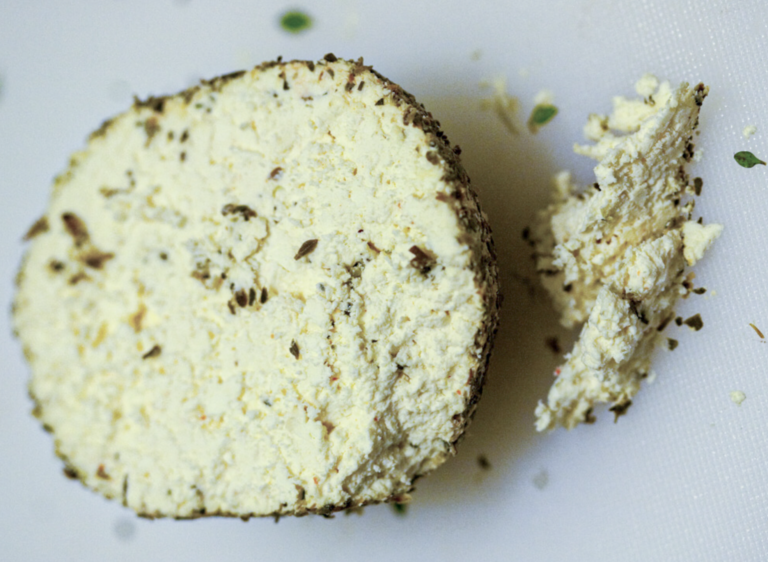
Take a ball of labane the size of a ping pong and roll it into zaatar. Put it in the fridge uncovered for a month, turning occasionally and voila you have a beautiful slow cheese from the Levant area of the Middle East. It can be grated over meals for an extra zing. Some variations inlcude rolling it in hot chilli peppers or anise seed.

Shanklish is generally eaten with finely-chopped tomato, onion, and olive oil in a dish called Shʿifurah; and often accompanied by araq. It is a common meze dish. Shanklish is also mashed up with eggs or in a pita with cucumbers, mint, and olive oil for breakfast.
Lebanon, a great setting for a picnic and eating shanklish.

While the Levant is known for simple, raw cheeses that don’t take long to ferment, we need to look to Europe for inspiration on how to make and eat the best cheeses in the world. The Slow Food organization has its annual awards, and like good olive oil and wine, cheese has its world of winners.

This year marks the 14th edition of Cheese, the largest international event dedicated to raw milk, natural cheeses and artisanal dairy products organized by the Slow Food movement and Città di Bra. The event brings together herders, cheesemakers and enthusiasts, united under the claim The Taste of the Meadows, emphasizing how raw milk from pasture-raised animals is crucial to sustainable food systems.

The Slow Cheese Awards pay tribute to the herders and artisan cheesemakers who work with respect for naturalness, tradition and animal welfare. These are small-scale producers who, despite all the hard work, risks and isolation involved, continue to resist. The winners were selected on the basis of their commitment not only to making natural raw-milk cheeses, but especially to fair and animal-friendly farming.

The winners of this year’s Slow Cheese Awards are:

David Nedelkovski, Kozi Mleko Planina, North Macedonia

David Nedelkovski Kozi Mleko Planina
David Nedelkovski from Kozi Mleko Planina, via IG

David is just over 30, but already ten years ago left Skopje and moved to the small village of Rastak, at the foot of the Karadak mountains, where he created the Kozi Mleko Planina farm together with his family. Here David raises alpine and domestic Balkan goats, calling himself a “Cossack,” or “free man”.

David produces several types of fresh or aged cheese, all hard or semi-hard. Together with his neighbors, they started some important projects to restore biodiversity and the mountains they live in. When they decided to move to the mountains, the project was to produce milk and cheese and go back to town, but the life in nature captured their hearts: “I go more and more infrequently to Skopje, I love living here surrounded by family and my animals,” Nedelkovski says. Looking at the future he would like to raise awareness on the importance of raw milk products and animal welfare, or on the relationship between farmers and veterinarians.

But his main priority is that his“goats are happy”.

Tetyana Stramnova from the Amalthea Goat Farm, Ukraine

Tetyana Stramnova, Image via UNFPA

Tetyana Stramnova started as interior designer in Donetsk and opened her first farm when she got her first child, starting to raise quails. When Russians arrived in the region, she and her family had to leave, finally arriving in Muzikyvka, in the Kherson region. There, they tried to restore the poultry farming but the business failed. “Actually my children chose Muzikyvka as our place to be as they felt it was home at first sight,” she says.

In the end, Tatiana decided to do something new: she raised goats, learned how to make cheese, created the Amalthea Goat farm, on the name of her first goat, and started conducting excursions for children with disabilities, such as autism, at the same time working to protect the local Ukrainian short-eared goats breed.

On the eve of the full-scale invasion, the village council allocated her a plot of land for the construction of a cheese factory. The woman would have to find money for premises and equipment. Instead, all these months she tried to protect from the Russians what she managed to create. And after the de-occupation of Muzikyvka, everything starts again almost anew: “My main motivation is children. I have to leave something for them, that’s why I started again and again. We want to get it all back on track. We have to move on with our life”.

Giampaolo Gaiarin, Italy

Giampaolo Gaiarin, Image via the Slow Food website

Teaching food technology, Giampaolo born in Switzerland and now in Italy, makes his skills available to young people and advances a precise idea of cheese. According to him, cheese made with raw milk without the addition of selected ferments is the most respectful and authentic form of cheesemaking: the only one capable of restoring the aromas and specificities of each milk, each barn, each pasture.

And he doesn’t just explain it in the classroom, but makes daily efforts to demonstrate in the field that it is possible to produce natural cheese, doing cheesemaking trials together with producers, helping interested cheesemakers to switch from purchased ferments to grafted milk, even inventing a small home fermenter to facilitate their work. In his life, he has put his experience and expertise at the service of the cause of natural cheese: made from raw milk and without the addition of selected ferments, working alongside small-scale producers, in Italy and around the world, training generations of cheesemakers through teaching.

Marco Villa, Italy

A veterinarian, he has been able to create a supportive community of breeders, motivated young people and given an opportunity for redemption to a difficult Ligurian mountain area at risk of depopulation as young people move to the cities.

Marco Villa with his rare breed of cows. Via Liguria Foods.

Thanks to his passion and great ability to share, he has helped save and protect the Cabannina breed of cows, an ancient breed, seemingly unsuitable for modern animal husbandry because it is less productive than commercial breeds. But the Cabannina is actually a key element in guaranteeing new opportunities for the highlands and a hope for those who want to breed with respect and in harmony with nature.


Why was the Morocco quake so deadly?

0
kasbah du toubkal
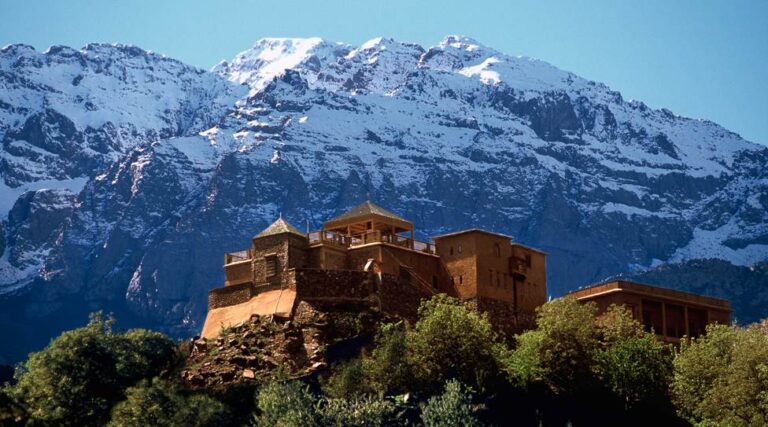
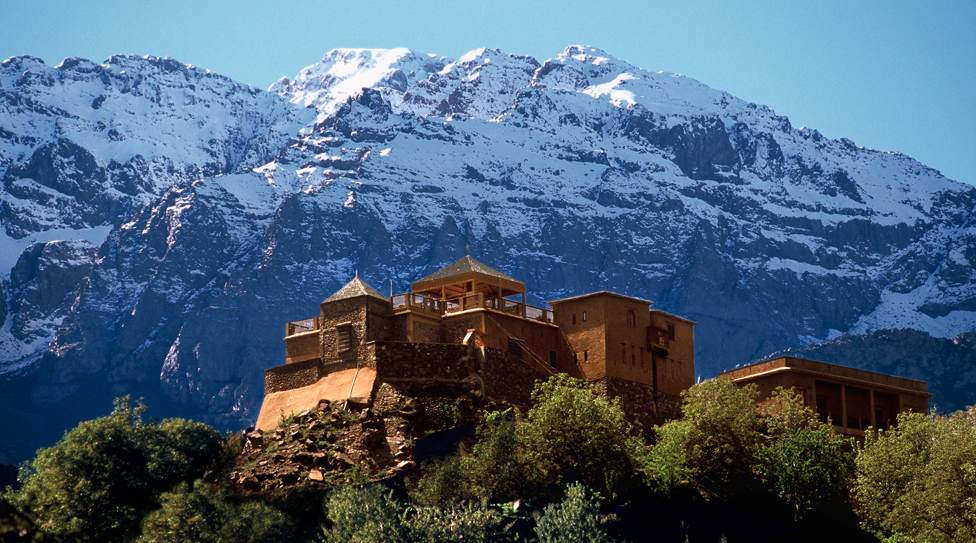
At the base of Toubkal in the Atlas Mountains. We visited this kasbah a decade ago. And it has taken some damage from the earthquake but all residents and guests were safe.

The earthquake that hit Morocco on 8 September in the Atlas Mountains was one of the most devastating that Morocco has seen decades: the quake killed more than 2,800 people and injured thousands more.

At 6.8 in magnitude, the earthquake was not huge, the disaster was exasperated by lack of preparedness, says disaster researcher Ilan Kelman: “Earthquakes don’t kill people, collapsing infrastructure does,” he says in a recent article.

Buildings in Morocco are often designed to control for extremes of temperature, which are an ever-present risk, whereas earthquake resilience has taken a back seat, he explains. This is the same problem that plagued Turkey and its devastating earthquake recently.

The question is how to rebuild sustainably with earthquakes in mind? The kasbah we visited in the Atlas Mountains is damaged but all the guests were spared, according to a story in The Independent. The Kasbah is also offering updates and ways to donate to the region in the earthquake aftermath.

One sustainable building method which has stood the test of time, and withstood earthquakes is the use of self-healing plaster used by the Romans in the Levant region and beyond. Straw bale building, one story high is supposed to be remarkably resilient against earthquakes, as are triangular shaped buildings. Perhaps these methods aren’t viable in mountain regions or cities.

We are looking for sustainable design engineers to help us write a guide for countries looking to earthquake proof with sustainable concepts in mind. Send your ideas to [email protected]

Sound art with Craig Colorusso

0
Environmental artist Craid Colorusso
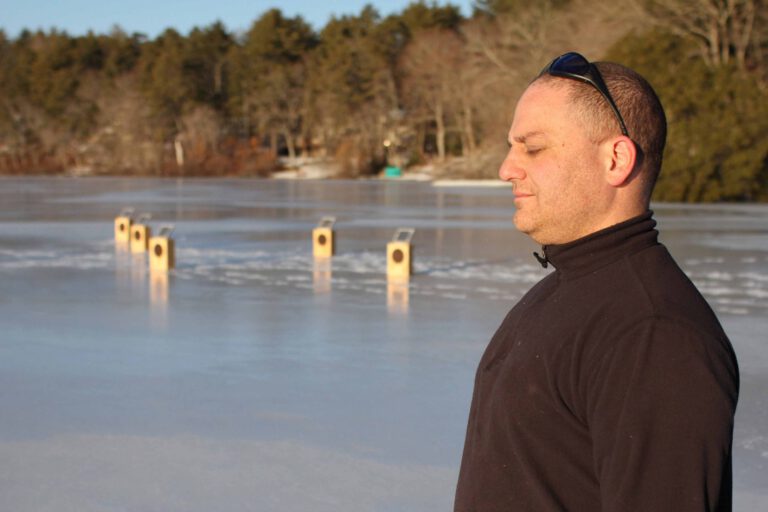
Environmental artist Craig Colorusso creates environmental art using sound. Image via Kevin Belli

There is a beautiful stretch of forest in Bentonville, Arkansas called, “Coler Mountain Bike Preserve.” It is an amazing chunk of land with several mountain bike trails throughout and one  main drag. There’s even delicious coffee at a place called Airship in the middle. There are two  bridges bookending the main drag a little over a mile apart from each other, I had the pleasure  of composing sound for them.

Covered Bridge ONE and El Segundo are two separate, yet  connected, sound pieces that play for several hours a day. Covered Bridge ONE is a multi-channel piece for electric guitar that has been bowed, scraped, rubbed and plucked. El  Segundo Is a multi channel piece for Clarinet and Bass Clarinet. Each played by a solar  powered sound system that begins shortly after sunrise and ends shortly after sunset. Both are based on the chord C# Suspended 2nd. 

The idea was to make something that would welcome people as the entered the park. A burst of sonic gratitude, and also for those returning a welcome home. I wanted to make something that engulfed the participant but also allowed the ambient sounds of the environment to also be heard in the mix, bugs, wind, water, leaves, cycle sounds etc.

Craid Colorusso

The world is already a  beautiful place I’m just trying to enhance little parts of it here and there.  

Our lives have become so cluttered with luxury and convenience it is quite refreshing to get outside and just breathe and listen. The older I get the more intrigued by the natural world I  become. Weather is a never ending series of systems colliding with each other. And it’s beautiful.

Through this process with my work I feel more in common with a farmer than an architect. I have an ongoing relationship with the weather and natural world unlike anything I’ve  experienced before. 

In 2009 I went to the desert with David Sanche-Burr and Richard Vosseller to make art using  sustainable energy outside. We went to the Goldwell Open Air Museum in Rhyolite, NV and created Off The Grid. My piece “Sun Boxes,’ Changed everything for me. It’s a solar powered sound installation, comprised of 20 speakers all making a Bb Chord.
I have come to sound art and installation work from the world of punk rock. Although I loved being on stage, the barrier between the audience and the performer felt confining. I wanted to make something that didn’t have that barrier. I wanted to make something that people could feel like they were apart of. Once I made my way outside I saw no reason to go back inside. I wanted to make work that  improvises with mother nature.  

Covered Bridge ONE and El Segundo are presented as music but I think it’s something else.  Recently a friend of mine sent me a video of a beautiful crane in the water under Covered Bridge ONE. It was just being a bird elegantly drinking from the water while my friend was on her walk. The video was cool: I could hear the sounds of the Bridge in the background. My friend said, “Even birds like your work. Congratulations.”  

It really struck me because I felt like, once again, it’s presented as a composition, but these pieces give you just a moment of pause to realize that you are part of some thing way bigger than you. Isn’t that what we’re all after? So the medium is not sound but sound is used as a vehicle to offer the participant a moment of stillness. To be outside and reminded that I am merely one tiny part in the world feels so empowering. 

I had a similar experience myself while testing the sound system for El Segundo. I sat in the  grass and listened to the audio as leaves fell from trees taking their last graceful moments before they go back to the earth. It was beautiful and an honor to be witness to this process.

Craig Colorusso has been exploring the intersection of sound, light, and space through sculpture since 2000. His installations consist of wood, metal, fabric, and electronics.

Saudi Arabia hosts World Environment Day, un unlikely choice

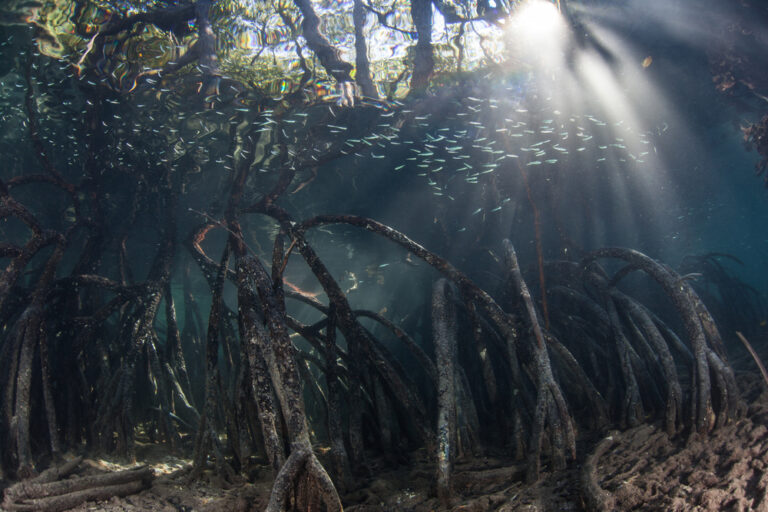
Saudi Arabian mangrove forests
Saudi Arabian mangrove forests can help mitigate climate change

The United Nations Environment Program (UNEP) has chosen Saudi Arabia to host World Environment Day 2024 which will center on the theme of “land restoration.” Saudi Arabia has an incredible vision for mangrove reforestation and it is starting to open up archeology from the past to foreigners and international research institutions, but as it looks to tourism from the West Saudi Arabia is very misguided about new community building seen with Neom projects which are completely out of line with sustainable development goals. It’s like they took some great sales teams from Europe on the most “eco” ideas they could find on paper and multiplied everything by a trillion.

But putting Saudi Arabia in the center of the discussion, if only for an event like World Environment Day, will open the nation to criticism and balance from environmentalists around the world. It may be Saudi territory, but nature and the world should belong to every human/

According to UNEP, the event will “accelerate action on the restoration of landscapes and ecosystems.”

World Environment Day, established by UNEP in 1972 is celebrated annually on June 5, and encourages awareness and action for the protection of the environment. It is supported by many non-governmental organizations, businesses, government entities, and represents the primary United Nations outreach day supporting the environment. It is also called Eco Day, Environment Day, WED (world environment day).

Over the past five decades, the Day has grown to be one of the largest global platforms for environmental outreach. Tens of millions of people participate online and through in-person activities, events and actions around the world. 2024 will mark the 30th anniversary of the UN Convention to Combat Desertification. The sixteenth session of the Conference of the Parties (COP 16) to the United Nations Convention to Combat Desertification (UNCCD) will be held in the Saudi capital, Riyadh, from 2 to 13 December 2024.

The Line, linear city Saudi Arabia
Illustrated image of The Line, Red Sea, Saudi Arabia. It cuts off the flow of nature completely. 

According to the UN Convention to Combat Desertification, up to 40 per cent of the planet’s land is degraded, directly affecting half of the world’s population and threatening roughly half of global GDP, $44 trillionUSD. The number and duration of droughts has increased by 29 per cent since 2000 – without urgent action, droughts may affect over three-quarters of the world’s population by 2050.

Land restoration is a key pillar of the UN Decade on Ecosystem Restoration (2021-2030), a rallying call for the protection and revival of ecosystems all around the world, which is critical to achieve the Sustainable Development Goals.

Red Sea port city, floating city, Oxagon, Neom, Saudi Arabia
A floating city, the largest in the world is planned for the Red Sea, Saudi Arabia

If I look at the track record of Saudi Arabia with its production and manipulation of cost of fossil fuels by Saudi Aramco and its apparent lack of awareness for sustainable development at all of Neom‘s projects like The Line and a desert ski-hill for a planet on fire, it would make more sense to choose a country like Israel to show the world how to combat desertification: not by buying the latest in desalination technologies, but by inventing and implementing new technologies.

Israel also has an efficient mode of watering crops, using drip irrigation, a process the country invented decades ago. These facts matched with advances in agriculture and reforestation would make Israel an obvious choice. But the world is still kowtowing to the highest bidder. So big oil money wins the game, again.

Gag Eden, Jerusalem’s green rooftops festival

0

Gag Eden 2023 Jerusalem Jerusalem celebrates Gag Eden, a play on words for Gan Eden or the Hebrew word for paradise. It is a 3-day green roofs festival in the heart of the city

This is not a festival about rooftops. It is a festival about the possibility of reinventing the city itself. Gad Eden is about adding the ground space that is in such shortage, and to dream up a reality of abundance for all of us. This year, we are celebrating the new rooftops that joined the city center on top of the art schools, and the brave decision of the Jerusalem Municipality, which together with us implemented the program for tapping into the potential of urban rooftops.

Video of Gag Eden, 2021:

Thanks to this initiative, in the upcoming years, one million meters of rooftop wilderness will be transformed into valuable green havens.

Related: meet Palestinian women beekeepers in Jerusalem.

honey beekeepers palestinian
Muslim women in East Jerusalem learn the art of beekeeping (via Haaretz)

And above all, Gag Eden is celebrating the fact that we are no longer alone, lone madmen on the roof – but a part of a growing and optimistic movement of people from all sectors, religions, sexes, and genders that come together to create the spaces we are missing, the realms of healing that the city and we need.

Join us for three days in which we will make and get to know the city we deserve.

Get the Gan Eden Full Schedule in English here (links to PDF)Gag Edenbees

Gag Eden 2023 Jerusalem

BioBetter accelerates molecular farming in tobacco plants

0
Biobetter molecular farming in tobacco plants
BioBetter is molecular farming in tobacco plants

Israel has an uneven contribution to the cultivated meat market. This means growing real meat with live cells, but circumventing animal suffering. It’s meat in a lab, if you will. Impossible Burgers is “meat” made from pea protein that just tastes like a whole lot of coconut oil. Cultivated meat is the real thing but made in a lab. No animals need to be slaughtered for lab meat. In Israel think Aleph Farms, Steakholder Foods,Super Meat, Believer Meats, and now BioBetter.

BioBetter just sent Green Prophet an announcement that it has opened its food-grade pilot facility to grow raw materials for the expanding cultivated meat market. The company has pioneered a unique protein manufacturing platform using tobacco plants as self-sustained, animal-free bioreactors.

They tell Green Prophet: “BioBetter is going to market raw materials, the growth factors, ingredients that are needed in the cultivated meat production process. We are not making bioreactors. Also, we are not making actual meat, we produce growth factors in tobacco plants that function like bioreactors for the cultivated meat industry.”

Currently cultivated meat production processes are relatively expensive, making it a challenge to scale up and reach price parity with animal-based counterparts: “Cultivated meat is still very expensive in comparison to conventional meat and the key is to reduce the growth medium costs to a minimum,” explains Amit Yaari, the CEO of BioBetter.

Companies like Israel’s Aleph Farms have introduced small steaks but the cost is hundreds to thousands of dollars to produce meat in a lab. BioBetter could help Aleph Farms make steaks faster and at less cost.

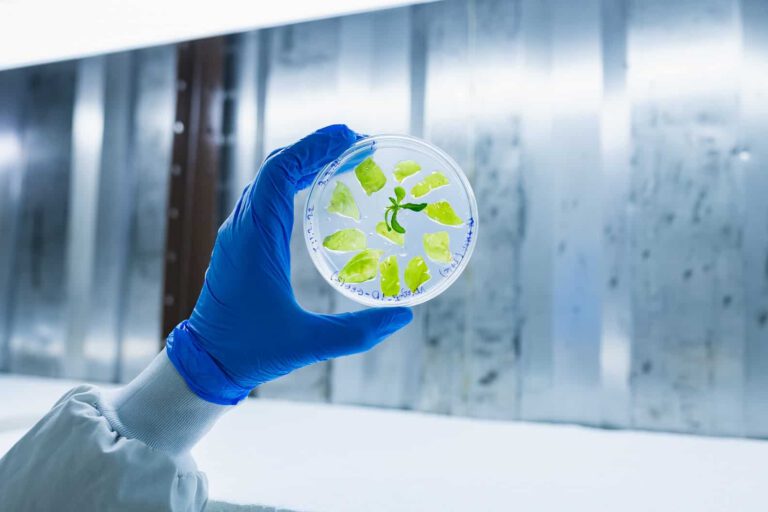
Biobetter lab, molecular farm

BioBetter makes raw materials for the cultivated meat market“Our target is to reduce the production cost of growth factors, including insulin, a key part of the growth
medium, to $1 per gram which is a 100-fold less than the going rate today,” notes Yaari.

BioBetter has achieved five impressive milestones in just the past year:

1. Production scale-up/building pilot plan
2. Commercial scale cultivation of insulin- and FGF-expressing tobacco plants
3. Reaching GF expression levels that enable a significant reduction of production costs
4. Significant regulatory progresses and advances with the Israel Ministry of Health
5. Collaboration with leading cultivated meat companies

BioBetter’s technology is a new purpose for the traditionally shunned tobacco plants, transforming them
into bioreactors for the production of growth factors for meat. Tobacco plants are typically used to make vaccines.

Growth factors for cell growth play a key role in the proliferation and differentiation of cultured meat cells, allowing for the formation of authentic and well-structured muscle tissue. Designed for both environmental safety and efficiency, these bioreactors will be grown in a large- scale, net house cultivation system. The plants are carefully engineered to prevent the escape of any transgenic material.

They are induced to express growth factors only when chemically triggered, and the company exclusively uses non-food, non-feed tobacco plants to eliminate any risk of inadvertent consumption or cross-contamination of food crops.

Sustainability at the core?

Tobacco plants produce growth hormones for molecular farms or cultivated meat

While the science talk may inspire the common sense sustainability folk to just return to actual farming or hunting, “Our commitment to sustainability shines through in every facet of our operations,” says Yaari. “We plan to use recycled and low-quality water for irrigation, minimize nitrogen fertilizer use, and reduce emissions and environmental impact.

The newly established pilot plant has the capacity to process 100kg of tobacco plant-derived GFs
daily. Constructed in adherence to the highest quality standards, the facility meets all regulatory
requirements for production of food-grade growth factors, including FGF2 and insulin. It currently is
progressing through essential stages of securing approval from the Ministry of Health for food
manufacturing licensing. The company is committed to scalability, adhering to ISO2200 and HACCP
standards.

meat tobacco
Meat proteins are grown with the help of tobacco plants

BioBetter also made breakthroughs in the cultivation of bovine insulin-expressing plants. Several
thousand square meters of FGF2-expressing tobacco plants are already thriving in northern Israel.

It’s the first time growth factor sources have been successfully planted in large net-houses, in four
locations, and with a fruitful harvest obtained in its first season.

Plans are underway to cultivate more FGF2 and insulin-expressing plants, with commercial roll-out projected for 2024.

The 250 million USD global cultivated meat sector is poised for substantial growth, yet its realization hinges upon a significant supply of growth factors. The most significant challenge of the cultivated meat industry is to produce and scale up at the right cost,” notes Aviv Oren, Director of Business Engagement and Innovation, the Good Food
Institute, Israel. “BioBetter’s technology, which is based on molecular farming of food-grade growth
factors in the required quantities and costs for industrial production, is a pivotal addition that has
the potential to accelerate this industry.”

In 2022, BioBetter secured 10 million USD in an A-round investment led by Jerusalem Venture
Partners (JVP). The company also is an active member of the Israeli Cultivated Meat Consortium,
which unites academic institutions, large companies, and start-ups to collaboratively advance the
field of cultivated meat.

Interested in this market? We have created an overview on molecular farming in Israel.