Home Blog Page 114

Meet the Eco Rabbi of Davos

Yonatan Neril, eco rabbi Davos
Yonatan Neril is an eco-rabbi. Catch him in Davos

We met Eco-Rabbi Yonatan Neril a few times over the years, in Tel Aviv and also in Jerusalem at his interfaith events to inspire people to change the planet using faith-based ways. He’s co-authored a successful Eco-Bible which highlights monotheistic faith texts and practices from the Bible. He was recently at the COP27 in Sinai and is now in Davos, hoping to influence business leaders and climate change policy makers to apply faith-based messaging and principles into their practices. We interview Neril below. Green Prophet: Tell us a little about your journey to the COP and how you connected to the faith elements of climate change?

I attended the UN climate conference COP 27 in Sharm El Sheikh, Egypt. I came based on the belief that religious communities have a key role to play in addressing climate change and climate justice, which requires deep transformation within society. The question is, how can people of faith deeply engage to address the climate crisis? 

Religion is the sleeping giant in the true story of climate action. Religious institutions have huge land holdings, media systems, educational systems, and billions of followers—many who are already very proactive in their communities on all kinds of issues. One thing I found amazing at the COP 27 was the coming together of people and clergy of many faiths. They found common cause so that the next generation can inherit a liveable, thriving and spiritually aware planet.

The knowledge is readily available about what changes are critically needed to diminish long-term harm to the planet. However, bringing about changes in action demands deeper changes in attitude, a change of heart. This has been the domain of religions for millennia. Religions are sources of inspiration for the transformation of heart and the ensuing changes of attitude and action. To support, challenge and inspire discussions during COP 27, ten interfaith climate events took place in Sharm El Sheik, Jerusalem, London, Rishikesh (India) and elsewhere that were heart-stirring, transformative and a moment of inspiration for religious communities and for humanity. 

Religious leaders called for reexamining deep-seated attitudes and for identifying ways to transform these attitudes for the wellbeing of Earth, our common home.

What was the most meaningful element of your participation

I was profoundly honored to be the only rabbi present at the UN climate conference, COP27. This wasn’t a conference on some abstract academic theory. Rather, it was focused on achieving a sustainable and thriving future for all life on this planet. 

One of the highlights of my time there was listening to the powerful words of the only imam who decided to be present at the conference, and to the only Orthodox Christian religious figure in attendance, Metropolitan Seraphim Kykotis.

I direct The Interfaith Center for Sustainable Development (ICSD), which together with partners The Peace Department and the Elijah Interfaith Institute, organized four multifaith climate events at COP 27 including in the press conference space in the Blue Zone. The events incorporated concrete examples of how religious communities are actively meeting the climate challenge, and featured concrete initiatives that translate the broader spiritual practices into action.

How has the experience influenced you?

My experience at COP27 is sinking in. Some 45,000 people were at the conference, including thousands from government delegations, and 650 lobbyists from the fossil fuel industry. I am digesting the fact that executives and lobbyists from the fossil fuel industry outnumbered clergy by a factor of about 10 to 1. What does that say about the organization and determination of fossil fuel executives, and about how religious figures are playing catchup? 

There’s a prevalent view that political leaders, business leaders and scientists will solve the climate crisis and religion can just sit this one out. However, the ecological crisis is a spiritual crisis.

From what I saw, there were about 40 clergy (almost all Christian), and several indigenous spiritual leaders at COP27. The reason that there were so few religious figures or clergy among the 45,000 people at the UN climate conference is that many religious figures and clergy think religion doesn’t have anything to do with climate change. But if many religious people continue to view ecology as idolatry, we will bring on the next flood.

So the climate crisis is also a crisis within religion. My NGO, The Interfaith Center for Sustainable Development (ICSD), is engaged in a concerted effort to encourage clergy to speak and preach about religion and climate change once a month, via our Eco Preacher resource that Rev. Dr. Leah Schade writes. I also co-authored Eco Bible: an Ecological Commentary on the Hebrew Bible, which ICSD has distributed to hundreds of religious figures and clergy. And ICSD, in cooperation with the Anglican Church in Africa and the impact investment platform Gigawatt Global, is working on a Faith Inspired Renewable Energy Project to deploy solar fields to bring electricity to Africans, reduce indoor air pollution and deforestation, and curb climate change.
The Guardian reported on a new analysis that revealed that “The oil and gas industry has delivered $2.8bn (£2.3bn) a day in pure profit for the last 50 years… The vast total captured by petrostates and fossil fuel companies since 1970 is $52tn, providing the power to ‘buy every politician, every syste’” and delay action on the climate crisis,” says Prof Aviel Verbruggen, the author of the analysis.

More oil and gas rigs are being built, as fossil fuel companies discover more gas underground and underneath the ocean floor, and political leaders warmly embrace these developments. One of the most powerful forces in modern society is indeed the fossil fuel industry. Yet another one of the most powerful forces are religious institutions combined. But if faith leaders and their organizations  stay quiet about the fossil fuel industry’s dominance of our economy and future, we will all be pushed past the carbon budget at which point irreversible and catastrophic climate change becomes the legacy we leave our children and grandchildren.

So there’s a lot of work to be done among the 85% of people on Earth who identify with a religion—so that religion can be a vehicle for sustainable living.

Who inspired you the most there?

I was inspired by commitments by the Church of Sweden and the Church of Finland to be carbon neutral by 2030. Bishop Andreas Holmberg of Stockholm spoke at the events I organized about how his Diocese is taking serious strides for sustainability.

I was also inspired by religious figures speaking about hope in the face of the climate crisis.  Some people have lost hope and think that there’s nothing we can do to avert catastrophe. But only God knows, and we have a deep responsibility to do our part. I believe that if we change course and live spiritually aware, sustainable lives, God will respond in kind. 

If you could have one wish for the planet what would it be? 

I wish that humanity as a species could live sustainably and at a much higher level of spiritual awareness.

Tell us about the 10 principles…

The Elijah Interfaith Institute and project partners brought together premier religious leaders from the world’s major religions to put forth a prophetic interreligious call to action: “Ten Universal Principles for Climate Justice.

The first principle states: ” Creation is not our possession. The human person must recognize this and find his/her rightful place in relation to this fundamental fact. For some of us, this leads to a sense of gratitude for God’s gifts and for the gift of life itself, wherein humanity takes its rightful place as partner and co-creator, in advancing the life of all creation. For others, creation itself is sacred. Therefore: We recognize human responsibility to love and protect nature.”

The other principles can be viewed in short version on this page, and with practical actions on this page.

Any closing thoughts?

The awareness that we need to transition from fossil fuel to renewable energy, conservation and mindfulness in how we use energy is a spiritual awareness. That that shift needs to be promoted by religious figures; it’s not just something to be promoted by environmentalists or government negotiators.

We are pumping 34 billion tons of CO2 into the atmosphere each year, and we increase this amount each year. The carbon will stay in the atmosphere for 100 years, and continue to heat the planet as our children and grandchildren inherit the world that we leave them. So this is a legacy issue– about our legacy of love for our children. Let us give our children, grandchildren, and future generations the lasting gift that shows our deep and enduring love for them, so they can survive and thrive on this beautiful planet, God’s creation.

Mayu makes spring water from your tap

0
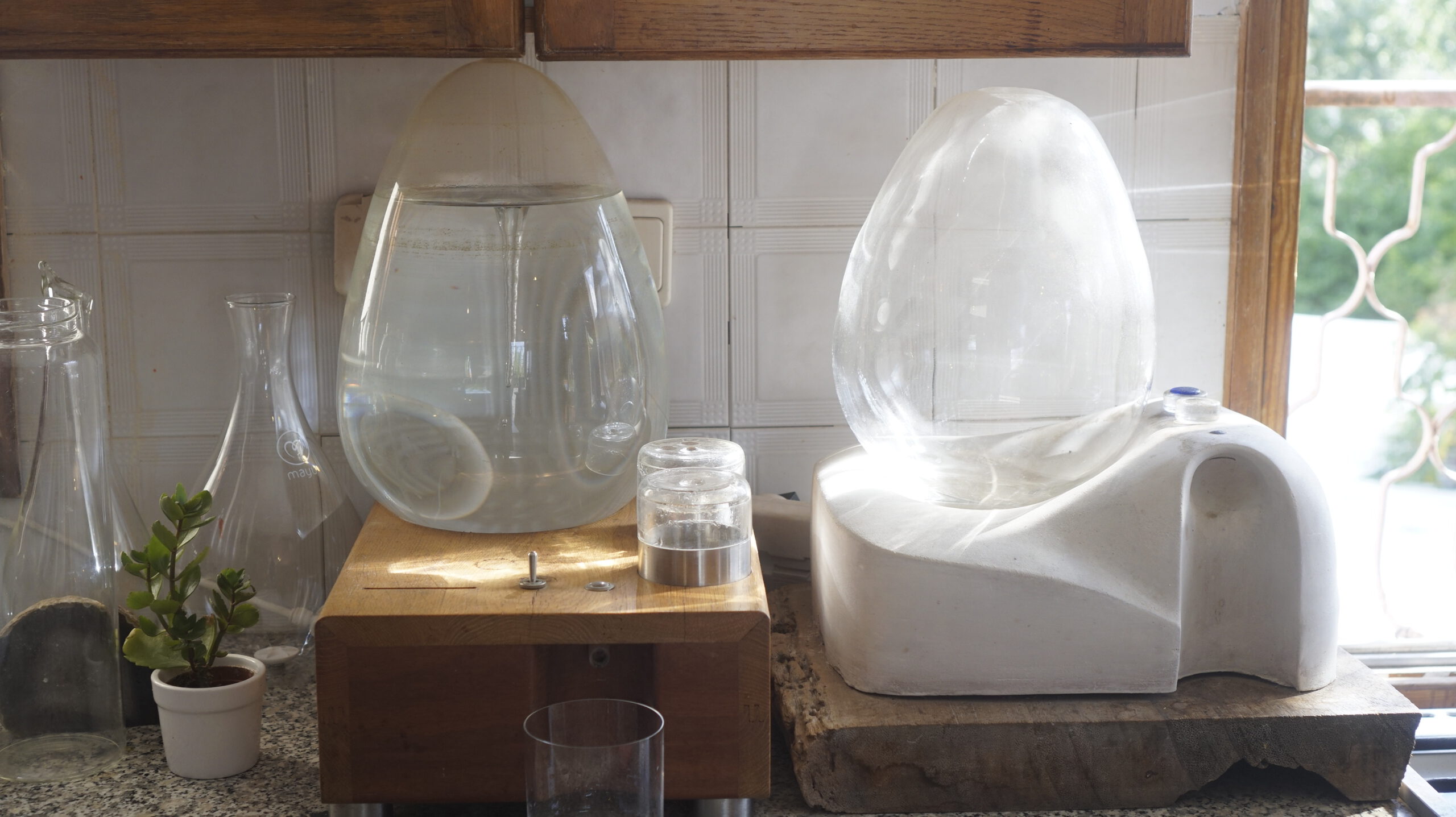
Mayu is a raw water dispenser that vortexes water and supplements minerals that your body needs. Image of a Swirl Machine.
A new spring water generator turns your polluted tap water into a healthier alternative, minus all the plastic waste

If you have ever had the pleasure of drinking from a natural spring, you might sense the taste, or maybe you’ll call it a feeling. Some people hunt for the pleasure of drinking raw water at springs in nature –– known as “living water” in Hebrew –– and that’s the story of the two founders of MAYU, a new kind of water device company from Israel that makes economical and ecological sense.  

They join a small group of entrepreneurs around the world that are looking to transform the capitalist machine with companies like Coca Cola and PepsiCo selling bottled tap water to American consumers. MAYU founders Shay Eden and Ze’ev Zohar were lovers of spring water who both came to the conclusion that water was broken. They needed to find a way to change it holistically for health reasons and for the planet. 

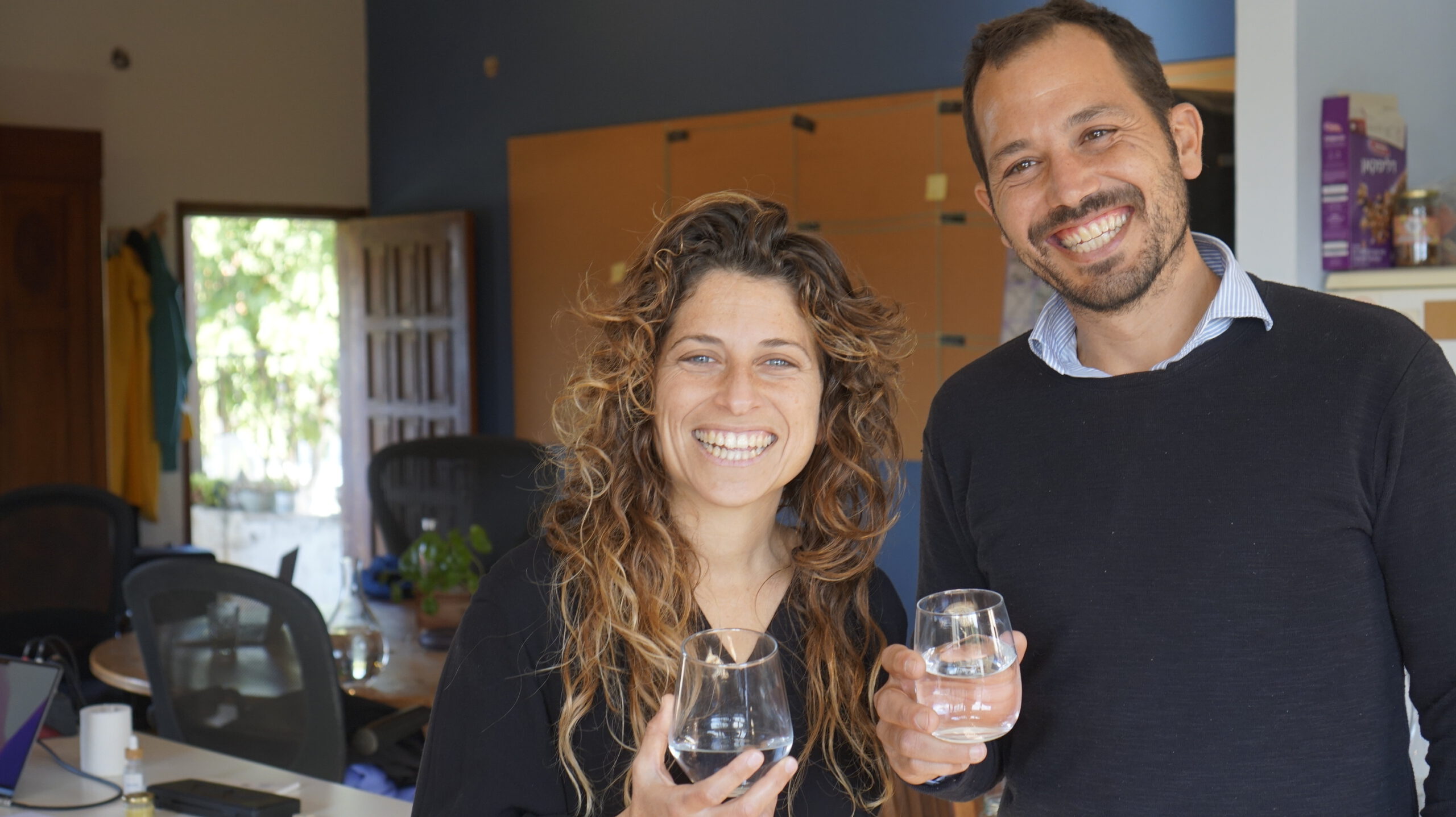
Mayu founders Ze'ev Zohar and Shay Eden, holding a glass of water, cheers
Mayu founders Ze’ev Zohar (right) and Shay Eden

None of the solutions they found locally in Israel such as the Strauss Tami4 machine or a Brita pitcher could come close to delivering water as nature makes it, the way they could find it at local springs in Jerusalem or near Michmoret where they both live today. Early tests on the best filters in the market showed them that devices consumers buy only remove about 5% of the problem. Reverse osmosis technologies can make water clean but without life. Even the springs and raw water they knew from their childhoods were starting to show signs of contamination from sewage, agricultural waste, microplastics. 

Mayu is a raw water dispenser that vortexes water and supplements minerals that your body needs. Image of a Swirl Machine.

After years of devotion, international quests to about 50 springs like Evian’s Cachat Spring, and more than a dash of mad science, MAYU was born. Their Swirl system is a machine that vortexes water, turning stagnant water into a living being, by aerating, restructuring and remineralizing it with mineral blends nature intended. A larger automated countertop dispenser, the MAYU II, is in the works.

Curating water with its own personality or nutrient blend

Are you an athlete who wants better performance for your work-out? A parent who wants the healthiest water for your kids? A hotelier that offers bespoke water with a flavor resembling the terroir of the place?

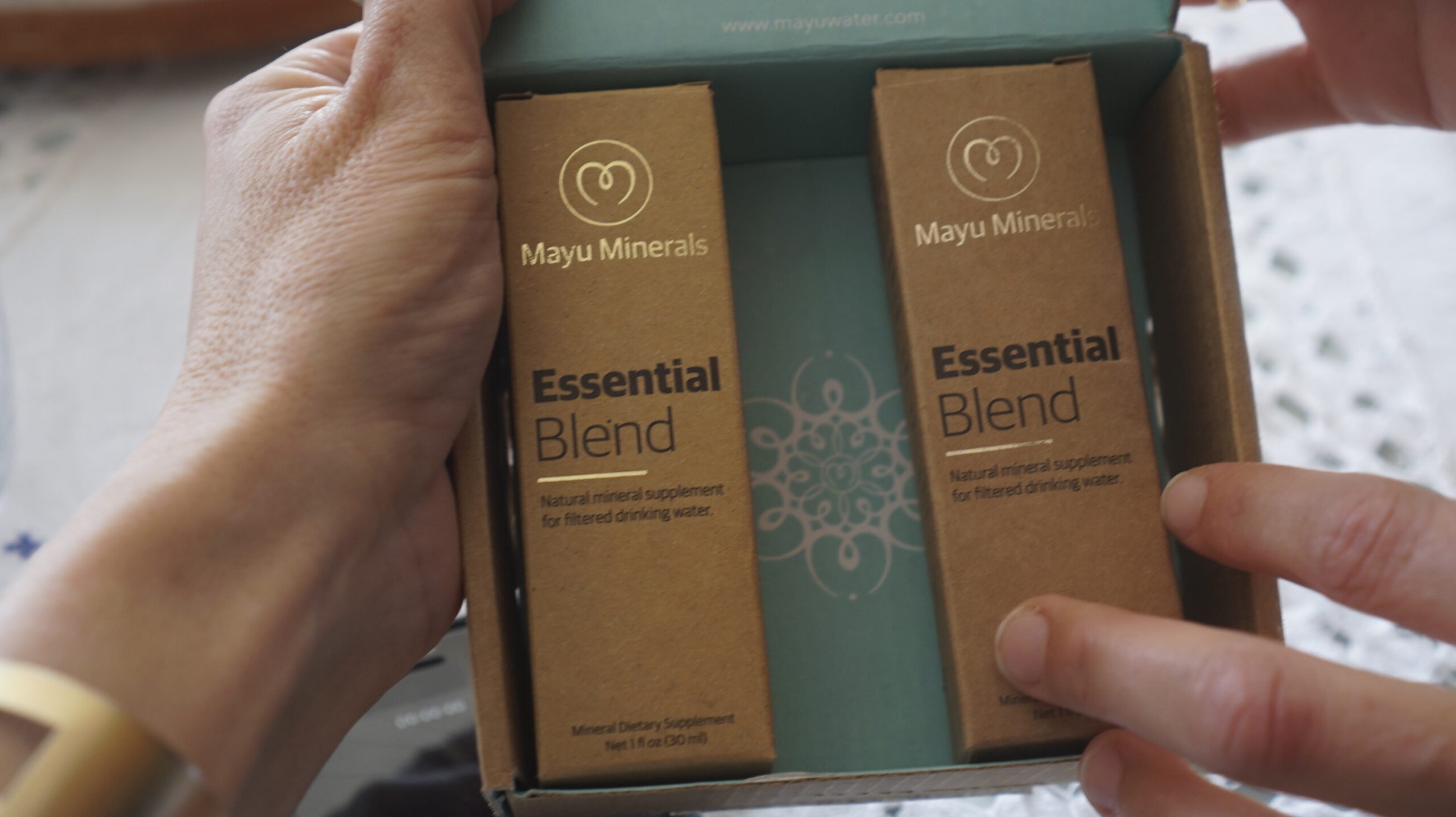
Currently MAYU offers the Swirl to US consumers. It sits on your kitchen table. Ideally you add water from a reverse osmosis machine to it, turn on the Swirl and then add drops of a formulated mineral mix you choose. Want to drink water that’s like springs in the French Alps, water that works well for pregnancy? Water that has the taste of your childhood? Choose your blend. 

water menu, MAYU, mineral blend desert oasis, raw, vortexed water
What’s on the water menu? A blend created to match the water at a desert oasis?

The minerals and physical process made by MAYU restores water as though it had passed through miles of natural stone, picking up minerals like calcium, magnesium and potassium, even trace amounts of platinum and gold, along the way. Water in nature is vortexed as it passes over rocks, and as it does it breathes in oxygen, evaporates out bad stuff such chlorine, CO2, unwanted odors, and other volatile organic compounds. Like in nature, the MAYU taste is better, and the pH is balanced. 

Mother of Invention

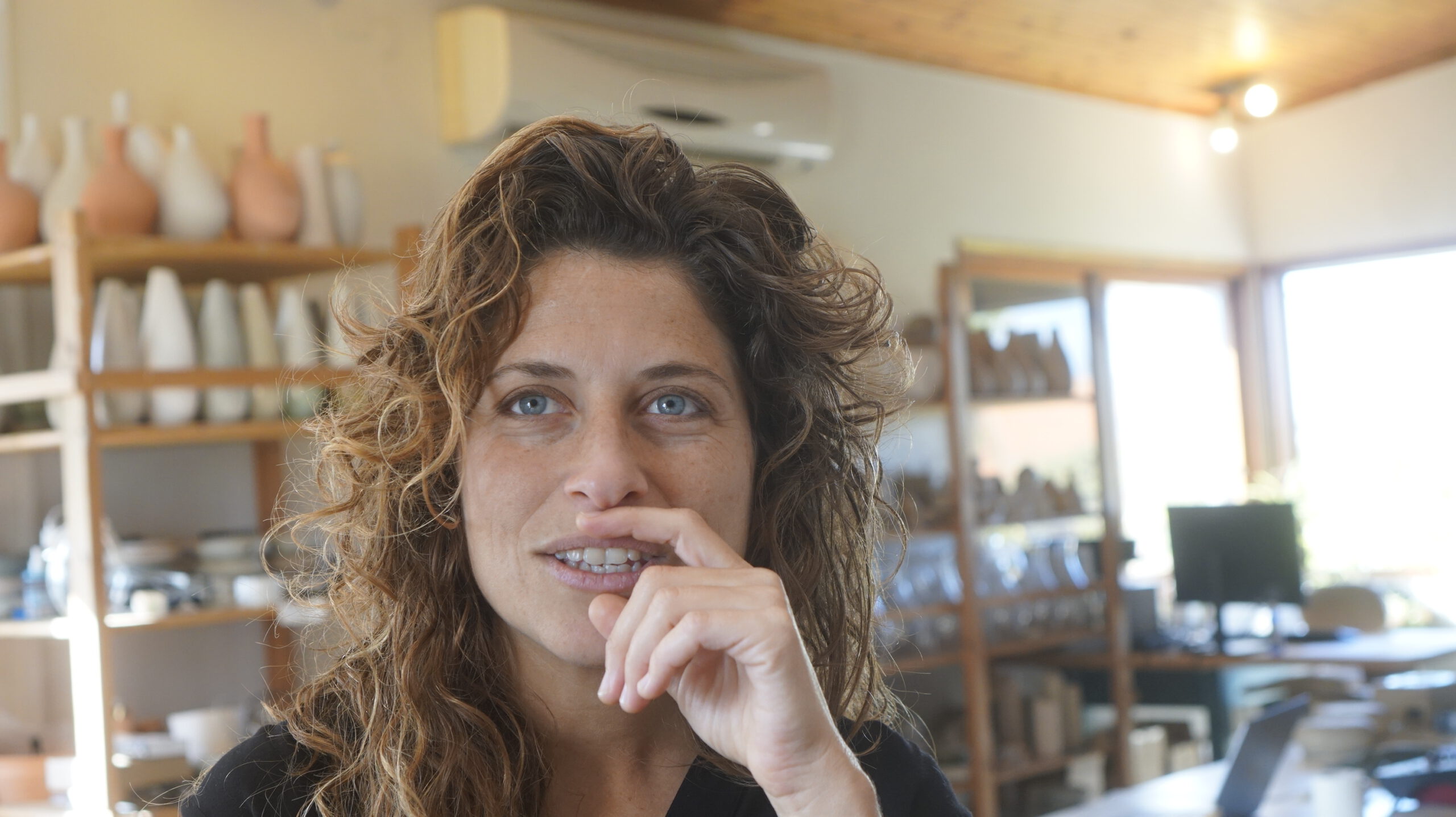
Before Eden and Zohar had met around 2016, and started tinkering around in Hogla, Israel where they are today, both were attracted to water in different ways. In his 20s Zohar had started daily spring dips on his way to art and design college in Jerusalem, a ritual that continues to this day, but at the sea. Shay, a mother and a potter, was creating natural vessels out of clay in the way of the ancients, to help tap water breathe and decontaminate.

Israel, as a backstory, has a history of natural springs of biblical proportions. Religious people immerse in a mikveh––  in living water –– such as a spring, the sea, or water collected from rainfall. Bible legend has it that the first water created in Genesis originated from a spring in the Old City of Jerusalem. You can visit that spring today.

There are other legends: when the Jews were wandering in the desert for 40 years, a spring would follow them whenever Moses’ sister Miriam would play her drum. Some locals claim the spring is now appearing in the middle of the Sea of Galilee

Water in Israel is spiritual and there is not only water, but fire in the eyes of Eden and Zohar, when they talk about MAYU, or the health of their kids. Zohar had first met Eden about healthy food options for his daughter, “she was known in the village as the wizard for health food,” he recalls. “I never thought about the water I am drinking –– until my daughter was born.”

“Yeah, I can make healthy food fun,” Eden, now a mother of 3, laughs. “But no matter how healthy your food is, it ends at water.”

And that’s when they started brainstorming. 

They needed to solve the water problem that persists at the tap. Heavy metals and other contaminants such as pharmaceuticals stick around. “Even if the water is clean at the source where it’s processed, it won’t be by the time it reaches your tap,” Eden says holding chunks of brown bits they’d collected from the tap in their lab, a space that used to be her childhood kitchen: “Asbestos pipes, lead, agriculture runoff, industrial waste –– it all leaks into the old pipes that bring the water to your home.”

Shay Eden, founder of Mayu, a water company from Israel
Shay Eden started making clay vessels to purify water. Her early renditions of MAYU were made on the potter’s wheel

The moment of truth, that Eureka moment happened when they found the research of Viktor Schauberger “the Tesla of water,” says Zohar. “Nothing acts like water. It’s an anomaly. It behaves like an element. There is fire. Then there is water.”

“Through him we found the voice of truth about water,” Eden explained. “He talked about the movement of water. How water works.”

Schauberger who died in 1958 was an Austrian forest caretaker, scientist, inventor and biomimicry experimenter. 

Ze’ev then suddenly announced to me, ‘‘we are going to create water” and I told him you are simply crazy –– only God can do that,” Eden recounts. But true to the mission, “The first years here were like a train station, with scientists and water lovers coming and going. All the water geeks of the world were here. We wanted to absorb, comprehend and mimic nature,” Eden tells Green Prophet.

Shaken or stirred?

MAYU solves two big problems. One is clean water, rich with essential minerals, but the second is a good alternative to our plastic bottle addiction driven by soda and food multinationals such as Nestle. We see the problem in the US, but if you go to a developing region like the Sinai Peninsula in Egypt, every hut in the village will have cases of Dasani water bottles (made by Coke), which end up floating into the sea and coral reefs. There is no other option for clean water in these remote locations. China, Thailand, Brazil. The story is the same.

The MAYU device can put water bottlers out of business, and can replace 100 percent of all the plastics at home and the office. The question for investors is where is the business?

Water bottling is a big business around the world. Data Bridge Market Research says that the global bottled water market was valued at 283.6 billion USD in 2021 and is expected to reach the value of 476.45 billion USD by 2029, at a CAGR of 6.7% during the forecast period of 2022 to 2029. Last year the US alone consumed an estimated $40 billion worth of bottled water (Grand View Research), a majority which was still, not sparkling, water. 

According to Seth Siegel, author of Let There Be Water, a NY Times bestseller, and an investor in MAYU, one in three American households have stopped drinking tap water. More than 74 billion water bottles are brought into American households and 67% of those are for bottled water. Greenpeace released a jaw-dropping expose in 2022 that only 5% of plastics can be recycled.  

MAYU was founded in 2018 and employs 4 people in Hogla, Israel. Elad Erdan is the company’s CEO, who has a track record that suited the values of the two founders: he worked in business development for Colu, a community-building app for American local governments offices, and at Israel’s largest renewable energy company Energix. 

Mayu team Elad Erdann(center), Shay Eden (left), Ze'ev Zohar
Mayu team in their kitchen/lab office cooking up water innovation: Elad Erdan (center), Shay Eden (left), Ze’ev Zohar

To date, MAYU has sales and has raised $2.2 million USD of a $3 million seed round at a $7.5 million USD valuation. Seed funds will help MAYU launch the larger automated MAYU II unit, with a manufacturing partner in Korea. 

Mayu II, counter version
The Seed round will help MAYU manufacture the MAYU II, a countertop version of the Swirl. Glass and sustainable materials will be built into the machine that automates clean and healthy water

The company’s assets include a patented process for liquifying minerals. The materials added are classified by the FDA with GRAS designation, which means safe. Consumable mineral packs is the bigger business model along with an appeal to offer custom recipes for water. If you are a chef who owns a Michelin star restaurant perhaps you’d like to develop your own water blend? Or what about pregnancy? Zohar experimented on his pregnant wife. He tinkered around and developed a water mineral mixture that stopped her leg spasms. The secret: micro dosing of magnesium and potassium throughout the day.

Mayu is a raw water dispenser that vortexes water and supplements minerals that your body needs.
Buy different mineral blends to suit your lifestyle or taste

For those that want to buy today a Swirl tabletop version costs about $180 plus minerals, $14.95 for 60 liters of water. Competition in the space includes Aqua Tru Water (US) , Berkey Filters (US), and Mitte (Germany).

Erdan, the CEO, sees the business of water, like Apple’s app store: “We are a marketplace for water applications,” he says. “We will provide the capsules and other products like vitamins and premium products will be delivered through our standards and quality system.”

Larger industrial systems that work for hotels, restaurants and college dorm rooms are also being piloted along with the hopes of creating a more perfect world: while we can’t all start water witching for natural springs in our backyard, we can at least try to mimic natural springs at home. 

New Age people and raw water lovers are excited about all of this: is MAYU looking beyond the chemical aspect of purification and looking holistically at the way the water flows, creating structured water, also known as hexagonal water, which is when the water molecules form a hexagonal cluster. 

Structured water is said to have very close similarities to pure and uncontaminated water found in natural springs and glacier melts. If you were at an actual source spring you would just drink it out of your hands, but when drinking MAYU, glass only please: “Because water dissolves everything, even trace amounts of silica in glass, and it’s a more powerful solvent when it’s very pure,” Eden explains, raising a glass to toast and filling up my water bottle before I hit the road back to Tel Aviv. 

Want to save $15 on your first Swirl? Add the coupon code: GREENPROPHET when you check out. For every purchase you make Mayu donates $25 to Green Prophet.

:: MAYU

Go to mass in a Cairo, Egypt church built out of a cave

Cave Church, Mokkatam, Cairo, Egypt, Garbage City, Zabaleen, eco-tourism, travel, Egypt, Garbage City, ZabaleenWe already have great respect for the Zabbaleen in Garbage City, the minority Coptic Christians who make a living sorting through Cairo’s trash, and then we saw these extraordinary Cave Churches that they have built. Visiting Cairo, Egypt and looking for an unusual Good Friday or Sunday mass? Try the Cave Church or the church in the rock. It has expanded in the last 10 years. See the above and below photos from 2013 to 2023.

church near me, RC church, church in the rock, Cave Church, cairo, Egypt, missionary
The Cave Church or church in the rock in Cairo Egypt image via Emad Rifaie

Historically marginalized and evicted from Giza in 1970, a community of Coptic Christians took up residence at the foot of the Mokattam hills in south east Cairo.

Ghayt Al Adah, Abdeen, Cairo Governorate 4421240, Egypt, church in the rock, cave church near me
Ghayt Al Adah, Abdeen, Cairo Governorate 4421240, Egypt, the church in the rock or the Cave Church

Burned by their previous experience, the religious group hesitated to build permanent churches in their settlement, which is now lined with mountains of trash, until 1976, when a fire broke out in Manshiyat Nasir.

Cave Church, Mokkatam, Cairo, Egypt, Garbage City, Zabaleen, eco-tourism, travel, Egypt, Garbage City, Zabaleen

The first 1,000 square foot cave church was carved at the foot of Mokattam mountain. The largest in the Middle East – the Monastery of St. Simon the Tame, a Coptic Christian saint – has an ampitheater that boasts a seating capacity of 20,000 devotees.

St. Bola’s Church, St. Marks Church, and St. Simon the Tanner’s Hall are among the six additional cave churches carved out of the rock, which continue to serve the community to this day.

Despite their status as outcasts, the Zabaleen have proven themselves to be not only excellent craftsmen whose attention to detail in the cave churches is sensational, but their garbage recycling operations are exceptionally efficient.

Cave Church, Mokkatam, Cairo, Egypt, Garbage City, Zabaleen, eco-tourism, travel, Egypt, Garbage City, Zabaleen

The subject of a popular documentary, the Zabaleen also used to raise pigs, which are considered haram (unclean) by Muslims, to manage Cairo’s organic waste as well. But then the government culled most of them in response to the swine flu epidemic in 2009.

A small handful of pigs have made a quiet comeback since then, though they remain in hidden corners of Garbage City.

Getting pork out of Egypt

Although Egypt has lost a lot of its tourists as a result of the post-revolution instability and occasional bouts of violence, the Cave Churches continue to attract a few.

If you are amazed about the power of garbage collectors, see how the Turkish garbage collectors in Ankara have built a massive library from books they found in the trash.

Images via Flickr. This story was updated in 2024 by Karin Kloosterman.

Ancient ostrich eggs found in 4000-year-old fire pit

0
ostrich eggs found in fire pit, Israel Negev Desert
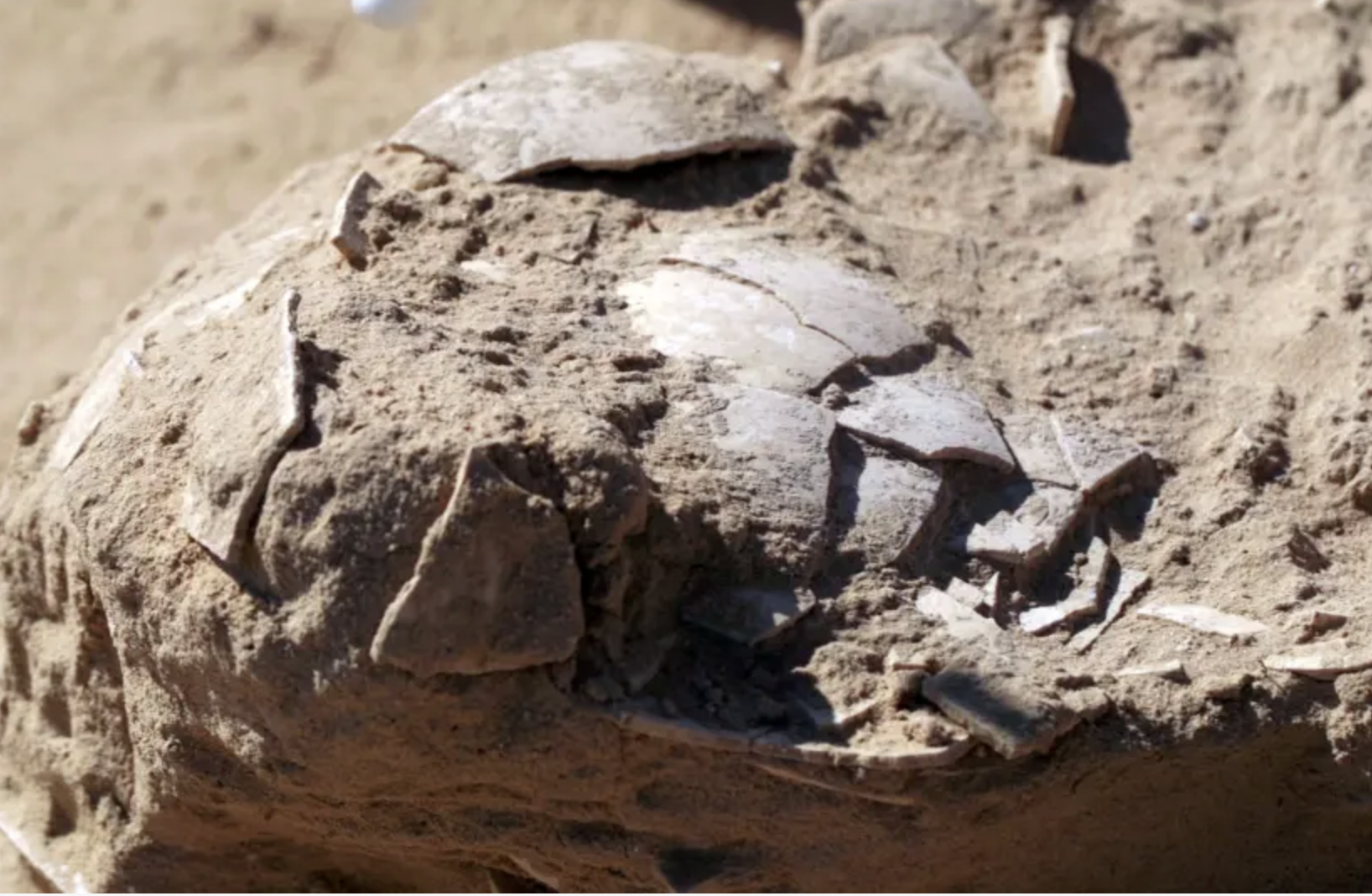
Ostrich eggs found in fire pit, Israel Negev Desert

A cracked pile of 8 ancient, 4000-year-old ostrich eggs were uncovered near an ancient fire pit in the Israeli Negev desert while making way for new agricultural developments. “This is a very important find that—with the help of modern scientific methods—can teach us a lot about the nomadic people of the desert in ancient times,” said Lauren Davis, the Israel Antiquities Authority excavation director. 

“We found a camp site, which extends over about 200 square yards, that was used by the desert nomads since prehistoric times. At the site we found burnt stones, flint and stone tools as well as pottery sherds, but the truly special find is this collection of ostrich eggs. Although the nomads did not build permanent structures at this site, the finds allow us to feel their presence in the desert,” she says.

As soon as the nomads moved on the camp sites were quickly covered over by the dunes and were re-exposed with the sand movement over hundreds and thousands of years. This fact explains the exceptional preservation of the eggs, allowing us a glimpse into the lives of the nomads who roamed the desert in ancient times. (There are still nomads in Israel. Peek inside their tent.)

Lauren Davis finds ostrich eggs

Ostriches were common in the area from the early prehistoric periods until they became extinct in the wild in the course of the 19th century. Their eggs have been found in archaeological sites from several periods, reflecting the importance of ostrich eggs as a raw material for food and design.

Ostrich eggs were often buried with the dead, used in luxury goods of the ancients and used for water canteens.

Life for a modern nomad in Jordan today

One ostrich egg omelette had the nutritional value of about 25 normal chicken eggs, explained Amir Gorzalczany from the Israel Antiquities Authority, who has researched the subject. “There is sometimes even evidence of decorating and incising on ostrich eggs, showing their use as decorative items. It is interesting, that whilst ostrich eggs are not uncommon in excavations, the bones of the large bird are not found. This may indicate that in the ancient world, people avoided tackling the ostrich and were content with collecting their eggs.”

“The proximity of the group of eggs to the fire pit indicates that this is not a natural chance find but the intentional collecting of the eggs,” says Davis. “One of the eggs was found directly in the fire pit, strengthening the understanding that they were used as food here. The ostrich eggs were crushed but well-preserved, despite the fact that they were uncovered in the surface layer.”

ancient ostrich eggs
One ostrich eggs contains the nutrition of 2 dozen regular chicken eggs

The next step is to put the pieces together like a puzzle, giving more clues perhaps about the ways of the ancients. Other fascinating research from the region includes funerary highways in Saudi Arabia and the desert kites of ancient trappers in Jordan and the region. There are big wows of course for Petra and the Nabateans, but also the lives of every day people are important to learn from.

Should I replace my gas stove?

0
cooking on a gas stove, man holding pot with t
A new study finds 12.7% of childhood asthma in the US is caused by gas stoves

This week a US Consumer Product Safety Commission rep told Bloomberg News they’d be considering new regulations for gas stoves in the United States. The appliances which use natural gas and propane in countertops and ovens, have been in the news since a December study said that about 12% of childhood asthma cases in the US are from gas stoves. That’s more than one in 10 kids getting sick from your appliance.

The rep later clarified on Twitter that regulations would only apply to new products and you could keep cooking on your old stoves: “To be clear, CPSC isn’t coming for anyone’s gas stoves.” 

So, should you replace your gas stove?

There is research showing health and climate risks from gas stoves.  Last year in December, a US study found that gas stoves are still releasing methane when they are off, and they can emit nitrogen oxides (NOx) at levels that are higher than those set by the US Environmental Protection Agency.

“Indoor gas stove use for cooking is associated with an increased risk of current asthma among children and is prevalent in 35% of households in the United States (US). The population-level implications of gas cooking are largely unrecognized,” the researchers wrote along with a summary that “We found that 12.7% of current childhood asthma in the US is attributable to gas stove use.”

NOx are the common pollutants found in cigarette smoke and car exhaust, and these can cause or seriously aggravate respiratory problems, especially in children. My daughter had a coughing attack brought on by incense burning in the Old City of Jerusalem, and in some countries, cooking with polluting gas inside the home is very common, like in Egypt.

In Israel where I live, most homes are using propane gas tanks for stovetop cooking. Ovens are often, but not always separate, and can run on electricity or gas.

gas stove fire, restaurant Noma
Gas stoves are taking the heat thanks to a new US study. What’s next? Gas furnaces?

Let’s look to the US standards for guidance. 

In addition to raising health concerns, methane and the carbon dioxide emitted from leaks and burning natural gas are both greenhouse gases that contribute to climate change. These can add up, since about 35% of households in the US cook with gas stoves. Rates in the US are similar in Europe, with about 30% of energy for cooking coming from gas. Consider, however, that unless your region is using solar or wind energy, your electricity-fed stoves aren’t exactly clean. The waste is just being produced somewhere else. 

Critics point out that there are bigger battles to fight, in climate and human health. But in some developing nations stove emissions are a seriously health concern. It’s also worth looking at your stove if your kids suddenly have breathing issues, previously unexplained. 

What can you do?

You can replace your gas stove to cut the climate and health harms from cooking. It can be an expensive thing to do but new policy in the US could make replacing gas-powered stoves significantly cheaper. Tax incentives in the Inflation Reduction Act could help cover replacement costs.

And if you are stuck with a gas stove in a rental unit or you can’t afford to buy a new one, you can help by opening the windows when cooking and ventilating the area. Chefs aren’t going to like this news, but all things must change. Even the owner of Noma in Denmark is moving on, saying the restaurant business as it is simply unsustainable.

Just venting – reader feedback

Environmental artist Pablo Solomon writes to us from Texas: “Actually rather than giving up gas stoves, we should be asking why so many kids have asthma? How much is tied to the environment, to diet, to nerves, etc. Have we become so weak?

“Gas stoves if properly vented/filtered should not pose a health issue. As one who grew up in family restaurants, you just cannot beat a gas stove. My mother had a Chambers with an oven, grill, griddle, burners and a 3 pot section to cook soups and chili. As did my aunt who was considered the best Lebanese cook in the USA (by magazines ).

However, [we have] an antique cast iron stove converted to an electric stove (made in Canada ). And in our 1856 historic home, the cast iron stove looks great. Luckily the replacement coils and things are standard. However, it is so heavy it must be repaired in place. And electric heat of any kind is expensive and a strain on the grid/storage capacity- see how long a Tesla home battery will last cooking a brisket? Thankfully we are on a hydro electric coop.”


Frequency Electronics reveals a better clock

0
Frequency Electronics makes clocks for time in space
Frequency Electronics makes clocks for time in space. Self-driving cars, drone deliveries, space travel to Mars. Our future depends on a new breed of clocks.

Five..four..three..two..one… a glittered ball drops over Time’s Square in New York City and millions celebrated with kisses, hugs and cheers of Happy New Year! The western 2023 new year was seven hours earlier in Jerusalem, nine hours earlier in Dubai and the last seconds of December 31st 2022 visited Baker and Howland islands in the South Pacific. But even if you missed all of these celebrations you could celebrate according to another calendar. Russian Old New Year (Novy God) begins on January 14th.[/caption]

Chinese year of the water rabbit begins on January 22nd, Islamic Hijri New Year begins at nightfall on July 19th (read this guide on Muslim time), the Mayan New year is on July 26th and Hebrew New Year (Rosh Hashana) 5784 begins at sundown September 15th.  With all of these new years to choose from you might ask yourself, what is so special about December 31st? It’s not the shortest day in the year. It’s not when Sirius rises above the great pyramids of Giza or when the Nile floods. It’s not a good time to plant crops. Sunrise and Sunsets are not aligned with Stonehenge. Some years it’s a new moon, other years it’s full or somewhere in between.

One of the first philosophical questions my child asked was, “How did everything get created in only seven days?” Remembering more about physics than religion I fell back on an answer that happened to be among the few where people of science and and people of faith agree. I said, “Time is weird,” but I might just as well have quoted the Book of Kohelet

(Ecclesiastes) 3:11 “He hath made every thing beautiful in his time: also he hath set the world in their heart, so that no man can find out the work that God maketh from the beginning to the end.” 

Nature Time

The ancients measured time by observing nature. It made sense to separate the day from the night and further divide these days into times of dawn, sunrise, sunset, dusk and night. Knowing the phases of the moon helped people know the tides and the best times to fish and hunt and knowing the seasons tells us when is a good time to plant and harvest. This is from the first part of the same chapter of Ecclesiastes. Pete Seeger used these words in a folk song made popular by The Byrds:

To every thing there is a season, and a time to every purpose under the heaven:
A time to be born, and a time to die; a time to plant, and a time to pluck up that which is planted;
A time to kill, and a time to heal; a time to break down, and a time to build up;
A time to weep, and a time to laugh; a time to mourn, and a time to dance;
A time to cast away stones, and a time to gather stones together; a time to embrace, and a time to refrain from embracing;
A time to get, and a time to lose; a time to keep, and a time to cast away;
A time to rend, and a time to sew; a time to keep silence, and a time to speak;
A time to love, and a time to hate; a time of war, and a time of peace.
 Enter mathematics

About 6000 years ago the Sumerians of southern Iraq invented a sexagesimal (base 60) counting system. Twelve times the number of finger on one hand became the basis for our 24 hour clock, our 60 minute hour and our 60 second minute. Sometime around 3500 B.C.E. the neolithic people of Ireland created mound and stone structures aligned with celestial events but in what may be the world’s oldest sundial, they divided daylight hours into eight sectors and appear to have divided the year into 16 months.

The French attempted to decimalize time in the late 1700s but that went about as well as the U.S attempt to go metric in the 1970s. If the number of heartbeats in a day (86,400+/-), number of days in a lunar month (29.53) and number of lunar months in a year (12.3601) and number of days in a year (365.2425) had been nice round numbers divisible by the number of our fingers and toes, it would have been simple. But it doesn’t and it isn’t. Arguments over how to align human time with natural time have gone on for centuries, dividing religions and inciting wars.

Let’s all agree to disagree

Saint Nicholas of Myra Turkey was among the members of the council of Nicea when it voted to break from the Jewish calendar so that Easter no longer aligned with the passover full moon. The calendar they adopted inherited flaws introduced by Roman emperor Julias Ceasar whose calendar assumed that a year is 365.25 days long. The actual length is about 365.2425 days. The calendar lost about 11 minutes each year until Pope Gregory XIII consulted the Vatican astronomer and left us a simple equation to compensate for the drift and removed 10 days from the calendar of October 1582.

Computer programmers would mistakenly use Julias Ceasar’s flawed leap-year equations for at least 441 years. The colonial United States and majority protestant parts of Europe didn’t accept the new calendar until September 1752 when the “stolen days” triggered riots over lost wages. 

The Eastern Orthodox church remained with the Julian calendar. So by 2023 the Orthodox Christmas and New Year arrive about two weeks after the western equivalent.

As the pace of life changed and people journeyed farther into the world they needed to find a way to mimic and improve on natural timekeepers. At the equator, the earth turns at roughly 1000mph (16 miles/second.) So even if a navigator gets a perfect fix on the angle of the sun or star, a 1 second time error could put them 16 miles east or west of where they think they are. In 1714 after the British Navy ran aground on the long Plymouth peninsula one too many times, the British parliament voted to create a reward for anyone who can invent a clock which stayed synchronized with celestial time even in rough seas far from home.

The book Longitude by David Sobel explains this struggle and how the strange custom of dropping a ball helped ships synchronize their clocks with shore time without going ashore. Ships weren’t the only means of transportation which required accurate clocks. Several train accidents and near misses drove people to create a standard railroad time. 

Pope Gregory’s calendar bugs

With telescopes made out of stone, it may have taken neolithic builders 500 years to notice errors caused by the slow precession of the earth’s axis but better tools revealed that there are more things in heaven and earth never dreamt of by Pope Gregory XIII. His calendar is also out of step with the heavens. The Earth is not a perfect sphere, its orbit isn’t round, its axis is tilted and wobbles like a top. Our supersize moon moves north and south, nearer and farther in its elliptical orbit. As the moon and sun drag tides across irregular bays and estuaries the friction slows and speeds up the earth’s rotation as the moon, earth and sun orbit moving centers of gravity in a dance with average days growing longer until one day only one hemisphere of the earth will face the moon and life can no longer rely on our familiar patterns of tides. 

Atomic time replaces astronomical time

Highly accurate atomic clocks eventually replaced astronomical measurements as a basis for universal standard time. Computers, phones, airline and train schedules take their time from an atomic clock. Since 1972 leap seconds have been occasionally added to keep our standard time aligned with the heavens. Many of us were too distracted with selfies, celebrations and streaming video to notice that the last minute of December 31, 2016 was 61 seconds long.

Unfortunately the software in our devices was designed around 60 second minutes and leap seconds can cause havoc with our technology. To avoid vexing equivalents of Y2K bugs at random intervals, the General Conference on Weights and Measures (CGPM) voted on November 18, 2022 to allow more than 1 second error between universal time (UTC) and astronomical time (UT1.)

What would we do with a better atomic clock?

Frequency Electronics in Space
Navigation and communications rely on precision timing done by an atomic clock

In May of 2022 Frequency Electronics, Inc (NASDAQ: FEIM) announced its next generation of portable Digital Rubidium Atomic Clock (DRAC) suitable for airborn and satellite applications. (Remember, the UAE also plans to build a colony on Mars). Such super accurate clocks can improve existing applications such as drones, self-driving cars and satellite navigation.

It can also be used to make radio communications more immune to interference, for better detection of gravitational waves and possibly in phased array radio telescopes.

Existing global Positioning System (GPS) and Galileo satellite navigation systems rely on cesium atomic clocks which are already precise enough to measure gravitational and velocity time dilation as predicted by Albert Einstein.

The clock on board one of these satellites is slightly slower because it is moving relative to us but slightly faster because gravity makes time run just a little bit slower down here on earth. As Inside Science explains, these relativistic factors balance out to a net gain of 38 microseconds per day. There is nothing wrong with the clock and these errors aren’t caused by complicated astronomical movements.

For these satellites time is actually running 38 microseconds slower per day. You might think we could 38 microseconds of relativistic time dilation but during that 0.000038 seconds, light travels about 7 miles. Time is weird.

First bee vaccine approved

Dalan bee vaccine, larvae bacterin

It’s hard to say how this is going to go with anti-vaxxers: the world’s first honeybee vaccine has been approved by the USDA in the United States. The new vaccine prevents a condition called American Foulbrood, which isa highly contagious bacteria that turns bee larvae into brown goo. It’s one of the reasons for the great honeybee die off, among other reasons such as light pollution, the use of pesticides, global warming.

You could say we have the larvae goo because we are getting nature all wrong and of course vegans would say don’t eat any honey anyway, it’s cruel! Our friends in Canada liberate bee hives. But that’s another story. Because we believe that honey is healthy and people should choose.

Dalan Animal Health’s vaccine for American foulbrood, an aggressive bacterial disease, is the first for any insect in the United States.
Bees may now be immune to an anti-bacterial vaccine

The new bee vaccine, developed by an American company, contains a dead version of the bacteria causing brown goo, and is incorporated into the royal jelly that worker bees feed to the queen. The queen then puts the vaccine unknowingly in her ovaries, which gives her future progeny immunity. The vaccine is non-GMO and can be used in organic agriculture, the company developing the vaccine reports.

The vaccine is developed by Dalan Animal Health, a biotech company pioneering insect health, and they have a conditional license against the bacteria Paenibacillus larvae.

“If we can prevent an infection in our hives, we can avoid costly treatments and focus our energy on other important elements of keeping our bees healthy,” explained Trevor Tauzer, owner of Tauzer Apiaries and board member of the California State Beekeepers Association. 

Honeybees, as we know, along with all kinds of bees, are a critical component of agriculture. One-third of the global food supply relies on pollination (almonds for instance), and healthy commercial hives are essential to secure high crop yields in conventional agriculture.

What is killing honeybees?

Scientists know that bees are dying from a variety of interrelated factors—pesticides, drought, habitat destruction, nutrition deficit, air pollution, global warming and more. 

However, honeybees above all that honeybees are also plagued by American Foulbrood, with previously no safe and sustainable solution for disease prevention. Cases of American Foulbrood are notifiable in the USA and Canada, and the only treatment method relies on burning the bees and infected hives and equipment.

“Our vaccine is a breakthrough in protecting honeybees. We are ready to change how we care for insects, impacting food production on a global scale,” said Dr. Annette Kleiser, CEO of Dalan Animal Health.

The bacterin was developed by Dalan Animal Health, and is manufactured by Diamond Animal Health (Des Moines, Idaho), a wholly-owned subsidiary of Heska (“Heska”; NASDAQ: HSKA).

Here’s how the bee vaccine works:

Dalan Animal Health’s vaccine for American foulbrood, an aggressive bacterial disease, is the first for any insect in the United States.

Dalan Animal Health’s vaccine for American foulbrood, an aggressive bacterial disease, is the first for any insect in the United States.

Dalan Animal Health’s vaccine for American foulbrood, an aggressive bacterial disease, is the first for any insect in the United States.Dalan Animal Health’s vaccine for American foulbrood, an aggressive bacterial disease, is the first for any insect in the United States.Dalan Animal Health’s vaccine for American foulbrood, an aggressive bacterial disease, is the first for any insect in the United States.Dalan Animal Health’s vaccine for American foulbrood, an aggressive bacterial disease, is the first for any insect in the United States.The USDA has issued the conditional license in the first instance for two years. Dalan will distribute the vaccine on a limited basis to commercial beekeepers and anticipates having the vaccine available for purchase in the United States in 2023.

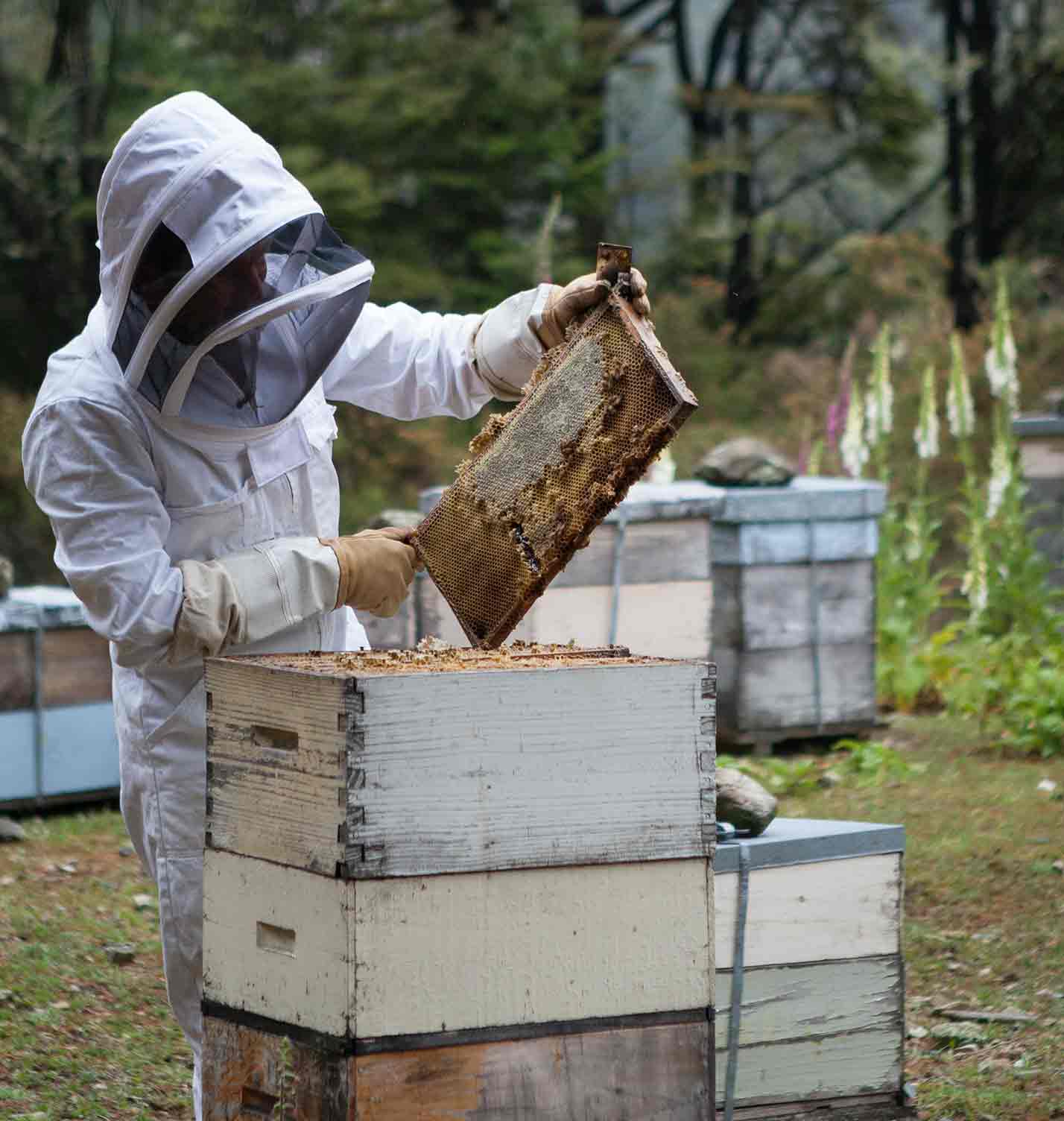
Love bees? We visited a beehive and Miriam gets swarmed. Also read about this hotel in Denver, which does it for the bees. Or like meat in a lab, this Israeli company is making honey in a lab, sparing the bees and the pressures we put on them. 

#savethebees


Will the Future of Parking lots and Structures be sustainable?

0
parking in paris, walking, sustainable city
The most sustainable kind of parking in Paris is walking, but jokes aside there are ways to make parking more efficient

The future of parking lots and structures is an essential topic for cities and towns worldwide. As more people move to urban areas, the demand for monthly parking spaces continues to increase. To address this need, cities are turning to sustainable solutions for parking lots and structures to reduce their environmental impact. 

In this article, we’ll explore the different sustainable options for parking lots and structures and discuss the potential for creating a greener, more sustainable future for our parking spaces.

The Current State Of Parking Lots

Parking lots and structures are a huge industry. The average driver in America racks up about 12 miles of driving for every 1 mile of travel, which means that the need for sustainable parking garages and lots is growing.

Depending on the city, there are a variety of parking options available. The most common types include street parking, lots, garages, and meters. Lots and garages require some payment, whether cash or credit card. Meters are often found in high-traffic areas and need coins or card payments through your phone.

The cost of parking can vary greatly depending on location. In big cities such as New York and Los Angeles, the average cost of parking can range from $25-$50 per day. This makes it difficult for people on a budget to find affordable parking. Fortunately, there are some ways to save money. Specialist parking platforms like Spacer allow you to compare prices for different lots and garages in your area and can save you a lot of money if you can park over longer periods. There are also options such as monthly parking and discounted rates for those willing to take advantage of them.

As transportation methods evolve (like self-driving cars and EVs) and new modes become available, we’ll see a shift away from cars towards public transportation and other options like ride-sharing services like Uber and Lyft or bike-sharing programs like LimeBike or Spin. Parking needs to evolve to stay ahead of the trend.

Parking garages will change over time to meet current trends

The future of parking garages will be more efficient, environmentally friendly, accessible and convenient. These are the qualities that consumers are looking for. While there’s no guarantee that any of these qualities will define the future of public parking structures, they’re likely to be important factors in making them sustainable long after construction.

  • Smart parking is becoming increasingly popular to reduce city congestion and make parking more efficient. Smart parking systems use sensors, cameras, and other technologies to detect when cars are parked, helping drivers quickly find the most available spots and reducing the time spent searching for parking. These systems can also help manage traffic flow and reduce emissions by limiting idling cars.
  • Driverless cars are another emerging technology that could revolutionize the future of parking structures. Autonomous vehicles have the potential to drastically reduce the need for parking spaces, as they will be able to drop off passengers and return to a designated lot, eliminating the need for people to take up space while waiting for their ride.
  • Parking apps are also becoming increasingly popular and can make it easier to find available spots. These apps can provide real-time information on the availability of parking spaces, helping drivers quickly find a spot without wasting time or fuel. They can also be used to reserve a spot ahead of time and even pay for parking through the app.

The future of parking structures is sure to involve a combination of intelligent parking solutions, driverless cars, and parking apps, all designed to make parking more efficient and sustainable. In addition, these solutions will help reduce congestion and emissions by leveraging the latest technologies, making them a win-win for cities and drivers.

The environmental impact of parking structures

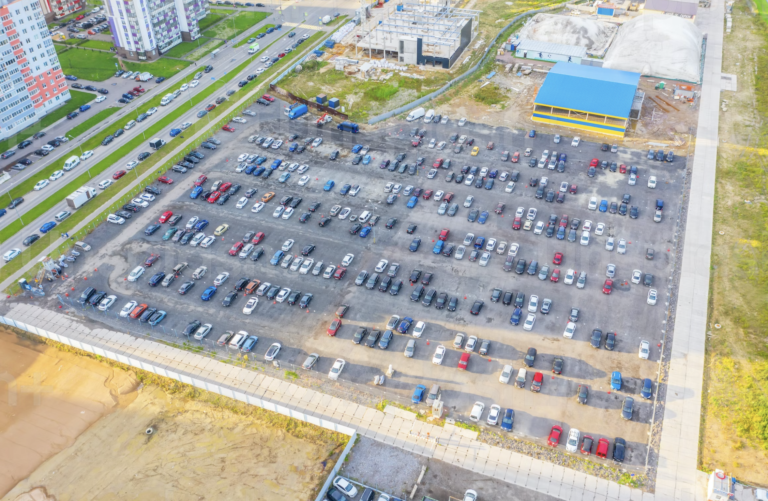
unsustainable parking lot
An unsustainable parking lot creates problems with rain runoff, use of space, headaches for drivers

Parking lots and structures have become a part of the modern landscape, but they need to be more sustainable. They often occupy large land areas, and their construction has been known to displace local ecosystems and cause soil erosion. Furthermore, parking lots and structures have been linked to increased air and water pollution, as well as higher noise and light pollution levels. On top of this, many parking lots and structures are not designed with efficient drainage systems, resulting in runoff that can lead to flooding and water contamination.

Clearly, the environmental impact of parking lots and structures must be addressed to create a more sustainable future.

The benefits of sustainable parking structures

Regarding the future of parking structures, sustainability has many benefits. For one, sustainable parking structures will help reduce air pollution, as they do not require the burning of fossil fuels to power them. Additionally, they are often more efficient and less costly to build, meaning construction costs can be reduced over time.

Sharenow car, car share, saves parking
If a carshare works, that’s about 100 families for one parking space and one car.

Sustainable parking structures can also be designed with other elements, such as green roofs and shade sails, which can help reduce the heat generated by the sun. This can cool down the area and create a comfortable environment for those visiting or using the parking structure.

Finally, sustainable parking structures can help promote environmental conservation and sustainability. This is especially important for cities and towns looking to reduce their carbon footprint and become more environmentally friendly. By investing in sustainable parking structures, cities can show their commitment to protecting the planet while providing a safe and efficient place for people to park their vehicles.

Takeaway: 

The truth is we are heading towards a future where sustainable parking lots and structures are the norm. Large companies will push for change, whether it’s because of government regulation or public demand. And as long as the costs continue to fall and the benefits continue to rise, those who don’t adapt will be left behind. If you want to build green parking lots and structures, it’s time to start thinking about what it takes.

The key is to consider your parking facility’s impact on the environment. You should also consider the other ways people can get around and how they can be incorporated into your structure. As more and more people start using these alternatives, we must begin building environmentally-friendly structures.

7 Benefits of Electric Cars

0
Quant Nanoflowcell
Some electric cars use lithium-ion batters. The Quant is an electric car that stores its energy in salt.

Are you concerned about your carbon footprint? Are you interested in purchasing a vehicle that is both economical and environmentally friendly? If so, then an electric car might just be the perfect option for you. Electric cars are becoming popular due to their cost savings, low emissions, and quiet operation. To help you with the topic, we’ll discuss why electric cars are such a great choice for those looking for an eco-friendly travel solution.

What Are The Reasons To Choose An Electric Car?

Like any other car, electric cars come with a wide range of benefits and drawbacks. But there are several reasons why you may want to choose an electric car over a traditional gasoline-powered car.

Here are some of the main reasons why electric cars make sense:

1. Zero Emissions

Pulling away from the pump in an electric car may not be as satisfying as revving the engine of a traditional combustible vehicle. However, you can feel great about showing your ecological support for a better-quality environment. That’s because electric cars produce zero emissions and don’t contribute to air pollution. The latter is becoming more and more concerning as increasing levels are linked with many health complications. Such as respiratory problems, heart disease, and stroke. Making the switch to an electric car could be just what we need to break down air pollution and safeguard public health.

2. Low Maintenance Costs

You don’t need to worry about costly maintenance or repairs with electric cars. Shedding the gasoline engine’s various moving parts means there are far fewer things to break down on an electric vehicle. That means no more trips to the mechanic and less hassle when it comes to servicing your car, saving you both time and money in the long run.

3. Cheaper to Operate

An electric car is worth considering if you are looking for a car that will save you money in the long run. Not only will you be saving on fuel costs due to electricity being significantly less expensive than gasoline. In addition, you can also take comfort in knowing that the maintenance associated with electric cars tends to be much lower than those of gasoline-fueled ones.

4. Environmentally Friendly

When it comes to being environmentally friendly, electric cars are hard to beat. Since they run on electricity rather than gasoline, these vehicles produce zero emissions and don’t add to air pollution. Furthermore, electric cars have less of an environmental impact since they don’t require the extraction and refining of fossil fuels like gasoline cars. 

5. Quieter Ride

Electric vehicles are nearly silent when the tires are not rolling on the road. The lack of noise is a huge benefit to drivers across the board. It creates an environment that encourages peacefulness and relaxation while you travel. Take it one step further, and electric cars come with the bonus of being eco-friendly – no more smoggy air or nasty emissions! There’s nothing like taking a break from city traffic with a nice ride in one of these silent beauties.

6. Faster Acceleration

If you’re the type of person who appreciates a blast of speed, then an electric car is made just for you. They are much faster when it comes to acceleration because they have something called instant torque that allows them to go from 0 to 100 km/h in 1.75s. It’s almost like pressing the gas pedal and rocketing off in an instant; one second, you’re standing still. After that, you are already well on your way with incredible force. Electric cars have significantly elevated the thrill factor for drivers looking for an exciting ride.

7. Tax Incentives

Electric cars are becoming increasingly popular. It is because most people continue to look for ways to be more eco-friendly and reduce their environmental impact. Many governments offer tax incentives to people who purchase electric vehicles. It helps offset the higher cost of electric vehicles. It can make them a much more friendly financial decision while also having long-term positive impacts on our environment. It’s a great way of encouraging people to switch and increase sustainability.

Conclusion

Electric cars are becoming increasingly popular as people continue looking for more eco-friendly ways. It will reduce their environmental impact. Not only do they offer a quieter ride, faster acceleration, lower maintenance costs, and cheaper running costs. Many governments also offer tax incentives for those purchasing electric vehicles. With all of these benefits in mind, it’s no wonder that electric cars are quickly becoming the preferred choice for drivers today.


Self-healing concrete is reason how the Romans built sustainable structures

0
Caesaria National Park
This structure is an ancient Roman-built aqueduct in Israel

There is a breakwall at the ancient port of Caesarea in Israel that’s been standing against waves for 2000 years. Meanwhile the break-walls in Jaffa down the coast are being fortified once again after a couple of decades. Ancient concrete used by the Romans to build aqueducts and Rome itself, it turns out, was made to be self-healing concrete, and it can repair itself over time, surmise researchers from MIT. And this is important when you consider the built mass of concrete and our planet

The new study on ancient concrete shows that while ancients didn’t know exactly why the concrete they used worked chemically, even though it was a recipe they perfected, it may be a recipe for reducing climate change. Current concrete mixtures create unnecessary greenhouses gases in their production, and as a circular material are not able to withstand the test of time.

Ancient roman breakwall, mortar is self-healing
Caesaria National Park: Built by Herod in honor of Caesar Augustus. Historians claim that Pontius Pilate lived there. Now ruins and located in one of Israel’s National Parks.

The research was led by Admir Masic from MIT and was published in a journal Science Advances and explores the process of hot mixing and how the ancient Romans made plaster to last. MIT is the same wonderful design, engineering and science school to hire Julia Watson who wrote the book every architecture student should own called Lo-Tek Design by Radical Indiginism. The book focuses more on primitive culture but it’s really a wonderful collection of building by nature. The best I have ever read. Plus it’s a glory to behold.

As for the self-healing plaster research: “The Romans employed hot mixing, using quicklime in conjunction with, or instead of, slaked lime, to create an environment where high surface area aggregate-scale lime clasts are retained within the mortar matrix,” writes Masic. 

Rome colosseum, self-healing mortar
Romans mastered self-healing mortar, which works well in wet environments

“Inspired by these findings, we propose that these macroscopic inclusions might serve as critical sources of reactive calcium for long-term pore and crack-filling or post-pozzolanic reactivity within the cementitious constructs. The subsequent development and testing of modern lime clast–containing cementitious mixtures demonstrate their self-healing potential, thus paving the way for the development of more durable, resilient, and sustainable concrete formulations.”

This is some news we can use. Now architects and design students: start experimenting. 


Light pollution killing rodents within days

0
light pollution in vietnam, lights hurting mammals at night
City lights and light pollution are killing small rodents. These are lights in a city in Vietnam but light pollution is everywhere.

A new study on rodents has found that light pollution hurts small mammals. An extensive study at Tel Aviv University’s School of Zoology tested the impact of prolonged low-intensity light pollution on two species of desert rodents: the diurnal golden spiny mouse, and the nocturnal common spiny mouse. The findings were highly disturbing: on two different occasions, entire colonies exposed to ALAN (Artificial Light At Night) died within days, and reproduction also decreased significantly compared to control groups.

The researchers: “Our results show clearly for the first time that light pollution can be extremely harmful to these species, and suggest they may be harmful to ecosystems, biodiversity, and even human health.”

The study was led by Prof. Noga Kronfeld-Schor, Chief Scientist of Israel’s Ministry of Environmental Protection, and PhD student Hagar Vardi-Naim, both from TAU’s School of Zoology and the Steinhardt Museum of Natural History.

Noga Kronfeld-Schor studies light pollution and rodents

The paper was published in Scientific Reports.

Millions of years of evolution undone in 50

desert rodent
Desert rodents killed by lights

Prof. Kronfeld-Schor explains: “We have been studying these closely related rodent species for years.  They both live in Israel’s rocky deserts. By comparing closely related species that differ in activity times, we gain new insights into the biological clock and its importance to the health of both animals and humans.”

Hagar Vardi-Naim: “In most species studied to date, including humans, the biological clock is synchronized by light. This mechanism evolved over millions of years in response to the daily and annual cycles of sunlight – day and night and their varying lengths that correspond to the change of seasons. Different species developed activity patterns that correspond to these changes in light intensity and daylength and developed anatomical, physiological and behavioral adaptations suitable for day or night activity and seasonality.”

However, over the last decades, humans have changed the rules by inventing and extensively using artificial light, which generates light pollution. According to latest studies, about 80% of the world’s human population is exposed to ALAN, and the area affected by light pollution grows annually by 2-6%. In a small and overcrowded state like Israel, very few places remain free of light pollution. In our study we closely monitored the long-term effects of ALAN on individuals and populations under semi-natural conditions.”

The average life expectancy of spiny mice is 4 to 5 years, and the original plan was to monitor the effects of ALAN on the same colonies, measuring the effects on reproductive output, wellbeing and longevity. But the dramatic results thwarted our plans: on two unrelated occasions, in two different enclosures exposed to white light, all animals died within several days.

“No abnormal mortality was recorded in any of the other enclosures, and as far as we are aware, no similar event has ever been documented by researchers before,” the researchers report.

Why do we need rodents anyway?

mice kissing on a poppy seed branch
Mice kissing on a poppy seed branch

If you are not a lover of mice or small rodents, you might think this is good news. But every species in the web of life in the city or desert is part of an intricate mechanism that supports our planet. As a Zoologist who worked with small mammals in forests in Ontario, Canada, for the Government of Canada, I learned that small mammals such as mice and voles, are indicator species. How they forage and breed does affect the health of a forest as they are the main scatterers of seeds and nuts which help trees regenerate. 

If the mammals go, so do our trees.

We can also learn about ourselves when we look at smaller mammals. If light pollution affects them, there is a good chance it will affect us too, and the researchers confirm this. Previous research we’ve covered on light pollution includes: light pollution make crickets chirp in the daytime, light pollution is stopping coral reefs from spawning, and we’ve seen research that it hurts bats too. So if you think light at night is a good thing for your backyard, think again. Just like we are planing wildflowers to bring back the bees, turn off your lights at night to help the small mammals.

NASA’s rover finds opals on Mars

0
Opal on Mars
The white patches are exposed opal caches on Mars. The result could mean water for future Martians. Image by NASA 

Diamonds can be made in a lab so perfectly that jewellers can’t tell the difference between a real and a fake. But a new cache of gemstones has been identified out of this world, on Mars, and these might be a kind of opal that only the red planet can produce. And the promise of opal, could mean water for future Martians.

A research team discovered the opals on the Martian surface using new methods from old data collected by NASA’s Curiosity rover. They verified opal, potentially serving as an important resource for human exploration.

In 2012, NASA sent the Curiosity rover to Mars to explore Gale Crater, a large impact basin with a massive, layered mountain in the middle. As Curiosity has traversed along the Mars surface, researchers saw light-toned rocks surrounding fractures that criss-cross certain parts of the Martian landscape, sometimes extending out far into the horizon of rover imagery.

Opal Mars Rover

Recent research into these rocks finds that these widespread halo networks served as one of the last, if not the last, water-rich environments in a modern era of Gale Crater. This water-rich environment in the subsurface would have also provided more habitable conditions when conditions on the surface were likely much more harsh.

Mars Rover, opal Curiosity
Mars rover, Curiosity

As part of a new study published in the Journal of Geophysical Research: Planets, led by former Arizona State University NewSpace Postdoctoral Fellow Travis Gabriel, now a research physicist at the U.S. government, archival data from several instruments were examined and showed considerable anomalies near light-toned rocks earlier in the traverse.

Curiosity rover drove right over one of these fracture halos many years ago, long before Gabriel and ASU graduate student and co-author Sean Czarnecki joined the rover team.

“Our new analysis of archival data showed striking similarity between all of the fracture halos we’ve observed much later in the mission,” Gabriel said. “Seeing that these fracture networks were so widespread and likely chock-full of opal was incredible.

Opals Mars Curiosity

The path of opals on Mars

Gabriel and his team of researchers studied the composition of light-colored rocks surrounding the fractures on the ground, or fracture halos, in Gale Crater. Previous studies Gabriel was involved in used the rover’s laser-induced breakdown spectrometer, Chemistry and Camera, or ChemCam, to show that these halos may be composed of opal, a material that has important implications for the history of Gale Crater.

Opal itself contains a large amount of water, which produced a strong signal in another instrument on the rover: the DAN spectrometer.

Observing drill cores taken at the Buckskin and Greenhorn drill sites many years into the mission, scientists confirmed that these light-toned rocks were very unique compared to anything the team had seen before.

“These light-toned rocks were lighting up in our neutron detector, producing anomalously high thermal neutron count rates,” Gabriel said.

In addition to looking back through archival data, Gabriel and his team went searching for opportunities to study these light-toned rocks again. Once they arrived at the Lubango drill site, a bright-toned fracture halo, Gabriel led a dedicated measurement campaign using the neutron spectrometer, confirming the opal-rich composition of fracture halos.

The discovery of opal is noteworthy as it can form in scenarios where silica is in solution with water, a similar process to dissolving sugar or salt in water. If there is too much salt, or conditions change, it begins to settle at the bottom. On Earth, silica falls out of solution in places like lake and ocean bottoms and can form in hot springs and geysers, somewhat similar to the environments at Yellowstone National Park.

Water-rich environments in the subsurface of Mars could have provided a safe haven from the harsh conditions on Mars’ surface, which is rather inhospitable compared to Earth. In Gale Crater, temperatures can go below minus 100 degrees Fahrenheit in the winter night time, reaching only up to roughly 30 degrees Fahrenheit in the warmest of afternoons. Gale crater also experiences far more radiation than the surface of Earth due to our much thicker atmosphere. Every day spent in Gale crater would expose you to a cosmic-source radiation dose that roughly equates to a daily pelvis X-ray.

Since scientists expect that this opal in Gale Crater was formed in a modern Mars era, these subsurface networks of fractures could have been far more habitable than the harsh modern-day conditions at the surface.

“Given the widespread fracture networks discovered in Gale Crater, it’s reasonable to expect that these potentially habitable subsurface conditions extended to many other regions of Gale Crater as well, and perhaps in other regions of Mars,” Gabriel said. “These environments would have formed long after the ancient lakes in Gale Crater dried up.”

The significance of finding opal on Mars will have advantages for future astronauts, and exploration efforts could take advantage of these widespread water resources. Opal itself is made up of predominantly two components: silica and water, with minor amounts of impurities such as iron. Since opal is not a mineral, the water is not bound as tightly within a crystal structure. This means that if you grind it down and apply heat, the opal releases its water. In a previous study, Gabriel and other Curiosity rover scientists demonstrated this exact process.

Although Gabriel and his team aren’t able to perform an exhaustive assessment of the water content in all halos, the dedicated neutron experiments they performed over two of these halos demonstrate that a single-meter halo could house roughly one to 1.5 gallons of water in the top foot of the surface.

Greener Heating Systems for Your Home

0
Home heating options are important now that the cost for winter heating is rising through the roof.

We all want to do our best to live more sustainably but preferably without costing our comfort. Thankfully, as technology develops, there are more and more ways in which we can take a greener approach to heating our homes without compromising on warmth.

Even if you are happy with your current type of heating system, it’s a good idea to make sure it’s still up to scratch. Old boilers or furnaces are even worse for the environment, since as they get older they become less efficient, meaning they use up more energy. If you’re ready to update your boiler and reduce your carbon footprint (as well as your energy bills!).

If you’re not sure yet about which kind of boiler or heating system you’d like for your home, we’ve got you covered! Below are some of the most eco-friendly options currently available for you to consider:

Heat pumps

Through the transfer of heat to or from an external source, heat pumps offer low-carbon heating and cooling for your home. There are numerous types of heat pumps from which you can choose for your home. They all function in a similar way, but their use of different heat sources affects each one’s performance and cost.

Air source heat pumps and ground source heat pumps are the most popular types. Heat pumps of all varieties are extremely effective, with levels between 300 and 400 percent.

Air source heat pumps are the cheapest of the two and also require the least amount of space. They work best in milder climates, since in colder weather they have to work harder to maintain the same temperature which will in turn increase the running costs.

On the other hand, ground source heat pumps can still work efficiently despite cold weather. This is because they are installed underground where the temperature is relatively constant all year round. Unfortunately, this does come at a cost though, since ground source heat pumps are one of the most expensive options and require a lot of space.

heat pumps make home heating more efficient

Micro-CHP Systems

So what exactly is a micro-CHP system? Micro-CHP (combined heat and power) technology is able to produce both electricity and heat at the same time. This heating system has really taken off in Japan, where around 230,000 are currently in operation. And as the technology develops, this popularity is likely to increase around other parts of the world.

Micro-CHP systems are not considered to be a renewable energy system, as they are typically powered by fossil fuels. However, they are still viewed as a low carbon alternative to many other types of heating systems, therefore, reducing your carbon footprint.

In addition to this, green energy suppliers that provide 100% renewable energy are becoming more common, so an alternative to powering a micro-CHP system with fossil fuels may already be available to you.

Biomass Boilers

Another alternative to traditional unsustainable heating systems is a biomass boiler. Biomass is biological material obtained from living organisms such as plants. Biomass can be used in a variety of ways to produce heat: directly via combustion, or indirectly after being converted into another type of fuel such as methane, ethanol, or biodiesel.

If you already have a gas or oil boiler, switching to a biomass boiler will be simple because it operates similarly but with less carbon production.

If you decide to use a biomass boiler, it’s vital to keep in mind that you will need room in your home to store the fuel and that the cost of the fuel may differ depending on where you’re located.

Electric Combi Boiler

Another easy switch to make is an electric combi boiler. New boiler costs can vary depending on many factors, but electric combi boilers tend to be one of the cheaper options as they don’t require any extra tanks or cylinders. This also means electric combi boilers fit well with homes that want to make the most of their space and don’t have a high hot water demand.

Electric boilers also have efficiency ratings of 99-100%, which is higher than your average gas boiler or furnace. With that being said, it’s important to make sure that your electricity is coming from a green supplier so you know that it is actually coming from a renewable source. Alternatively, you could also consider installing solar pv panels to your own home!

What to Do After an Oil Field Accident

0
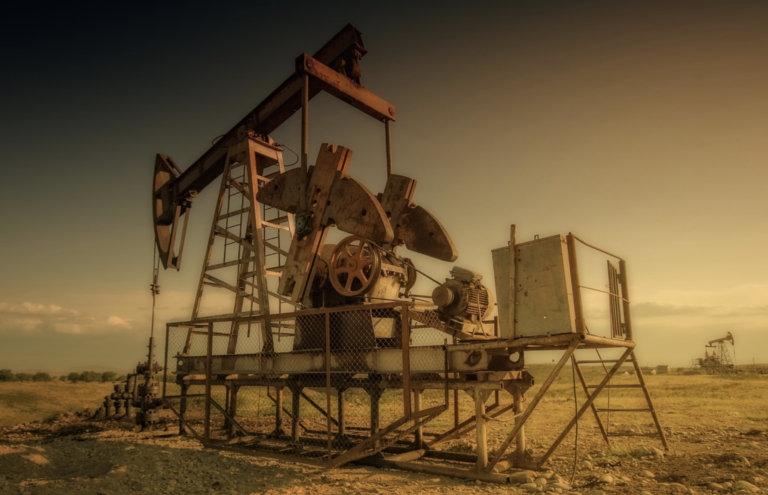
oil rig in Texas or in the Middle East, vintage photo
Oil rig workers have to avoid hazards to themselves and the environment. If an oil spill happens and you are on the job this is what you need to do. Sometimes your boss has an interest to let it slide.

Oil field workers have some of the most physically and mentally demanding jobs on the planet. However, with such high levels of risk comes the potential for accidents, injuries, or even fatalities. While oilfield work often pays better than traditional nine to five employment in the corporate world, you may be responsible for your health and safety while out in remote landscapes, often alone. Read on to learn about various rights and options available after an accident during oil field work so that you can make informed decisions about how best to protect yourself in the future.

Notify Your Employer

As soon as possible after an accident, make sure to alert your employer to the situation. In some cases, you may have time constraints for reporting a work-related injury or illness; states like Pennsylvania require that injuries be reported within 120 days of the incident, so it’s best not to delay notifying your superiors.

Notifying your employer is vital for ensuring that you receive the treatment and care you need to recover, but it’s also a critical step in protecting your rights. If your injury or illness forces you away from work, you may be entitled to compensation through workers’ compensation benefits.

an oil rig drilling in TexasSeek Medical Attention

In the event of an injury or illness, prompt medical attention is essential for minimizing the potential for long-term damage. Serious injuries, such as those involving head trauma, broken bones, and puncture wounds, should always be evaluated by a medical professional as soon as possible. Likewise, if you’re exposed to certain types of hazardous materials on the job, you should conduct toxicity screenings to determine whether or not you’ve been exposed. Some employers may provide medical care for their workers, but if yours doesn’t, you should still seek treatment from a qualified doctor of your own accord.

Know Your Rights

It’s essential to understand your state’s various labor laws and regulations. Every state has its unique set of laws, so you must familiarize yourself with your specific rights as an oil field worker. For instance, many states require employers to carry workers’ compensation insurance for accidents or injuries. This type of insurance covers medical expenses, lost wages, and other costs that may arise from an accident. Contact them if you’re unsure whether your employer carries this coverage.

You can also file a personal injury claim in an oil field accident. This type of claim is designed to cover pain and suffering and legal fees associated with the case. An experienced personal injury lawyer can help you navigate this process and get the compensation you need and deserve.

Seek Compensation

If you’ve been injured or become ill while working in an oil field, you may be entitled to pursue compensation from your employer. Depending on the extent of your injuries and the severity of your illness, you may be eligible for workers’ compensation benefits, disability payments, or even a negligence lawsuit against your employer.

In some cases, you may receive compensation through a third-party claim. Reputable oilfield accident attorneys can help you understand your options and can guide you on filing for workers’ compensation benefits or pursuing a lawsuit. You should also be aware that filing for workers’ compensation does not preclude you from seeking other forms of compensation.

No matter your situation, it’s important to take the time to fully understand your legal rights as an oil field worker so that you can make an informed decision about how best to protect yourself in the future. You can protect your rights and interests with the proper knowledge and resources.

5 Tips for Removing Your Underground Storage Tank

0
Love Canal USA, a child holding a sign saying please help me
Love Canal USA is a story where a chemical company participated in building a neighborhood on top of a chemical storage tank. Children and families got sick. It didn’t end well.

Removing an underground storage tank (UST) is challenging and intimidating; it requires specialized skills and knowledge, not to mention specific safety protocols that you must follow. If you’re contemplating taking this on yourself, here are some tips to make the process easier.

1. Check the Local Regulations

The local government regulates underground storage tanks. Before you get started, research your area’s regulations to ensure that you’re following all the required steps and staying compliant with the law. It is also essential to research any permit requirements necessary for the removal job. The paperwork can be extensive and time-consuming, so give yourself enough time to get through it. If there are any special requirements or regulations you need to be aware of, consider them as you plan your UST removal job.

2. Survey the Site

Before removing a UST, surveying the site and performing a few safety checks is important. Make sure there are no utilities running through the area, such as gas lines, electrical wires, and water mains. It is also important to note any other environmental hazards that may be present on the site, such as nearby bodies of water or underground septic tanks.

3. Hire Experts

Removing an underground storage tank is a complex task that requires specialized skills and knowledge. Before attempting to do it yourself, consider hiring an underground storage tank removal service to handle the job. Not only will they have the experience necessary to do the job safely and efficiently, but they can also help ensure that all regulations are followed. With the help of experienced professional service, you can rest assured that your UST will be removed with minimal disruption to your property and the environment.

4. Have a Plan for Leaks

If you are removing an old or damaged UST, it is crucial to have a plan to deal with potential leaks. Have the necessary safety equipment and absorbent materials to address any spills quickly. It is also vital to ensure that the area surrounding the UST is appropriately sealed off before beginning work. This will help reduce the risk of hazardous materials leaching into the ground and contaminating the surrounding soil or groundwater.

5. Take Care of Contaminated Soil

If the UST has been leaking, some contaminated soil will likely be around it. Make sure to dispose of this material per local regulations properly. Sometimes, you may need to hire a remediation company to help assess and clean up contamination before the removal job begins. This can be especially important if the contamination poses a risk to the health and safety of nearby residents. You may also need to hire a professional to test the soil before and after removing the UST. This can help ensure that all contamination has been adequately addressed and that the area is safe for future use.


Following these five tips can help you safely and efficiently remove your UST. Remember to do your research, plan, hire experts when necessary, and take care of any contaminated soil. Doing so can help ensure that the job is done quickly and properly, with minimal disruption to you or the environment.