
Ancient ostrich eggs found in 4000-year-old fire pit

ostrich eggs found in fire pit, Israel Negev Desert
Ostrich eggs found in fire pit, Israel Negev Desert

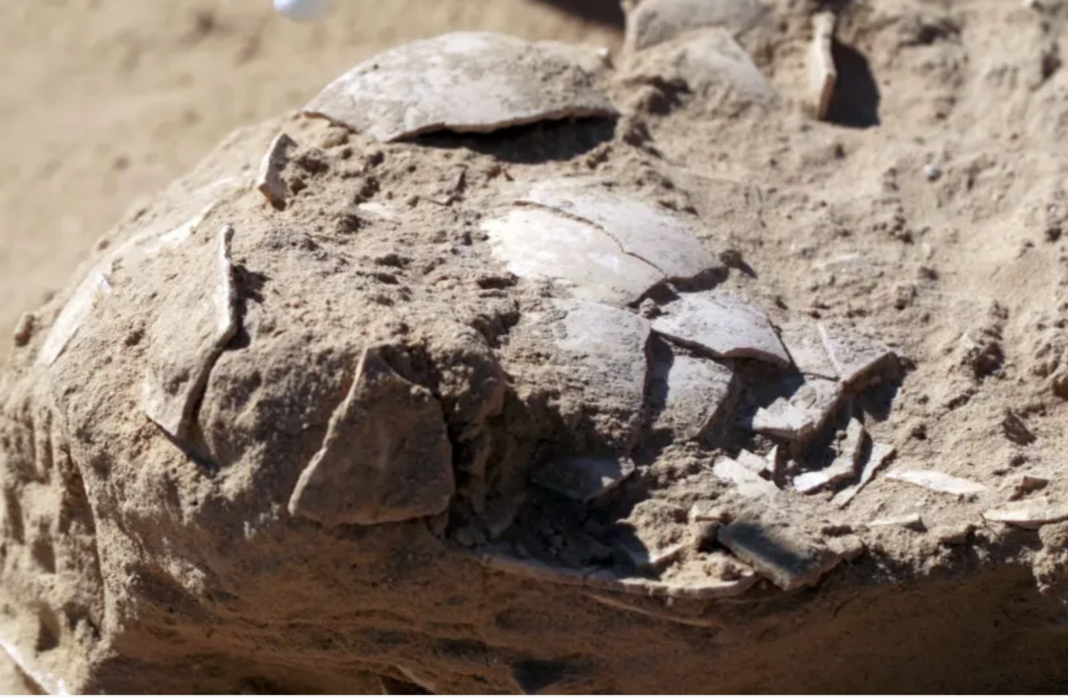
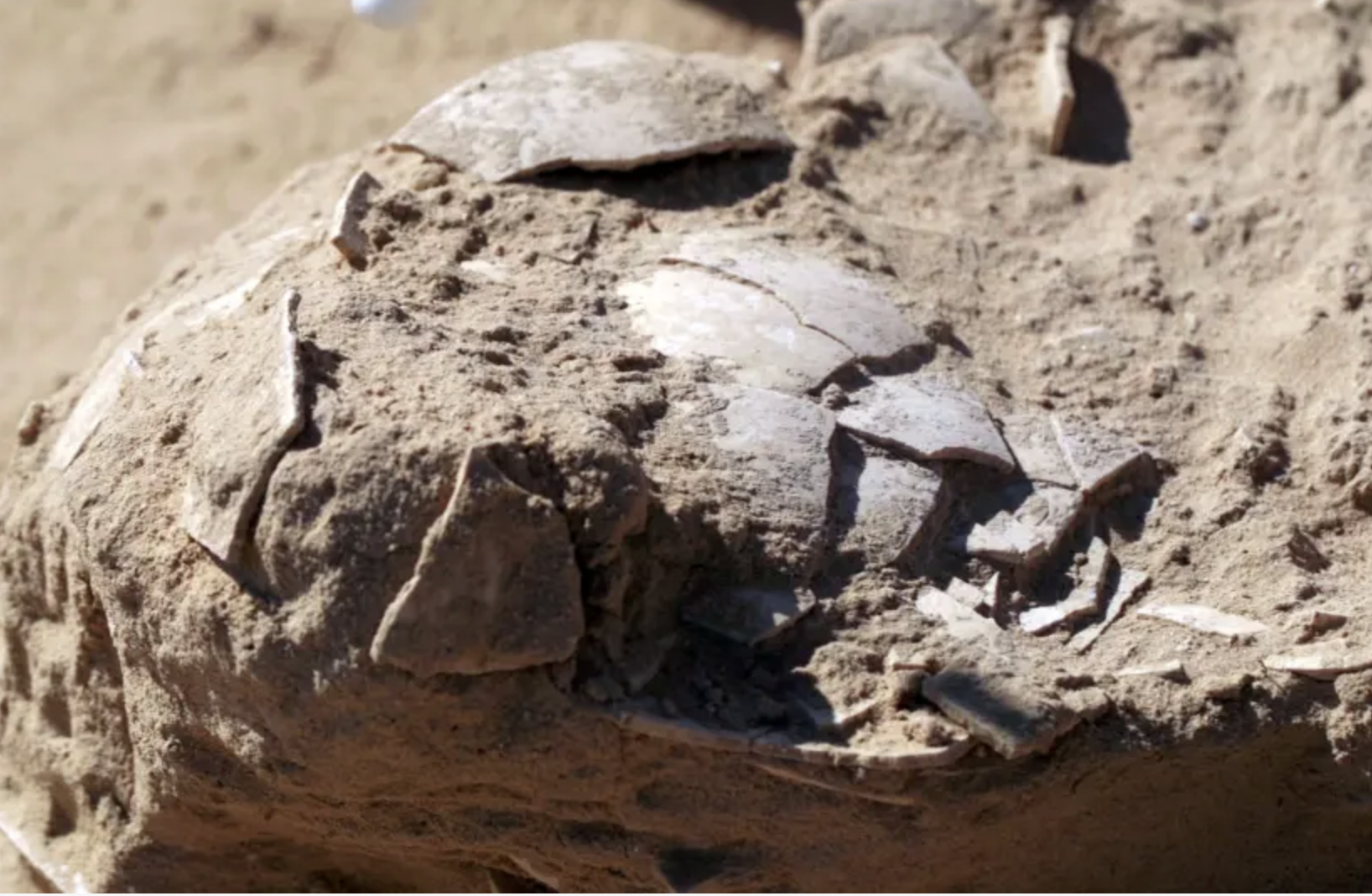
A cracked pile of 8 ancient, 4000-year-old ostrich eggs were uncovered near an ancient fire pit in the Israeli Negev desert while making way for new agricultural developments. “This is a very important find that—with the help of modern scientific methods—can teach us a lot about the nomadic people of the desert in ancient times,” said Lauren Davis, the Israel Antiquities Authority excavation director. 

“We found a camp site, which extends over about 200 square yards, that was used by the desert nomads since prehistoric times. At the site we found burnt stones, flint and stone tools as well as pottery sherds, but the truly special find is this collection of ostrich eggs. Although the nomads did not build permanent structures at this site, the finds allow us to feel their presence in the desert,” she says.

As soon as the nomads moved on the camp sites were quickly covered over by the dunes and were re-exposed with the sand movement over hundreds and thousands of years. This fact explains the exceptional preservation of the eggs, allowing us a glimpse into the lives of the nomads who roamed the desert in ancient times. (There are still nomads in Israel. Peek inside their tent.)

Lauren Davis finds ostrich eggs

Ostriches were common in the area from the early prehistoric periods until they became extinct in the wild in the course of the 19th century. Their eggs have been found in archaeological sites from several periods, reflecting the importance of ostrich eggs as a raw material for food and design.

Ostrich eggs were often buried with the dead, used in luxury goods of the ancients and used for water canteens.

Life for a modern nomad in Jordan today

One ostrich egg omelette had the nutritional value of about 25 normal chicken eggs, explained Amir Gorzalczany from the Israel Antiquities Authority, who has researched the subject. “There is sometimes even evidence of decorating and incising on ostrich eggs, showing their use as decorative items. It is interesting, that whilst ostrich eggs are not uncommon in excavations, the bones of the large bird are not found. This may indicate that in the ancient world, people avoided tackling the ostrich and were content with collecting their eggs.”

“The proximity of the group of eggs to the fire pit indicates that this is not a natural chance find but the intentional collecting of the eggs,” says Davis. “One of the eggs was found directly in the fire pit, strengthening the understanding that they were used as food here. The ostrich eggs were crushed but well-preserved, despite the fact that they were uncovered in the surface layer.”

ancient ostrich eggs
One ostrich eggs contains the nutrition of 2 dozen regular chicken eggs

The next step is to put the pieces together like a puzzle, giving more clues perhaps about the ways of the ancients. Other fascinating research from the region includes funerary highways in Saudi Arabia and the desert kites of ancient trappers in Jordan and the region. There are big wows of course for Petra and the Nabateans, but also the lives of every day people are important to learn from.


Karin Kloosterman
Karin Kloostermanhttp://www.greenprophet.com
Karin Kloosterman is an award-winning journalist, innovation strategist, and founder of Green Prophet, one of the Middle East’s pioneering sustainability platforms. She has ranked in the Top 10 of Verizon innovation competitions, participated in NASA-linked challenges, and spoken worldwide on climate, food security, and future resilience. With an IoT technology patent, features in Canada’s National Post, and leadership inside teams building next-generation agricultural and planetary systems — including Mars-farming concepts — Karin operates at the intersection of storytelling, science, and systems change. She doesn’t report on the future – she helps design it. Reach out directly to [email protected]

Read More

TRENDING

Bricks and Minifigs, and the Future of Circular Play

A second-hand LEGO marketplace keeps plastic bricks circulating for years instead of ending up forgotten in basements or discarded in landfills. It gives children access to building materials at lower prices. It extends the lifespan of a product that was originally designed to last generations.

HelloFresh’s pride prepping ad raises a bigger question: we are we still outsourcing dinner?

The backlash against HelloFresh's Pride Month marketing campaign has sparked a wider conversation about food, labor, sustainability, and whether consumers should reconnect with local farmers, butchers, and home gardens instead of relying on subscription meal kits.

Regenerative Wool or Greenwashing? Zentera Responds to Critics

Zentera responds to questions about ZQ wool, animal welfare, regenerative farming, ethical fashion and the fallout from PETA's New Zealand investigation.

The Ocean’s Hidden ‘Dark Web’ Is Being Fished Before Scientists Understand It

Deep below the ocean's surface, in a dimly lit region known as the twilight zone, millions of fish are being caught every year. Scientists say the consequences are largely unknown.

Barnacle glue could fix coral reefs, inspire new advances in building and medicine

Aalto University researchers create a protein-based adhesive inspired by barnacles and mussels that works underwater and could aid coral reef restoration.

Here’s How To Implement The Four Pillars Of Employee Engagement

If you throw a party for your work team and they are vegans, don't make it a barbecue. Know the sustainability values of your team to boost moral and retain good people.

Locals From Rishon Fight IKEA

Big Box stores are a pretty new concept in Israel, and thank God that not every Israeli city wants them in their backyard. A word from someone who has see the beautiful farmland around her hometown Newmarket, Ontario stripped and converted into vulgar strip malls of big box shops: they have no place in a healthy and sustainable town or city.

The Jewish National Fund Meets An Inconvenient Truth

According to the JNF, it has transformed thousands of acres of barren land into green forests in Israel. They state that each person emits about 23 tons of carbon per year, estimating that each tree planted can absorb one ton of carbon in its lifetime. That's a whole lot of trees you'd need to be planting. Could so many fit in Israel?

How to quiet noise from construction in your office

Streets need to be resurfaced in New York but the humming and grinding noise is unsettling. Noise is environmental pollution. 

EarthX and a blueprint for sustainable investing

Trammell S. Crow, a Dallas-based businessman and father of four, is focusing his efforts on impact investing, and media that focuses on saving the planet through EarthX.

Mining Afghanistan’s Mineral Discoveries Similar to Avatar

Now that American forces in Afghanistan are commemorating the longest period of any war that America has been involved in, including the 1965-73 Vietnam War, the recent discoveries of large and extremely valuable mineral and metal deposits may finally bring to light a reason to continue the presence of US fighting forces in this war torn and backward country.

From Pilot Plant to Global Stage: How Aduro Clean Technologies’ 2026 Expansion Signals a Turning Point for Chemical Recycling Investors Like Yazan Al Homsi

The company's Next Generation Process (NGP) Pilot Plant in London, Ontario, has officially moved into initial operating campaigns, generating the kind of structured, repeatable data that separates laboratory promise from commercial viability.

Nobul’s Regan McGee on Shareholder Value: “Complacency Is the Silent Killer” 

Why the governance framework designed to protect shareholders so...

Popular Categories