Repair Your Eating Habits in Time for Yom Kippur

Fasting, while probably better for the environment, is unfortunately unsustainable for us humans.  What other ways can you make your eating eco-friendly?

Yom Kippur, the Jewish Day of Atonement, is one of the holiest days of the year for Jews and is a time of reflection, atonement, fasting and prayer.  It is a day when people look back upon the past year and think forward towards the future.  With the fasting that will be going on (and the resulting grumbling tummies), though, you may also want to think about how the ways you satisfy one of your most basic needs – eating – can be improved.  Our eating habits have a huge effect on the environment, and making a few alterations can make a big difference.

So this year, in addition to reflecting on the other aspects of your life, how about thinking about what you put in your body? Here are some ways to get you started:

Eat less meat. You don’t have to go full-out vegetarian, but it’s easy to be more “vegawarian” (aware of the benefits of eating more vegetarian meals on the planet, your body, and your wallet).  You can start by reading some of our tips for switching to a vegetable-based diet and searching Green Prophet’s archives for some great recipes.  Not convinced that vegetarian is the way to go?  Read some debunked vegetarian myths.

Waste not, want not. Don’t buy more food than you need so that it doesn’t end up rotting in your fridge, and eat those leftovers.  Also, how about generating leftovers on purpose so that you can bring a homemade, healthy lunch to work the next day instead of eating fast food junk that’s bad for both you and the environment?

Put less junk in your body. These days, unfortunately, chemicals and coloring agents are found in almost every type of food.  And if it’s not one thing it’s another – even if your food doesn’t have chemicals in it, it’s probably packed with a ton of sugar (or high fructose corn syrup).  Your body (and, of course, the earth) simply don’t need that.  Detoxify.  Go as natural as you can.  Put your body through food (aka drug) rehab.

Eat as locally as possible. Eating locally isn’t just about calculating your food’s carbon footprint.  It’s also about doing what’s good for you.  The more local your food is, the fresher (and more packed with nutrients) it is.  Try finding a local farmer’s market near you.

Eat as many organic products as possible. Rid your body (and the earth) of unnecessary pesticides and additives by replacing as many mainstream products as you can with organic ones.

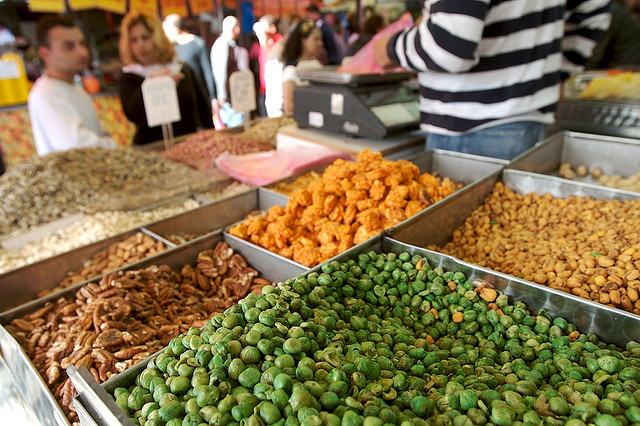
Image via: David Minton

Read about Yom Kippur and its significance for other aspects of your life::
Atoning for Environmental Sins in the Kitchen this Yom Kippur
Are Your Wires Crossed? Go Offline for Yom Kippur

Karen Chernick
Karen Chernickhttps://www.greenprophet.com/
Much to the disappointment of her Moroccan grandmother, Karen became a vegetarian at the age of seven because of a heartfelt respect for other forms of life. She also began her journey to understand her surroundings and her impact on the environment. She even starting an elementary school Ecology Club and an environmental newsletter in the 3rd grade. (The proceeds of the newsletter went to non-profit environmental organizations, of course.) She now studies in New York. Karen can be reached at karen (at) greenprophet (dot) com.

TRENDING

Haman’s Fingers, A Moroccan Purim Specialty

There’s feasting at home on the night and the next day, and to make sure everyone gets good things to eat, families send out packages of treats to friends and neighbors. Traditional goodies are hamentaschen, and other treats like our chocolate nut clusters .

Are vegetarian babies at risk for being shorter than meat eaters?

Are vegetarian babies at risk for growing shorter than kids who eat meat?

Make nettle dumplings, also known as nettles malfatti

Springtime foraging yields a harvest of wild greens to cook at home, like nettles. Make delicious nettles malfatti dumplings with this recipe.

Farm To Table Israel Connects People To The Land

Farm To Table Israel is transforming the traditional dining experience into a hands-on journey.

What is the Jewish Climate Trust?

Jewish Climate Trust has quickly attracted the attention and support of some of the most influential voices in Jewish philanthropy, drawing backing from prominent family foundations and business leaders connected to the Bronfman and Schusterman philanthropic networks, alongside climate-focused investors and community builders aligned with founding leader Nigel Savage. Together, these donors have committed many millions of dollars to build a serious, long-term climate platform for the Jewish world — not as a symbolic gesture, but as a strategic intervention in one of the defining challenges of this generation.

How AI Helps SaaS Companies Reduce Repetitive Customer Support Work

SaaS products are designed for large numbers of users with different levels of experience, and also in renewable energy.

Pulling Water from the Air

Faced with water shortage in Amman, Laurie digs up...

Turning Your Energy Consultancy into an LLC: 4 Legal Steps for Founders in Texas

If you are starting a renewable energy business in Texas, learn how to start an LLC by the books.

Tracking the Impacts of a Hydroelectric Dam Along the Tigris River

For the next two months, I'll be taking a break from my usual Green Prophet posts to report on a transnational environmental issue: the Ilısu Dam currently under construction in Turkey, and the ways it will transform life along the Tigris River.

6 Payment Processors With the Fastest Onboarding for SMBs

Get your SMB up and running fast with these 6 payment processors. Compare the quickest onboarding options to start accepting customer payments without delay.

Qatar’s climate hypocrisy rides the London Underground

Qatar remains a master of doublethink—burning gas by the megaton while selling “sustainability” to a world desperate for clean air. Wake up from your slumber people.

How Quality of Hire Shapes Modern Recruitment

A 2024 survey by Deloitte found that 76% of talent leaders now consider long-term retention and workforce contribution among their most important hiring success metrics—far surpassing time-to-fill or cost-per-hire. As the expectations for new hires deepen, companies must also confront the inherent challenges in redefining and accurately measuring hiring quality.

8 Team-Building Exercises to Start the Week Off 

Team building to change the world! The best renewable energy companies are ones that function.

Related Articles

Popular Categories