When Green Prophet first wrote about the experimental Hydrophilis rebreather by Swiss inventor Oliver Isler, the internet reacted exactly the way the internet reacts to unusual design.
(We have an exclusive interview on the Hydrophilis rebreather here.)
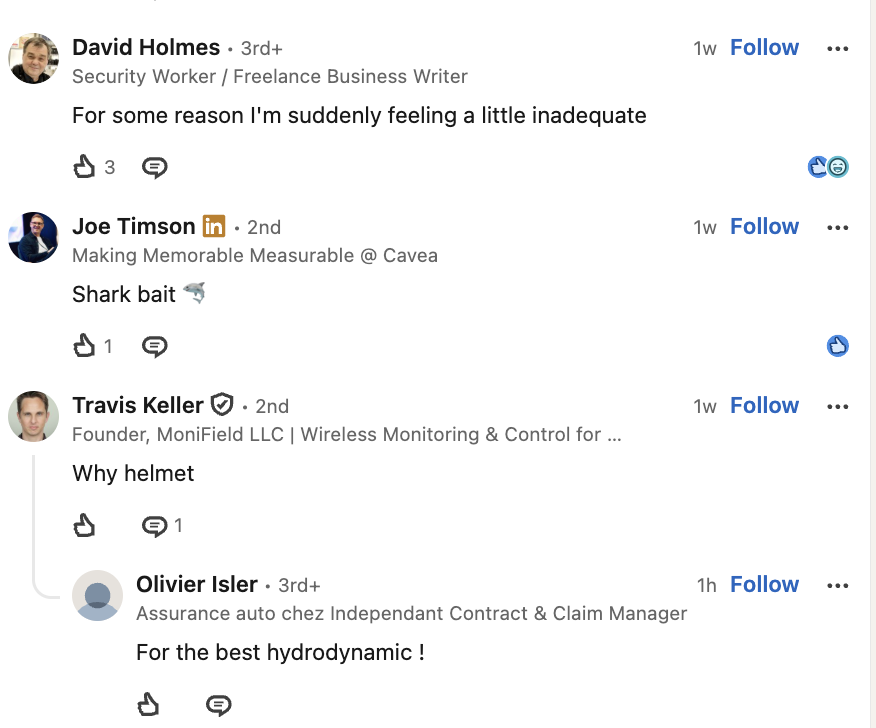
People compared the sleek underwater breathing device to a phallus. Others joked that divers wearing it would become “shark bait.” Some called it ridiculous. Others said it looked like science fiction. But underneath the mockery there was something else: curiosity. A lot of curiosity.
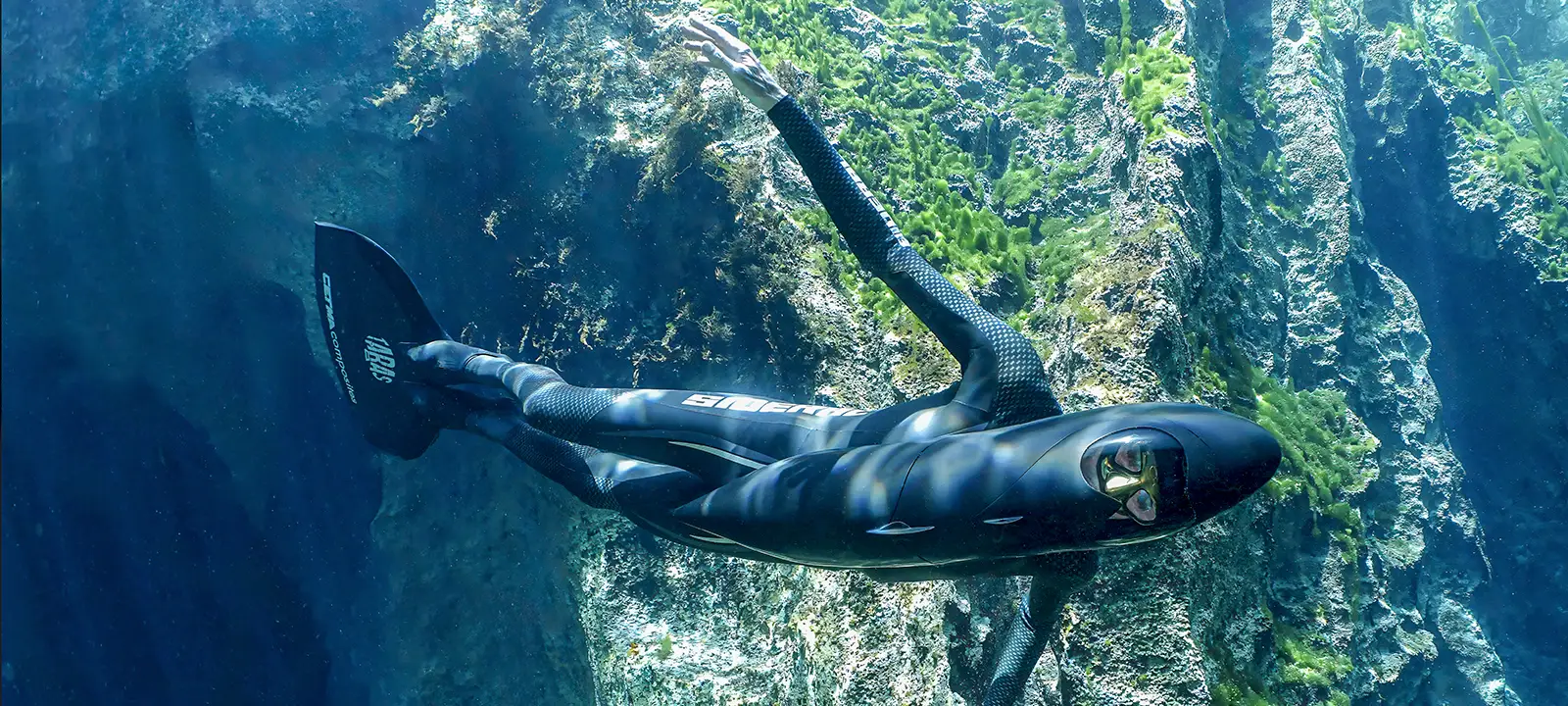
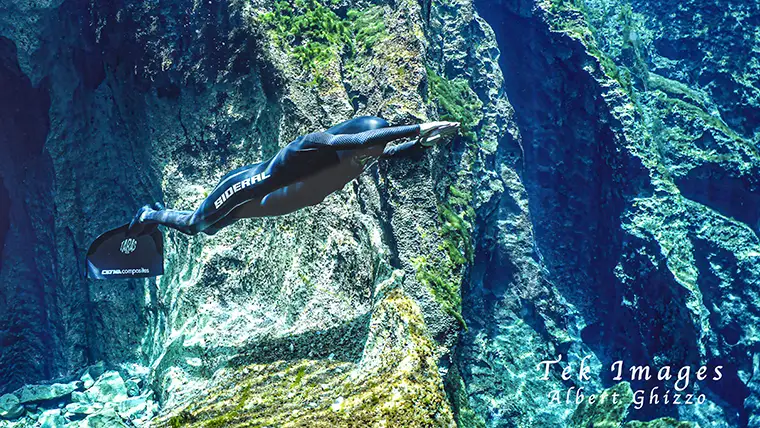
The original article on Hydrophilis, Isler’s radically streamlined underwater rebreather system, sparked strong reactions because the device doesn’t look like normal scuba gear. Instead of bulky tanks and hoses strapped awkwardly to the back, Hydrophilis wraps the diver into a smooth hydrodynamic shape designed to move through water more like a dolphin than a machine.
And while many commenters laughed, others were fascinated by the possibility of quieter, bubble-free diving with less drag and less physical effort. We reached out to Oliver Isler after the reaction online and asked him what he thought about the sudden attention.
We reached out to Oliver Isler after the reaction online and asked him what he thought about the sudden attention.
“Thank you for article, which explains very well the philosophy behind my prototype, designed to be as much as possible in symbiosis with its environment, moving easily with the least possible effort,” Isler tells Green Prophet.
“The greatest challenge was the miniaturization of everything that could be reduced in size, while still remaining comfortable from a breathing standpoint. I dive either on pure oxygen (0 – 6 m), with an autonomy of about 90 – 100 min., or on Nitrox 55 down to 20 m depth, with an autonomy of 45 – 50 minutes.
“I have completed 54 dives so far. My 2 mm freediving wetsuit is intended for warm water (above 18 degrees).”
The original article on Hydrophilis, Isler’s radically streamlined underwater rebreather system, sparked strong reactions because the device doesn’t look like normal scuba gear. Instead of bulky tanks and hoses strapped awkwardly to the back, Hydrophilis wraps the diver into a smooth hydrodynamic shape designed to move through water more like a dolphin than a machine.
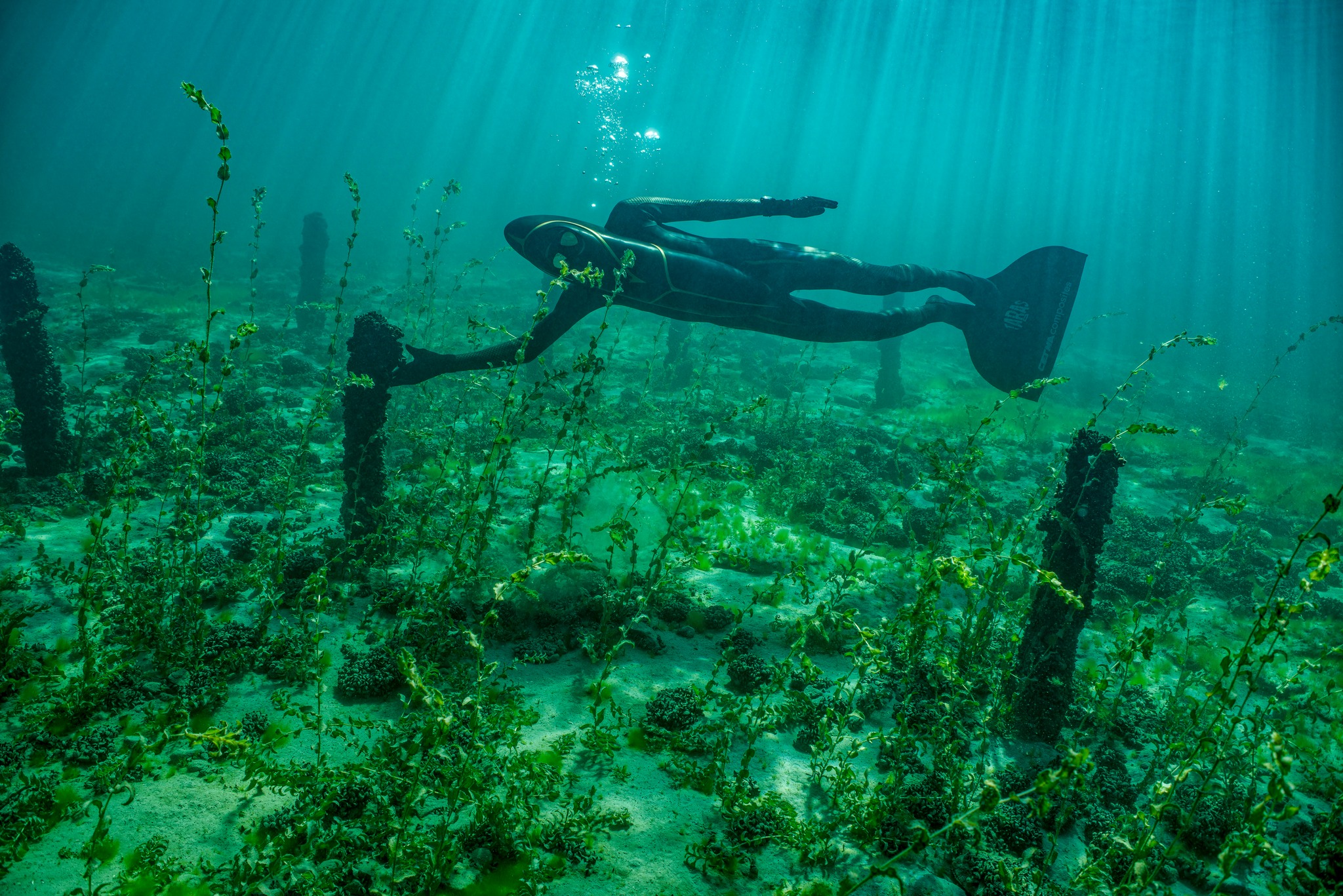
“The goal was never to make something provocative. The idea came from a dream I had more than fifteen years ago where I was swimming peacefully among whales and dolphins.”
That dream eventually became Hydrophilis, a chest-mounted closed-circuit rebreather system that attempts to rethink how humans move underwater. Instead of treating diving like hauling industrial equipment into the sea, Isler designed the system around hydrodynamics and low resistance.
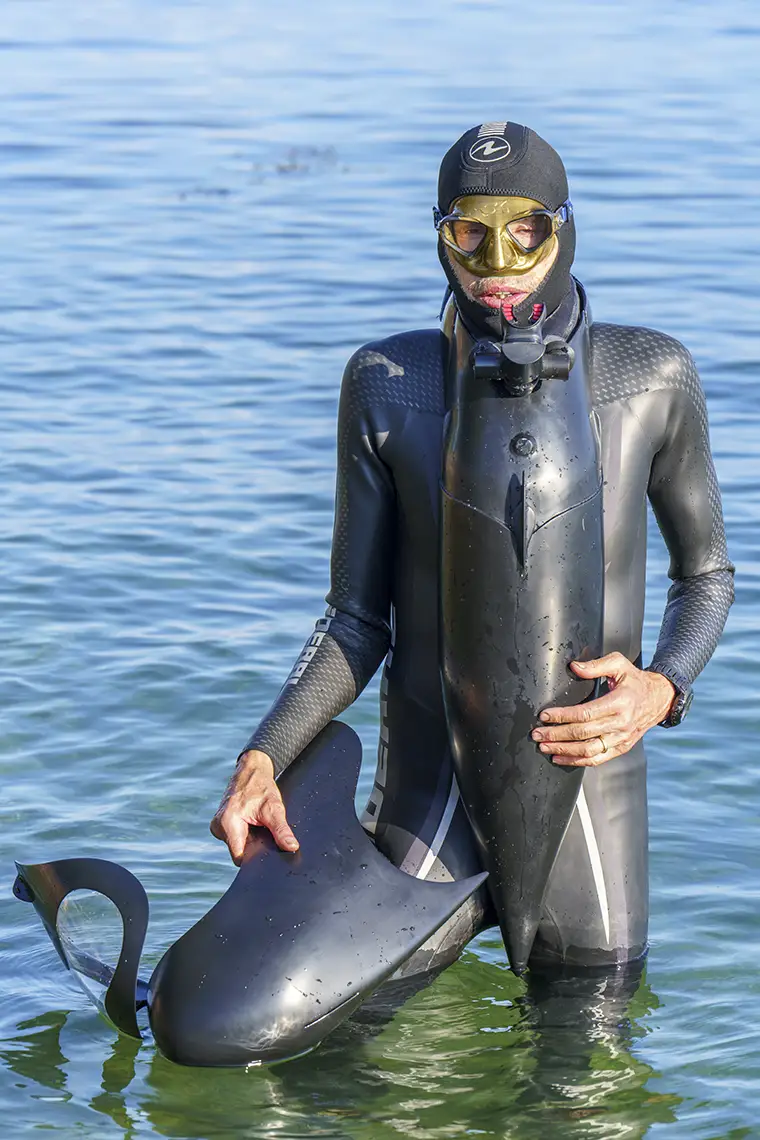
“The ideal shape for minimum resistance is the NACA airfoil,” he explains, referring to the aerodynamic forms developed for aircraft engineering. “Everything was built around that principle.”
The Hydrophilis rebreather currently weighs about 10 kilograms and integrates ballast, breathing equipment, and streamlined body shaping into a single form. Unlike traditional scuba tanks worn on the back, the breathing system sits on the chest. Isler says this decision was partly made “to avoid Immersion Pulmonary Edema (IPE), a dangerous affliction whose risk is higher when inhaling from a back-mounted counterlung.”
The device is still experimental. There is no commercial model yet and no announced certification process. Isler says he has completed several dozen dives while continuing to refine buoyancy, visibility, and breathing performance underwater.
Some divers online questioned whether the design is practical. Others wondered whether the unusual shape could attract sharks.
“Suddenly I feel a little inadequate, wrote one commenter.”
But for many underwater enthusiasts, freedivers, futurists, and marine technology fans, Hydrophilis represents something refreshing: an attempt to rethink scuba from the ground up instead of endlessly refining the same tanks and hoses developed decades ago.
Traditional scuba equipment made humans capable underwater. Hydrophilis asks whether humans can become more natural in the water itself.
That difference may explain why people reacted so strongly.
“There is still work to do,” Isler says cautiously. “It’s impossible to say whether it will become a model for the future.”
Still, the project has already succeeded in doing one thing rare in the diving world: getting people to imagine a completely different relationship between the human body and the ocean.
And maybe that’s why even the critics couldn’t stop talking about it.
Green Prophet looks forward to following Hydrophilis as the technology develops and hopes to speak again with Oliver Isler in future interviews about underwater mobility, silent diving systems, and the future of human interaction with the sea.
Background from Green Prophet’s original Hydrophilis feature.