
Also known as zebiba or zebibah, the prayer mark can develop after years of prostration. Here’s how to care for the skin without harsh bleaching products.
If you’ve ever traveled through India or the Middle East, you may be surprised by the shelves of skin-lightening products sold by major beauty brands. Companies such as Nivea have marketed products promising brighter, lighter or more even-toned skin in countries where complexion has long been associated with beauty and social status.
In India, particularly, colorism has deep social roots. Lighter skin has historically been associated with privilege, class and desirability. We know how ridiculous it is to judge someone’s worth by their skin color, but the beauty industry has made enormous business out of these prejudices. There is, however, a difference between wanting to change your natural complexion and wanting to soften a dark patch of skin caused by years of friction.

We’ve previously written for eco-Muslimas about natural ways to care for darkened knees, especially when regular prayers leave the skin thickened or discolored. But what about the forehead?
If you pray five times a day, you may have noticed a dark spot developing where your forehead touches the prayer mat. In parts of the Muslim world, this mark is called a zabiba, also spelled zebiba or zebibah.

For some Muslims, it is a visible reminder of devotion to Allah. Others might prefer the mark to fade, whether for cosmetic reasons, comfort or simply because they don’t want a dark callus in the middle of their forehead. Neither choice needs defending. But facial skin deserves special attention. Before reaching for a bleaching cream or trying an internet beauty trick, consider a gentler approach.
What is a zabiba?
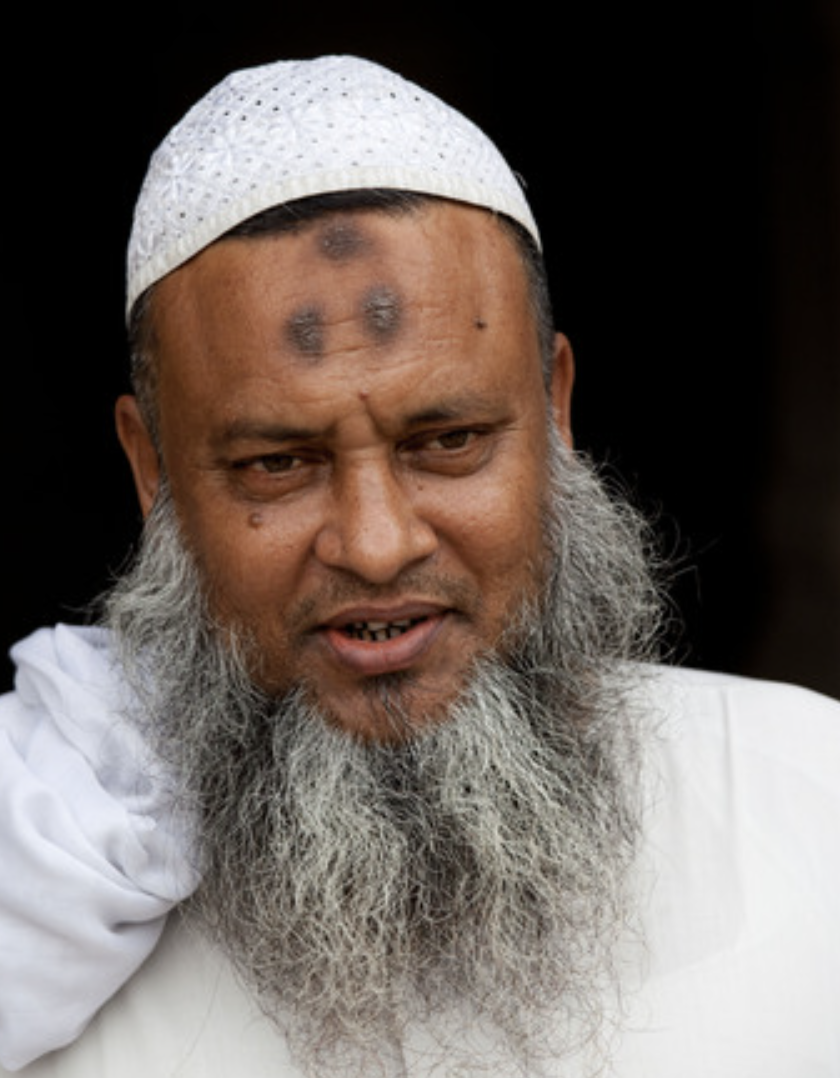
The zabiba is sometimes called a prayer bump or prayer mark. It develops through repeated pressure and friction when the forehead contacts the ground or prayer mat during sujood, the prostration performed during Islamic prayer.
Over time, the skin can thicken, become rougher and develop darker pigmentation. Dermatologists describe these changes as hyperpigmentation, hyperkeratosis and lichenification. A published dermatological study of 349 Muslims found prayer marks on the forehead, knees, ankles and tops of the feet. The marks were more common among older participants and men, and were associated with prolonged, repeated friction.
The good news is that reducing irritation and protecting the skin may help prevent further darkening. Existing pigmentation can sometimes fade, although thickened skin may require more specific treatment.
Seven gentle ways to care for a zabiba

1. Choose a softer prayer mat. A padded, clean prayer mat may reduce the pressure and friction that contribute to the mark. Avoid unnecessary rubbing or dragging your forehead across the surface. Dermatological research identifies padded prayer rugs as one practical measure for friction-related skin problems. Our hunch feels like a natural material might be better than one made from polyester. We’ve featured an organic prayer mat here.
2. Moisturize with a simple, fragrance-free cream. Apply a gentle moisturizer after washing and before bed. Look for ingredients such as glycerin or ceramides, which help support the skin barrier. The goal is to soften dry, thickened skin, not scrub it away.
3. Protect your forehead from sunlight. Sun exposure can worsen hyperpigmentation, particularly in darker skin tones. Use a broad-spectrum sunscreen of at least SPF 30. The American Academy of Dermatology recommends tinted sunscreen containing iron oxides for people dealing with dark patches.
4. Be careful with natural oils. A plain, fragrance-free moisturizing oil or cream may help dryness, provided your skin tolerates it. But coconut oil, olive oil and aloe vera have not been established as effective treatments for fading a zabiba. Natural ingredients can also cause allergic reactions, so test unfamiliar products on a small area first.
5. Avoid aggressive exfoliation. Your forehead isn’t the place for sugar scrubs, abrasive brushes or harsh peels. Irritation can actually make dark patches darker. If the skin is very thick, a dermatologist may recommend a suitable softening treatment rather than an at-home scrub.
6. Give your skin time. Pigmentation doesn’t disappear overnight. Even after the source of irritation is addressed, a dark patch can take months to fade. If daily friction continues, the mark may persist.
Natural doesn’t always mean safe
You may have seen beauty websites recommending lemon juice, baking soda, vinegar or toothpaste to lighten dark skin. Please don’t put these on your forehead. Lemon juice can irritate the skin and, when combined with sunlight, can trigger a phototoxic reaction. Baking soda and other abrasive homemade treatments may damage the skin barrier. Be equally cautious with unregulated skin-lightening creams. Some have been found to contain undisclosed mercury or potent steroids, which can cause significant harm.
The safest approach is not necessarily the one that promises the quickest results. A prayer mark is generally harmless, but not every dark spot on the forehead is a zabiba.
If the area becomes painful, swollen, cracked, itchy, bleeds or changes rapidly in appearance, have it examined by a healthcare professional. This is particularly important for people with diabetes, impaired circulation or reduced skin sensation.
A dermatologist can also distinguish ordinary pigmentation from a thickened callus and recommend an appropriate treatment for each.
At Green Prophet, we believe caring for the body and respecting religious traditions can go hand in hand. You don’t need to bleach your face, damage your skin or abandon your prayers to take care of a small patch of irritated skin. Sometimes the greenest beauty advice is also the simplest: less friction, fewer unnecessary chemicals and a little patience.