


Ancient Roman strategy game figured out with AI

ancient roman game rules AI
Play an ancient Roman game

Two thousand years ago, someone scratched a web of lines into stone in a Roman settlement on the empire’s northern edge. Soldiers, traders, or locals passing time in Coriovallum, now Heerlen in the Netherlands, moved small counters across those lines in a tactical duel of blockade and entrapment.
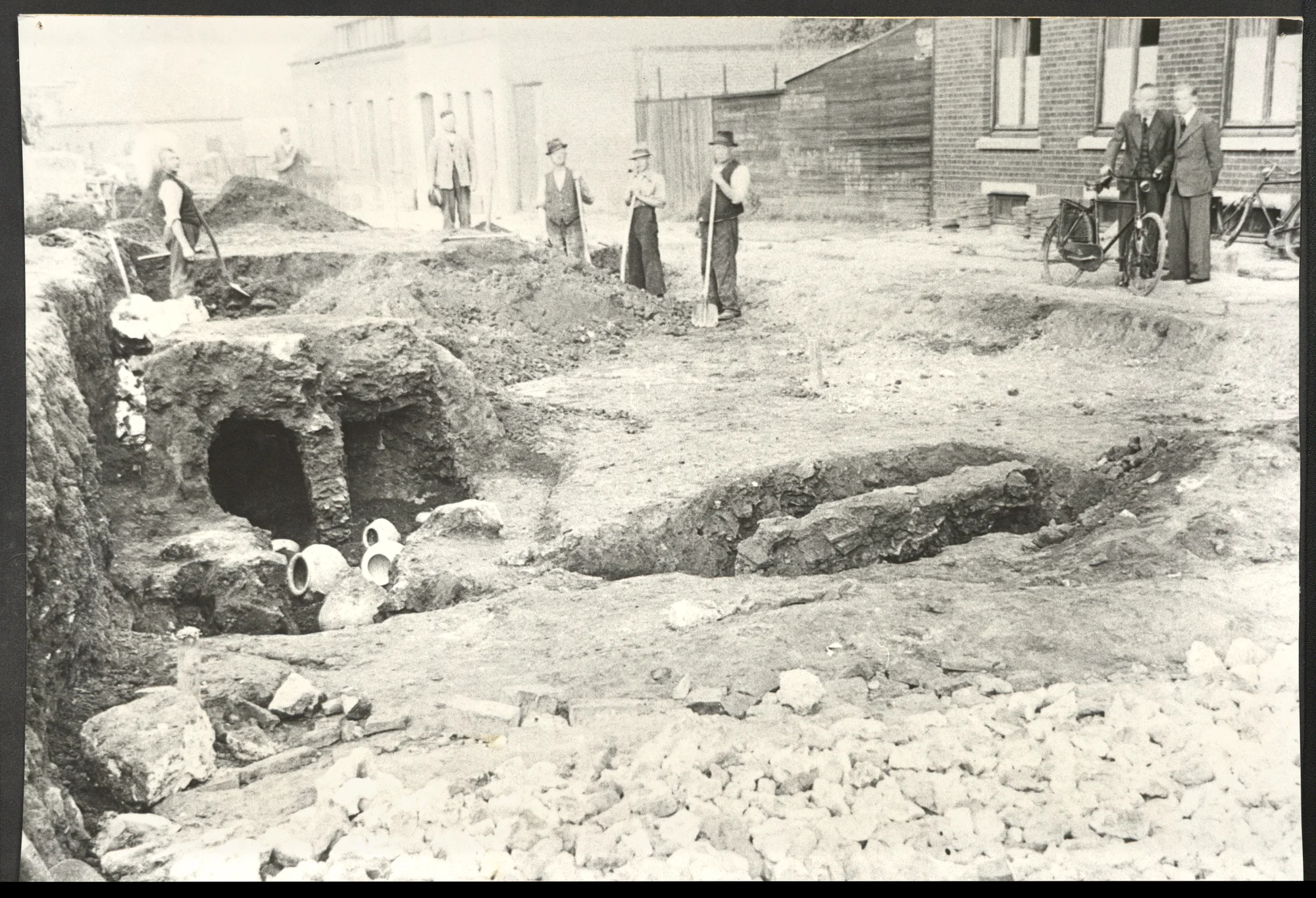
Excavation of two pottery kilns in Heerlen, the Netherlands, in 1940.Het Romeins Museum

The board survived but the rules did not. Now researchers believe they have them using artificial intelligence.

By simulating thousands of possible turn sequences on the carved network found at the site, archaeologists identified a ruleset that best matches the wear patterns on the stone: a two-player blocking game they’ve named Ludus Coriovalli, the Game of Coriovallum.
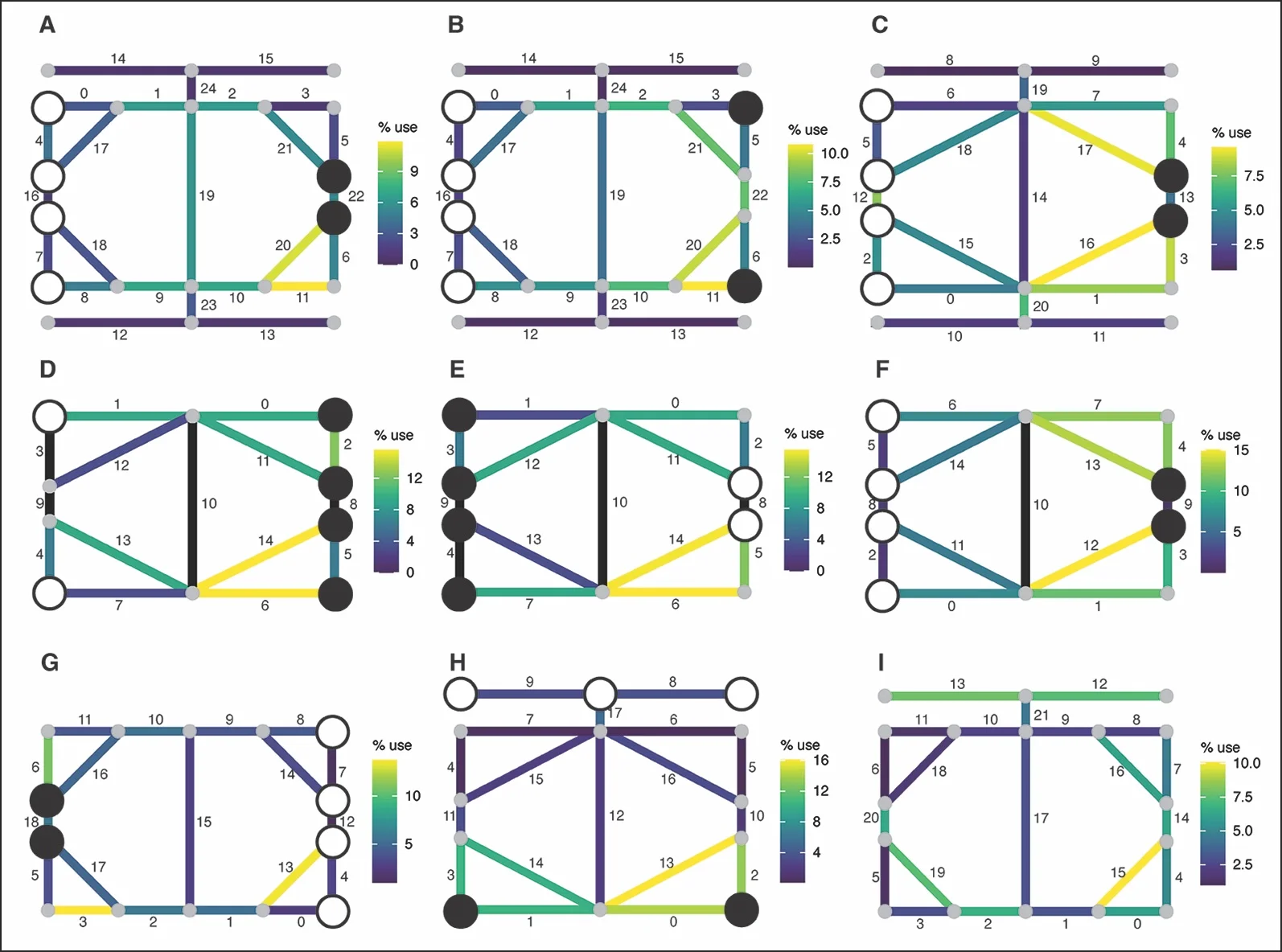
Results of the AI simulation showing nine possible game boards. In these games, the player with more pieces attempts to block the player with fewer pieces.Crist et al./Antiquity
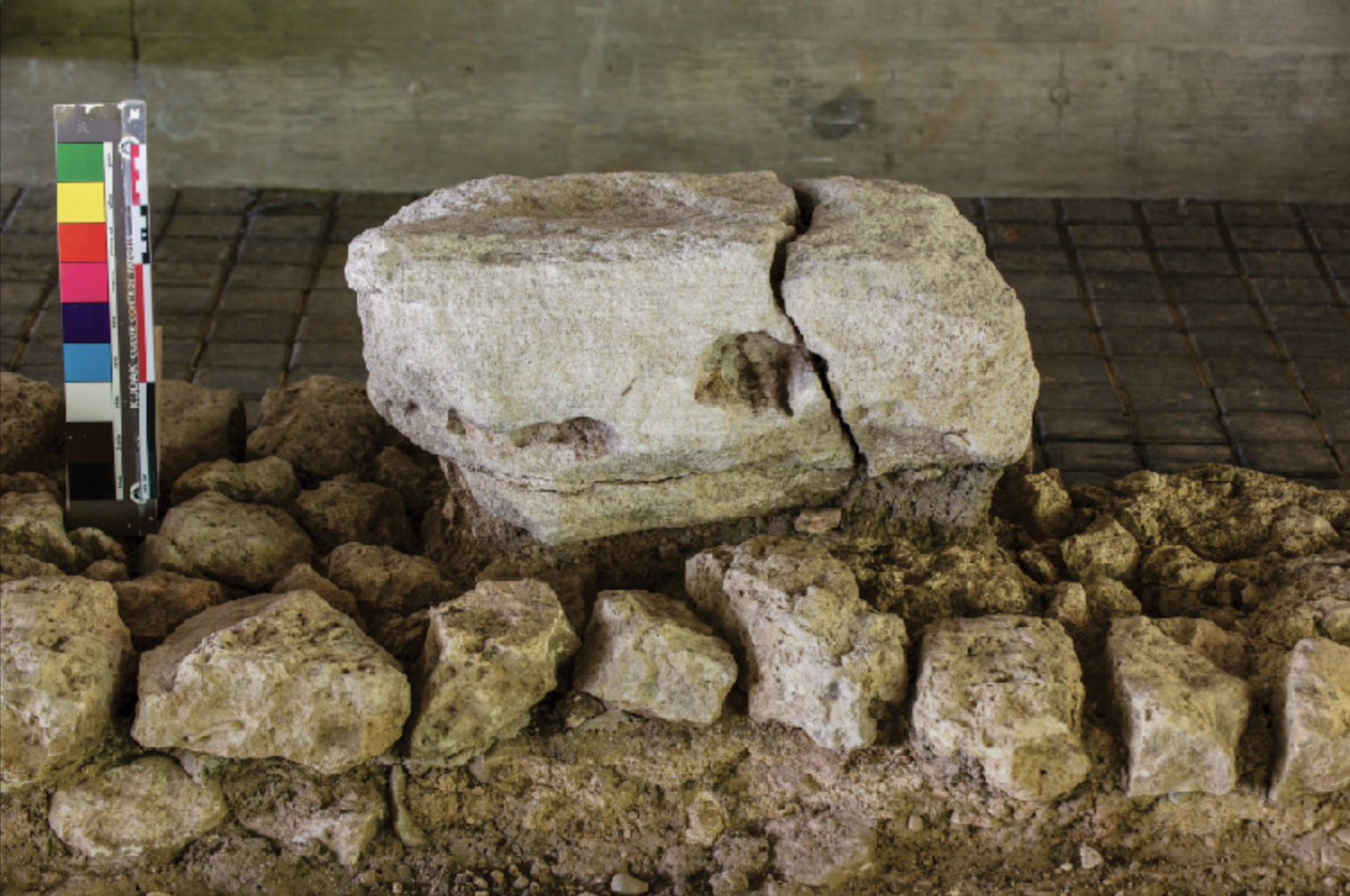
Kunrader limestone blocks forming the foundation of the porticus of the Roman baths of Coriovallum. The rough-hewn blocks are from a local quarry. A Norroy limestone pillar base rests atop them (photograph courtesy of Het Romeins Museum).

It belongs to the Roman family of line-movement strategy games that includes ludus latrunculorum, but with its own geometry and tempo.

Here, the results of use-wear analysis are used to inform artificial intelligence-driven simulations based on permutations of rules from historic Northern European games. Disproportionate wear along specific lines favours the rules of blocking games, potentially extending the time depth and regional use of this game type.

For Green Prophet readers, this is familiar territory.

We’ve previously explored ancient games reborn from archaeology, from Mehen boards etched into ship planks to Egyptian Senet sets reconstructed from tomb art. These games are more than pastime, they’re ancient culture, revealing how people thought about territory, risk, and control.


Results of the AI simulation showing nine possible game boards. In these games, the player with more pieces attempts to block the player with fewer pieces.Crist et al./Antiquity
Researchers studied a possible game board, shown here with pencil marks highlighting the incised lines. Walter Crist

Ludus Coriovalli adds a Roman frontier voice to that conversation.

What are the proposed rules of the game?

Two players use unequal numbers of pieces on a network of intersecting lines, with the larger force attempting to surround and immobilize the smaller force. Players take turns moving one piece at a time along the engraved lines to an adjacent intersection point. A piece (or group) is captured or neutralized when it is completely blocked so it cannot move along any connecting line. The larger side wins by trapping all opposing pieces, while the smaller side wins by evading capture or escaping the blockade.


Karin Kloosterman
Karin Kloostermanhttp://www.greenprophet.com
Karin Kloosterman is an award-winning journalist, innovation strategist, and founder of Green Prophet, one of the Middle East’s pioneering sustainability platforms. She has ranked in the Top 10 of Verizon innovation competitions, participated in NASA-linked challenges, and spoken worldwide on climate, food security, and future resilience. With an IoT technology patent, features in Canada’s National Post, and leadership inside teams building next-generation agricultural and planetary systems — including Mars-farming concepts — Karin operates at the intersection of storytelling, science, and systems change. She doesn’t report on the future – she helps design it. Reach out directly to [email protected]

Read More

TRENDING

Can a one trillion-Dollar SpaceX IPO change life on earth?

A SpaceX IPO could become one of the most consequential financial events of the century, creating thousands of millionaires and fueling investment across the New Space economy. From orbital robotics and African space programs to launch infrastructure and satellite networks, the ripple effects may extend far beyond Earth—while forcing investors to reconsider whether generative AI remains the most compelling technology bet of the decade.

Anthropic, Google and Stripe put nearly $1 Billion on carbon removal

A coalition led by Frontier, backed by Stripe, Google, Salesforce and newly joined AI company Anthropic, has committed an additional $915 million to remove carbon dioxide from the atmosphere. The pledge adds to a previous $1 billion commitment and brings Frontier's total buying power to nearly $2 billion.

From Pasture to ROI: Implementing Autonomous Systems in Livestock and Pasture Management

The livestock and pasture management sector is currently facing...

Astro uses AI to help procure land for renewable energy

For oil-rich, environmentally vigilant Gulf states, Astro isn’t just another startup story. It is a blueprint for accelerating an energy transition that is now existential, not optional.

Take me home, Roman roads

Two thousand years ago, all roads led to Rome....

Yerukim Forms a New Green Economy Where the Money is Really Green

The Yerukim members who pick up the recyclables get to keep the monetary reward, the public earns "green" bills that can be used in shops, and business owners get to be associated with environmentalism.

Choosing Riyadh over Dubai? What Investors Should Know

Saudi Arabia is deploying capital at unmatched scale to catalyze tourism and advanced industry while rewiring its power-and-water backbone. The investable frontier is widening—especially in renewables, grid storage, water efficiency/desal retrofits, and hospitality operating platforms. Prudent investors will insist on phased delivery, enforceable KPIs (energy, water, biodiversity), and RHQ/zone compliance—while pricing political-economy and reputational risks alongside growth upside.

Sell your cooking oil for biodiesel money

Want to make money on old french fry oil? Sell it.

Qatar Alternative Energy Summit Pairs Investors And Innovators

Alternative energy investors and innovators can meet n' greet in Doha, Qatar March 16 and 17.

Here’s How To Implement The Four Pillars Of Employee Engagement

If you throw a party for your work team and they are vegans, don't make it a barbecue. Know the sustainability values of your team to boost moral and retain good people.

Locals From Rishon Fight IKEA

Big Box stores are a pretty new concept in Israel, and thank God that not every Israeli city wants them in their backyard. A word from someone who has see the beautiful farmland around her hometown Newmarket, Ontario stripped and converted into vulgar strip malls of big box shops: they have no place in a healthy and sustainable town or city.

The Jewish National Fund Meets An Inconvenient Truth

According to the JNF, it has transformed thousands of acres of barren land into green forests in Israel. They state that each person emits about 23 tons of carbon per year, estimating that each tree planted can absorb one ton of carbon in its lifetime. That's a whole lot of trees you'd need to be planting. Could so many fit in Israel?

How to quiet noise from construction in your office

Streets need to be resurfaced in New York but the humming and grinding noise is unsettling. Noise is environmental pollution. 

Popular Categories