Hybrid Solar + Storage: How AI and Smart Modeling Tools Are Helping Solar Installers Scale

A Tesla Powerwall can stabilize the grid and keep your home running during a blackout

Residential solar has entered a new phase. It is no longer just about installing panels and exporting excess electricity to the grid. Today, homeowners want energy security amid shifting legislation, predictable savings that justify the hassle and investment, and systems that keep working during outages, heatwaves, and peak pricing hours.

For solar energy providers, this shift opens a powerful opportunity to reach a wider range of customers — from people fully connected to the grid to those seeking partial or full independence. Hybrid solar systems paired with batteries are now becoming the norm, designed and explained using advanced solar modeling, energy-yield calculators, and AI-assisted proposal software.

Solar didn’t become data-driven overnight

Farming under solar panels
Solar panels in farmer fields

Solar did not become intelligent overnight. More than 15 years ago, companies were already pioneering ways to analyze, track, and optimize the sun at scale. Early consumer tools and apps helped homeowners use Google Earth to find the best angle for panels on their roof, replacing guesswork with simple data.

At the industrial level, companies like Brightsource used advanced solar field modeling, heliostat tracking, and real-time sun analysis to concentrate sunlight with extreme precision. That technology later powered large projects such as Ivanpah in California and helped prove that solar performance could be engineered rather than assumed.

Around the same time, Israel’s solar ecosystem produced practical innovations that reduced risk and improved reliability. Solaredge developed inverter technology that maximized usable energy from each panel and improved integration with batteries. Ecoppia introduced robotic systems that kept panels clean in dusty environments, protecting output in harsh conditions.

ecoppia like a roomba for solar panels
A solar powered Roomba that cleans solar panels. They were tested for thousands of hours and are still tested to see how small tweaks make more energy optimized solar panels.

Even so, bringing solar into homes and businesses in every state in the US or in provinces in Canada was still a leap of faith. Finding a good installer often felt like searching for the right plastic surgeon — high stakes, uneven quality, and limited transparency. You choose once, and that’s your solution. That early wave of innovation laid the foundation for today’s residential solar software ecosystem: systems that no longer guess how solar performs, but model it.

Why grid-tied solar with batteries changes the equation

A grid-tied solar system reduces electricity bills. A grid-tied system combined with battery storage goes further.

  • Stores excess solar energy instead of exporting it all to the grid
  • Delivers backup power during blackouts
  • Reduces exposure to time-of-use and sells it back during peak pricing
  • Improves long-term energy independence

Solar batteries only sell well when their value is clearly explained. This is where solar design software, energy-yield calculators, and proposal platforms become essential tools for installers.

Modern solar providers increasingly rely on professional modeling platforms to compare system configurations that use AI to show homeowners real-world outcomes. Instead of abstract promises, installers can demonstrate exactly how a system behaves over time — during normal days, extreme heat, and grid outages.

For solar energy providers, the benefits are both operational and financial.

  • Faster proposal creation and approvals
  • Higher close rates for solar plus battery systems
  • Fewer post-install disputes and misunderstandings
  • Clear justification for premium, resilience-focused projects

Leading solar modeling tools include Aurora Solar, Helioscope, and PVsyst/PV*SOL for comprehensive design, performance, and financial analysis, alongside free options like OpenSolar for broad accessibility, while specialized tools like PVcase (for utility-scale) and Energy Toolbase (for financial modeling) cater to specific needs, all offering advanced 3D layouts, shading analysis, and energy yield predictions for residential to large-scale projects.

Batteries are becoming central, not optional
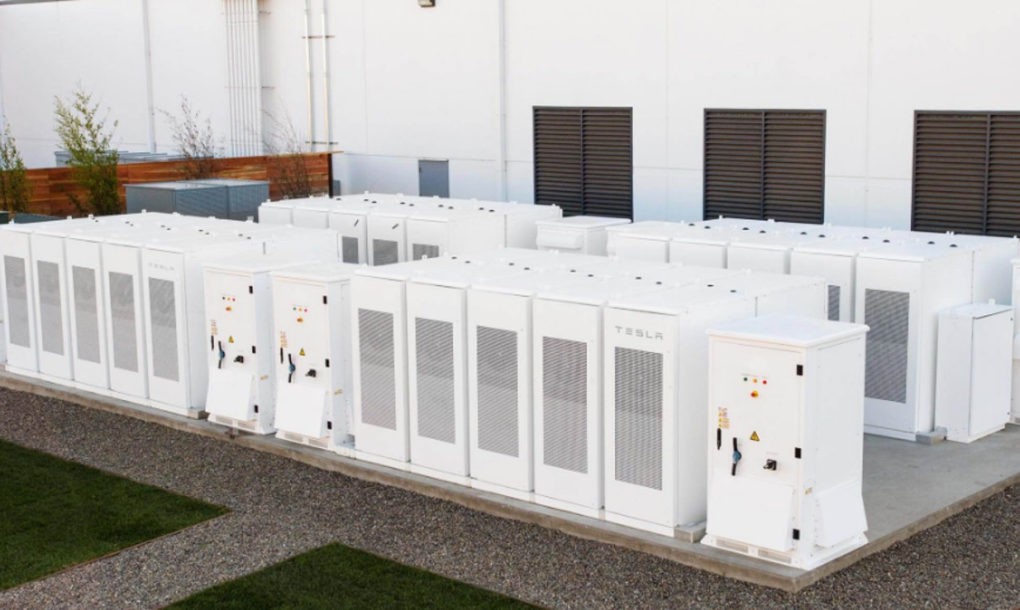
Commercial Powerpack from Tesla

In regions facing heat stress, grid instability, or rising electricity prices — from the US Southwest to parts of the Middle East — batteries are no longer an add-on. They are becoming a core part of the residential solar value proposition. Modeling tools allow installers to clearly compare different paths: grid-only solar, solar paired with a small battery, or solar with full-home backup.

This clarity helps homeowners choose the right system rather than the biggest one. Counterintuitively, that often leads to higher-value installs because customers understand exactly what they are paying for and why. For solar companies, this shift reduces post-install dissatisfaction, misaligned expectations, and price-only competition — while strengthening long-term customer relationships.


Bhok Thompson
Bhok Thompsonhttp://www.greenprophet.com
Bhok Thompson is an “eco-tinkerer” who thrives at the intersection of sustainability, business, and cutting-edge technology. With a background in mechanical engineering and a deep fascination with renewable energy, Bhok has dedicated his career to developing innovative solutions that bridge environmental consciousness with profitability. A frequent contributor to Green Prophet, Bhok writes about futuristic green tech, urban sustainability, and the latest trends in eco-friendly startups. His passion for engineering meets his love for business as he mentors young entrepreneurs looking to create scalable, impact-driven companies. Beyond his work, Bhok is an avid collector of vintage mechanical watches, believing they represent an era of precision and craftsmanship that modern technology often overlooks. Reach out: [email protected]

Read More

TRENDING

Can a one trillion-Dollar SpaceX IPO change life on earth?

A SpaceX IPO could become one of the most consequential financial events of the century, creating thousands of millionaires and fueling investment across the New Space economy. From orbital robotics and African space programs to launch infrastructure and satellite networks, the ripple effects may extend far beyond Earth—while forcing investors to reconsider whether generative AI remains the most compelling technology bet of the decade.

Anthropic, Google and Stripe put nearly $1 Billion on carbon removal

A coalition led by Frontier, backed by Stripe, Google, Salesforce and newly joined AI company Anthropic, has committed an additional $915 million to remove carbon dioxide from the atmosphere. The pledge adds to a previous $1 billion commitment and brings Frontier's total buying power to nearly $2 billion.

Who Owns the Farm Robot? A State of Jefferson Startup Takes on Carbon Robotics

In California's self-proclaimed State of Jefferson, a small agricultural technology company is challenging the dominant laser-weeding business model. Laudando & Associates believes farmers should own and repair their AI-powered weeding tools rather than pay ongoing subscription fees. The approach has put the company on a collision course with industry leader Carbon Robotics, sparking a patent dispute that has pushed the Jefferson startup toward overseas markets while raising broader questions about ownership, right-to-repair, and the future of farm automation.

Weston Higginbotham found dead in a Kyoto forest: is climate anxiety part of the story?

In some ways, Weston has become a symbol of a generation wrestling with environmental and technological anxiety. Friends and family described him as deeply concerned about environmental issues. Reports also noted that he questioned the growing role of artificial intelligence in daily life, even reportedly disagreeing with his mother about her use of AI.

Robot Monk Gabi Takes Vows in Seoul. What Would the Buddha Have Thought?

  How many of us looked twice when we saw...

Yerukim Forms a New Green Economy Where the Money is Really Green

The Yerukim members who pick up the recyclables get to keep the monetary reward, the public earns "green" bills that can be used in shops, and business owners get to be associated with environmentalism.

Choosing Riyadh over Dubai? What Investors Should Know

Saudi Arabia is deploying capital at unmatched scale to catalyze tourism and advanced industry while rewiring its power-and-water backbone. The investable frontier is widening—especially in renewables, grid storage, water efficiency/desal retrofits, and hospitality operating platforms. Prudent investors will insist on phased delivery, enforceable KPIs (energy, water, biodiversity), and RHQ/zone compliance—while pricing political-economy and reputational risks alongside growth upside.

Sell your cooking oil for biodiesel money

Want to make money on old french fry oil? Sell it.

Qatar Alternative Energy Summit Pairs Investors And Innovators

Alternative energy investors and innovators can meet n' greet in Doha, Qatar March 16 and 17.

Here’s How To Implement The Four Pillars Of Employee Engagement

If you throw a party for your work team and they are vegans, don't make it a barbecue. Know the sustainability values of your team to boost moral and retain good people.

Locals From Rishon Fight IKEA

Big Box stores are a pretty new concept in Israel, and thank God that not every Israeli city wants them in their backyard. A word from someone who has see the beautiful farmland around her hometown Newmarket, Ontario stripped and converted into vulgar strip malls of big box shops: they have no place in a healthy and sustainable town or city.

The Jewish National Fund Meets An Inconvenient Truth

According to the JNF, it has transformed thousands of acres of barren land into green forests in Israel. They state that each person emits about 23 tons of carbon per year, estimating that each tree planted can absorb one ton of carbon in its lifetime. That's a whole lot of trees you'd need to be planting. Could so many fit in Israel?

How to quiet noise from construction in your office

Streets need to be resurfaced in New York but the humming and grinding noise is unsettling. Noise is environmental pollution. 

Popular Categories