Truck maintenance is more than an operating expense. From tire pressure and engine efficiency to idling and unexpected breakdowns, discover how smarter fleet maintenance can reduce fuel consumption, lower carbon emissions and improve sustainability reporting.
Good gardens start with good seeds. Learn how to choose reliable seed companies, avoid poor-quality seeds, understand heirloom and hybrid varieties, and store seeds for better germination.
Seven years after creating her first perfume in a small Sicilian shop, my daughter had just three drops left. A family-owned perfumer in Palermo helped us recover the scent of her childhood.
Ukrainian design studio Pilsok, known for its popular Beetle backpack, transforms discarded car airbags into a striking designer jacket honouring Ukraine's emergency rescuers.
From the forests of Ontario to sea turtle conservation in Lebanon and water cooperation across the Middle East, Green Prophet founder Karin Kloosterman argues that CleanTech, EnviroTech and AgTech are already building the foundations of PeaceTech.
Truck maintenance is more than an operating expense. From tire pressure and engine efficiency to idling and unexpected breakdowns, discover how smarter fleet maintenance can reduce fuel consumption, lower carbon emissions and improve sustainability reporting.
Good gardens start with good seeds. Learn how to choose reliable seed companies, avoid poor-quality seeds, understand heirloom and hybrid varieties, and store seeds for better germination.
Seven years after creating her first perfume in a small Sicilian shop, my daughter had just three drops left. A family-owned perfumer in Palermo helped us recover the scent of her childhood.
Ukrainian design studio Pilsok, known for its popular Beetle backpack, transforms discarded car airbags into a striking designer jacket honouring Ukraine's emergency rescuers.
From the forests of Ontario to sea turtle conservation in Lebanon and water cooperation across the Middle East, Green Prophet founder Karin Kloosterman argues that CleanTech, EnviroTech and AgTech are already building the foundations of PeaceTech.
Truck maintenance is more than an operating expense. From tire pressure and engine efficiency to idling and unexpected breakdowns, discover how smarter fleet maintenance can reduce fuel consumption, lower carbon emissions and improve sustainability reporting.
Good gardens start with good seeds. Learn how to choose reliable seed companies, avoid poor-quality seeds, understand heirloom and hybrid varieties, and store seeds for better germination.
Seven years after creating her first perfume in a small Sicilian shop, my daughter had just three drops left. A family-owned perfumer in Palermo helped us recover the scent of her childhood.
Ukrainian design studio Pilsok, known for its popular Beetle backpack, transforms discarded car airbags into a striking designer jacket honouring Ukraine's emergency rescuers.
From the forests of Ontario to sea turtle conservation in Lebanon and water cooperation across the Middle East, Green Prophet founder Karin Kloosterman argues that CleanTech, EnviroTech and AgTech are already building the foundations of PeaceTech.
Truck maintenance is more than an operating expense. From tire pressure and engine efficiency to idling and unexpected breakdowns, discover how smarter fleet maintenance can reduce fuel consumption, lower carbon emissions and improve sustainability reporting.
Good gardens start with good seeds. Learn how to choose reliable seed companies, avoid poor-quality seeds, understand heirloom and hybrid varieties, and store seeds for better germination.
Seven years after creating her first perfume in a small Sicilian shop, my daughter had just three drops left. A family-owned perfumer in Palermo helped us recover the scent of her childhood.
Ukrainian design studio Pilsok, known for its popular Beetle backpack, transforms discarded car airbags into a striking designer jacket honouring Ukraine's emergency rescuers.
From the forests of Ontario to sea turtle conservation in Lebanon and water cooperation across the Middle East, Green Prophet founder Karin Kloosterman argues that CleanTech, EnviroTech and AgTech are already building the foundations of PeaceTech.
Truck maintenance is more than an operating expense. From tire pressure and engine efficiency to idling and unexpected breakdowns, discover how smarter fleet maintenance can reduce fuel consumption, lower carbon emissions and improve sustainability reporting.
Good gardens start with good seeds. Learn how to choose reliable seed companies, avoid poor-quality seeds, understand heirloom and hybrid varieties, and store seeds for better germination.
Seven years after creating her first perfume in a small Sicilian shop, my daughter had just three drops left. A family-owned perfumer in Palermo helped us recover the scent of her childhood.
Ukrainian design studio Pilsok, known for its popular Beetle backpack, transforms discarded car airbags into a striking designer jacket honouring Ukraine's emergency rescuers.
From the forests of Ontario to sea turtle conservation in Lebanon and water cooperation across the Middle East, Green Prophet founder Karin Kloosterman argues that CleanTech, EnviroTech and AgTech are already building the foundations of PeaceTech.
Truck maintenance is more than an operating expense. From tire pressure and engine efficiency to idling and unexpected breakdowns, discover how smarter fleet maintenance can reduce fuel consumption, lower carbon emissions and improve sustainability reporting.
Good gardens start with good seeds. Learn how to choose reliable seed companies, avoid poor-quality seeds, understand heirloom and hybrid varieties, and store seeds for better germination.
Seven years after creating her first perfume in a small Sicilian shop, my daughter had just three drops left. A family-owned perfumer in Palermo helped us recover the scent of her childhood.
Ukrainian design studio Pilsok, known for its popular Beetle backpack, transforms discarded car airbags into a striking designer jacket honouring Ukraine's emergency rescuers.
From the forests of Ontario to sea turtle conservation in Lebanon and water cooperation across the Middle East, Green Prophet founder Karin Kloosterman argues that CleanTech, EnviroTech and AgTech are already building the foundations of PeaceTech.
Truck maintenance is more than an operating expense. From tire pressure and engine efficiency to idling and unexpected breakdowns, discover how smarter fleet maintenance can reduce fuel consumption, lower carbon emissions and improve sustainability reporting.
Good gardens start with good seeds. Learn how to choose reliable seed companies, avoid poor-quality seeds, understand heirloom and hybrid varieties, and store seeds for better germination.
Seven years after creating her first perfume in a small Sicilian shop, my daughter had just three drops left. A family-owned perfumer in Palermo helped us recover the scent of her childhood.
Ukrainian design studio Pilsok, known for its popular Beetle backpack, transforms discarded car airbags into a striking designer jacket honouring Ukraine's emergency rescuers.
From the forests of Ontario to sea turtle conservation in Lebanon and water cooperation across the Middle East, Green Prophet founder Karin Kloosterman argues that CleanTech, EnviroTech and AgTech are already building the foundations of PeaceTech.
Truck maintenance is more than an operating expense. From tire pressure and engine efficiency to idling and unexpected breakdowns, discover how smarter fleet maintenance can reduce fuel consumption, lower carbon emissions and improve sustainability reporting.
Good gardens start with good seeds. Learn how to choose reliable seed companies, avoid poor-quality seeds, understand heirloom and hybrid varieties, and store seeds for better germination.
Seven years after creating her first perfume in a small Sicilian shop, my daughter had just three drops left. A family-owned perfumer in Palermo helped us recover the scent of her childhood.
Ukrainian design studio Pilsok, known for its popular Beetle backpack, transforms discarded car airbags into a striking designer jacket honouring Ukraine's emergency rescuers.
From the forests of Ontario to sea turtle conservation in Lebanon and water cooperation across the Middle East, Green Prophet founder Karin Kloosterman argues that CleanTech, EnviroTech and AgTech are already building the foundations of PeaceTech.
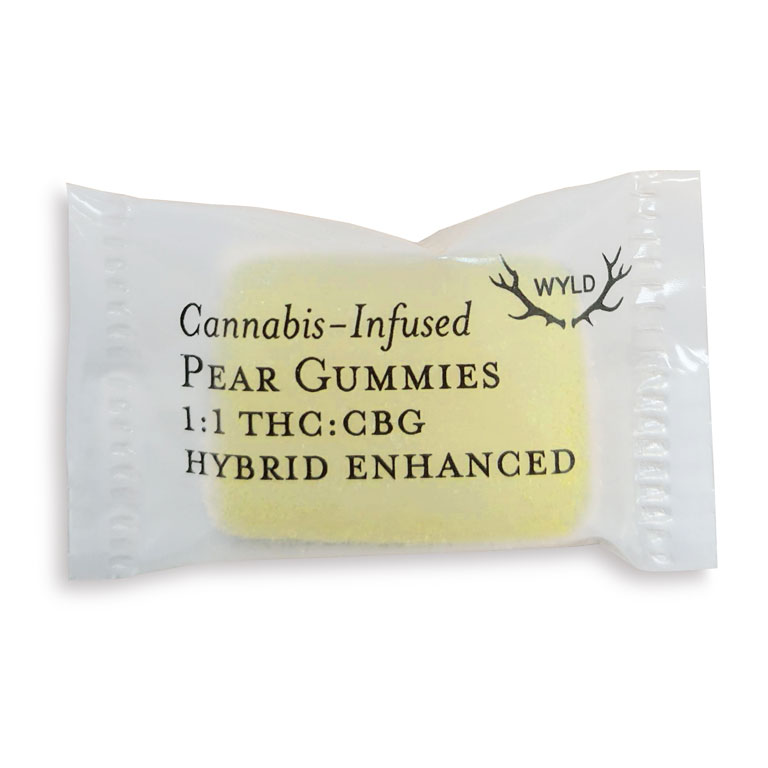
TIPA and Wyld are teaming up to package cannabis edibles in home-compostable laminate and take steps to keep hard-to-recyclable, single-use flexible plastics out of the environment.
TIPA and Wyld are teaming up to package legal edibles in home-compostable laminate and take steps to keep hard-to-recyclable, single-use flexible plastics out of the environment.
Israel’s Tipa, a sustainable plastics company that creates plastics from plants, has started working with Wyld, a cannabis edibles company based in the US. Wyld is adopting TIPA’s 608 home-compostable laminate for its edibles packaging, as well as pouches and outer parcels. The laminate was recently brought to North America for local production and is set to package Wyld’s products across the US and Canada this year.
Tipa’s plastic is TÜV OK Home Compost certified which means it can be placed in home composters at end-of-life to break down into nutrient-rich soil and leave no waste behind. The laminate produced by TIpa is also said to run on most conventional plastic packaging machinery.
Edibles are cannabis products for recreation and medicine that come in all shapes and sizes, usually as gummies or candies, and can be infused with medical grade marijuana supplements such as THC and also CBD which gives pain-relief and perhaps a sense of calm, without the high. Budder, Lumi, and Kiva are other brands operating in this space.
Wyld, based in the Pacific Northwest was founded in 2016 and is now a leading edible brand in the US, and is now found in Canada too where cannabis is legal recreationally. Wyld’s Good Tide line, an innovative line of tropical-flavored hash rosin gummies was introduced in 2022.
What sets one edibles company apart from the next in a very competitive industry where Google does not allow the companies to promote products with THC in them online, is to set oneself apart in branding and marketing. Smart move Wyld.
“This marks a significant milestone in both companies’ commitment to environmental responsibility and underscores our dedication to meeting the evolving demands of sustainability-conscious consumers,” says Rodrigo Castaneda, TIPA’s VP and GM North America. “This collaboration is poised to make a positive impact not only on the edibles industry but also on the larger movement to move away from traditional single-use flexible plastics for the benefit of our planet.”
Wyld decided to do better with its packaging solution: We know that most of all the plastics produced in the United States are never recycled and those that are contribute to a serious amount of pollution and toxins to the environment and the people working in these facilities. Plastics remain as forever chemicals and then become part of our drinking water as PFAS. The only solution to plastics seems to be ones that are biodegradable in the real sense of the world. Not just break up into little bits of plastic when they go to a composter.
I was one of the first people to write about Tipa when they just started (we later covered them here) as an idea and how they have grown.
The edibles market in the United States
The new adult-use markets have put the legal edibles industry on track to more than quadruple by 2032 at an estimated $37.1billion value. As the market booms, so does demand for sophisticated sustainable packaging that meets both rigorous safety and compliance standards as well as high brand standards. Demand for alternative packaging is largely driven by consumers and businesses seeking to reduce reliance on single-use flexible plastics in the face America’s more than 40 million tons of plastic waste a year, with less than 5% of which is recycled.
Wyld’s journey, marked by a relentless commitment to sustainability, is a narrative of constant evolution and dedication. “Having been part of an industry known for its excessive single-use packaging that cannot be easily recycled, we searched for compostable materials that met our brand standards and provided product stability. That’s when we found TIPA”, says Kale Gray, Sr. Brand Manager at Wyld.
“By partnering with TIPA, Wyld has redefined packaging norms in the cannabis sector”, says Gray. “Our move to compostable packaging, as a Climate Neutral Certified brand, highlights our eco-friendly practices like using renewable energy and implementing waste diversion in our facilities.”
“The response to the new compostable packaging from customers and retail partners has been overwhelmingly positive, embracing Wyld’s transition to sustainable packaging”, adds Gray. “By using compostable packaging for our products, we have set a new industry standard.“
Wyld’s story with TIPA’s compostable packaging is more than a business move; it’s a statement of purpose, they say.
The next evolution in this deal, we think, is creating edible packaging from edibles. They probably heard that joke before.
In other news Brandmydispo has implemented smart packaging features into its own very expensive white label cannabis packaging, including QR codes, real-time freshness indicators, and state-of-the-art near-field communication (NFC) technology. A good solution if you can buy in bulk.
Karin Kloosterman is an award-winning journalist, innovation strategist, and founder of Green Prophet, one of the Middle East’s pioneering sustainability platforms. She has ranked in the Top 10 of Verizon innovation competitions, participated in NASA-linked challenges, and spoken worldwide on climate, food security, and future resilience.
With an IoT technology patent, features in Canada’s National Post, and leadership inside teams building next-generation agricultural and planetary systems — including Mars-farming concepts — Karin operates at the intersection of storytelling, science, and systems change.
She doesn’t report on the future – she helps design it.
Reach out directly to [email protected]
A new study published in Science finds that psilocybin may prevent chemotherapy-induced peripheral neuropathy by protecting sensory nerves and keeping their mitochondrial energy supply functioning.
Breaking into the sports industry with a product that’s both high-performance and fully circular is a proud moment for us at Balena. This frisbee, made from our bacteria-fermented bioplastic, is proof that sustainable materials can go beyond concepts and prototypes, they can play, perform, and inspire” — David Roubach, Founder & CEO, Balena
Adults who are 21 or older can carry up to 30 grams. This amount applies to personal use within Pittsburgh’s limits. Carrying more could lead to confiscation or legal action. Staying under the limit avoids problems during any public stop.
Based on the results from the driving simulation, participants with elevated baseline concentrations of THC did no worse on a driving simulator compared with participants who were below per se cut-off points. Altogether, the results add to a growing body of evidence showing that current per se THC blood limit laws lack scientific credibility as face-value evidence of impairment.
Scientists have developed a “raincoat” for lead-free tin perovskite solar cells, helping them withstand air, moisture and heat while maintaining high efficiency.
Sustainability is an approach where businesses and individuals balance the environmental, social, and economic aspects of a project such that current and future stakeholders are not overburdened with the impacts of the project in future.
The Yerukim members who pick up the recyclables get to keep the monetary reward, the public earns "green" bills that can be used in shops, and business owners get to be associated with environmentalism.
Saudi Arabia is deploying capital at unmatched scale to catalyze tourism and advanced industry while rewiring its power-and-water backbone. The investable frontier is widening—especially in renewables, grid storage, water efficiency/desal retrofits, and hospitality operating platforms. Prudent investors will insist on phased delivery, enforceable KPIs (energy, water, biodiversity), and RHQ/zone compliance—while pricing political-economy and reputational risks alongside growth upside.
If you throw a party for your work team and they are vegans, don't make it a barbecue. Know the sustainability values of your team to boost moral and retain good people.
Big Box stores are a pretty new concept in Israel, and thank God that not every Israeli city wants them in their backyard. A word from someone who has see the beautiful farmland around her hometown Newmarket, Ontario stripped and converted into vulgar strip malls of big box shops: they have no place in a healthy and sustainable town or city.