Not all green web hosting is created equal. Some companies buy renewable energy certificates, others use cleaner data centers, and some extend the life of existing servers. We compare six web hosts, including GreenGeeks, SiteGround and Hostinger, to see how their environmental claims stack up against performance, speed and transparency.
Danit Peleg is reinventing 3D-printed fashion with algae-based biomaterials, AI-powered design and made-to-order manufacturing. Can circular fashion become commercially viable?
Oil spills grab headlines for black beaches and struggling wildlife. Fewer stories follow the people who scrub those shores. Workers and volunteers often spend days breathing fumes and touching tar. Their health matters as much as the coastline.
The 2026 Walk of Water Photostory Contest is offering $9,000 in prizes for photographers documenting the hidden side of water, from wastewater and pollution to sanitation workers, public health and clean-water solutions.
Twenty-six students planted 45 mangrove saplings at Al Zorah Beach in Ajman, joining a much larger Gulf-wide push to restore mangrove forests and protect vulnerable coastlines.
Not all green web hosting is created equal. Some companies buy renewable energy certificates, others use cleaner data centers, and some extend the life of existing servers. We compare six web hosts, including GreenGeeks, SiteGround and Hostinger, to see how their environmental claims stack up against performance, speed and transparency.
Danit Peleg is reinventing 3D-printed fashion with algae-based biomaterials, AI-powered design and made-to-order manufacturing. Can circular fashion become commercially viable?
Oil spills grab headlines for black beaches and struggling wildlife. Fewer stories follow the people who scrub those shores. Workers and volunteers often spend days breathing fumes and touching tar. Their health matters as much as the coastline.
The 2026 Walk of Water Photostory Contest is offering $9,000 in prizes for photographers documenting the hidden side of water, from wastewater and pollution to sanitation workers, public health and clean-water solutions.
Twenty-six students planted 45 mangrove saplings at Al Zorah Beach in Ajman, joining a much larger Gulf-wide push to restore mangrove forests and protect vulnerable coastlines.
Not all green web hosting is created equal. Some companies buy renewable energy certificates, others use cleaner data centers, and some extend the life of existing servers. We compare six web hosts, including GreenGeeks, SiteGround and Hostinger, to see how their environmental claims stack up against performance, speed and transparency.
Danit Peleg is reinventing 3D-printed fashion with algae-based biomaterials, AI-powered design and made-to-order manufacturing. Can circular fashion become commercially viable?
Oil spills grab headlines for black beaches and struggling wildlife. Fewer stories follow the people who scrub those shores. Workers and volunteers often spend days breathing fumes and touching tar. Their health matters as much as the coastline.
The 2026 Walk of Water Photostory Contest is offering $9,000 in prizes for photographers documenting the hidden side of water, from wastewater and pollution to sanitation workers, public health and clean-water solutions.
Twenty-six students planted 45 mangrove saplings at Al Zorah Beach in Ajman, joining a much larger Gulf-wide push to restore mangrove forests and protect vulnerable coastlines.
Not all green web hosting is created equal. Some companies buy renewable energy certificates, others use cleaner data centers, and some extend the life of existing servers. We compare six web hosts, including GreenGeeks, SiteGround and Hostinger, to see how their environmental claims stack up against performance, speed and transparency.
Danit Peleg is reinventing 3D-printed fashion with algae-based biomaterials, AI-powered design and made-to-order manufacturing. Can circular fashion become commercially viable?
Oil spills grab headlines for black beaches and struggling wildlife. Fewer stories follow the people who scrub those shores. Workers and volunteers often spend days breathing fumes and touching tar. Their health matters as much as the coastline.
The 2026 Walk of Water Photostory Contest is offering $9,000 in prizes for photographers documenting the hidden side of water, from wastewater and pollution to sanitation workers, public health and clean-water solutions.
Twenty-six students planted 45 mangrove saplings at Al Zorah Beach in Ajman, joining a much larger Gulf-wide push to restore mangrove forests and protect vulnerable coastlines.
Not all green web hosting is created equal. Some companies buy renewable energy certificates, others use cleaner data centers, and some extend the life of existing servers. We compare six web hosts, including GreenGeeks, SiteGround and Hostinger, to see how their environmental claims stack up against performance, speed and transparency.
Danit Peleg is reinventing 3D-printed fashion with algae-based biomaterials, AI-powered design and made-to-order manufacturing. Can circular fashion become commercially viable?
Oil spills grab headlines for black beaches and struggling wildlife. Fewer stories follow the people who scrub those shores. Workers and volunteers often spend days breathing fumes and touching tar. Their health matters as much as the coastline.
The 2026 Walk of Water Photostory Contest is offering $9,000 in prizes for photographers documenting the hidden side of water, from wastewater and pollution to sanitation workers, public health and clean-water solutions.
Twenty-six students planted 45 mangrove saplings at Al Zorah Beach in Ajman, joining a much larger Gulf-wide push to restore mangrove forests and protect vulnerable coastlines.
Not all green web hosting is created equal. Some companies buy renewable energy certificates, others use cleaner data centers, and some extend the life of existing servers. We compare six web hosts, including GreenGeeks, SiteGround and Hostinger, to see how their environmental claims stack up against performance, speed and transparency.
Danit Peleg is reinventing 3D-printed fashion with algae-based biomaterials, AI-powered design and made-to-order manufacturing. Can circular fashion become commercially viable?
Oil spills grab headlines for black beaches and struggling wildlife. Fewer stories follow the people who scrub those shores. Workers and volunteers often spend days breathing fumes and touching tar. Their health matters as much as the coastline.
The 2026 Walk of Water Photostory Contest is offering $9,000 in prizes for photographers documenting the hidden side of water, from wastewater and pollution to sanitation workers, public health and clean-water solutions.
Twenty-six students planted 45 mangrove saplings at Al Zorah Beach in Ajman, joining a much larger Gulf-wide push to restore mangrove forests and protect vulnerable coastlines.
Not all green web hosting is created equal. Some companies buy renewable energy certificates, others use cleaner data centers, and some extend the life of existing servers. We compare six web hosts, including GreenGeeks, SiteGround and Hostinger, to see how their environmental claims stack up against performance, speed and transparency.
Danit Peleg is reinventing 3D-printed fashion with algae-based biomaterials, AI-powered design and made-to-order manufacturing. Can circular fashion become commercially viable?
Oil spills grab headlines for black beaches and struggling wildlife. Fewer stories follow the people who scrub those shores. Workers and volunteers often spend days breathing fumes and touching tar. Their health matters as much as the coastline.
The 2026 Walk of Water Photostory Contest is offering $9,000 in prizes for photographers documenting the hidden side of water, from wastewater and pollution to sanitation workers, public health and clean-water solutions.
Twenty-six students planted 45 mangrove saplings at Al Zorah Beach in Ajman, joining a much larger Gulf-wide push to restore mangrove forests and protect vulnerable coastlines.
Not all green web hosting is created equal. Some companies buy renewable energy certificates, others use cleaner data centers, and some extend the life of existing servers. We compare six web hosts, including GreenGeeks, SiteGround and Hostinger, to see how their environmental claims stack up against performance, speed and transparency.
Danit Peleg is reinventing 3D-printed fashion with algae-based biomaterials, AI-powered design and made-to-order manufacturing. Can circular fashion become commercially viable?
Oil spills grab headlines for black beaches and struggling wildlife. Fewer stories follow the people who scrub those shores. Workers and volunteers often spend days breathing fumes and touching tar. Their health matters as much as the coastline.
The 2026 Walk of Water Photostory Contest is offering $9,000 in prizes for photographers documenting the hidden side of water, from wastewater and pollution to sanitation workers, public health and clean-water solutions.
Twenty-six students planted 45 mangrove saplings at Al Zorah Beach in Ajman, joining a much larger Gulf-wide push to restore mangrove forests and protect vulnerable coastlines.
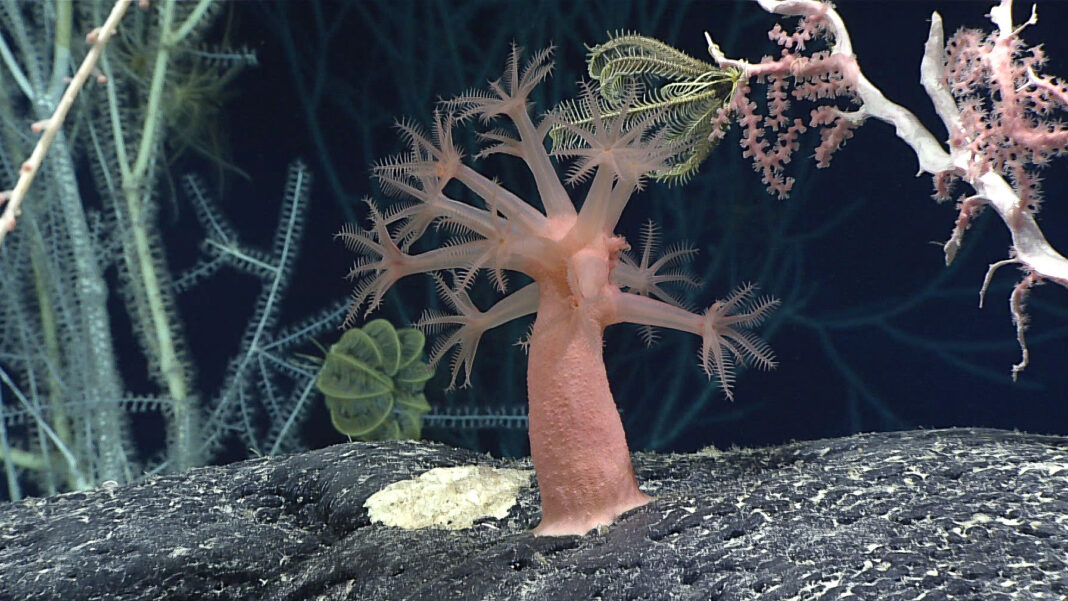
Soft creatures from the deep would be impacted by deep sea mining. Norway will accelerate the hunt for precious metals which are in high demand for green technologies.
Deep sea mining is catastrophic for sea creatures, plants and their surrounding ecosystems. Knowing this Norway has still decided to go ahead with the commercial practice. Swiss-based WWF has decided to sue the Government of Norway through its Norway-based NGO WWF-Norway.
“We believe the government is violating Norwegian law by now opening up for a new and potentially destructive industry without adequately assessing the consequences. It will set a dangerous precedent if we allow the government to ignore its own rules, override all environmental advice, and manage our common natural resources blindly,” says WWF-Norway CEO Karoline Andaur.
The government was given a two-week deadline to respond to the notice of the lawsuit when it was first launched in April, but failed to reply. “We hoped the notice of a lawsuit would prompt the government to reconsider and withdraw its controversial decision. Unfortunately, WWF-Norway sees no other options but to proceed with legal action,” says Andaur.
No legal basis for opening decision
WWF-Norway believes that the strategic impact assessment by the Ministry of Energy, which underpins the government’s decision, fails to meet the minimum requirements of the Subsea Minerals Act 2-2. Consequently, there is no legal basis for the decision to open these areas for mining activity. This concern was also highlighted by the government expert body, the Norwegian Environment Agency, in its public consultation response.
Significant international opposition
Norway is among the first countries to open areas for seabed mining, despite warnings from national and international experts, as well as significant criticism from the EU and global research communities. A Canadian company is also trying to kickstart deep sea mining.
“While other countries opt for a moratorium to gather sufficient knowledge about the deep sea environments to assess the consequences of mining and ensure the effective protection of the marine environment, the Norwegian Offshore Directorate has already invited industry proposals for extraction licenses. This approach is both arrogant and cynical, damaging Norway’s reputation as a responsible ocean steward,” says Andaur.
Green Prophet’s editor, biologist and environmental activist Karin Kloosterman says that “Norway of all people should have reverence for the life-sustaining seas around us. Deep sea mining for the extraction of minerals such as lithium for electric cars and batteries ruins the environment, instead of helping it.”
Norway’s modern manufacturing and welfare system rely on a financial reserve produced by exploitation of natural resources, particularly North Sea oil.
In January 2024, Norway approved commercial deep-sea mining following a study commissioned by the government concluding it would have minimal impact, reported Reuters. “We believe that a thorough process has been carried out with broad involvement, and that the applicable requirements have been followed.
The World Wide Fund for Nature (WWF) is a Swiss-based international non-governmental organization founded in 1961 that works in the field of wilderness preservation and the reduction of human impact on the environment. It is currently based in Gland, in the canton of Vaud.
The founders were a diverse group of passionate environmentalists, including Sir Julian Huxley, Max Nicholson, Peter Scott, and Prince Bernhard of Lippe-Biesterfeld. They aimed to address the growing threats to wildlife and the environment, emphasizing the need for global conservation efforts.
WWF’s establishment in Switzerland is historically significant. Switzerland’s reputation for neutrality and stability provided an ideal base for an international organization.
Kon-Tiki expedition The Kon-Tiki expedition was a 1947 journey by raft across the Pacific Ocean from South America to the Polynesian islands, led by Norwegian explorer and writer Thor Heyerdahl. The raft was named Kon-Tiki after the Inca god Viracocha, for whom “Kon-Tiki” was said to be an old name.
Norway’s connection to WWF is also noteworthy. Norwegian environmentalist Thor Heyerdahl, known for his Kon-Tiki expedition, was among the early supporters of WWF. Norway has been active in WWF’s efforts, particularly in marine conservation and sustainable development, which is ironic given its current move to mine the sea.
Deep below the ocean's surface, in a dimly lit region known as the twilight zone, millions of fish are being caught every year. Scientists say the consequences are largely unknown.
A vast and largely untapped lithium reserve may be hiding beneath one of North America’s oldest landscapes, the Appalachian Mountains, offering a surprising twist in the global race for clean energy materials. According to new findings from the U.S. Geological Survey (USGS), as much as 2.5 million tons of lithium could be buried across the region, stretching from the Carolinas up through New England.
BMW launched a pan-European partnership with SK tes, a company that can mine valuable minerals such as cobalt, nickel and lithium from used batteries before returning them to the value chain to make new batteries.
Scientists have developed a “raincoat” for lead-free tin perovskite solar cells, helping them withstand air, moisture and heat while maintaining high efficiency.
Sustainability is an approach where businesses and individuals balance the environmental, social, and economic aspects of a project such that current and future stakeholders are not overburdened with the impacts of the project in future.
The Yerukim members who pick up the recyclables get to keep the monetary reward, the public earns "green" bills that can be used in shops, and business owners get to be associated with environmentalism.
Saudi Arabia is deploying capital at unmatched scale to catalyze tourism and advanced industry while rewiring its power-and-water backbone. The investable frontier is widening—especially in renewables, grid storage, water efficiency/desal retrofits, and hospitality operating platforms. Prudent investors will insist on phased delivery, enforceable KPIs (energy, water, biodiversity), and RHQ/zone compliance—while pricing political-economy and reputational risks alongside growth upside.
If you throw a party for your work team and they are vegans, don't make it a barbecue. Know the sustainability values of your team to boost moral and retain good people.
Big Box stores are a pretty new concept in Israel, and thank God that not every Israeli city wants them in their backyard. A word from someone who has see the beautiful farmland around her hometown Newmarket, Ontario stripped and converted into vulgar strip malls of big box shops: they have no place in a healthy and sustainable town or city.