Two tons of microplastics on Israel’s Mediterranean Sea coast

microplastics at sea

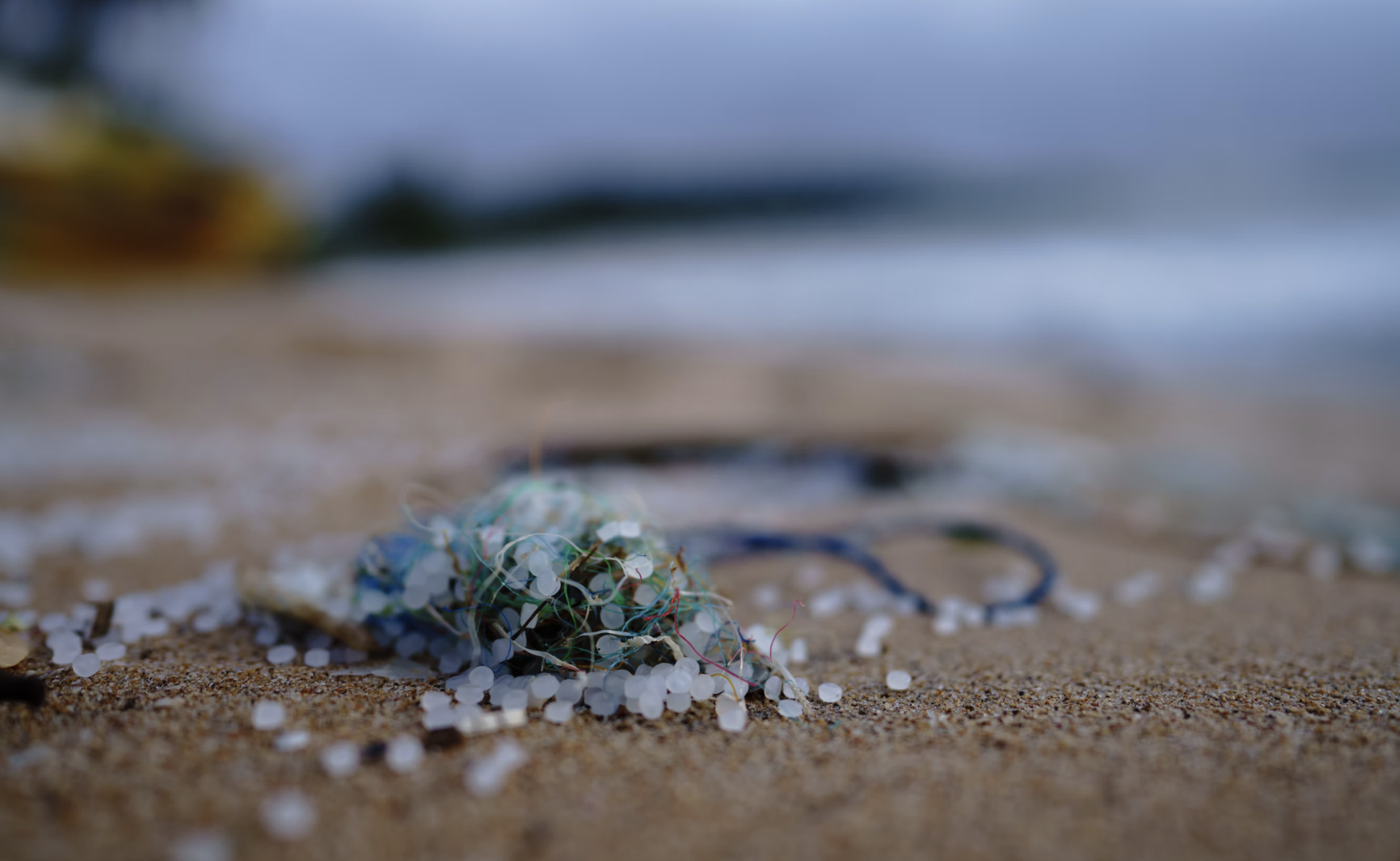
A new study shows that the Israeli part of the Levantine coastline of the Mediterranean Sea is contaminated with over two tons of micro-plastics

Last week the rains started falling in the Eastern Mediterranean, or Western Middle East. One man in Lebanon died because the storm sewers over-flooded from plastic bags and he drowned. The next day storm sewers in Tel Aviv opened to the sea bringing piles of plastic bits and wrappings along the beach. Oily tar and other pollution built up from the summer also joined the party. But just how much plastics is going out to sea from Lebanon, Turkey, Israel, Syria, Gaza, Lebanon or Egypt? Look to this first of its kind study to get an estimate of what’s probably happening in other countries spewing out plastics unchecked.

A new study by Tel Aviv University and the Mediterranean Sea Research Center found that Israel beaches are contaminated by 2 tons of microplastics. The most polluted Israeli beaches are in Tel Aviv and its northerly neighbour Hadera. The study’s findings show that the sources of plastic pollution include food packaging, single-use plastic products, and fishing nets.

The dangers of microplastics

Microplastics pair up with other volatile pollutants, compounding their effects in the human or any animal body. In light of the alarming findings, the researchers warn that given the current situation in Israel, exposure to microplastic waste, which is dangerous to the environment and human health, is inevitable.

The study was led by doctoral student Andrey Ethan Rubin and master’s student Limor Omeysi from the laboratory of Ines Zucker. The study was published in the scientific journal Marine Pollution Bulletin.

microplastics researchers Israel

Pink Himalayan salt
Some people are turning to pink Himalayan salt, mined in the east on mountains, free from microplastics

Rubin explains that over the course of 2021, the researchers collected samples from six areas along the coast: Ashkelon, Rishon LeZion, Tel Aviv, Hadera, Dor Beach and Haifa. The samples were then taken to the laboratory where various analyses were performed, including particle count, mass measurements, image analysis, and chemical analysis to identify the polymer the plastic was made up of, as well as the elements adsorbed onto the microplastic particles.

“It was interesting to see that plastics of terrestrial origin, such as food packaging, were more dominant than plastics of marine origin,  such as fishing nets,” says Rubin. “This indicates a need for better regulation of coastal waste.”
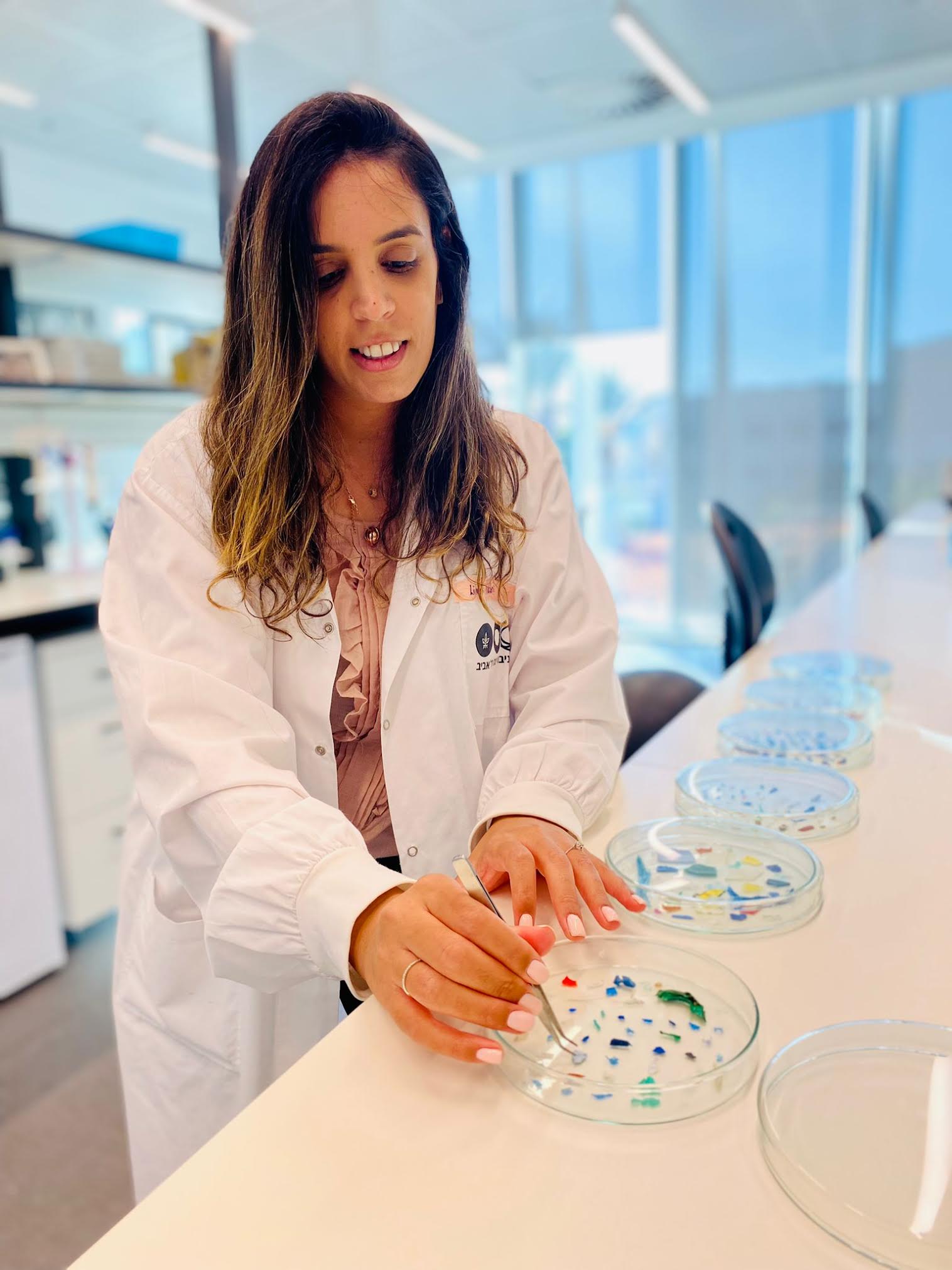
Microplastics, sea in test tubes, counting plastic buts

The research findings show that the beaches of Tel Aviv and Hadera were the most polluted of the beaches tested. The level of contamination on these beaches, which are located near stream estuaries (the Yarkon in Tel Aviv and Nahal Alexander in Hadera) was four times higher than that of Rishon Lezion and Dor Beach, which were the two beaches with the lowest concentration of microplastic particles. Still, even in the Dor Beach nature reserve, which is cleaned frequently, a considerable amount of microplastic particles were found.

Where do the microplastics come from?

Where do microplastics come from? Probably streams, rivers, storm sewers. The researchers’ assessment is that the high level of pollution on the beaches of Tel Aviv and Hadera and the fact that they are in close proximity to streams indicates that the stream’s waters carry microplastic particles with them into the sea, thereby intensifying the level of contamination on the beach.

For example, the researchers say that Nahal Alexander collects leachate from untreated sewage from the West Bank, as well as waste from agricultural and industrial areas located near the riverbeds. Similarly, microplastics accumulate at the Yarkon River from the industrial centers in Tel Aviv.

“Our research reveals that the Israeli coastline likely contains over two tons of microplastic waste,” says Rubin. “Environmental conditions slowly break this plastic down into even smaller particles. The smaller the plastic particles, the harder it is to remove them from the environment, and the more dangerous they are to the environment and to our health. The microplastic particles that drift into the sea are swallowed by fish, and their remains eventually reach humans.”

Zucker adds: “Plastic monitoring research in Israel is still lacking, and we must monitor the smaller plastic particles and additional environmental samples, such as sea water and streams, in order to better understand environmental patterns with regards to the presence of microplastics.

“In a practical perspective, regulatory steps are required in order to reduce Israel’s contribution to microplastic pollution in the Mediterranean.”


Karin Kloosterman
Karin Kloostermanhttp://www.greenprophet.com
Karin Kloosterman is an award-winning journalist, innovation strategist, and founder of Green Prophet, one of the Middle East’s pioneering sustainability platforms. She has ranked in the Top 10 of Verizon innovation competitions, participated in NASA-linked challenges, and spoken worldwide on climate, food security, and future resilience. With an IoT technology patent, features in Canada’s National Post, and leadership inside teams building next-generation agricultural and planetary systems — including Mars-farming concepts — Karin operates at the intersection of storytelling, science, and systems change. She doesn’t report on the future – she helps design it. Reach out directly to [email protected]

Read More

TRENDING

Dan Zaslavsky’s energy tower dream is rising again in Iran and China

The Energy Tower idea never made the leap from drawings and engineering studies to full-scale construction. But nearly two decades after most people stopped talking about it, the concept is quietly evolving in two unexpected places: China and Iran. The concept let dreamers dream and doers do - figuring out more pleasing designs and engineering.

A visit to Amirim, Israel’s first all-vegetarian village in the Galilee

Just 15 kilometers from Tzfat there is a moshav that was founded in the late 50s that was ideologically influenced by organic, vegetarian and vegan principles. My hostess at Ohn-Bar, the tzimmer where I stayed, explained that the people of Amirim were among the pioneers of Israel’s strong vegetarian movement.

Billie Eilish’s Mom Takes the Stage at Hollywood Climate Summit — But Does Hollywood Still Care About Climate Change?

Hollywood once promised to help save the planet. Leonardo DiCaprio warned of climate catastrophe from awards stages. Celebrities flew to climate conferences. Studios pledged greener productions. Streaming platforms rushed to commission environmental documentaries. But in 2026, with the aftermath of wildfires, heatwaves and floods becoming routine, a question lingers: Does Hollywood still care about climate change?

What is holistic dentistry?

A recent study of graduating dental hygiene students in the United States suggests there is a knowledge gap. Researchers found that 42% of respondent students were unfamiliar with holistic dentistry, while 60% did not feel comfortable discussing it with patients. Yet nearly half believed the topic deserved greater attention in dental hygiene education.

Israeli Hydrogen Startup H2Pro Are Trying to Solve Clean Energy’s Hardest Problem

The company has attracted backing from major investors including Breakthrough Energy Ventures, the climate fund founded by Bill Gates, along with industrial partners such as Sumitomo, ArcelorMittal, and Temasek, a multi-billion dollar company that owns Singapore airlines. H2Pro has raised more than $100 million USD and is moving from pilot projects toward commercial-scale deployments.

Locals From Rishon Fight IKEA

Big Box stores are a pretty new concept in Israel, and thank God that not every Israeli city wants them in their backyard. A word from someone who has see the beautiful farmland around her hometown Newmarket, Ontario stripped and converted into vulgar strip malls of big box shops: they have no place in a healthy and sustainable town or city.

The Jewish National Fund Meets An Inconvenient Truth

According to the JNF, it has transformed thousands of acres of barren land into green forests in Israel. They state that each person emits about 23 tons of carbon per year, estimating that each tree planted can absorb one ton of carbon in its lifetime. That's a whole lot of trees you'd need to be planting. Could so many fit in Israel?

How to quiet noise from construction in your office

Streets need to be resurfaced in New York but the humming and grinding noise is unsettling. Noise is environmental pollution. 

EarthX and a blueprint for sustainable investing

Trammell S. Crow, a Dallas-based businessman and father of four, is focusing his efforts on impact investing, and media that focuses on saving the planet through EarthX.

Mining Afghanistan’s Mineral Discoveries Similar to Avatar

Now that American forces in Afghanistan are commemorating the longest period of any war that America has been involved in, including the 1965-73 Vietnam War, the recent discoveries of large and extremely valuable mineral and metal deposits may finally bring to light a reason to continue the presence of US fighting forces in this war torn and backward country.

From Pilot Plant to Global Stage: How Aduro Clean Technologies’ 2026 Expansion Signals a Turning Point for Chemical Recycling Investors Like Yazan Al Homsi

The company's Next Generation Process (NGP) Pilot Plant in London, Ontario, has officially moved into initial operating campaigns, generating the kind of structured, repeatable data that separates laboratory promise from commercial viability.

Nobul’s Regan McGee on Shareholder Value: “Complacency Is the Silent Killer” 

Why the governance framework designed to protect shareholders so...

Should You Invest in the Private Market?

startustartup Unlike public stock exchanges, which offer daily trading, strict...

Popular Categories