

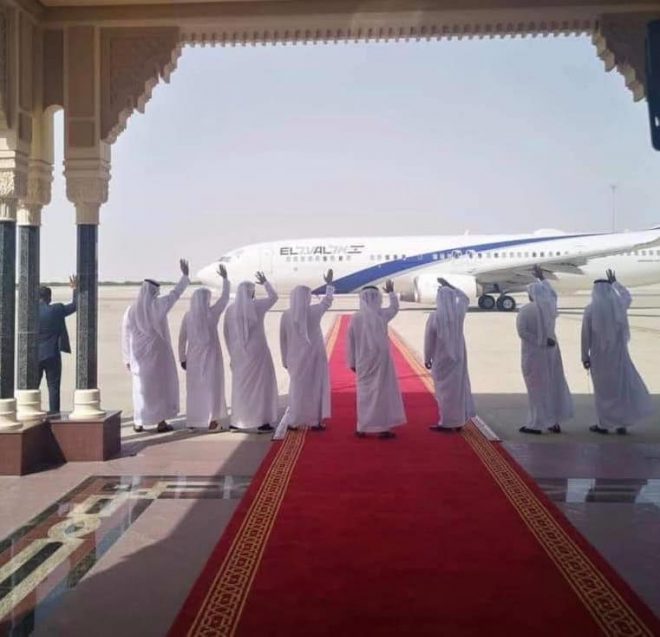
The Arab world has bravely taken on a new partner in peace and prosperity this week by welcoming the first flight of Israeli and American diplomats on an historic flight to Abu Dhabi yesterday. It is a new dawn where two moderate superpowers were only operating cooperatively quietly – until now. Israel and the UAE foment their willingness to create a new Middle East (or Western East) with an official visit by an Israel-US delegation led by Jared Kushner this week.
Israel and the United Arab Emirates –– also known as the UAE –– have a lot more in common in renewable energy, water resume and conservation and desert agriculture, than let’s say Israel does with the northern country of Norway. But for years outdated Middle East bigotry pervaded the ranks of the Arab League of which Israel was never a part despite about half its population being both Israeli Arabs and Arab Jews from countries like Iraq, Morocco, Jordan, Syria and Lebanon.
Business will find a way and did go on over the years go on behind the backs of the bullies. I have met with leaders from Arab nation governments, including Iraq, that were very keen on cooperating with Israel on cleantech and water tech. What was stopping them from doing it in the open was a broker and the US President Trump helped achieve that.
We spoke with experts from a variety of fields: carbon, energy, water, and green building to find reasonable opportunities and pathways for NGOS, businesses and humankind to go forward with building this world into a net positive place. We all want prosperity for all.
He knows the sweet spots of both nations: decarbonizing together

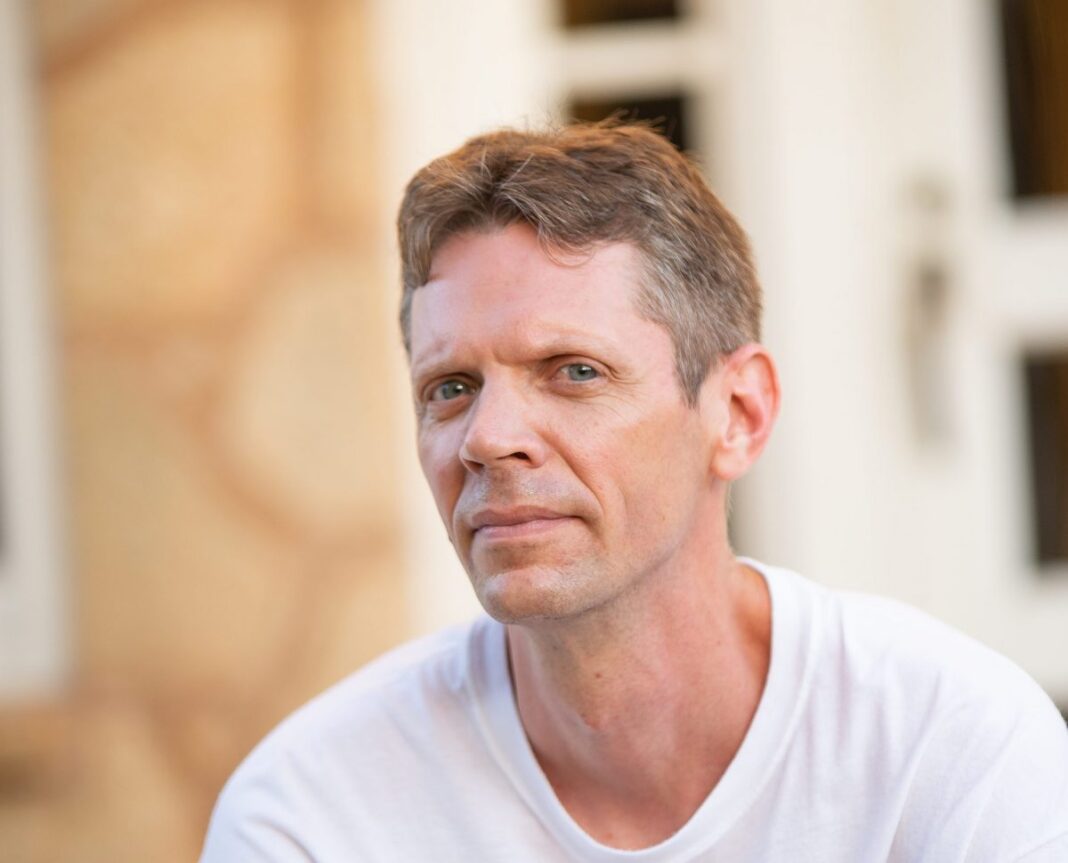
François Le Scornet is president of Carbonexit Consulting in Grenoble, France, where he works as a senior energy consultant, supporting industry, startups, investors and NGOs. He was at the last World Energy Congress in Abu Dhabi last September and understands the challenges and opportunities that such an agreement can bring.
Le Scornet tells Green Prophet: “I strongly believe that the very recent UAE-Israel peace deal can only be seen as a positive step when it comes to the development of the low-carbon energy sector in Israel in particular.
“The UAE is clearly an oil giant, no doubt, I actually had the chance to visit the impressive The Abu Dhabi National Oil Company or ADNOC headquarters in Abu Dhabi last September, and they are also extremely active in the renewable sector of course.”
Le Scornet continues: “They host IRENA as well as some of the largest solar PV solar plants in the world and we sometimes forget about that in the West. The Emirates Water and Electricity Company (EWEC) actually announced partners to develop the world’s largest solar power plant: 2 Gigawatts at the Al Dhafra plant– just a few days ago.
“With very limited oil and gas, Israel has a lot of innovative startups in the decarbonized power sector and a strong solar sector like the UAE. Israel will strongly push for new energy and water infrastructures in the frame of its post-COVID-19 stimulus plan and a strong growth is expected in the solar sector with a total of 2GW to be installed for about $1.6B within the next few years.
“Israel could become a new market for the UAE renewable energy companies as well as for the players involved in the energy hungry desalination plant ecosystem. On the other hand, many Israeli startups may use the UAE as a way to penetrate the regional Middle Eastern market for their innovative products and services in energy storage, smart grids etc,” Le Scornet concludes.
Renewable energy will reduce conflict
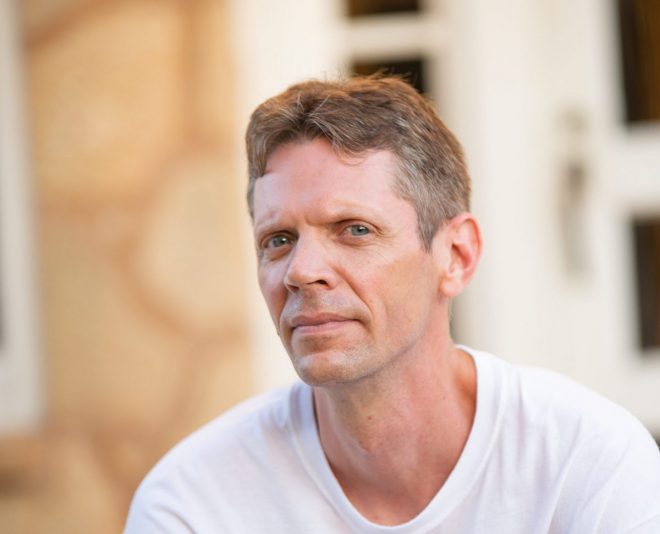
Mark Cann, the CEO of Cryomatiks in Florida works to provide zero emission technology for transportation and energy storage. He knows about the cost of conflict for Mother Earth: “Military conflict is notoriously difficult on the environment,” he tells Green Prophet.
“Even potential conflict has long lasting negative effects on the environment with the toxic military sites left over from the Cold War as just one example. So any step towards de-escalation of potential military conflict should normally be a boost for the environment.
Cann continues: “As far as an increase in renewable energy as a direct impact from the current Israel-UAE agreement, that’s a bit like the tail wagging the dog. Ahmed Zaki Yamani, Saudi Arabia’s former Minister of Oil, was famously quoted as saying ‘The Stone Age didn’t end for lack of stone, and the oil age will end long before the world runs out of oil.’
“In other words, it’s not so much that the current agreement will result in more renewable energy but rather renewable energy will result in more agreements. Commerce has proven to be a productive pathway for various states and regions to co-exist. Countries that are heavily dependent on exporting petroleum to balance sovereign budgets may experience more social unrest relative to the countries that don’t.”
Agriculture is energy too so save water

Aadith Moorthy, founder and CEO of ConserWater is working between San Francisco and Israel and they are invested in the peace deal already. His company offers a sensor-free way to grow more food using less water. “We have large initiatives in Israel and with the peace deal, we have also seen a stronger uptick of collaboration between our Israel team and upcoming projects in the UAE,” he tells Green Prophet,
“This deal is going to be very great from an environment perspective for the entire world: Israel has historically been a leader in water technology and precision agriculture, which is necessary for the world’s population to better adapt to climate change, which will result in greater resource scarcity and more frequent droughts,” Moorthy says.
“On the other hand,” he notes, “the UAE has recently become a global clean energy hub through its aggressive investment in cleantech in the past decade. The synergy of the combination of these two will provide humanity with the right resources to both reduce further climate change, while also enabling humanity to adapt to the warming that is already happening.”
Desalinating Israel and the UAE is also reducing wars on the horizon
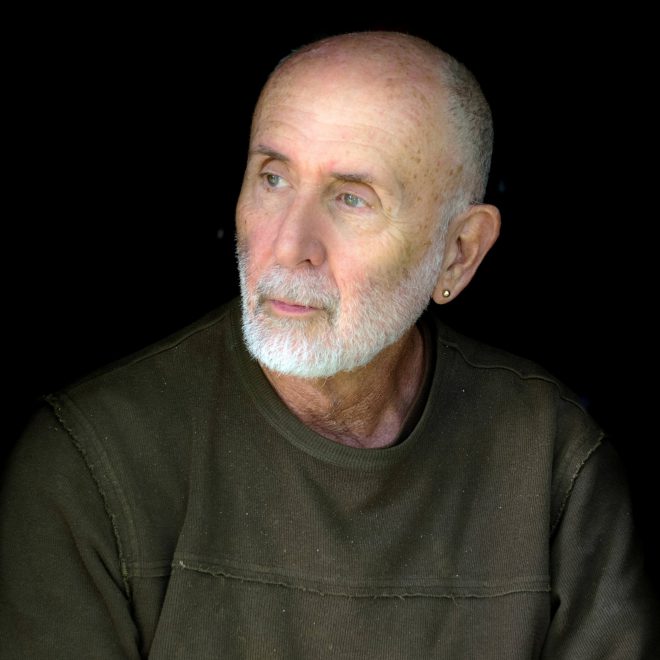
Environmental designer and artist Pablo Soloman from Texas considers himself a lifelong leader in conservation, a person of science, an “accurate futurist” and also grew up in a very multicultural mixed home where they spoke a number of languages including Arabic. He was the first to come up with the idea of the Red Dead Sea Canal, and explained to the world why tree planting is good for carbon sequestering.
He believes that all renewable energy applications are limited in use until we find ways to store electricity efficiently, and desalination can be the key as both nations are now heavily reliant on desalination for freshwater, a process which is very energy intensive: “The best use in many places for renewable energy that cannot be directly stored is to use that electricity to desalinate seawater and/or to pump water into reservoirs for hydroelectric power back up,” he tells Green Prophet.
“Desalinating seawater cheaply will be the greatest boost to the health, economies and peace in the Middle East. More fresh water would increase food production and would reduce the chance of wars over water that are currently on the horizon. Renewable energy is only one part of cleaning up our environment. Use of natural gas is a step up from less clean carbon fuels,” he notes.
But Soloman addresses, “Keep in mind that in effect fossil fuels are stored solar energy. They pack a huge amount of energy in a small package. As economies expand, more money will be available to develop more efficient and effective ways of cleaning and repurposing emissions from fossil fuels.
“As peace and prosperity expand, nuclear material money can be used for electrical generation instead of bomb making. As economies interact peacefully and share technology, there will be increased cultural understanding and possibly tolerance and acceptance. People gain greater understanding and respect through working together on shared interests than from threats of war,” Soloman concludes.
Invest in solar, destabilize destroyers

Joshua M. Pearce, a PhD and director of the Michigan Tech Open Sustainability Technology (MOST) Lab, Michigan Technological University says that “renewable energy deployment in the Middle East can be a key factor in promoting peace.
If the US continues to follow the standard model, relatively weak diplomacy, military threats and economic sanctions could lead to another Iraq-like war. Although Iran and Iraq have differences, most observers would agree that the same outcome and price are likely results. In purely economic terms, the CBO estimates that the Iraq-US war cost about $2.4 trillion.
“In a study published in the Pearce Studies Journal, I showed that strong US support for solar in Iran would obtain all the benefits from denuclearizing Iran for a fraction of the cost of the standard model, while earning a higher return and improve environmental impact in the process,” Pearce tells Green Prophet.
Toward a $1 trillion solar energy goal
How? Today, solar photovoltaic (PV) technology is the lowest-cost electricity source and is thus unsurprisingly growing the most rapidly, Pearce explains. “Unfortunately, tensions between Israel and the Arab world have prevented the region from obtaining the PV deployment scale, which has limited the deployment velocity.”
Pearce explores: “Today, the region’s operational PV capacity is at $5 to 7.5 billion USD, with another $15 to 20 billion USD slated for deployment by 2024. The Middle East Solar Industry Association reports energy investment in the Middle East region could hit $1 trillion USD in the next few years.
“The peace deal between Israel and the United Arab Emirates (UAE) unquestionably benefits the $1 trillion of solar energy goal. Peace and stability will provide the security for investors that is needed to drop PV prices even further with scale of both large centralized and distributed generation solar options in the Middle East. The UAE is already a solar leader in the region for PV, which now can be more easily exported in the region.
Largest PV plant reaches record low power prices
“They launched commercial operations at the 1.177 GW Sweihan PV project, Abu Dhabi in November the allocated the fifth, 0.9GW phase of the massive, 5 GW Mohammad bin Rashid Al Maktoum Solar Park for a record low power price of $0.01693/kWh.
“My research has clearly shown that a wiser, more-profitable way to invest in the elimination of nuclear capability in Iran is through solar. This ‘generous solar option‘ shows that the US can obtain all the benefits from denuclearizing Iran for a fraction of the cost of the standard model, while earning a higher return and improve environmental impact in the process.
“This generous solar option is not even necessary if the region can enjoy <$0.02/kWh solar electricity funded by partnerships between the Arab world and Israel.
“Why invest in nuclear if solar beats it without any of the risk?”