Greenpeace against Arab world’s first nuclear power plant

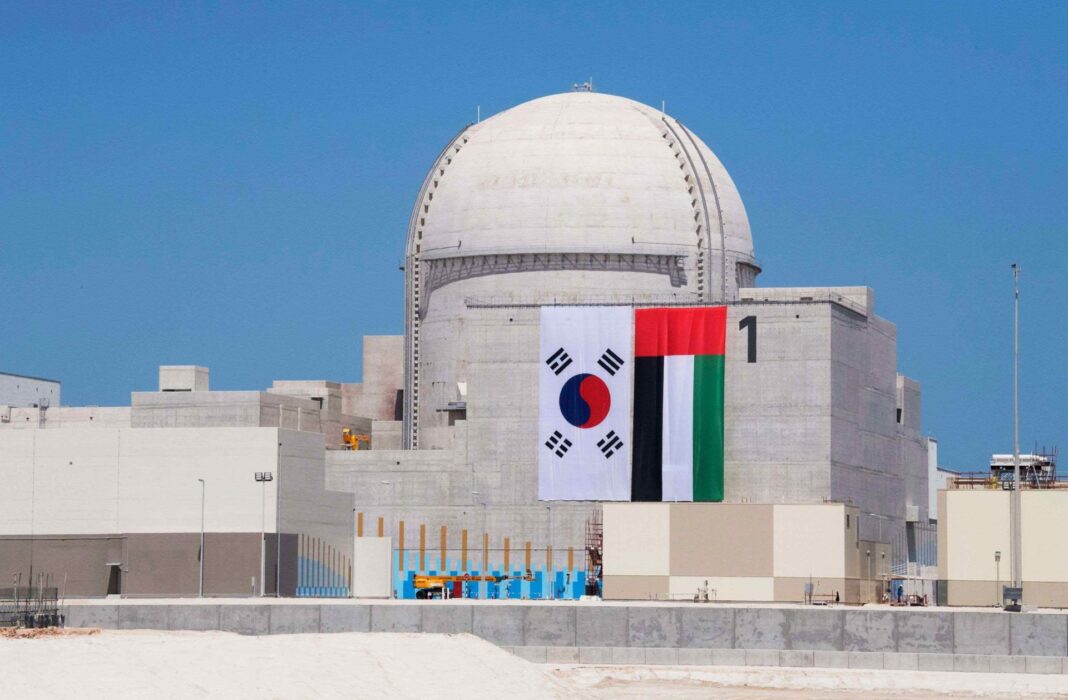
The first nuclear energy plant in the United Arab Emirates goes online on the Gulf Coast east of Qatar.

In a desert region full of oil, and well unlimited sunshine, Abu Dhabi still plans to go ahead and build a nuclear energy site despite the risks. Remember Japan? And Greenpeace, which runs an active unit in the Arab world and Middle East, called Greenpeace MENA, isn’t thrilled about the development. (They weren’t thrilled about Jordan going nuclear as well, in 2011. That seems to be off the table for now.)

After seeing the lack of Middle East oversight of dangerous chemicals in Beirut, some groups like Greenpeace worry about the dangers of a nuclear Arab world. The United Arab Emirates  will become the first Arab country to produce nuclear energy when commercial operations start at the $24.4 Billion USD Barakah nuclear power plant in 2020.

Until 2006, the six oil-producing states of the Gulf Cooperation Council (GCC) had been vocally opposed to nuclear power in the Gulf, however, as Iran’s nuclear ambitions advanced, the position changed.

Once all four of Barakah’s reactors are operational in 2025, the plant will provide the UAE with 5.6GW of power generation capacity – about one quarter of the country’s anticipated energy requirements.

Greenpeace believes that this action will further deplete natural resources such as water, which is very scarce in the United Arab Emirates.

Currently desalination is looked to as a viable option, but creating it is energy intense. Creating a nuclear reactor to run desalination is much like a snake biting its own tail.

The plant in Abu Dhabi was set to open in 2017 but its start-up was delayed for what officials say were “safety requirements” according to the BBC.

The UAE is oil rich but despite that plans for Barakah to meet ts energy needs, as the region of seven emirates adopts more sustainable energy sources.

Two weeks ago the UAE sent a mission to Mars, another scientific first for the Gulf nation.

A threat to peace? 

The UAE also has plans to invest in solar, putting into question the logic of the Barakah nuclear plant. Solar power is cleaner, cheaper, 100% renewable and makes a lot more sense in a region plagued by terrorism and political problems over oil and wealth. See solar energy at Masdar City.

masdar-shams-1-solar-energy
Solar energy farm at Masdar

The BBC reports that “last year Qatar called the Barakah plant a flagrant threat to regional peace and environment. Qatar is a bitter regional rival of the UAE and Saudi Arabia.”

Greenpeace says they “condemn the start-up of unit 1 of the Barakah Nuclear Energy Plant, located in the Al Dhafrah Region of Abu Dhabi, as a wasteful investment in the wrong technology that will only deplete the scarce water resources of the Emirates.

Established in 2016, the Nawah Energy Company plans on running 4 nuclear energy units, the first nuclear energy plant in the United Arab Emirates.

Nawah will generate up to 5,600 megawatts of energy from the 4 units at Barakah, supplying approximately 25% of the UAE’s electricity requirements.

Julien Jreissati, programme manager at Greenpeace Middle East and North Africa, commented: “Nuclear energy is not the energy of the future, and definitely not the solution. With it we are leaving our future generations with nothing but a toxic legacy of radioactive and dangerous nuclear waste”.

He continued: ”The UAE has been a regional leader in developing and investing in cheap, safe and green renewable energy such as solar. This innovative country should keep its focus on capitalising on its abundant and generous sun instead of “betting” on the nuclear race. After the legacy of Fukushima and the high price Japan had to pay for relying on nuclear power, countries around the world – like Germany-  are opting for phasing-out nuclear energy not the other way around.”

Building new nuclear plants is more expensive and takes longer than building renewable energy plants, Greenpeace argues.

Building a nuclear plant in a water scarce country is just a bad and dangerous investment that will compete with the UAE people on accessing much needed water resources, the organization points out. In a region that has been prone to conflicts, the reactor also poses considerable safety risk to the people. 

Karin Kloosterman
Karin Kloostermanhttp://www.greenprophet.com
Karin Kloosterman is an award-winning journalist, innovation strategist, and founder of Green Prophet, one of the Middle East’s pioneering sustainability platforms. She has ranked in the Top 10 of Verizon innovation competitions, participated in NASA-linked challenges, and spoken worldwide on climate, food security, and future resilience. With an IoT technology patent, features in Canada’s National Post, and leadership inside teams building next-generation agricultural and planetary systems — including Mars-farming concepts — Karin operates at the intersection of storytelling, science, and systems change. She doesn’t report on the future – she helps design it. Reach out directly to [email protected]

Read More

LEAVE A REPLY

Please enter your comment!
Please enter your name here

TRENDING

AI data centers are triggering panic, instead of cleantech opportunities

AI may unintentionally become the economic engine that finally modernizes America’s aging grid. California is experiencing a massive AI data center boom, ranking 3rd in the U.S. with 227 operating centers and 54 more in development as of April 2026, according to Stanford.

Meet Seramic Materials from Abu Dhabi

Based in Masdar City, Abu Dhabi, Seramic Materials was founded in 2019 by Dr. Nicolas Calvet and Dr. Jean-François Hoffmann, researchers working at the intersection of renewable energy and materials science. The company grew out of the Masdar Institute ecosystem and is supported by clean tech programs like The Catalyst, with early backing of around $150,000 and more than $2 million invested in research and development over time.

Korean researchers create battery from greenhouse gases

Professor Ji-Soo Jang, in collaboration with Professor Taekwang Yoon of Ajou University and Professor Hansel Kim of Chungbuk National University, has developed a novel energy device that generates electricity during the process of capturing greenhouse gases.

Should You Invest in the Private Market?

startustartup Unlike public stock exchanges, which offer daily trading, strict...

EU startup aiming to generate energy on moon villages

Stepping up to democratize the moon is an EU-funded company, Deep Space Energy, which has just raised more than $1 million USD as a seed fund to help it create energy generators on the moon.

How to quiet noise from construction in your office

Streets need to be resurfaced in New York but the humming and grinding noise is unsettling. Noise is environmental pollution. 

EarthX and a blueprint for sustainable investing

Trammell S. Crow, a Dallas-based businessman and father of four, is focusing his efforts on impact investing, and media that focuses on saving the planet through EarthX.

Mining Afghanistan’s Mineral Discoveries Similar to Avatar

Now that American forces in Afghanistan are commemorating the longest period of any war that America has been involved in, including the 1965-73 Vietnam War, the recent discoveries of large and extremely valuable mineral and metal deposits may finally bring to light a reason to continue the presence of US fighting forces in this war torn and backward country.

From Pilot Plant to Global Stage: How Aduro Clean Technologies’ 2026 Expansion Signals a Turning Point for Chemical Recycling Investors Like Yazan Al Homsi

The company's Next Generation Process (NGP) Pilot Plant in London, Ontario, has officially moved into initial operating campaigns, generating the kind of structured, repeatable data that separates laboratory promise from commercial viability.

Nobul’s Regan McGee on Shareholder Value: “Complacency Is the Silent Killer” 

Why the governance framework designed to protect shareholders so...

Should You Invest in the Private Market?

startustartup Unlike public stock exchanges, which offer daily trading, strict...

How to build a 100-year-company

Kongō Gumi is a Japanese construction company, purportedly founded in 578 A.D., making it the world's oldest documented company. What can we learn about building sustainable businesses from them?

How AI Helps SaaS Companies Reduce Repetitive Customer Support Work

SaaS products are designed for large numbers of users with different levels of experience, and also in renewable energy.

Popular Categories