
American irrigation research finds watering sweet spot for agriculture and earth

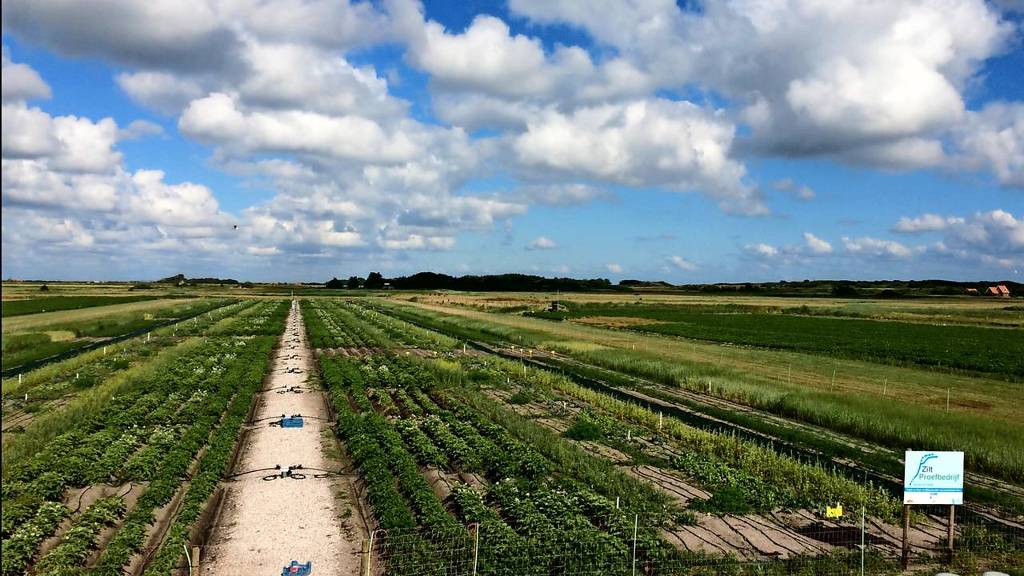
salt farm texel
A healthy lifestyle consists of a mixture of habits. Diet, exercise, sleep and other factors all must be in balance. Similarly, a sustainable farm operates on a balanced plan of soil, crop, and water management techniques.


The western United States is a region with scarce water resources (that’s why tools like Eddy were invented, using hydroponics and AI instead of soil). In this case, water management techniques make up a larger piece of a sustainability plan. There is mounting concern around the globe about water scarcity. This is due to urban sprawl, depleting water supplies in some areas, and predicted water shortages in the future with less snowpack.

Water management techniques that lead to the optimal use of limited resources are not well-identified. Yet. Matt Yost, a researcher at Utah State University, is working to find the best combination of practices to maximize yield, profit, and water efficiency. He has some new results that might be applied to the overly water stressed Middle East.

“Most cropland in Utah and the western United States is irrigated,” explains Yost. “There are areas where groundwater from aquifers is being used faster than it can be replaced. Some of these areas are under intense pressure to conserve water.” 

Water for irrigation comes from aquifers far below the farm’s surface. Aquifers are naturally refilled by water from the surface by precipitation. Increased water use can lower the water table. Eventually wells can go dry. These factors make water optimization crucial for food security.

African farmer women
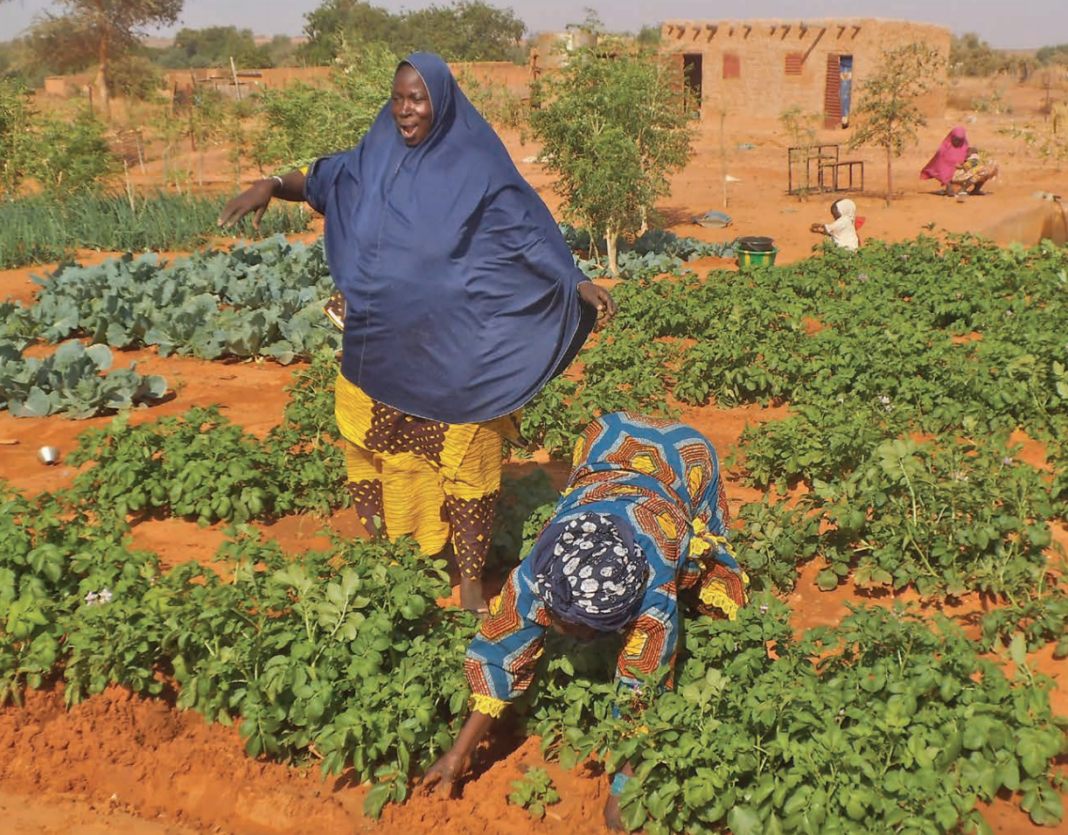
Women in Africa with the back breaking work of watering their farm

Yost researches many water management techniques. These include using irrigation scheduling and advanced pivot irrigation technology. In addition, his team researches crop and soil management practices. They look at rotating in drought-tolerant crops, cover crops, and reduced tillage.

Yost’s team works together with many farmers across Utah to do farm-scale trials.

“Irrigation research is tough and costly on farmer’s fields,” says Yost. “It’s especially true when it comes to irrigation scheduling. Though difficult, this on-farm research and collaboration is crucial for the understanding and adoption of new water optimization techniques.”

So, what is the best combination of management techniques to maximize yield, profit, and water efficiency? The answer isn’t clear, yet. Results and analyses are still pending, but Yost offers some initial recommendations:

  • Advanced pivot irrigation technologies, such as mobile drip and low-energy precision application or spray application, are beneficial. They can usually maintain crop yields with about 20% less applied water.
  • Most farmers may be able to reduce irrigation rates by 10% without affecting crop yields.
  • Biochar applications are showing few short-term crop yield or water saving benefits.

“We are beginning to answer questions about new irrigation techniques and scheduling approaches,” says Yost. “But many still exist for discovery.”

Next, Yost and his team hope to secure funding for long-term irrigation research sites. Water is a limited and vital resource. Strategies to optimize water use will be crucial to the sustainability of irrigated agriculture.

“In irrigated agriculture, agronomy and irrigation go hand-in-hand,” explains Yost. “Nearly everything about one influences the other. Most irrigation programs focus more on engineering than on irrigation science. With my original training in agronomy, I’ve noticed knowledge gaps and have identified opportunities to unite irrigation science and agronomy.” Yost’s unique perspective offers a holistic approach to integrated water, soil, and crop management.

Yost presented his work at the November International Annual Meeting of the American Society of Agronomy, Crop Science Society of America, and Soil Science Society of America in San Antonio.

Funding for this research came from an Innovator Award from the Foundation for Food and Agriculture, Western Sustainable Agriculture Research and Education, and the Utah State University Water Initiative and Extension Service.

Karin Kloosterman
Karin Kloostermanhttp://www.greenprophet.com
Karin Kloosterman is an award-winning journalist, innovation strategist, and founder of Green Prophet, one of the Middle East’s pioneering sustainability platforms. She has ranked in the Top 10 of Verizon innovation competitions, participated in NASA-linked challenges, and spoken worldwide on climate, food security, and future resilience. With an IoT technology patent, features in Canada’s National Post, and leadership inside teams building next-generation agricultural and planetary systems — including Mars-farming concepts — Karin operates at the intersection of storytelling, science, and systems change. She doesn’t report on the future – she helps design it. Reach out directly to [email protected]

TRENDING

Baby teeth read like tree rings paint a picture of toxins in early life

A new study from the Icahn School of Medicine at Mount Sinai in New York offers a striking insight into how the environments we are born into can quietly shape our brains years later. By analyzing naturally shed baby teeth, the ones tucked under pillows for the tooth fairy, researchers have reconstructed a detailed timeline of exposure to environmental metals during pregnancy and early infancy.

Poop in the East River shows the city’s rat problem and what people like to eat

New York ecology and health can be monitored by a jug of water a week.

Monitoring farmers’ tillage patterns from space

Tillage is one of the clearest signals of how a farm treats its soil. Intensive plowing can degrade structure, release carbon, and increase erosion. Conservation practices—no-till, cover cropping, minimal disturbance—do the opposite. They build soil, retain water, and support biodiversity. But until now, measuring these practices at scale has been slow, expensive, and often self-reported.

Is your groundwater too young? New study finds risks for Parkinson’s and type of water you drink

People whose drinking water came from newer groundwater had a higher risk of developing Parkinson’s disease than those whose drinking water came from older groundwater, according to a preliminary study released March 2, 2026, that will be presented at the American Academy of Neurology’s 78th Annual Meeting taking place April 18–22, 2026, in Chicago and online.

The Saudi Startup Turning Desalination’s Toxic Waste Into Its Own Disinfectant

For millennia, the Middle East's water crisis seemed an immutable fact of geography — a region defined as much by what it lacked as by what lay beneath its sands. Today, a convergence of plummeting solar costs, advancing membrane technology, and hard-won engineering expertise is rewriting that story.

Nobul’s Regan McGee on Shareholder Value: “Complacency Is the Silent Killer” 

Why the governance framework designed to protect shareholders so...

Should You Invest in the Private Market?

startustartup Unlike public stock exchanges, which offer daily trading, strict...

How to build a 100-year-company

Kongō Gumi is a Japanese construction company, purportedly founded in 578 A.D., making it the world's oldest documented company. What can we learn about building sustainable businesses from them?

From Pilot Plant to Global Stage: How Aduro Clean Technologies’ 2026 Expansion Signals a Turning Point for Chemical Recycling Investors Like Yazan Al Homsi

The company's Next Generation Process (NGP) Pilot Plant in London, Ontario, has officially moved into initial operating campaigns, generating the kind of structured, repeatable data that separates laboratory promise from commercial viability.

How AI Helps SaaS Companies Reduce Repetitive Customer Support Work

SaaS products are designed for large numbers of users with different levels of experience, and also in renewable energy.

Pulling Water from the Air

Faced with water shortage in Amman, Laurie digs up...

Turning Your Energy Consultancy into an LLC: 4 Legal Steps for Founders in Texas

If you are starting a renewable energy business in Texas, learn how to start an LLC by the books.

Tracking the Impacts of a Hydroelectric Dam Along the Tigris River

For the next two months, I'll be taking a break from my usual Green Prophet posts to report on a transnational environmental issue: the Ilısu Dam currently under construction in Turkey, and the ways it will transform life along the Tigris River.

Related Articles

Popular Categories