Earth up for sale – save it by buying it!

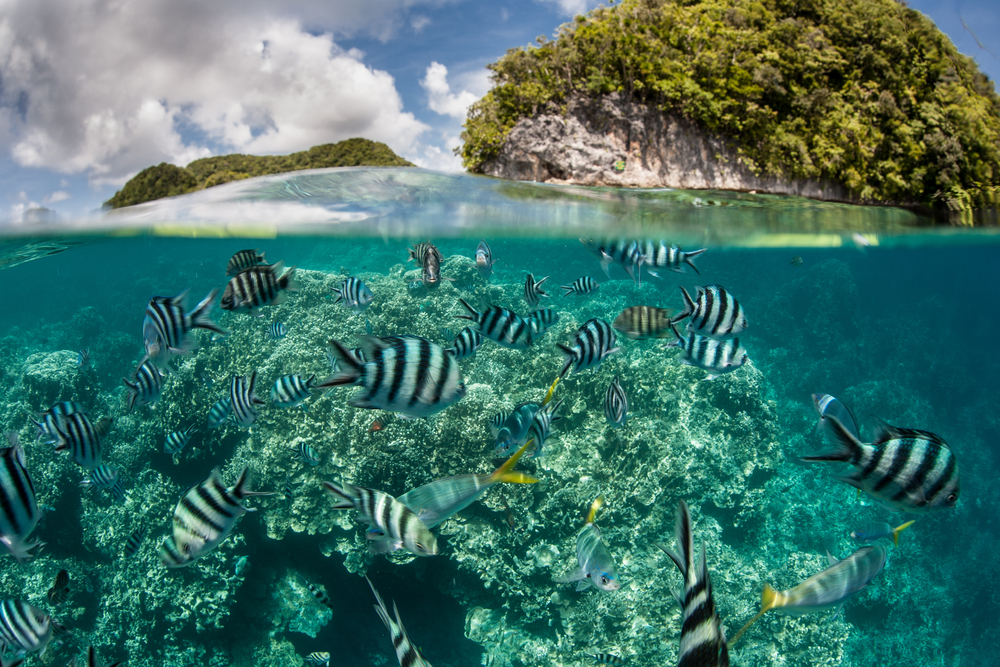
damselfish-sea-coral
Back in high school we bought a few acres of rainforest in Brazil – to save it. To stop illegal logging. To preserve biodiversity. Instead of buying just an acre or two or a few hundred, a researcher from Israel has a plan to save the world’s biodiversity – by buying 1.4% of the planet using crowdfunding.

Prof. Uri Shanas of the University of Haifa has launched an unusual new initiative: a massive, international, and democratic “purchase group” open to all that aims to save the Earth. “It is neither possible nor necessary to conserve the entire planet all the time,” Prof. Shanas explains.

“But if we manage to conserve even a small percentage that is home to an unusual diversity of plant and animal life in danger of extinction, we can go some way to halting the current process of species extinction.”

Prof. Shanas is using the crowdsourcing technique to raise the funds needed to launch the initiative.

He explains that many species of plants and animals already face extinction, and the list is getting longer due to global warming and the ongoing destruction of open spaces. “We can’t always predict the consequences of the disappearance of a single species from the ecosystem,” he admits, “but there are examples of systems that have collapsed to an extent that has influenced human life following the extinction of a single species.

“For example, the disappearance of the sea otter in the Pacific Ocean led to an increase in the population of sea urchins. The sea urchins ate seaweed that provided the necessary underwater habitat for development of fish and other sea life. The consequence was a collapse of fisheries that affected many fishermen and their families.”

Prof. Shanas’s plan for saving biodiversity is simple: 1.4 percent of the Earth’s surface is currently defined as “biodiversity hot spots” – areas with numerous plant and animal species on the brink of extinction.

Purchasing these areas and transforming them into nature reserves will save these species, and thereby save life on the planet.

If the necessary funding is raised to launch the organization – known as TIME (This Is My Earth) – anyone around the world, adult or child, will be able to join by making a payment of at least one dollar. Once a year, all the members will vote on how to invest the organization’s funds, based on a list of biodiversity hot spots prepared by an international team of scientists.

Every member will have an equal vote, no matter how much they pay.

Prof. Shanas emphasizes that the TIME group differs from existing efforts by groups and individuals to purchase land for the purpose of conservation. The difference lies in the democratic, international, and public character of his initiative, as well as in the fact that members in each country will be responsible for caring for the purchased areas. “The goal isn’t to engage in some kind of ‘green colonialism,’ but to enable local residents to manage their own natural resources.

“We are interested in founding an organization that can help educate people to involvement, environmental conservation, and democracy from an early age. And yes – to save the Earth in the process,” he concludes.

Great idea, but who will manage the purchased land and protect it into the future will be the bigger question.

Photo of damselfish at sea from Shutterstock

Karin Kloosterman
Karin Kloostermanhttp://www.greenprophet.com
Karin Kloosterman is an award-winning journalist, innovation strategist, and founder of Green Prophet, one of the Middle East’s pioneering sustainability platforms. She has ranked in the Top 10 of Verizon innovation competitions, participated in NASA-linked challenges, and spoken worldwide on climate, food security, and future resilience. With an IoT technology patent, features in Canada’s National Post, and leadership inside teams building next-generation agricultural and planetary systems — including Mars-farming concepts — Karin operates at the intersection of storytelling, science, and systems change. She doesn’t report on the future – she helps design it. Reach out directly to [email protected]

Read More

2 COMMENTS

TRENDING

Billie Eilish’s Mom Takes the Stage at Hollywood Climate Summit — But Does Hollywood Still Care About Climate Change?

Hollywood once promised to help save the planet. Leonardo DiCaprio warned of climate catastrophe from awards stages. Celebrities flew to climate conferences. Studios pledged greener productions. Streaming platforms rushed to commission environmental documentaries. But in 2026, with the aftermath of wildfires, heatwaves and floods becoming routine, a question lingers: Does Hollywood still care about climate change?

Can Scientists Predict Coral Bleaching Before It Happens?

Now researchers at the Woods Hole Oceanographic Institution (WHOI) in the US say they have developed a way to predict coral bleaching five to six months before it occurs, potentially giving reef managers enough time to intervene and save vulnerable corals.

Nearly the half the world’s migratory species are declining, in new UN report for COP15

With larger, land-bound animals human encroachment and Middle East warns make it more troubling for the survival of migratory animals on land, air and at sea. A new United Nations report released this week warns that the situation is getting worse, not better.

OECD: Renewable Energy Expansion Must Avoid New Ecological Trade-Offs

Overall, links between climate change and biodiversity are relatively well covered in national strategies, but the relationships involving pollution — including how climate and biodiversity pressures heighten pollution risks — are often missing. Policies designed to explicitly manage trade-offs, especially around pollution, remain limited.

Biodiversity Blueprint Set for 2026

If we seize this moment, the 2026 review can catalyse a new wave of finance (see Green Finance mechanisms in the UAE), innovation and policy coherence — and move us closer to the vision of a nature-positive world by 2050. If not, the checkpoint risks becoming another missed opportunity while ecosystems, livelihoods and economies continue to degrade.

Locals From Rishon Fight IKEA

Big Box stores are a pretty new concept in Israel, and thank God that not every Israeli city wants them in their backyard. A word from someone who has see the beautiful farmland around her hometown Newmarket, Ontario stripped and converted into vulgar strip malls of big box shops: they have no place in a healthy and sustainable town or city.

The Jewish National Fund Meets An Inconvenient Truth

According to the JNF, it has transformed thousands of acres of barren land into green forests in Israel. They state that each person emits about 23 tons of carbon per year, estimating that each tree planted can absorb one ton of carbon in its lifetime. That's a whole lot of trees you'd need to be planting. Could so many fit in Israel?

How to quiet noise from construction in your office

Streets need to be resurfaced in New York but the humming and grinding noise is unsettling. Noise is environmental pollution. 

EarthX and a blueprint for sustainable investing

Trammell S. Crow, a Dallas-based businessman and father of four, is focusing his efforts on impact investing, and media that focuses on saving the planet through EarthX.

Mining Afghanistan’s Mineral Discoveries Similar to Avatar

Now that American forces in Afghanistan are commemorating the longest period of any war that America has been involved in, including the 1965-73 Vietnam War, the recent discoveries of large and extremely valuable mineral and metal deposits may finally bring to light a reason to continue the presence of US fighting forces in this war torn and backward country.

From Pilot Plant to Global Stage: How Aduro Clean Technologies’ 2026 Expansion Signals a Turning Point for Chemical Recycling Investors Like Yazan Al Homsi

The company's Next Generation Process (NGP) Pilot Plant in London, Ontario, has officially moved into initial operating campaigns, generating the kind of structured, repeatable data that separates laboratory promise from commercial viability.

Nobul’s Regan McGee on Shareholder Value: “Complacency Is the Silent Killer” 

Why the governance framework designed to protect shareholders so...

Should You Invest in the Private Market?

startustartup Unlike public stock exchanges, which offer daily trading, strict...

Popular Categories