Organic farming doesn’t pay off in Gaza

Arab Farmer, Gaza farming, organic food, Gaza City, politics, poverty, food security, agricultureOrganic farming is widely thought to be the healthy choice – not only nutritionally but because organic farmers are required (in general) to keep their crops chemical- and pesticide-free. But in poverty-stricken Gaza, people are more frequently buying conventionally-grown foods.

NPR recently visited The Good Earth organic produce stand in Gaza City, where the attending clerk Rami al-Waffer explains that people pay no attention to the signs and charts detailing the benefits of organic foods.

The first thing they see is the price, which typically runs about 25 percent higher than foods that are grown using a whole cocktail of potentially toxic chemicals.

This store purchases its produce from an organic farm in southern Gaza that is run by the Palestinian Center for Organic Agriculture. This eight acre farm is on land previously run by Israeli farmers, and produces most of the organic produce in Gaza.

Related: Organic farming boom in Gaza

In the good old days, Gaza farmers could sell produce to their Israeli neighbors, but that practice is now forbidden so the farmers have to look within to sell their goods. Very often they end up having to sell their crops at lower prices in amongst standard foods at public markets – otherwise they would go to waste.

But perhaps there will eventually be a shift. Even if customers can’t see past the price, and who can blame them given that without work and the Israeli blockade so many families are desperately poor, farmers are beginning to recognize that it can be cheaper to farm using organic methods.

Samir al-Shaer, an agronomist who heads the farm, told NPR that there are about 30 farmers working with him.

“When they plant organic, they’ll tell people about it,” says Shaer. “Some farmers are first interested because they can’t afford the chemical fertilizers. They didn’t realize the other benefits.”

Instead of using chemicals, they have double doors on the greenhouse to keep out pests, and they shake tomatoes to pollinate them in lieu of bees. But traders “don’t care” Shaer tells NPR.

“It’s all cucumbers, they say.”

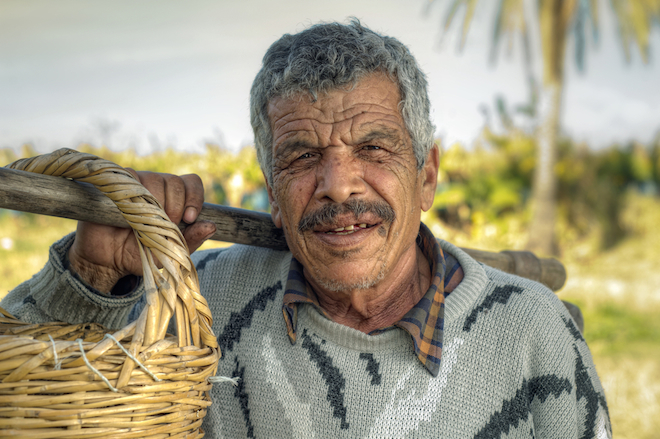
Image of Arab farmer | Shutterstock
Tafline Laylin
Tafline Laylinhttp://www.greenprophet.com
As a tour leader who led “eco-friendly” camping trips throughout North America, Tafline soon realized that she was instead leaving behind a trail of gas fumes, plastic bottles and Pringles. In fact, wherever she traveled – whether it was Viet Nam or South Africa or England – it became clear how inefficiently the mandate to re-think our consumer culture is reaching the general public. Born in Iran, raised in South Africa and the United States, she currently splits her time between Africa and the Middle East. Tafline can be reached at tafline (at) greenprophet (dot) com.

Read More

TRENDING

HelloFresh’s pride prepping ad raises a bigger question: we are we still outsourcing dinner?

The backlash against HelloFresh's Pride Month marketing campaign has sparked a wider conversation about food, labor, sustainability, and whether consumers should reconnect with local farmers, butchers, and home gardens instead of relying on subscription meal kits.

Regenerative Wool or Greenwashing? Zentera Responds to Critics

Zentera responds to questions about ZQ wool, animal welfare, regenerative farming, ethical fashion and the fallout from PETA's New Zealand investigation.

A visit to Amirim, Israel’s first all-vegetarian village in the Galilee

Just 15 kilometers from Tzfat there is a moshav that was founded in the late 50s that was ideologically influenced by organic, vegetarian and vegan principles. My hostess at Ohn-Bar, the tzimmer where I stayed, explained that the people of Amirim were among the pioneers of Israel’s strong vegetarian movement.

Tanner Winterhof on the Custom Harvesters Quietly Holding American Agriculture Together

In late January, in a Des Moines hotel ballroom that smelled faintly of diesel and convention coffee, Tanner Winterhof spent three days hosting the members and attendees of the  U.S. Custom Harvesters Inc. annual convention on his podcast as Farm4Profit’s official media partner for the show.

Park Slope food coop boycotts “Gay Tahini” already boycotted by Muslims in Israel

The tragedy is that this kind of activism rarely builds peace. It builds tribes instead of humanity. It rewards outrage over dialogue. Once an enlightenment group starts deciding which nationalities are acceptable to boycott publicly, history suggests the line rarely stops where activists think it will.

Locals From Rishon Fight IKEA

Big Box stores are a pretty new concept in Israel, and thank God that not every Israeli city wants them in their backyard. A word from someone who has see the beautiful farmland around her hometown Newmarket, Ontario stripped and converted into vulgar strip malls of big box shops: they have no place in a healthy and sustainable town or city.

The Jewish National Fund Meets An Inconvenient Truth

According to the JNF, it has transformed thousands of acres of barren land into green forests in Israel. They state that each person emits about 23 tons of carbon per year, estimating that each tree planted can absorb one ton of carbon in its lifetime. That's a whole lot of trees you'd need to be planting. Could so many fit in Israel?

How to quiet noise from construction in your office

Streets need to be resurfaced in New York but the humming and grinding noise is unsettling. Noise is environmental pollution. 

EarthX and a blueprint for sustainable investing

Trammell S. Crow, a Dallas-based businessman and father of four, is focusing his efforts on impact investing, and media that focuses on saving the planet through EarthX.

Mining Afghanistan’s Mineral Discoveries Similar to Avatar

Now that American forces in Afghanistan are commemorating the longest period of any war that America has been involved in, including the 1965-73 Vietnam War, the recent discoveries of large and extremely valuable mineral and metal deposits may finally bring to light a reason to continue the presence of US fighting forces in this war torn and backward country.

From Pilot Plant to Global Stage: How Aduro Clean Technologies’ 2026 Expansion Signals a Turning Point for Chemical Recycling Investors Like Yazan Al Homsi

The company's Next Generation Process (NGP) Pilot Plant in London, Ontario, has officially moved into initial operating campaigns, generating the kind of structured, repeatable data that separates laboratory promise from commercial viability.

Nobul’s Regan McGee on Shareholder Value: “Complacency Is the Silent Killer” 

Why the governance framework designed to protect shareholders so...

Should You Invest in the Private Market?

startustartup Unlike public stock exchanges, which offer daily trading, strict...

Popular Categories