Deadly MERS virus spreading fast out of Saudi Arabia, raising panic before Hajj

MERS virus

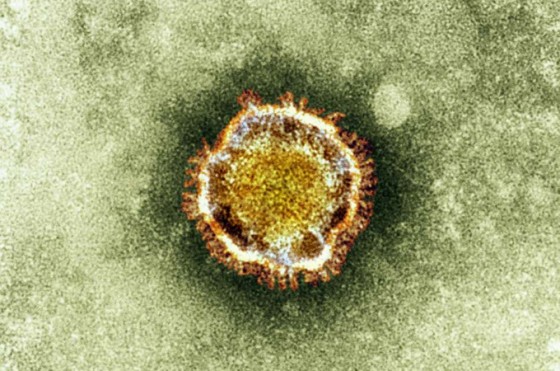
Deadly and debilitating viruses are no strangers to the Middle East; especially following the discovery of a SARS-like mystery virus in Saudi Arabia back in 2012.  This virus, which since then has become known as the Corona or MERS virus (see photo above) has been said to be spreading fast in the Arabian Peninsula by bats and camels.

But Saudi doesn’t seem to be able to cope with the problem.

The focus of the MERS virus, or Middle East Respiratory Syndrome, has until now been centered in Saudi Arabia, where 261 confirmed cases of the virus have resulted in 81 deaths.

The spread of the virus in the Kingdom has raised such concern that the Saudi Health Minister, Abdullah al Rabeeah, was sacked recently by Saudi by King Abdullah after saying in a news conference that he “had no idea why Middle East Respiratory Syndrome-Coronavirus, or MERS, was surging,” in his country.

The outcry and fear in this desert nation over the deadly disease, for which there is presently no vaccine and which kills an estimated one in three who contract the disease, is now causing great concern for the health of the millions of visitors who will come there during the annual Hajj pilgrimage; causing it to spread to developing countries in Africa and Asia.

A number of victims to the disease have been health workers who have had to deal with the increasing cases of the disease, now said to be passed from person to person. This has caused doctors and nurses to  doctors and nurses to express their concerns on Twitter and other social media sites; and accuse the health ministry of trying to minimize the outbreak.

To add to the above fears, the word is out that the MERS virus has now spread to Egypt.

Local reports from Al Jazeera say that the deadly virus was reported recently in Cairo from a person who had returned from visiting Saudi Arabia.  Al Jazeera went on to say that the “virus has been extraordinarily common” in camels for at least 20 years, and may have been passed directly from the animals to humans”.

This factor involving camels transmitting the disease was also reported by Green Prophet.

The SARS virus, which caused great concern almost a decade ago, resulted in 8,273 persons being infected, of which 9 per cent died.

Dr Michael Osterholm, director of the Center for Infectious Disease Research and Policy at the University of Minnesota and an expert on pandemics and biosecurity, was quoted saying that the Saudi government needs to cooperate more with international health officials, such as those connected with the World Health Organization:

“They really need to bring in the global public health community. A senior WHO-supported team needs to get in there and help out. They need people with expertise,” says Dr. Osterholm.

More articles on the MERS virus, now on  the rise in the Middle East:

Bats blamed for Deady Middle East MERS Respiratory Virus

Deadly Middle East Corona Virus may come from Camels

SARS Like Mystery Virus Appears in Saudi Arabia, Alerting Haj Pilgrims

Photo of actual Corona shaped MERS virus by Reuters/AlJazeera

Maurice Picow
Maurice Picowhttps://www.greenprophet.com/
Maurice Picow grew up in Oklahoma City, U.S.A., where he received a B.S. Degree in Business Administration. Following graduation, Maurice embarked on a career as a real estate broker before making the decision to move to Israel. After arriving in Israel, he came involved in the insurance agency business and later in the moving and international relocation fields. Maurice became interested in writing news and commentary articles in the late 1990’s, and now writes feature articles for the The Jerusalem Post as well as being a regular contributor to Green Prophet. He has also written a non-fiction study on Islam, a two volume adventure novel, and is completing a romance novel about a forbidden love affair. Writing topics of particular interest for Green Prophet are those dealing with global warming and climate change, as well as clean technology - particularly electric cars.

Read More

2 COMMENTS

TRENDING

NEOM’s The Line is delayed as Saudi mirage hits reality

Without blinking indeed: Saudi Arabia has reportedly delayed major work on The Line,  the planned 170-kilometer mirrored city slicing through the desert, until after 2030. Tourism projects along the Red Sea are being pushed back, and Trojena, the fantasy ski resort in the mountains fueled with artificial snow, is also effectively frozen.

Desalination experts debunk Aqua Solaire, the floating desalination barge

AI makes it easy to dream, develop, and create images of what could be world-changing ideas, until the reality sets in. A new project making the rounds is Aqua Solaire, an allged French concept for a solar-powered desalination vessel designed to bring drinking water to coastal communities facing drought, storms, and infrastructure failures.

Shebara hotel Saudi Arabia – is it eco-luxury dream or desert illusion?

A new breed of luxury has landed on the Red Sea, mirrored pods floating above coral reefs, reflecting sky and sea like something not entirely of this Earth. Energy powered by solar powers, drinking water pulled from the sea using desalination. 

When peace returns, will we rediscover Saudi Arabia’s mud-brick soul?

When the region settles after the American war with Iran, and it will, American and European travelers will come back. Not just for spectacle or headline projects, but for places that feel real. Places that haven’t been engineered to impress and which get into your soul. We predict that visitors to Saudi Arabia will want to see places like Rijal Alma.When the region settles after the American war with Iran, and it will, American and European travelers will come back. Not just for spectacle or headline projects, but for places that feel real. Places that haven’t been engineered to impress and which get into your soul. We predict that visitors to Saudi Arabia will want to see places like Rijal Alma.

What are AWG air-water generators, and why they aren’t a golden-bullet solution (yet)

Atmospheric water generators (AWGs) sound like magic: machines that can pull drinking water out of air. The idea is mentioned in the Bible, where the elders would pray for water collected as dew on plants and the catch on turning this into a machine is in the physics. To turn invisible vapor into liquid, you must remove heat, especially the latent heat of condensation.

Locals From Rishon Fight IKEA

Big Box stores are a pretty new concept in Israel, and thank God that not every Israeli city wants them in their backyard. A word from someone who has see the beautiful farmland around her hometown Newmarket, Ontario stripped and converted into vulgar strip malls of big box shops: they have no place in a healthy and sustainable town or city.

The Jewish National Fund Meets An Inconvenient Truth

According to the JNF, it has transformed thousands of acres of barren land into green forests in Israel. They state that each person emits about 23 tons of carbon per year, estimating that each tree planted can absorb one ton of carbon in its lifetime. That's a whole lot of trees you'd need to be planting. Could so many fit in Israel?

How to quiet noise from construction in your office

Streets need to be resurfaced in New York but the humming and grinding noise is unsettling. Noise is environmental pollution. 

EarthX and a blueprint for sustainable investing

Trammell S. Crow, a Dallas-based businessman and father of four, is focusing his efforts on impact investing, and media that focuses on saving the planet through EarthX.

Mining Afghanistan’s Mineral Discoveries Similar to Avatar

Now that American forces in Afghanistan are commemorating the longest period of any war that America has been involved in, including the 1965-73 Vietnam War, the recent discoveries of large and extremely valuable mineral and metal deposits may finally bring to light a reason to continue the presence of US fighting forces in this war torn and backward country.

From Pilot Plant to Global Stage: How Aduro Clean Technologies’ 2026 Expansion Signals a Turning Point for Chemical Recycling Investors Like Yazan Al Homsi

The company's Next Generation Process (NGP) Pilot Plant in London, Ontario, has officially moved into initial operating campaigns, generating the kind of structured, repeatable data that separates laboratory promise from commercial viability.

Nobul’s Regan McGee on Shareholder Value: “Complacency Is the Silent Killer” 

Why the governance framework designed to protect shareholders so...

Should You Invest in the Private Market?

startustartup Unlike public stock exchanges, which offer daily trading, strict...

Popular Categories